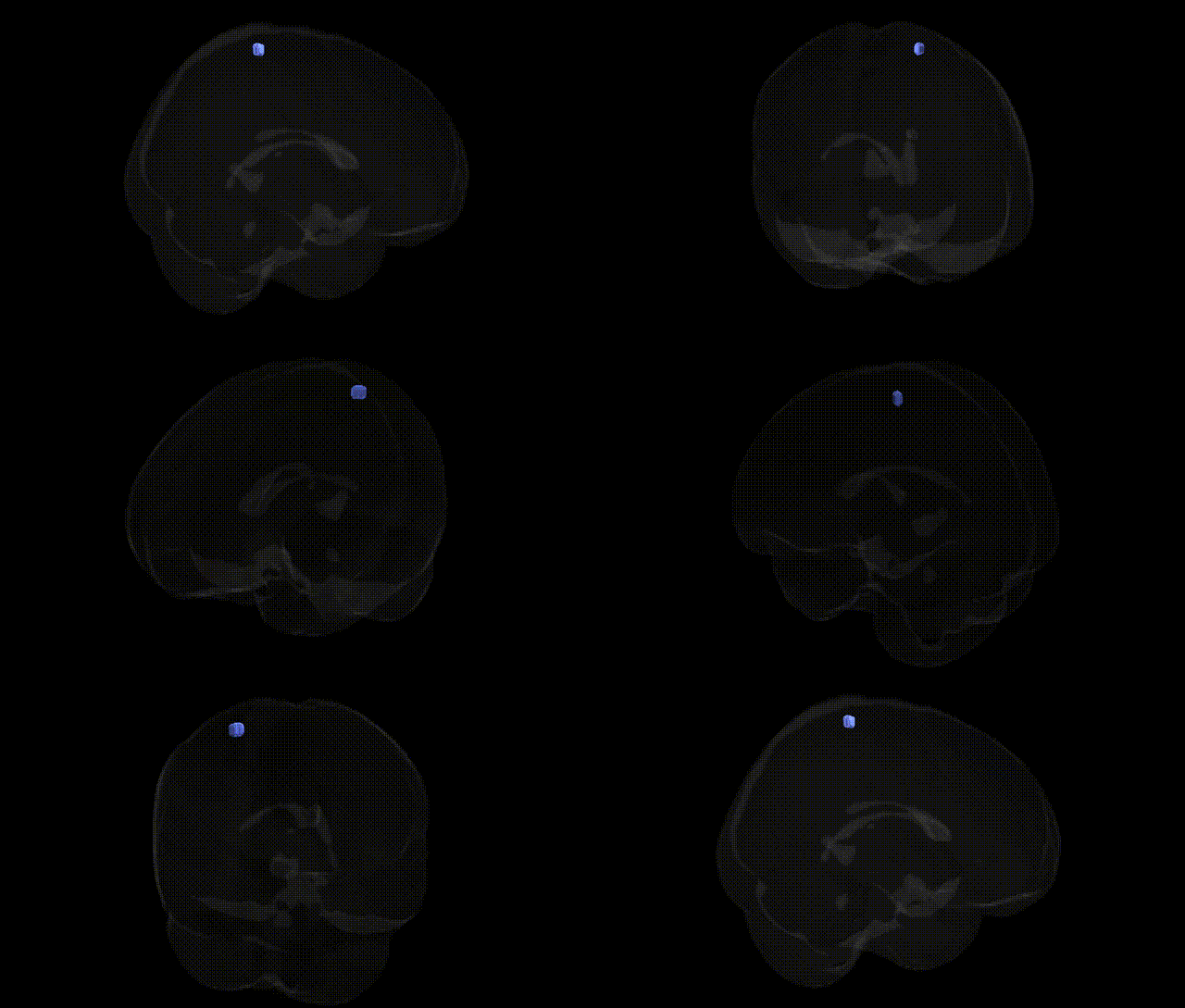
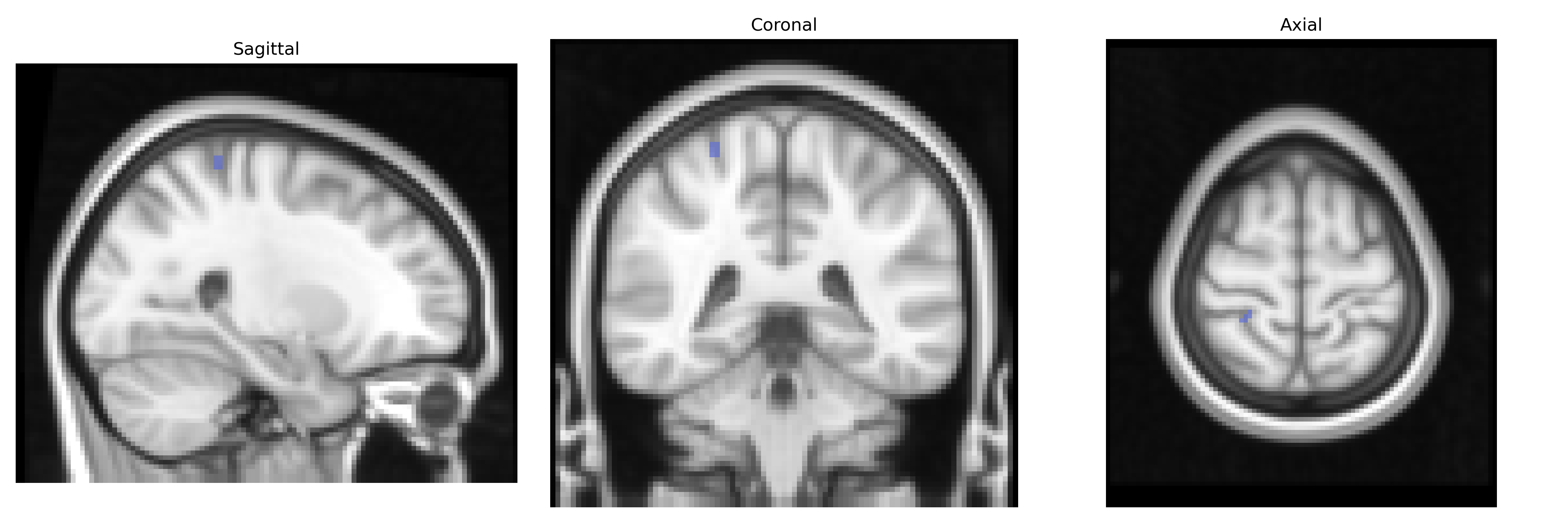
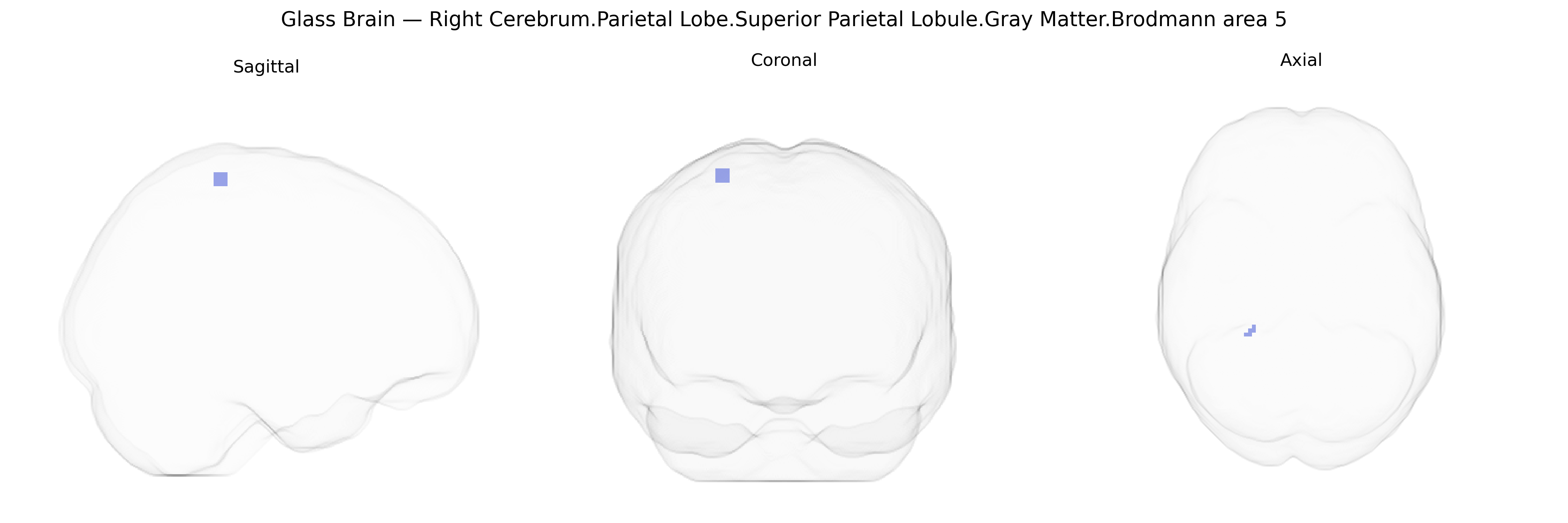
The bilateral Right Cerebrum.Parietal Lobe.Superior Parietal Lobule.Gray Matter.Brodmann area 5 corresponds to a somatosensory association cortex region located in the dorsal parietal lobe, just posterior to the primary somatosensory cortex (BA 3,1,2). This area integrates tactile, proprioceptive, and kinesthetic information to contribute to complex functions such as sensorimotor integration, body schema representation, and guidance of limb movements in space. Neuronal populations in Brodmann area 5 receive dense input from primary somatosensory areas and project to motor-related regions, supporting coordinated voluntary actions and spatial aspects of body-related perception. There is no direct Wikipedia article for Brodmann area 5 specifically; a related structure encompassing it is the Superior parietal lobule.
The bilateral right superior parietal lobule (SPL; Brodmann area 5) has been implicated in genetic studies primarily through imaging genetics and GWAS of brain structure, cognition, and neuropsychiatric traits rather than region-specific single-gene associations. Large-scale neuroimaging GWAS (e.g., ENIGMA, UK Biobank) have identified common variants influencing parietal gray matter volume and cortical thickness, including loci near genes involved in neurodevelopment, synaptic function, and axon guidance (such as genes in the Wnt and semaphorin pathways), although findings usually report broader parietal or posterior cortical measures rather than BA5 alone. Polygenic risk scores for schizophrenia, bipolar disorder, major depression, and ADHD have been associated with structural and functional alterations in superior parietal cortices, suggesting that distributed genetic risk for these disorders partially manifests in this region’s morphology and connectivity. SPL has also been repeatedly implicated in GWAS-related intermediate phenotypes: variants associated with general cognitive ability, working memory, attentional control, and mathematical skills show downstream effects on parietal activation or structure, and genes linked to neurodevelopmental conditions such as autism spectrum disorder and dyslexia have been associated with atypical parietal functioning during visuospatial and language tasks. In somatosensory and motor integration, BA5 is affected in genetic movement and coordination disorders (e.g., some hereditary ataxias and dystonias show altered parietal activation patterns), but evidence remains largely indirect and mediated through broader sensorimotor networks. Overall, genetic associations involving BA5 are best characterized at the level of polygenic influences on parietal lobe structure and function rather than clear, region-specific, single-gene effects.
Overview generated by GPT-4o (2026).
Region ID: 1098
Hemisphere: bilateral
Atlas: Talairach labels 2mm
Full Quality Version: Download MP4
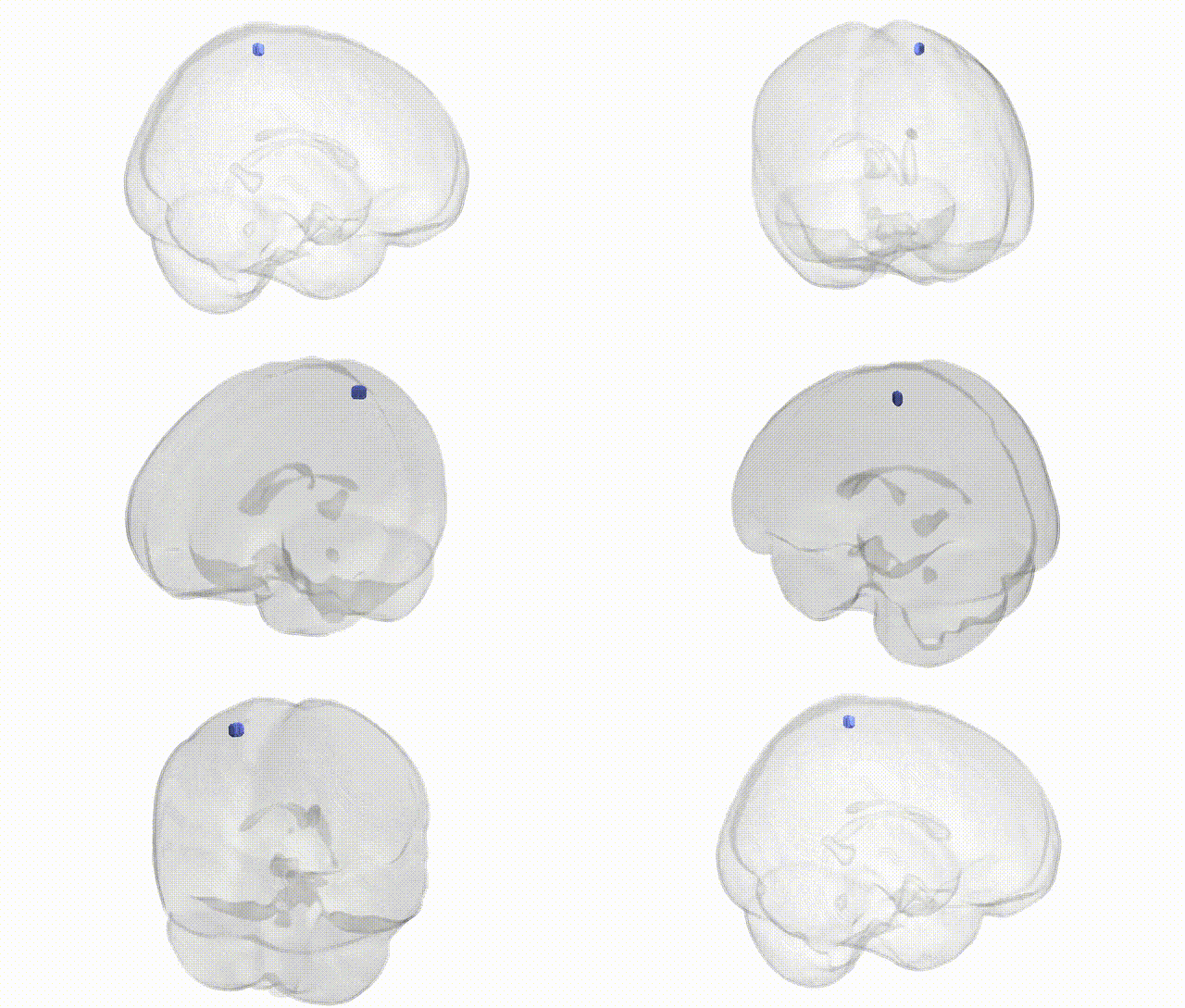
Full Quality Version: Download MP4
Wali Sidiqyar*, Gaurav Rudravaram*, Elyssa M. McMaster, Trent M. Schwartz, Adam M. Saunders, Kurt G. Schilling, Bennett A. Landman "Introducing SPINS: A Shared Public Visualization Library of Neuroanatomical Structures." Medical Imaging with Deep Learning- short paper
This resource is licensed under CC0 1.0 Universal (Public Domain).