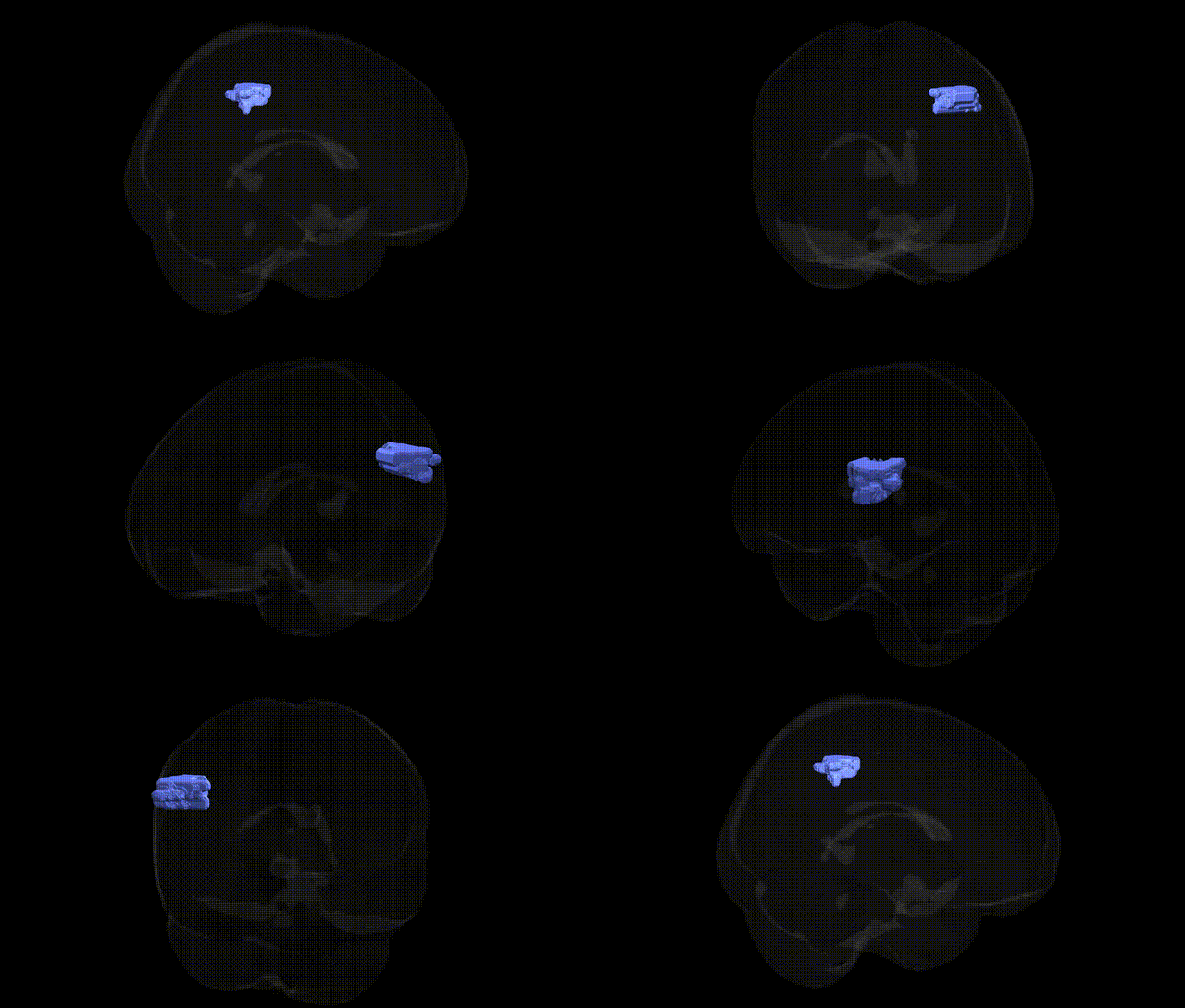
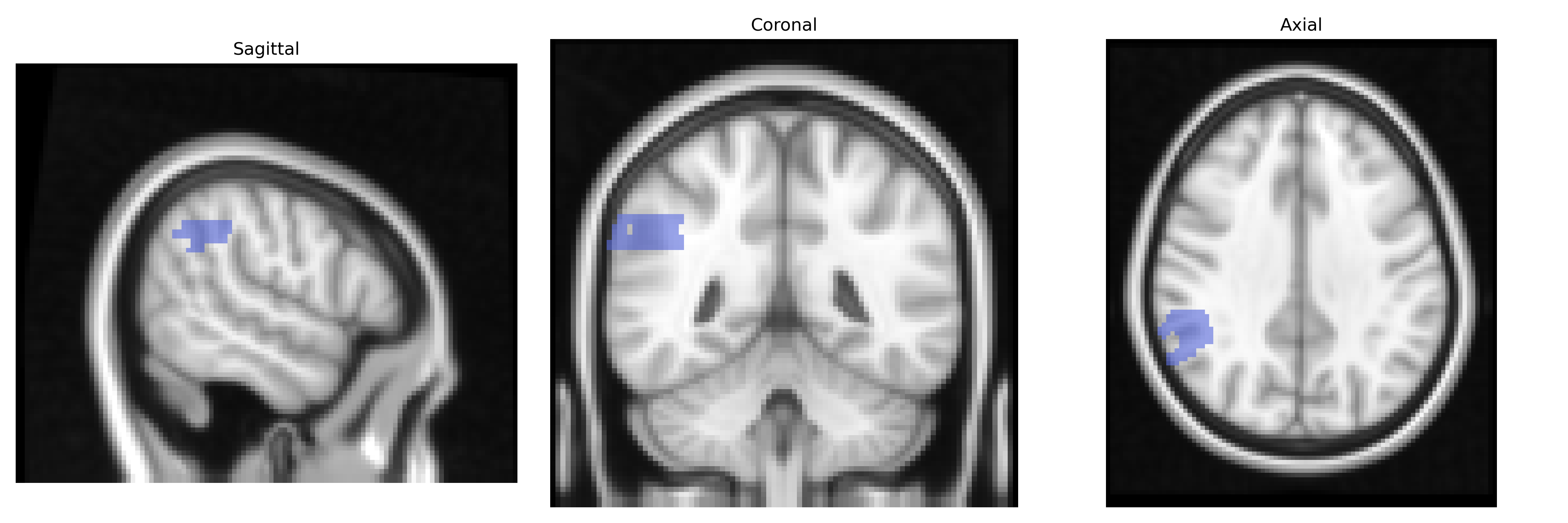
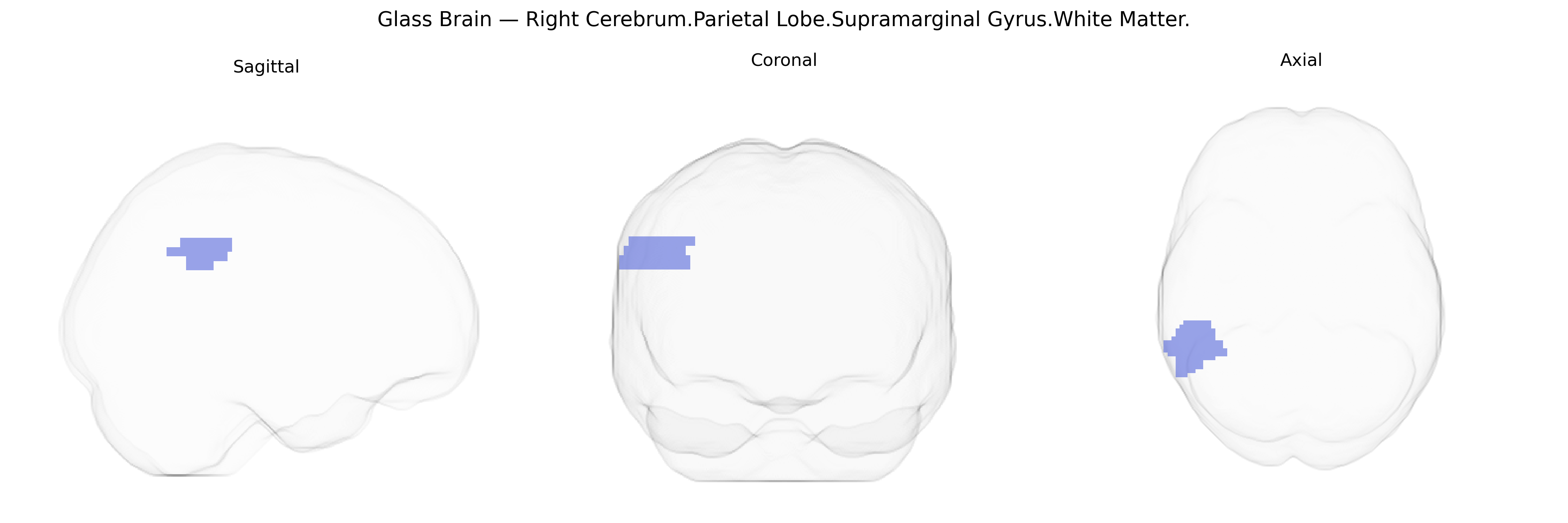
The bilateral Right Cerebrum.Parietal Lobe.Supramarginal Gyrus.White Matter refers to the subcortical fiber tracts underlying the supramarginal gyrus in the right parietal lobe, encompassing association and projection pathways that interconnect parietal cortex with frontal, temporal, and other parietal regions. Functionally, this white matter supports processes attributed to the supramarginal gyrus, including multisensory integration, language-related phonological processing, spatial attention, and aspects of social cognition, by facilitating rapid communication between distributed cortical networks. These fibers contribute to the dorsal language stream and visuo-spatial processing pathways, and disruptions in this region’s white matter integrity have been associated with deficits in reading, phonological working memory, and neglect syndromes. There is no direct link for the white matter of the supramarginal gyrus; a related cortical structure is the Supramarginal gyrus.
The bilateral Right Cerebrum Parietal Lobe Supramarginal Gyrus White Matter, as defined in the Talairach 2 mm atlas, lies within the posterior perisylvian parietal network implicated in language, social cognition, and multimodal integration, and genetic associations typically come from GWAS linking white matter microstructure (e.g., fractional anisotropy) or regional volumes to common variants. Large neuroimaging-genetics consortia (such as ENIGMA and UK Biobank–based studies) have identified polygenic influences from loci near genes involved in axon guidance, myelination, and synaptic plasticity (e.g., NRG1/ERBB signaling pathways, oligodendrocyte-related genes, and general neurodevelopmental loci) that broadly affect parietal and perisylvian white matter rather than this tract in isolation. Variants in genes associated with language and reading (such as CNTNAP2, FOXP2-related networks, and DCDC2/KIAA0319 implicated in dyslexia) and autism spectrum conditions show imaging correlates in supramarginal/temporoparietal white matter, though these findings are typically reported at the level of tracts (e.g., superior longitudinal fasciculus/arcuate fasciculus) or lobar measures rather than Talairach-defined regions. GWAS of schizophrenia, bipolar disorder, and major depression repeatedly demonstrate polygenic risk effects on parietal and temporoparietal white matter integrity, including the supramarginal region, with risk alleles influencing global and regional white matter organization. Additionally, GWAS of cognitive traits such as general intelligence, working memory, and educational attainment report associations with parietal white matter metrics, indicating that common genetic variation contributes to structural differences in this area that mediate higher-order cognition, language-related skills, and vulnerability to neurodevelopmental and psychiatric disorders, but current evidence remains relatively coarse-grained and does not isolate the Right Supramarginal Gyrus white matter as a uniquely or specifically associated locus.
Overview generated by GPT-4o (2026).
Region ID: 930
Hemisphere: bilateral
Atlas: Talairach labels 2mm
Full Quality Version: Download MP4
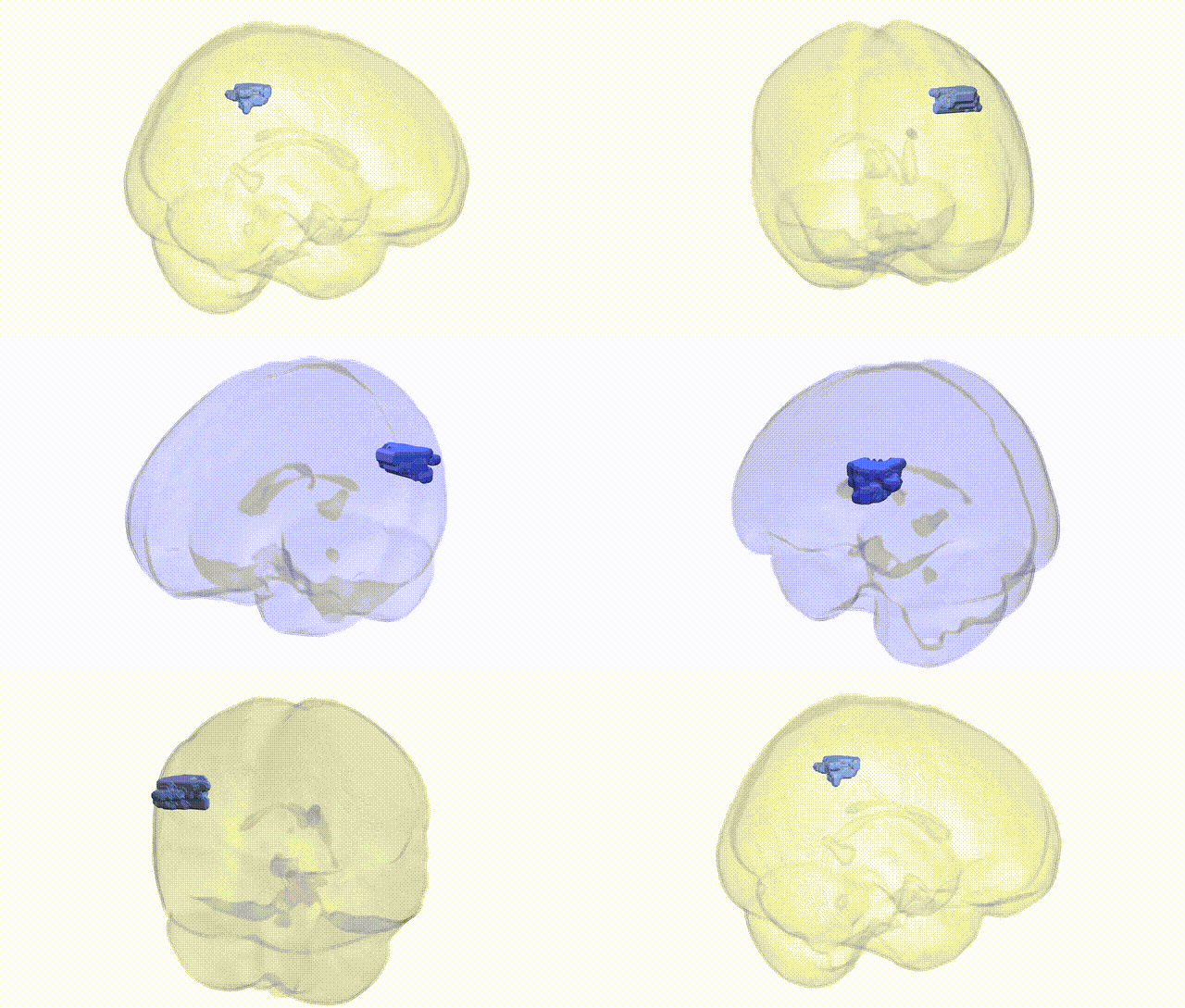
Full Quality Version: Download MP4
Wali Sidiqyar*, Gaurav Rudravaram*, Elyssa M. McMaster, Trent M. Schwartz, Adam M. Saunders, Kurt G. Schilling, Bennett A. Landman "Introducing SPINS: A Shared Public Visualization Library of Neuroanatomical Structures." Medical Imaging with Deep Learning- short paper
This resource is licensed under CC0 1.0 Universal (Public Domain).