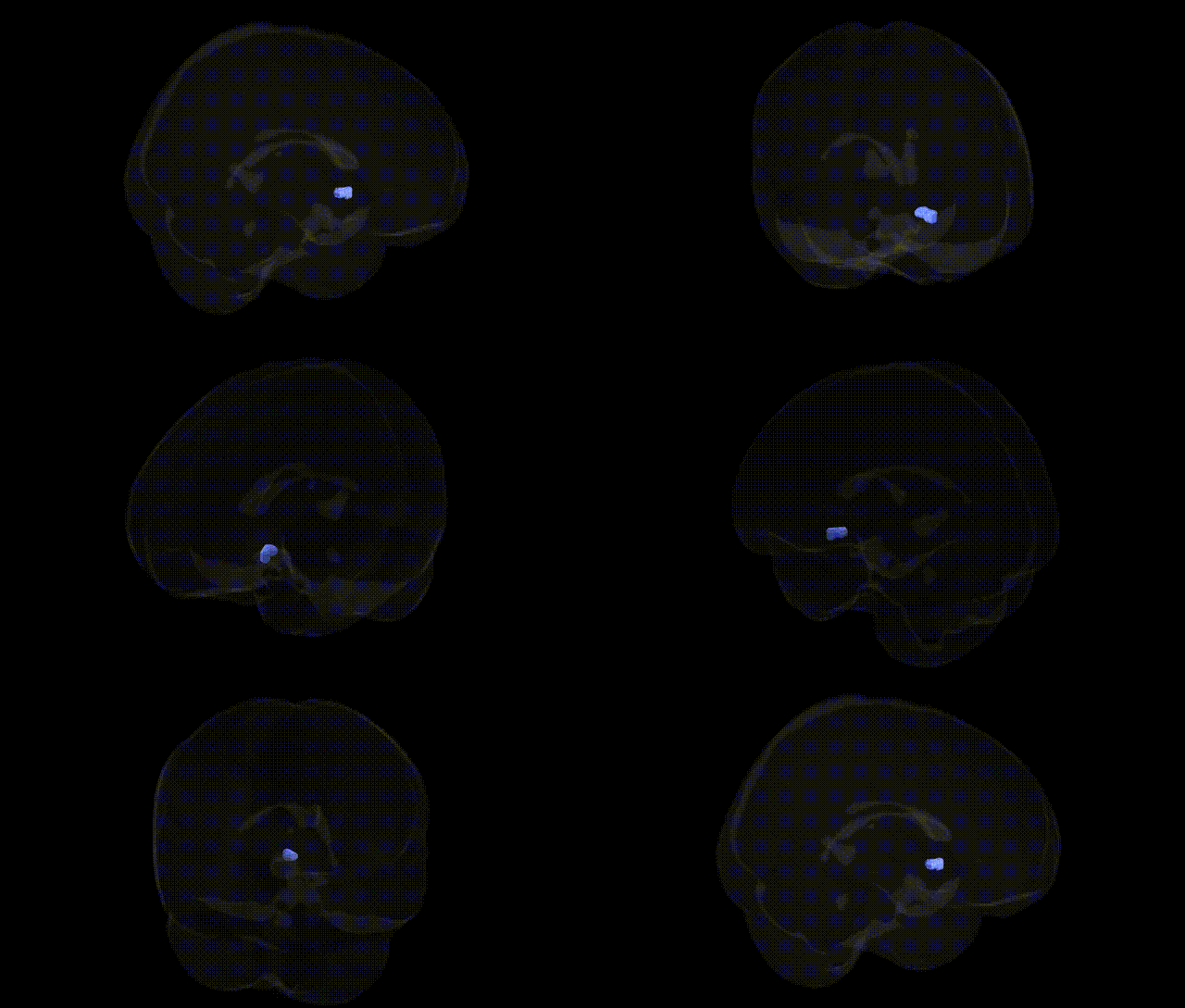
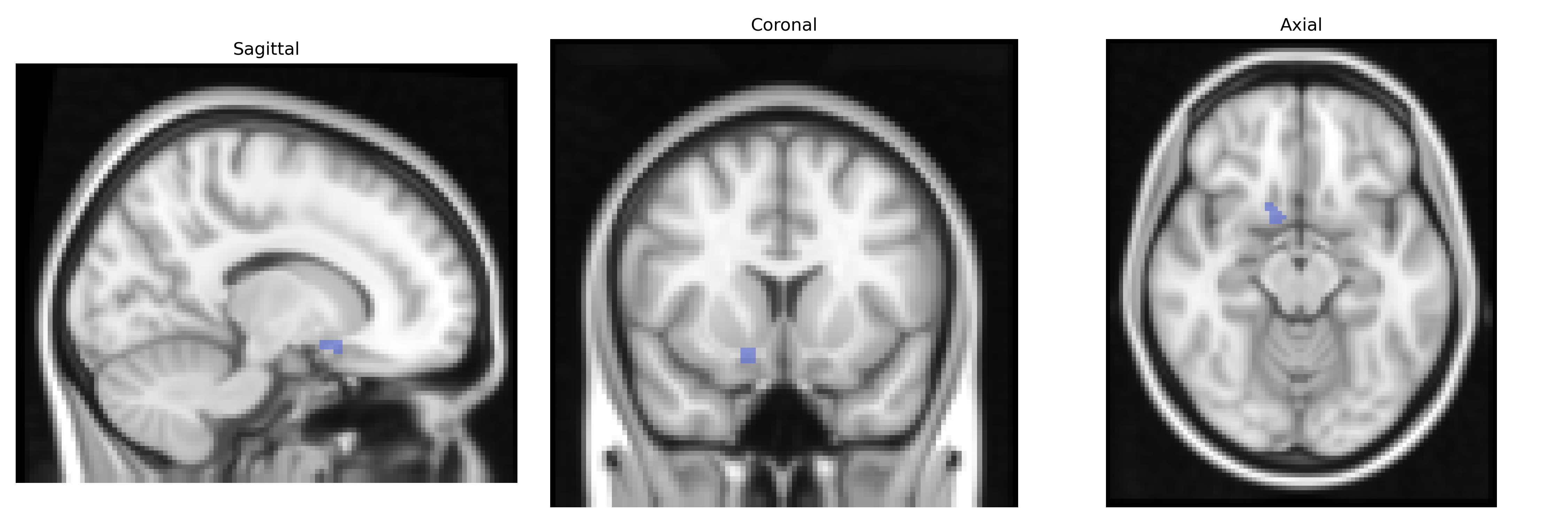
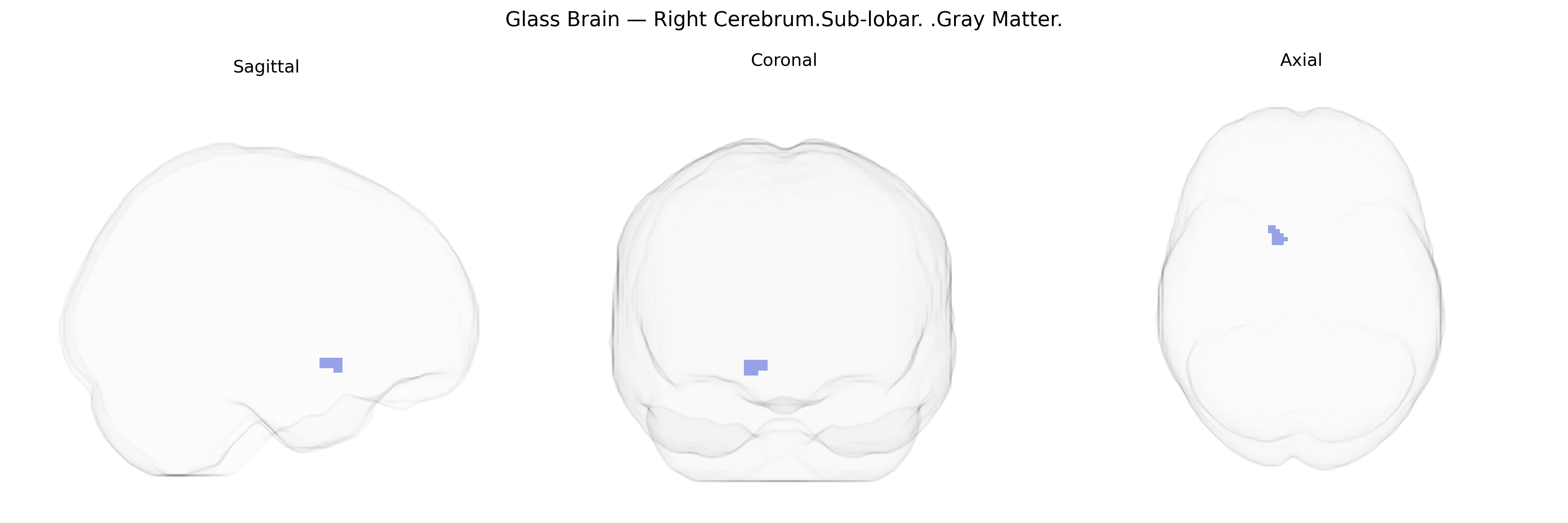
The bilateral Right Cerebrum.Sub-lobar.Gray Matter region in the Talairach 2 mm Atlas refers to non-cortical gray matter structures located beneath the cerebral cortex in the right hemisphere, typically encompassing components of the basal ganglia and associated nuclei. “Sub-lobar” designates deep gray matter regions situated below the frontal, parietal, temporal, or occipital lobes, including structures such as the caudate nucleus, putamen, and globus pallidus, which participate in motor control, procedural learning, and modulation of cortical activity through cortico-striato-thalamo-cortical circuits. These nuclei integrate excitatory and inhibitory signals, contribute to the regulation of voluntary movement, and are implicated in neuropsychiatric and movement disorders when structurally or functionally altered. There is no single direct Wikipedia article for this exact Talairach label; a closely related structure is the Basal ganglia.
The bilateral right sub-lobar gray matter (Talairach “Right Cerebrum.Sub-lobar.Gray Matter”) encompasses deep structures such as the insula, claustrum, and portions of the basal ganglia and adjacent white–gray matter interfaces, and genetic associations typically map to these constituent regions rather than the composite atlas label. Large-scale neuroimaging GWAS (e.g., ENIGMA and UK Biobank studies) have identified multiple common variants influencing insular and basal ganglia volumes and cortical thickness, including loci near genes involved in neurodevelopment, synaptic signaling, and axon guidance (such as variants near HMGA2, KTN1, and several 3p24, 6q22, and 12q23 regions), with these morphometric traits frequently sharing genetic architecture with psychiatric conditions (schizophrenia, bipolar disorder, major depression), substance use, and cognitive performance. The insula and surrounding sub-lobar gray matter show heritable structural and functional features associated with anxiety, pain sensitivity, interoception, and addiction phenotypes, with polygenic risk scores for schizophrenia, depression, and autism spectrum disorder often correlating with altered volume or connectivity in these regions. Basal ganglia components within the sub-lobar compartment (particularly striatal territories) are strongly implicated by GWAS in movement disorders such as Parkinson’s disease and dystonia, as well as in ADHD and Tourette’s syndrome, through variants affecting dopaminergic signaling and synaptic plasticity. Overall, while the Talairach “Right Cerebrum.Sub-lobar.Gray Matter” label is coarse, genetic studies consistently implicate its major subregions as heritable neuroanatomical substrates that mediate the effects of polygenic risk for neuropsychiatric, cognitive, and motor traits.
Overview generated by GPT-4o (2026).
Region ID: 386
Hemisphere: bilateral
Atlas: Talairach labels 2mm
Full Quality Version: Download MP4
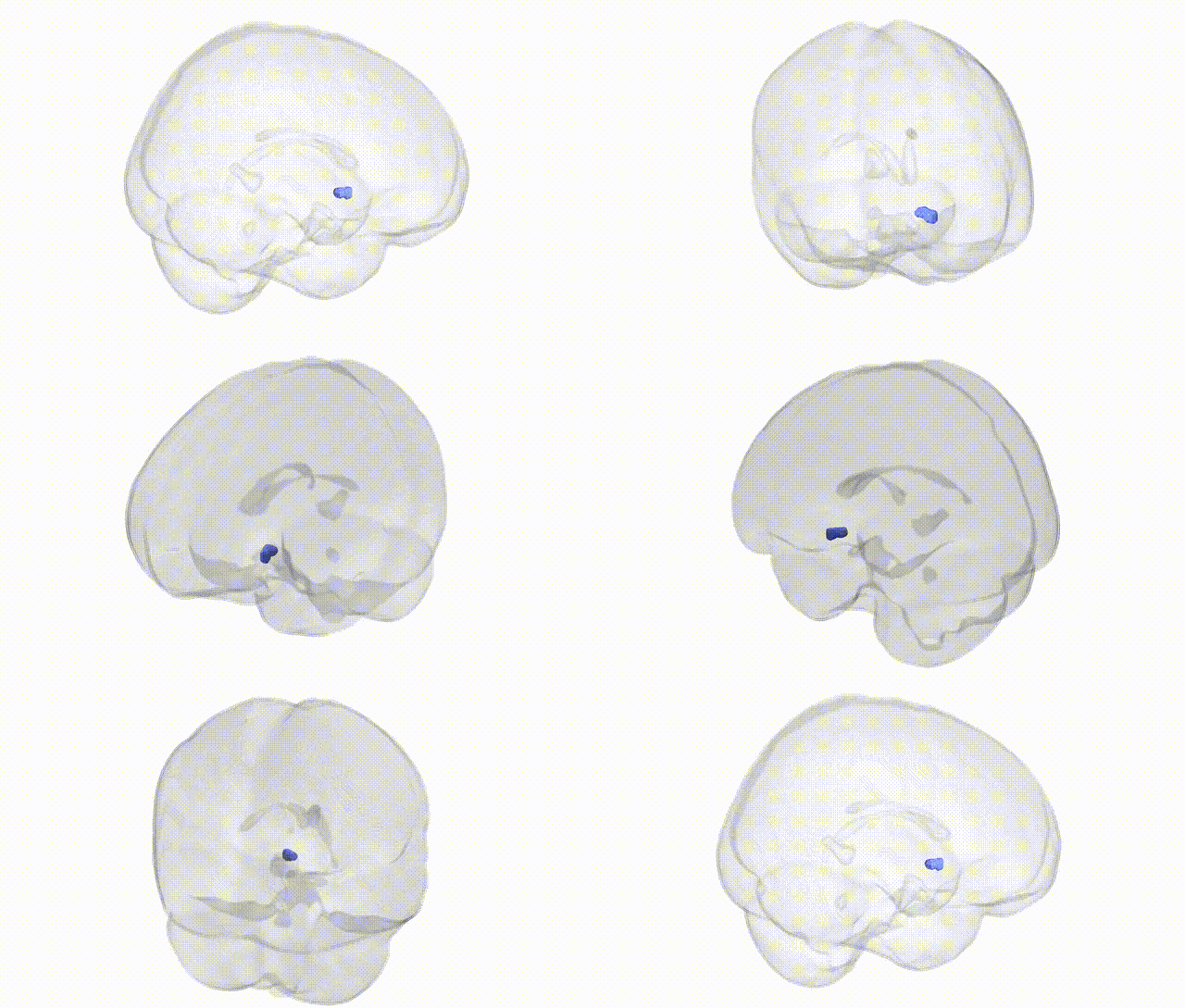
Full Quality Version: Download MP4
Wali Sidiqyar*, Gaurav Rudravaram*, Elyssa M. McMaster, Trent M. Schwartz, Adam M. Saunders, Kurt G. Schilling, Bennett A. Landman "Introducing SPINS: A Shared Public Visualization Library of Neuroanatomical Structures." Medical Imaging with Deep Learning- short paper
This resource is licensed under CC0 1.0 Universal (Public Domain).