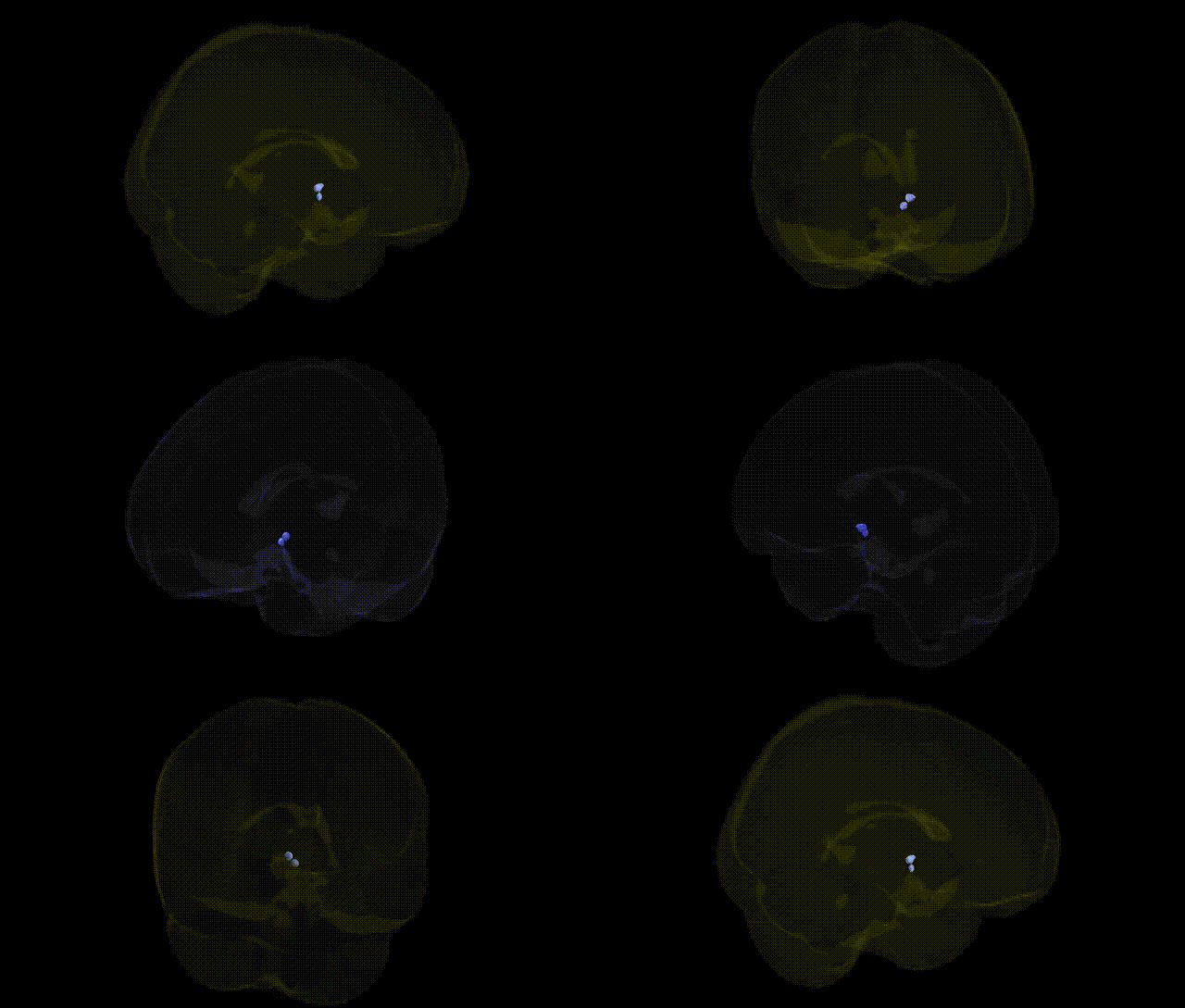
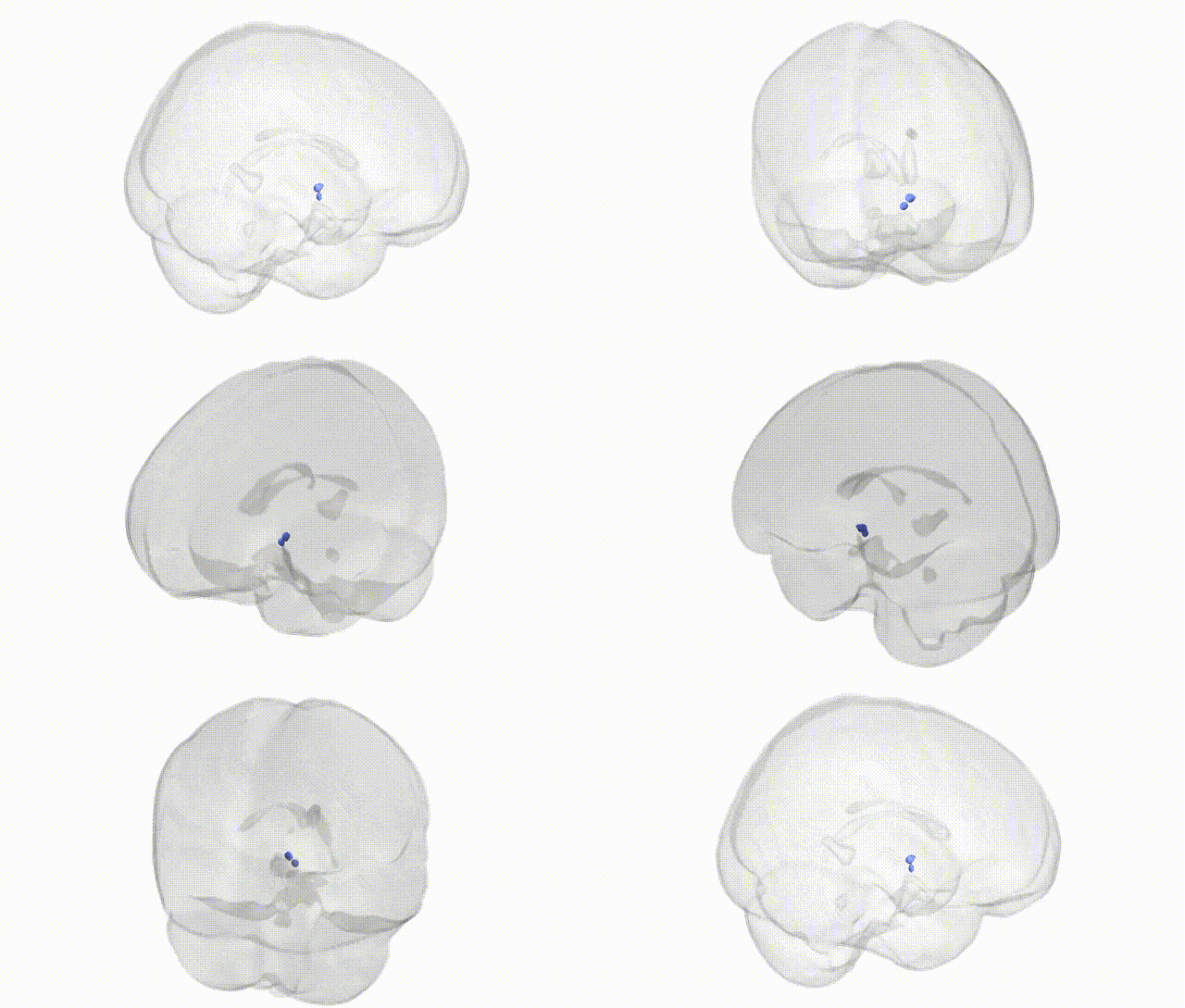
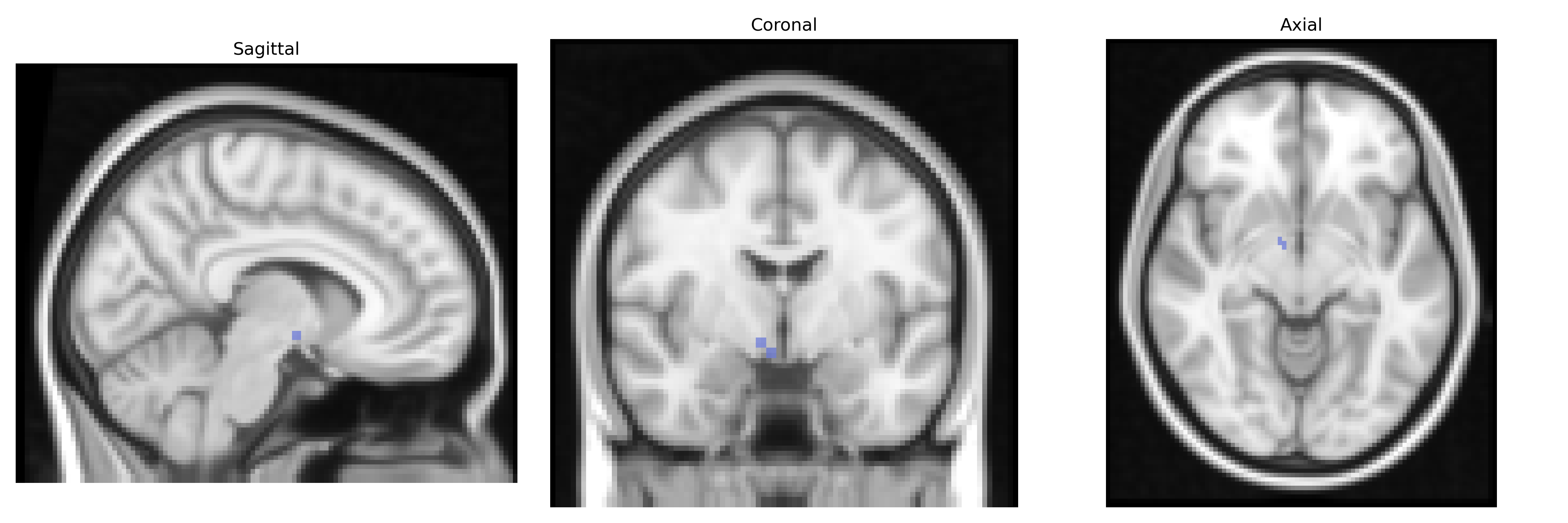
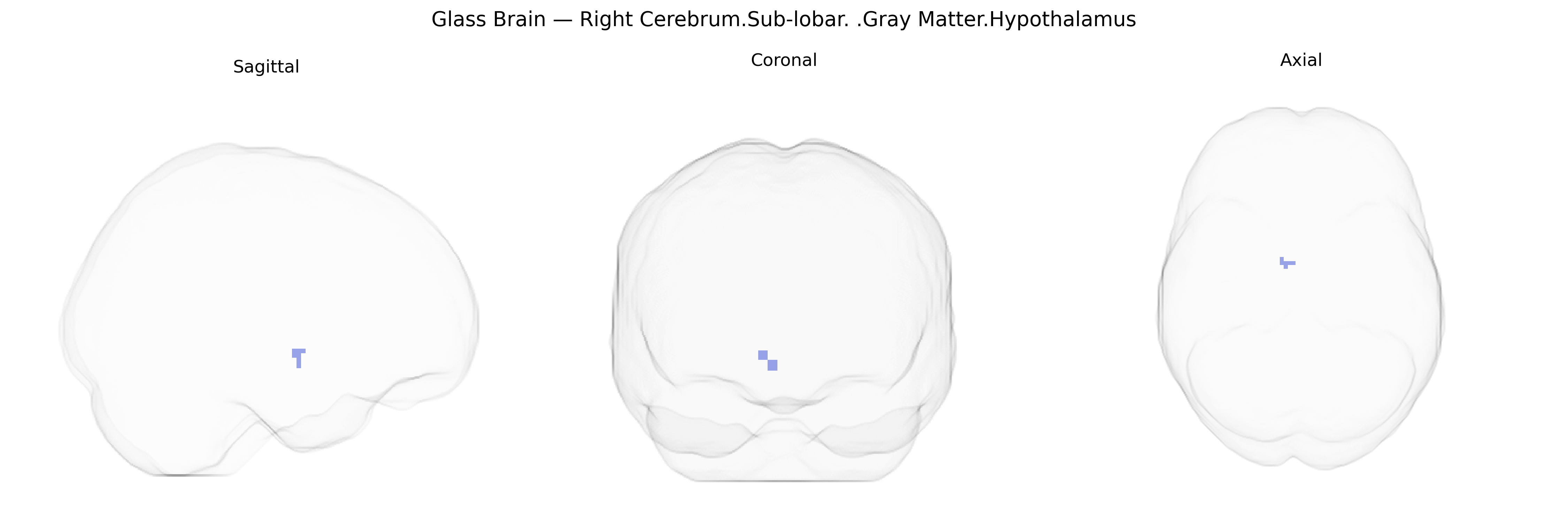
The bilateral Right Cerebrum.Sub-lobar.Gray Matter.Hypothalamus region, as defined in the Talairach 2 mm Atlas, corresponds to hypothalamic gray matter located within the sub-lobar territory of the right cerebral hemisphere, bordering diencephalic structures such as the thalamus and extending around the third ventricle. This area plays a central role in autonomic and endocrine regulation, including control of hunger, thirst, circadian rhythms, thermoregulation, stress responses, and reproductive behaviors, largely via its connections with the pituitary gland and widespread cortical and brainstem networks. Functionally, the hypothalamus integrates sensory, hormonal, and limbic inputs to maintain homeostasis and coordinate motivated behaviors, while its nuclear subdivisions (e.g., lateral, ventromedial, paraventricular nuclei) support distinct yet overlapping regulatory functions. Hypothalamus
The hypothalamus gray matter, corresponding to the bilateral Right Cerebrum Sub-lobar Hypothalamus region in the Talairach 2 mm atlas, has been implicated in multiple genetic associations, largely through imaging genetics and GWAS of brain structure and function. Large-scale neuroimaging GWAS (e.g., ENIGMA and UK Biobank-based studies) have identified common variants influencing hypothalamic volume and morphology, including loci near genes involved in neurodevelopment, synaptic signaling, and endocrine regulation (such as those related to neuronal growth factors and axon guidance), though specific single-gene effects are typically small and polygenic. Genetic variants in leptin–melanocortin and energy homeostasis pathways (e.g., LEP, LEPR, MC4R) show indirect associations with hypothalamic structure or activity via obesity, appetite, and metabolic traits. Several psychiatric and neurodevelopmental disorder GWAS (major depressive disorder, schizophrenia, bipolar disorder, autism spectrum conditions) and PTSD studies have reported polygenic risk scores that correlate with hypothalamic volume or functional activation, suggesting shared genetic architecture affecting stress response and emotional regulation circuits centered in this region. Additionally, variants in circadian rhythm genes (such as CLOCK and BMAL1/ARNTL) and HPA-axis regulators (including CRHR1, NR3C1) have been linked to sleep, chronotype, and stress-related traits that involve hypothalamic nuclei, with imaging genetics occasionally demonstrating associated differences in hypothalamic connectivity. Overall, genetic influences on this hypothalamic label are highly polygenic and pleiotropic, contributing to variation in metabolic, endocrine, stress, and affective phenotypes rather than mapping uniquely to a single disorder.
Overview generated by GPT-4o (2026).
Region ID: 364
Hemisphere: bilateral
Atlas: Talairach labels 2mm
Full Quality Version: Download MP4
Full Quality Version: Download MP4
Wali Sidiqyar*, Gaurav Rudravaram*, Elyssa M. McMaster, Trent M. Schwartz, Adam M. Saunders, Kurt G. Schilling, Bennett A. Landman "Introducing SPINS: A Shared Public Visualization Library of Neuroanatomical Structures." Medical Imaging with Deep Learning- short paper
This resource is licensed under CC0 1.0 Universal (Public Domain).