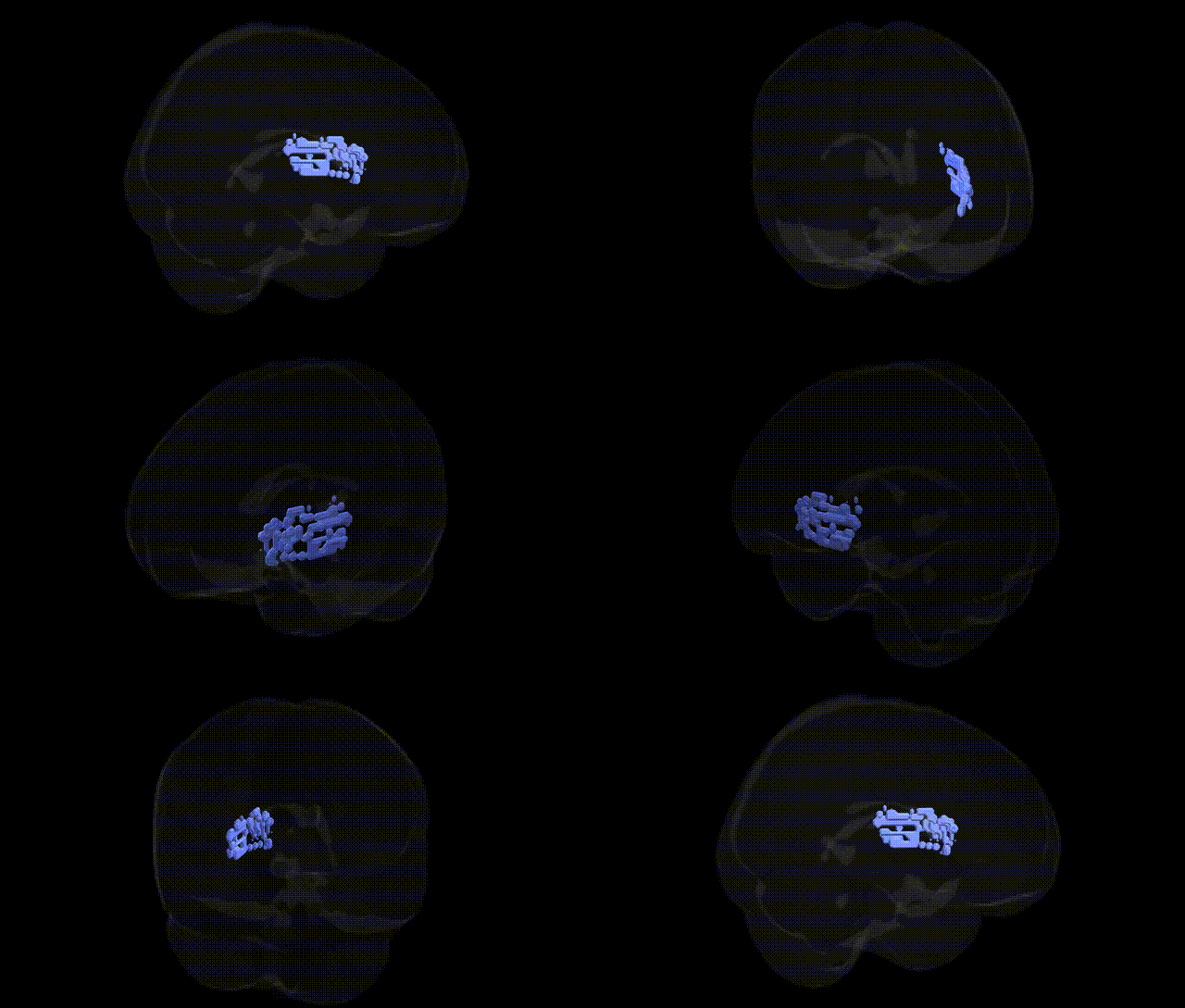
The bilateral Right Cerebrum.Sub-lobar.Claustrum.Gray Matter refers to the thin, irregular sheet of gray matter located deep within the sub-lobar region of the cerebral hemisphere, nestled between the insular cortex medially and the putamen laterally. Composed primarily of densely packed neurons, the claustrum is thought to be heavily interconnected with widespread cortical areas, suggesting a role in integrating multisensory information, coordinating cortical activity, and possibly contributing to processes such as attention, consciousness, and perceptual binding, although its precise functions remain under active investigation. As a sub-lobar gray matter structure, it forms part of the broader basal forebrain and insular–striatal complex, and is commonly identified in neuroimaging atlases like the Talairach 2mm Atlas as a distinct, though small and elongated, region of interest. Claustrum
The claustrum, including bilateral right sub-lobar gray matter as defined in the Talairach 2mm atlas, has limited direct locus-specific genetic association data, but converging evidence from GWAS and neuroimaging–genetics studies implicates it in several heritable neuropsychiatric and cognitive phenotypes. Large-scale GWAS of schizophrenia, bipolar disorder, major depressive disorder, and autism spectrum disorder have identified risk variants in genes (e.g., CACNA1C, GRIN2A, CNTNAP2, and synaptic/neurodevelopmental pathways more broadly) that show altered structural or functional connectivity involving claustral networks, particularly fronto-insular and limbic circuits. Imaging–genetics work using structural MRI parcellations that encompass the claustrum has demonstrated heritability of local gray-matter volumes and cortical thickness in adjacent insular and sub-lobar regions, with associations to polygenic scores for psychiatric disorders, intelligence, and educational attainment; these traits often show effects on salience-network hubs where the claustrum is a key node. Variants in genes involved in axon guidance, synaptic plasticity, and neurotransmission (e.g., NRG1–ErbB signaling, glutamatergic and GABAergic pathways) have been linked to altered connectivity patterns that include claustral projections, and rare-variant or CNV studies in epilepsy and consciousness-related disorders occasionally implicate circuits that rely on claustral integration. While no large GWAS to date has reported the claustrum as a primary region-of-interest with specific SNP-level hits, its role as an integrative hub in salience, attention, and multimodal processing networks means that many polygenic influences on psychiatric illness, cognition, and personality likely manifest partly through structural and functional variation in this sub-lobar gray matter region.
Overview generated by GPT-4o (2026).
Region ID: 450
Hemisphere: bilateral
Atlas: Talairach labels 2mm
Full Quality Version: Download MP4
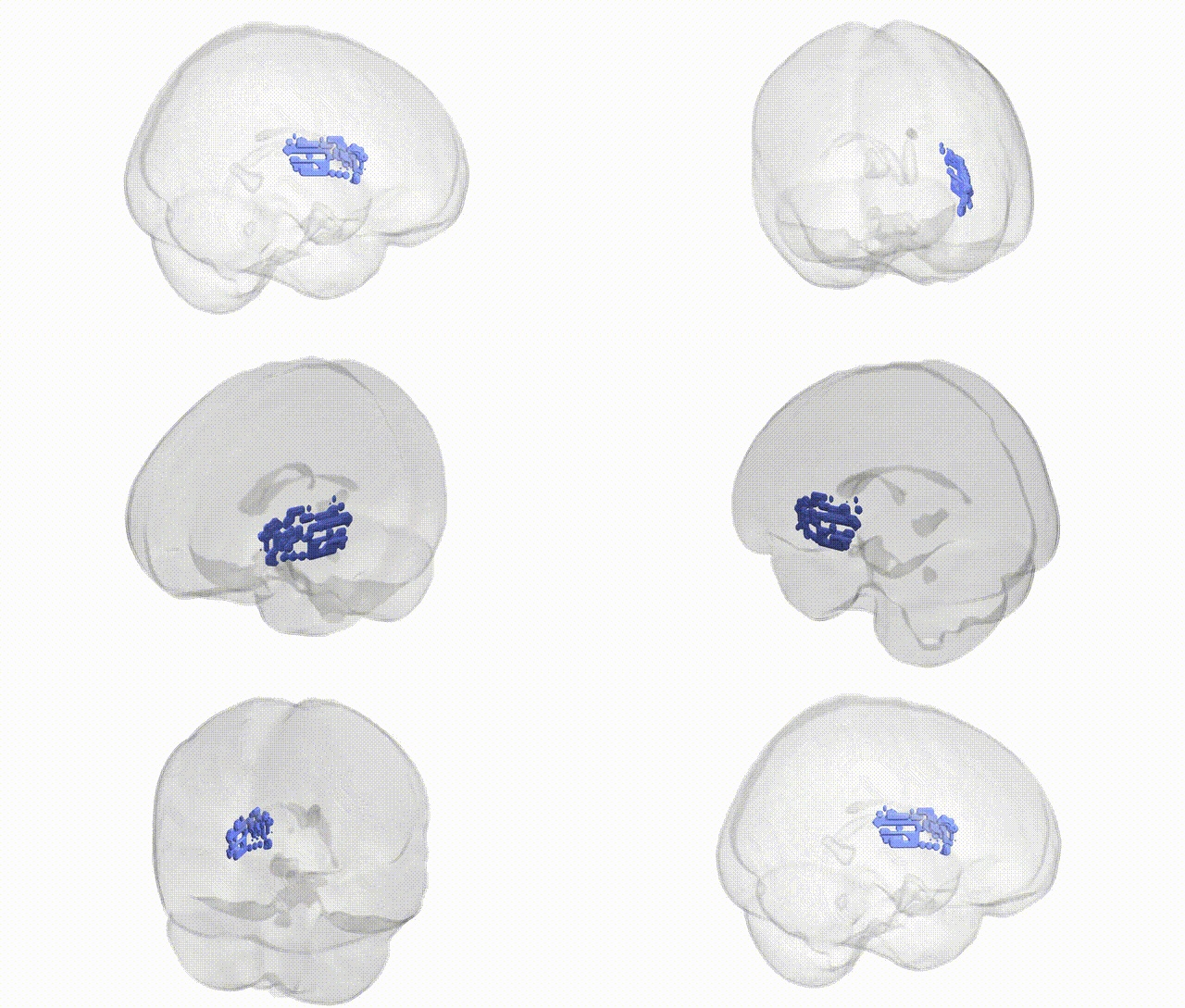
Full Quality Version: Download MP4
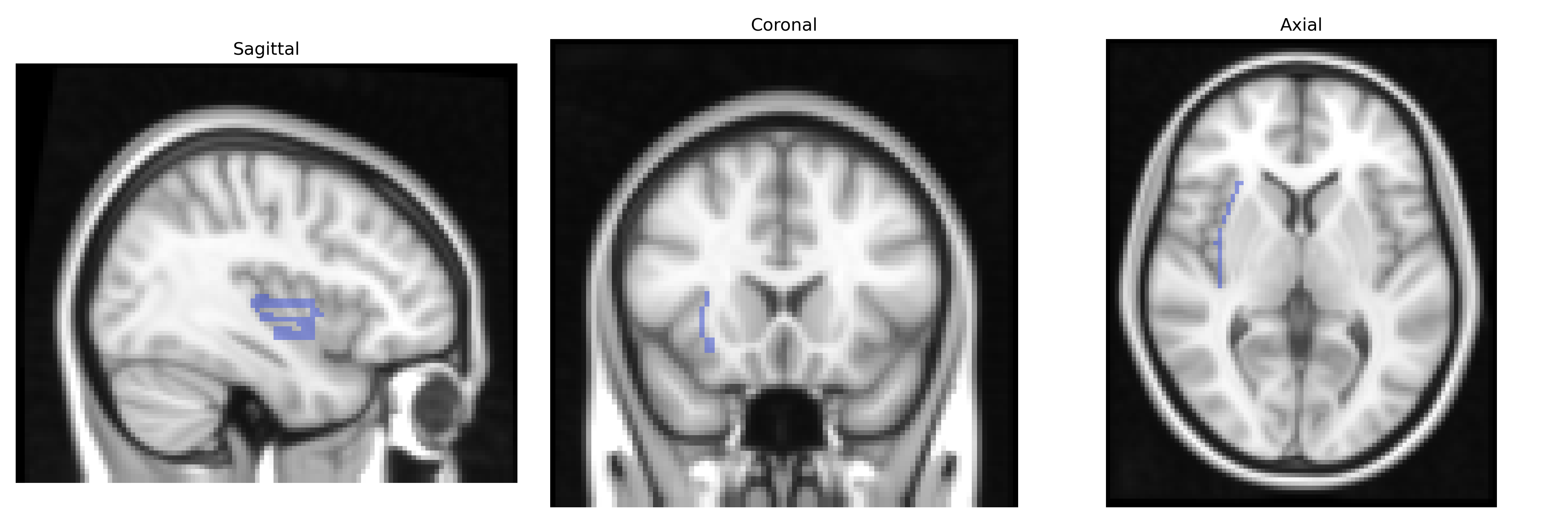
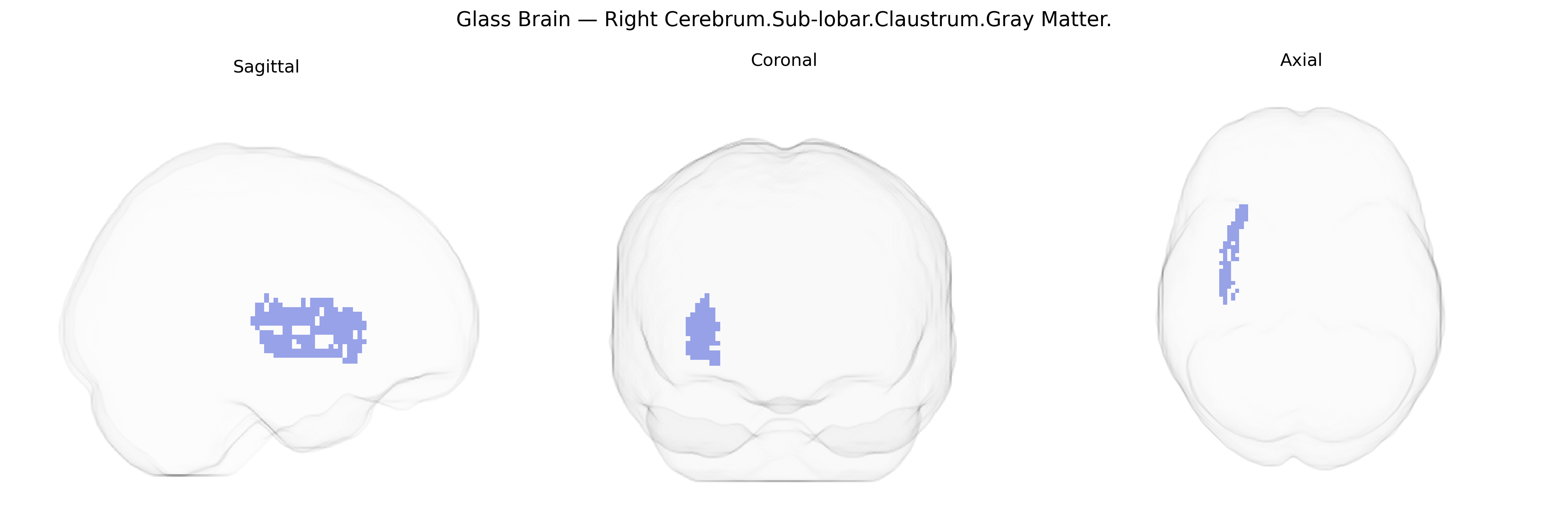
Wali Sidiqyar*, Gaurav Rudravaram*, Elyssa M. McMaster, Trent M. Schwartz, Adam M. Saunders, Kurt G. Schilling, Bennett A. Landman "Introducing SPINS: A Shared Public Visualization Library of Neuroanatomical Structures." Medical Imaging with Deep Learning- short paper
This resource is licensed under CC0 1.0 Universal (Public Domain).