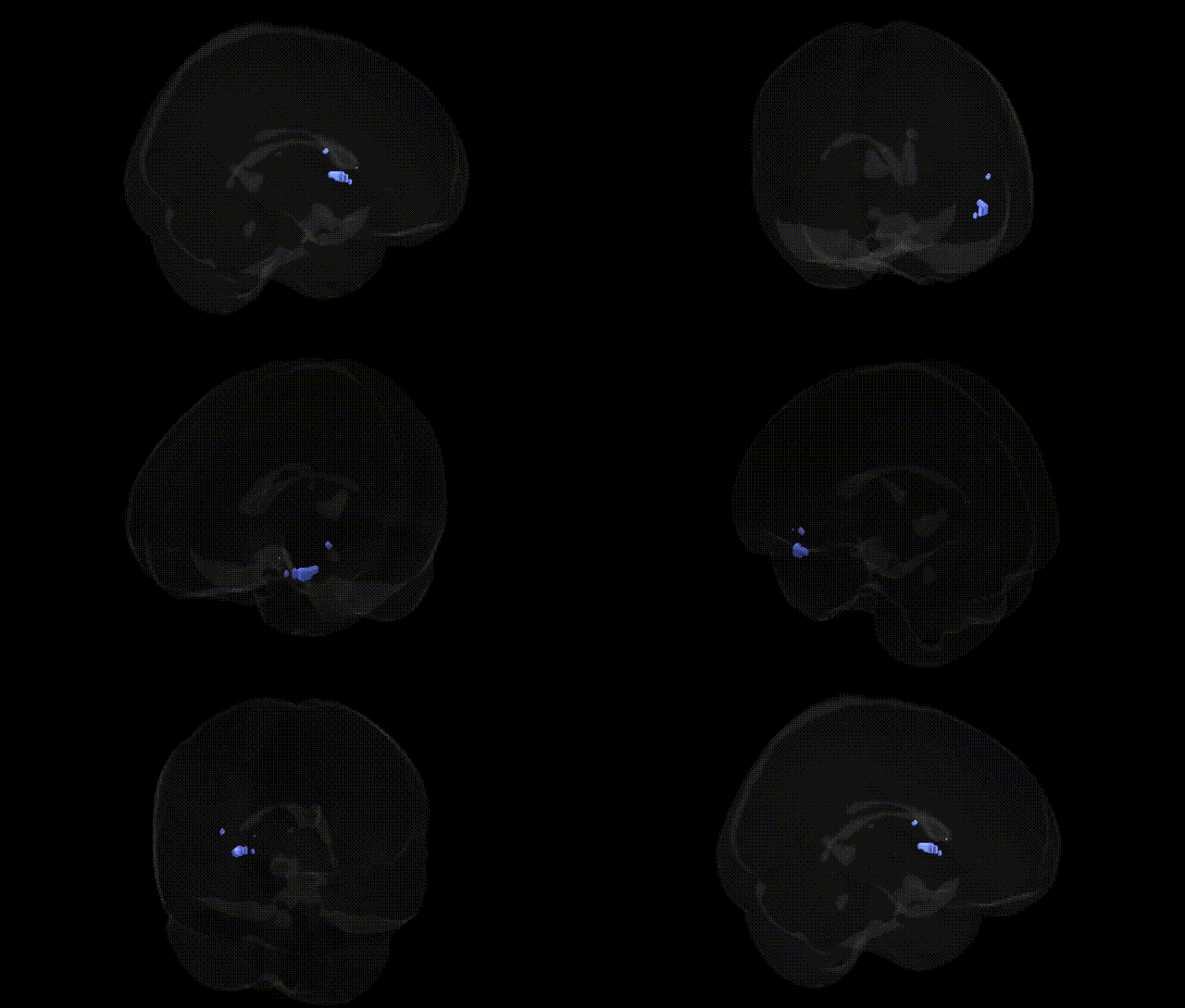
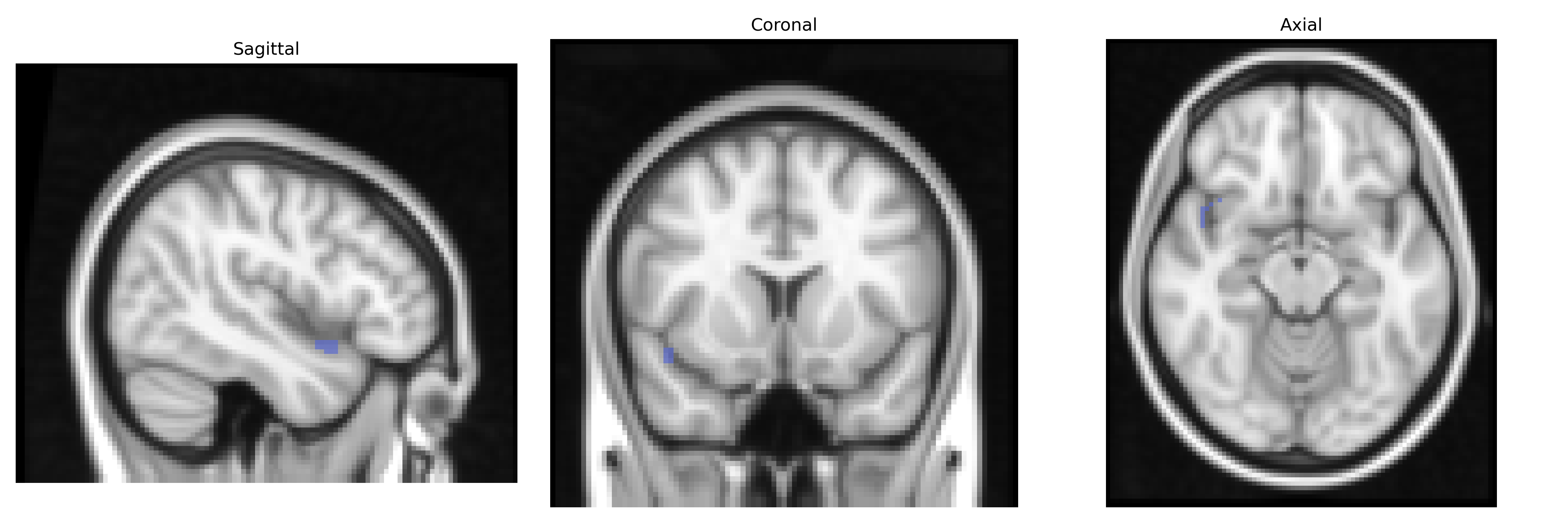
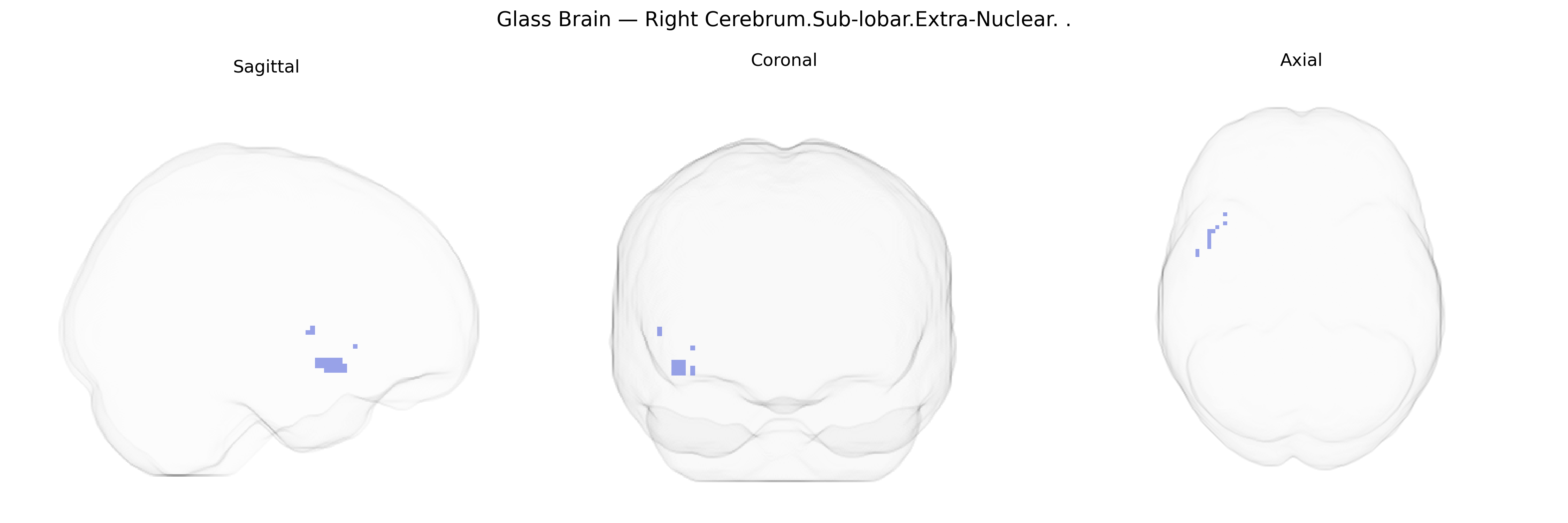
The bilateral Right Cerebrum.Sub-lobar.Extra-Nuclear region in the Talairach 2 mm Atlas refers to subcortical areas within the right cerebral hemisphere that lie outside the major, well-defined nuclear groups (such as the thalamus or basal ganglia), typically encompassing white matter tracts and small, non-aggregated gray matter islands in the deep parenchyma. Functionally, these extra-nuclear territories participate in long-range connectivity, serving as conduits for association, commissural, and projection fibers that integrate cortical and subcortical processing across motor, sensory, cognitive, and limbic domains. They lack a single, unified cytoarchitectonic identity and instead represent a heterogeneous collection of pathways and small structures crucial for the coordination and timing of neural signals. There is no direct Wikipedia article for this specific Talairach label; a related and encompassing structure is the Cerebrum.
The bilateral Right Cerebrum Sub-lobar Extra-Nuclear region in the Talairach 2 mm atlas broadly corresponds to deep subcortical white matter tracts and periventricular tissue adjacent to basal ganglia and limbic structures, so genetic associations typically emerge from studies targeting connected functional networks rather than the atlas label itself. GWAS and imaging-genetics work on subcortical and periventricular regions have implicated multiple loci influencing white matter microstructure, including variants in genes related to myelination and axonal integrity (e.g., MAG, PLP1, and CNTN4), and polygenic scores for schizophrenia, bipolar disorder, and major depression show associations with altered deep white matter volume and integrity in right-hemisphere tracts that pass through “extra-nuclear” zones. Large consortia such as ENIGMA have identified robust heritability for deep white matter and basal ganglia–adjacent volumes, with risk alleles for neuropsychiatric disorders (e.g., CACNA1C, ZNF804A, GRM3) and neurodevelopmental traits (including ADHD and autism spectrum disorder) linked to structural and connectivity changes in nearby frontostriatal and limbic pathways. Additionally, GWAS of periventricular white matter hyperintensities and small-vessel disease (e.g., variants near COL4A2, PDE3A, SH2B3) associate with lesions and microstructural disruption in extra-nuclear periventricular tissue, which in turn relate to vascular cognitive impairment, late-life depression, and stroke risk. Overall, genetic findings for this Talairach-defined region are inferred from studies of the surrounding deep white matter and subcortical circuitry rather than any atlas-specific label, highlighting polygenic influences on myelin, vascular integrity, and neuropsychiatric vulnerability.
Overview generated by GPT-4o (2026).
Region ID: 383
Hemisphere: bilateral
Atlas: Talairach labels 2mm
Full Quality Version: Download MP4
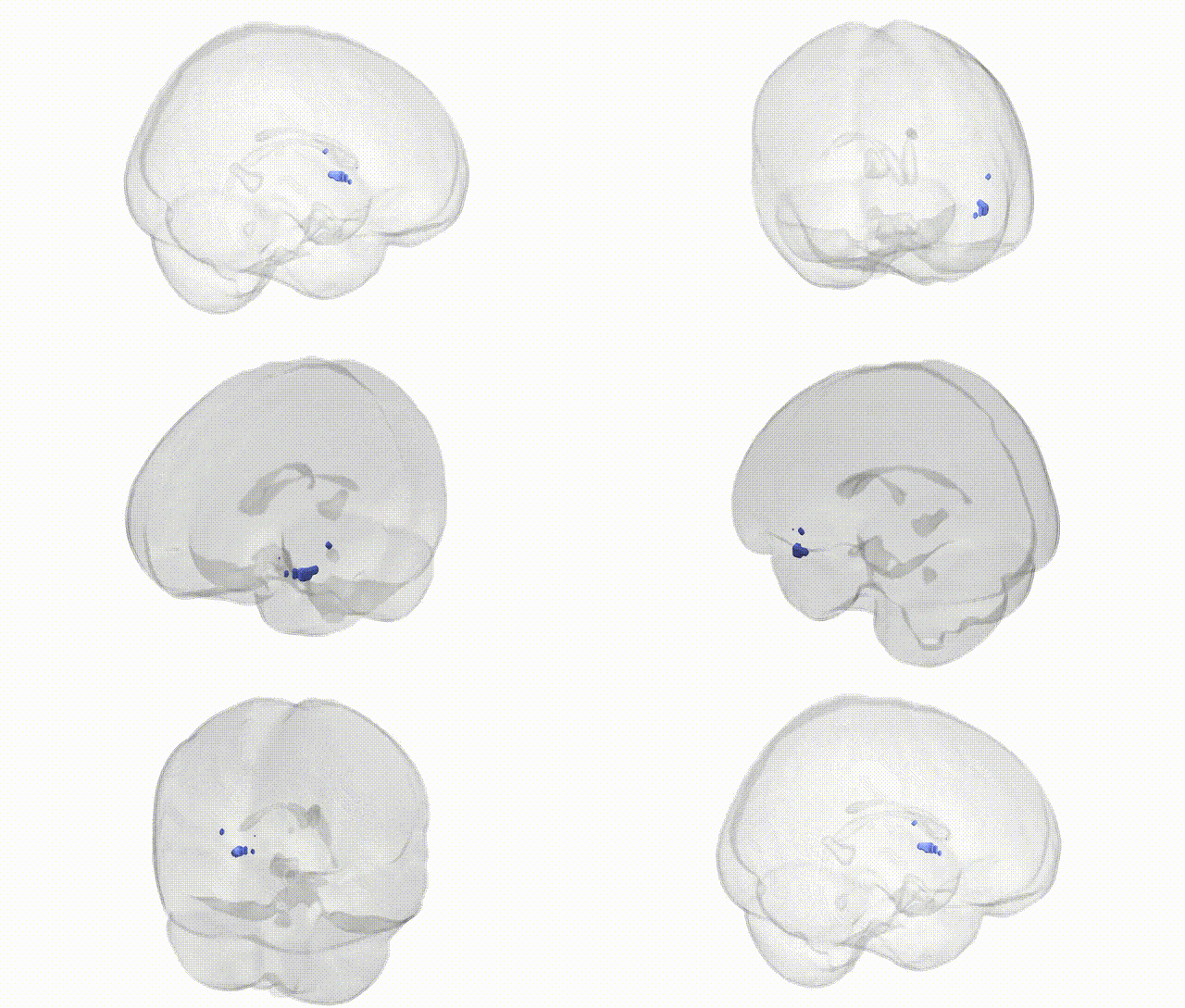
Full Quality Version: Download MP4
Wali Sidiqyar*, Gaurav Rudravaram*, Elyssa M. McMaster, Trent M. Schwartz, Adam M. Saunders, Kurt G. Schilling, Bennett A. Landman "Introducing SPINS: A Shared Public Visualization Library of Neuroanatomical Structures." Medical Imaging with Deep Learning- short paper
This resource is licensed under CC0 1.0 Universal (Public Domain).