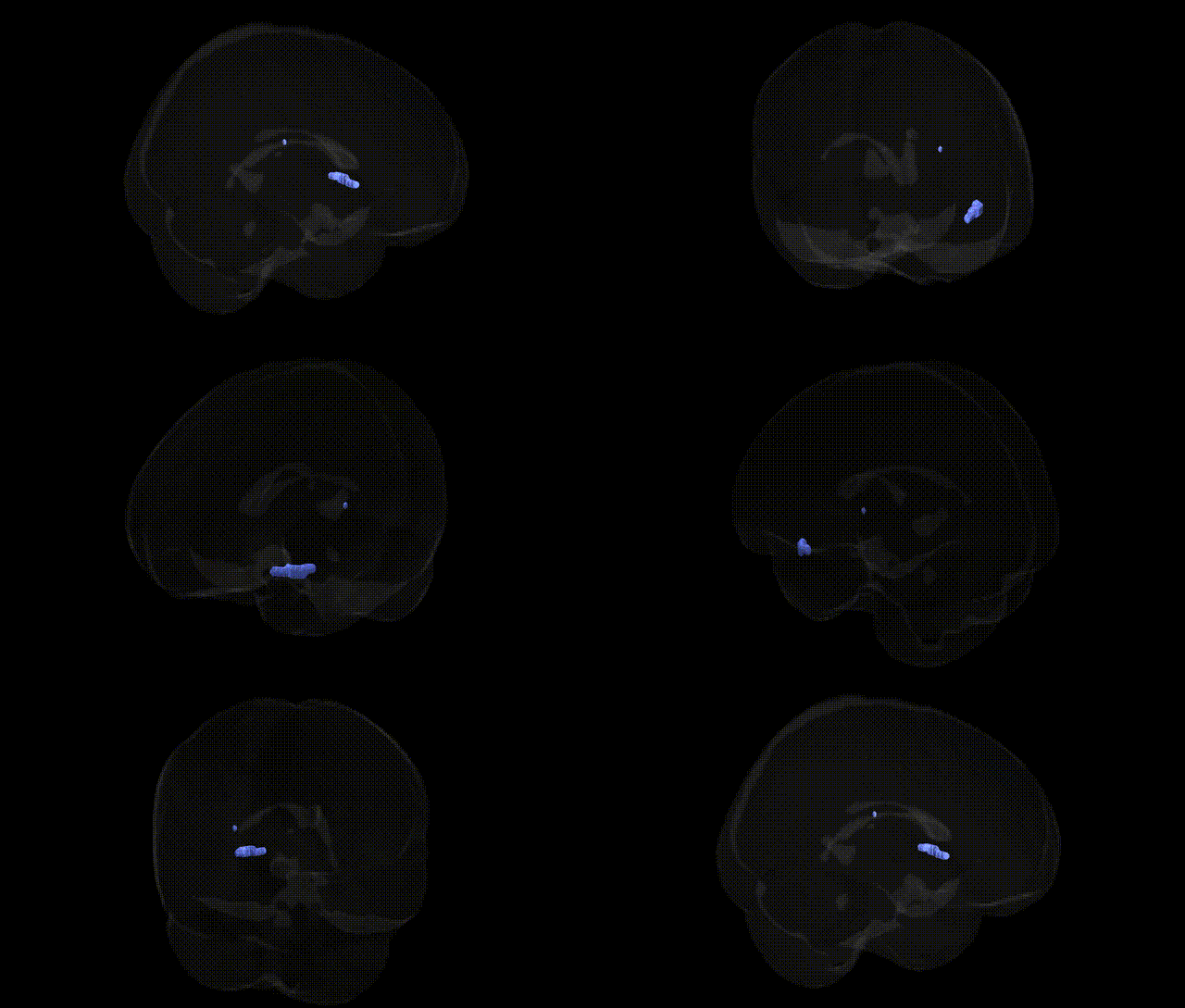
Bilateral Right Cerebrum.Sub-lobar.Extra-Nuclear.Gray Matter.Brodmann area 13 corresponds to agranular cortex located primarily within the insular region and adjacent ventral frontal opercular areas, forming part of the paralimbic zone. Brodmann area 13 is heavily interconnected with limbic and autonomic centers, including the amygdala, hypothalamus, and brainstem viscerosensory nuclei, and plays key roles in interoceptive awareness, gustatory processing, affective and visceral integration, and aspects of emotional and social cognition. Functionally, this region participates in evaluating internal bodily states, integrating somatic and emotional signals, and contributing to decision-making under conditions of uncertainty and affective load. Microstructurally, it is characterized by a relatively sparse granular layer IV and prominent pyramidal neurons in deeper layers, consistent with its classification as agranular/frontal insular cortex. There is no direct Wikipedia article for Brodmann area 13; a closely related structure is the insular cortex: Insular cortex.
Brodmann area 13, a core insular and extra-nuclear region involved in interoception, emotion, risk evaluation, and salience processing, has been implicated in multiple genetic and GWAS-based associations, though often via broader insular or salience-network analyses rather than Talairach-specific labels. Imaging genetics studies have linked variation in genes such as SLC6A4 (serotonin transporter), COMT, and BDNF (e.g., Val66Met) to structural and functional differences in the insular cortex that encompass BA13, affecting emotional reactivity, anxiety traits, and stress sensitivity. Large-scale psychiatric GWAS for major depressive disorder, bipolar disorder, schizophrenia, and anxiety disorders have repeatedly identified risk loci that show downstream effects on insular and anterior temporal gray matter volume and connectivity, including genes involved in synaptic plasticity (CACNA1C, GRM3), glutamatergic signaling, and neurodevelopment (ZNF804A, DISC1). Insula-centered GWAS and polygenic risk score studies report associations between genetic loading for depression, schizophrenia, and substance use disorders and reduced or altered gray matter in insular/BA13 territories, often within the salience and default-mode networks. Additionally, GWAS of traits such as neuroticism, risk-taking, pain sensitivity, and autonomic reactivity have identified polygenic architectures whose brain-structural correlates include BA13-related insular and extra-nuclear regions, suggesting this area is a convergence point where genetic variation influencing affect regulation, interoceptive awareness, and decision making manifests in measurable brain morphology and connectivity differences.
Overview generated by GPT-4o (2026).
Region ID: 376
Hemisphere: bilateral
Atlas: Talairach labels 2mm
Full Quality Version: Download MP4
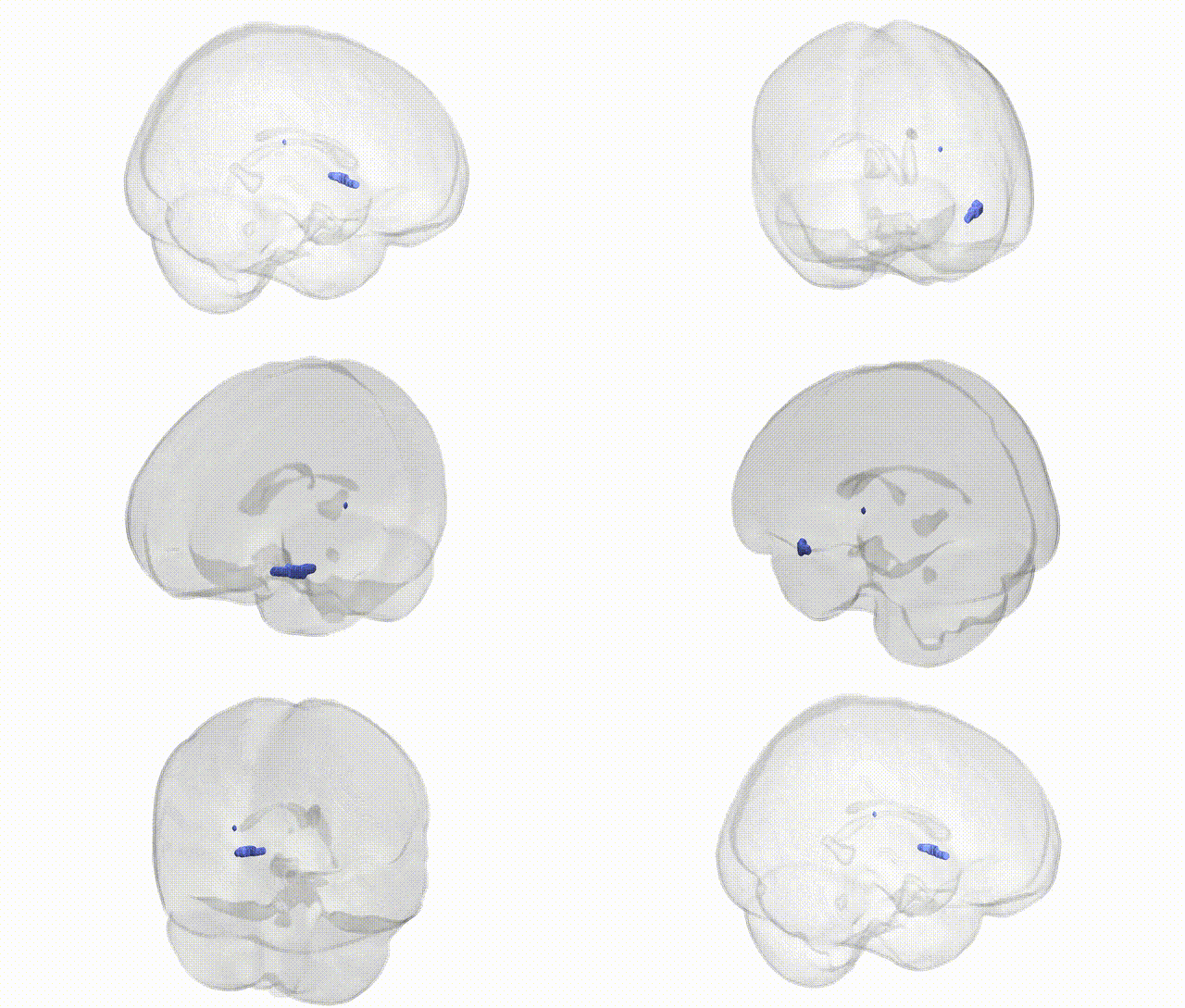
Full Quality Version: Download MP4
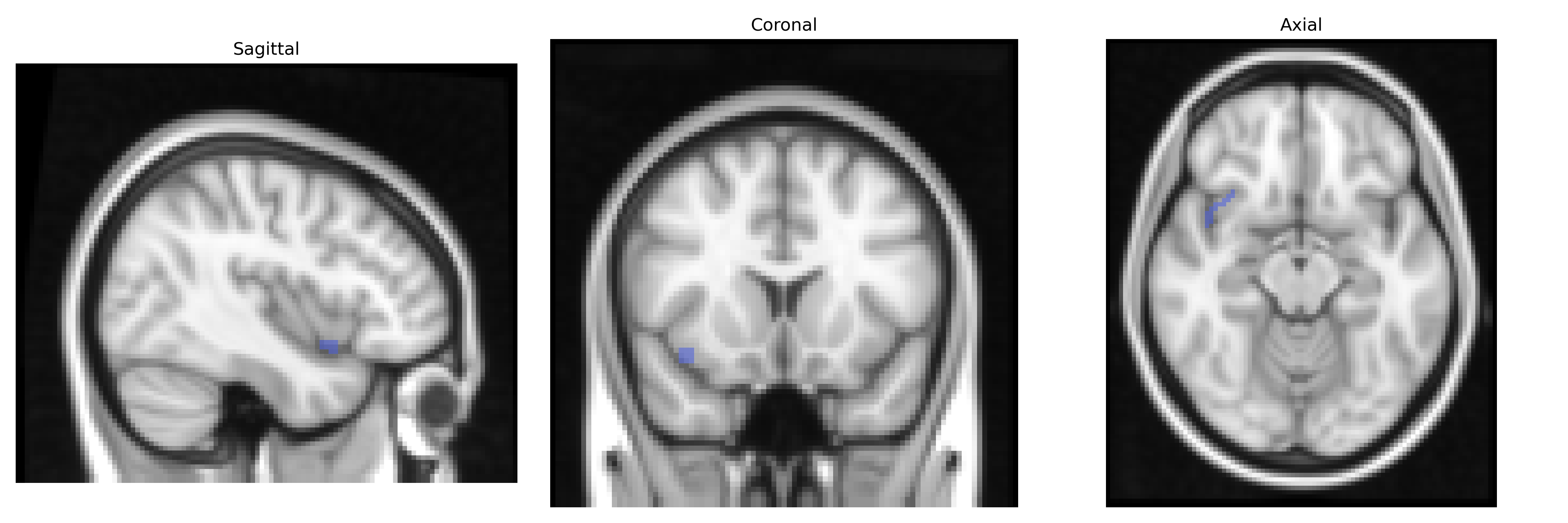
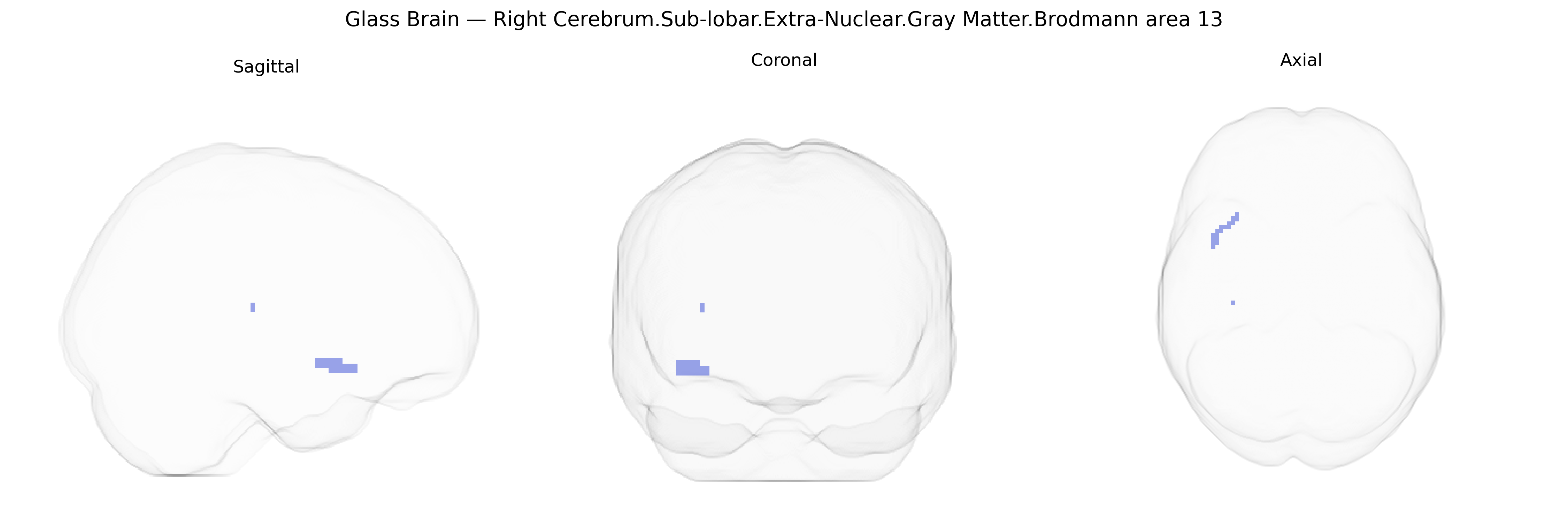
Wali Sidiqyar*, Gaurav Rudravaram*, Elyssa M. McMaster, Trent M. Schwartz, Adam M. Saunders, Kurt G. Schilling, Bennett A. Landman "Introducing SPINS: A Shared Public Visualization Library of Neuroanatomical Structures." Medical Imaging with Deep Learning- short paper
This resource is licensed under CC0 1.0 Universal (Public Domain).