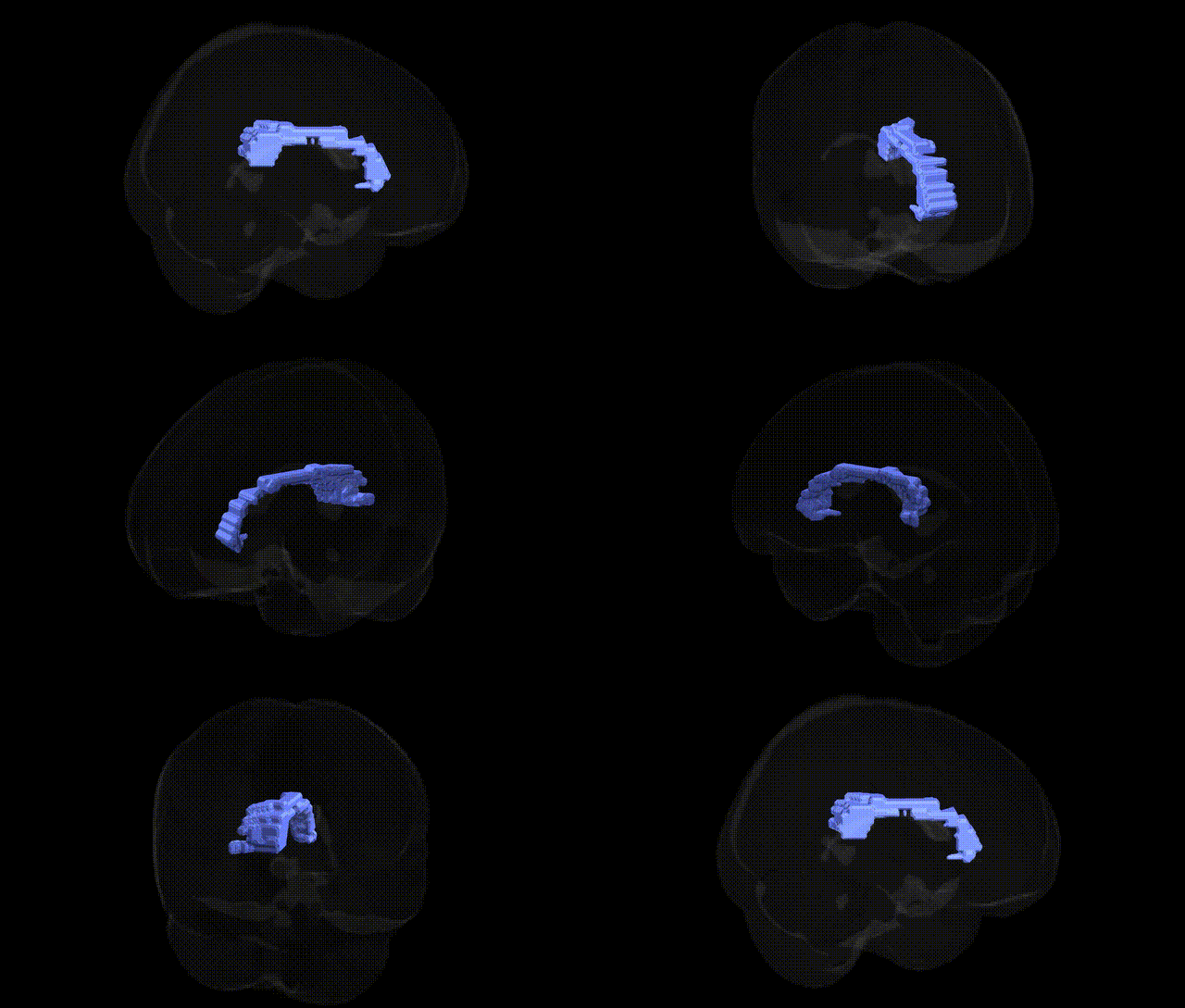
The bilateral Right Cerebrum.Sub-lobar.Extra-Nuclear.White Matter.Corpus Callosum region, as defined in the Talairach 2 mm Atlas, corresponds to segments of the corpus callosum within the right cerebral hemisphere’s deep sub-lobar white matter, outside the nuclear (basal ganglia and thalamic) complexes. The corpus callosum is the largest commissural fiber bundle in the human brain, composed of densely packed myelinated axons that interconnect homologous cortical areas between the left and right hemispheres, thereby enabling interhemispheric integration of sensory, motor, and cognitive information. In this atlas context, these right-sided extra-nuclear white matter portions include callosal fibers traversing beneath the cortical mantle and above deep nuclei, contributing to the coordination of bilateral cortical activity and the synchronization of higher-order functions such as language, attention, and executive processing. Corpus callosum
The bilateral Right Cerebrum Sub-lobar Extra-Nuclear White Matter Corpus Callosum region, as defined in the Talairach 2 mm atlas, corresponds largely to interhemispheric callosal fibers whose genetic architecture has been extensively probed in neuroimaging GWAS. Twin and family studies show high heritability for corpus callosum volume and microstructure (e.g., fractional anisotropy), and large-scale GWAS (ENIGMA, UK Biobank) have identified associations with variants in genes involved in axon guidance, myelination, and neurodevelopment (including loci near CNTN4, NRG1, FOXO3, and myelin-related genes such as MAG and MBP), although specific signals and effect sizes vary by study and callosal subregion. Common variants influencing corpus callosum structure have been linked to neuropsychiatric and neurodevelopmental disorders in which callosal abnormalities are prominent, including schizophrenia, bipolar disorder, autism spectrum disorder, ADHD, and major depressive disorder, as well as traits such as general cognitive ability and processing speed. Rare structural and sequence variants in genes critical for midline and commissural development (e.g., L1CAM, DCC, ARID1B, KIAA1279) are strongly associated with agenesis or hypoplasia of the corpus callosum and syndromic neurodevelopmental disorders. Polygenic risk scores for schizophrenia, bipolar disorder, and autism have been shown to correlate with altered callosal white matter measures, suggesting that distributed common genetic risk contributes to microstructural variation in this region. Overall, genetic studies consistently implicate corpus callosum white matter as a heritable, genetically modulated substrate that bridges molecular pathways of axon growth and myelination with clinical phenotypes of cognition, behavior, and psychiatric disease.
Overview generated by GPT-4o (2026).
Region ID: 510
Hemisphere: bilateral
Atlas: Talairach labels 2mm
Full Quality Version: Download MP4
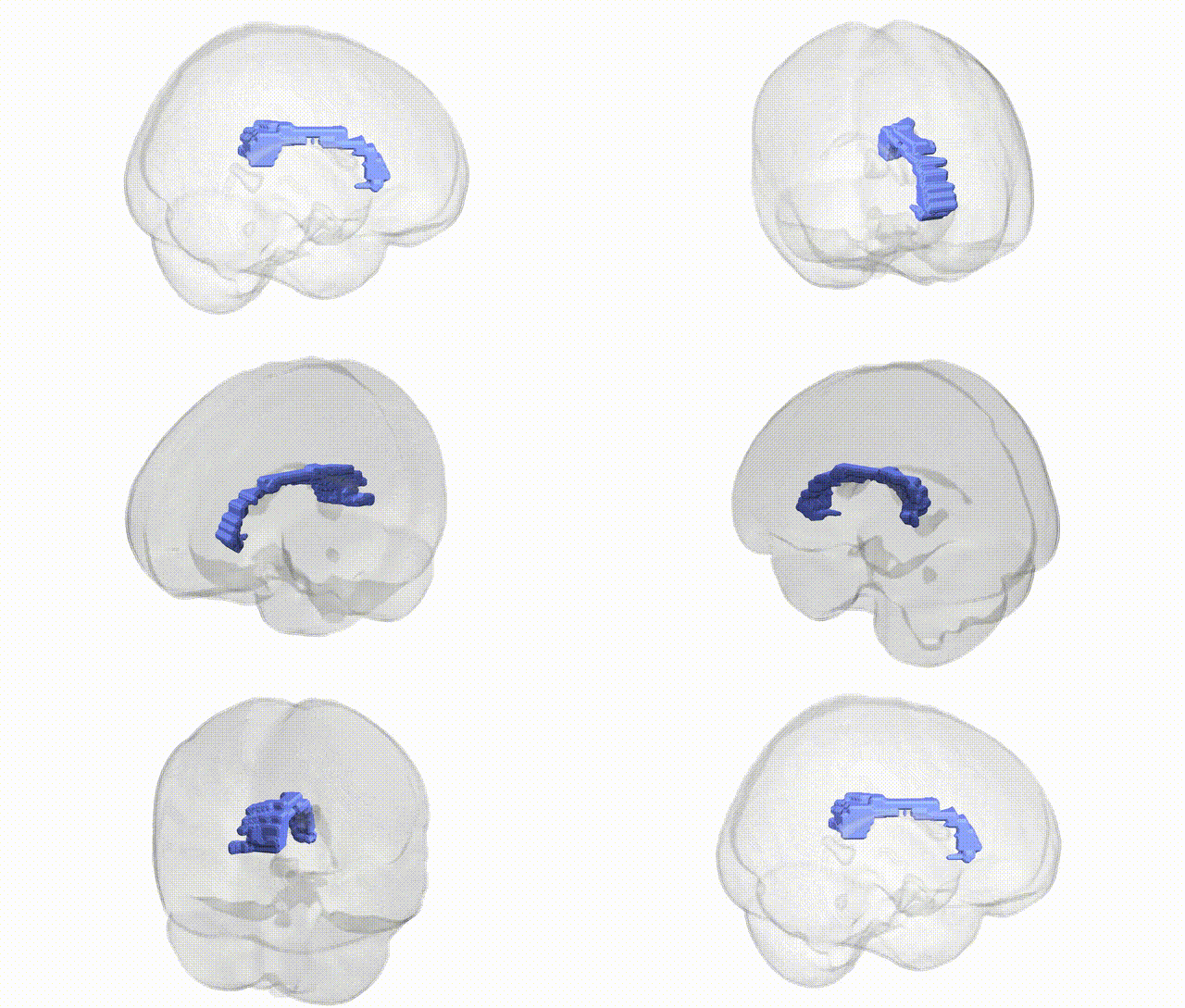
Full Quality Version: Download MP4
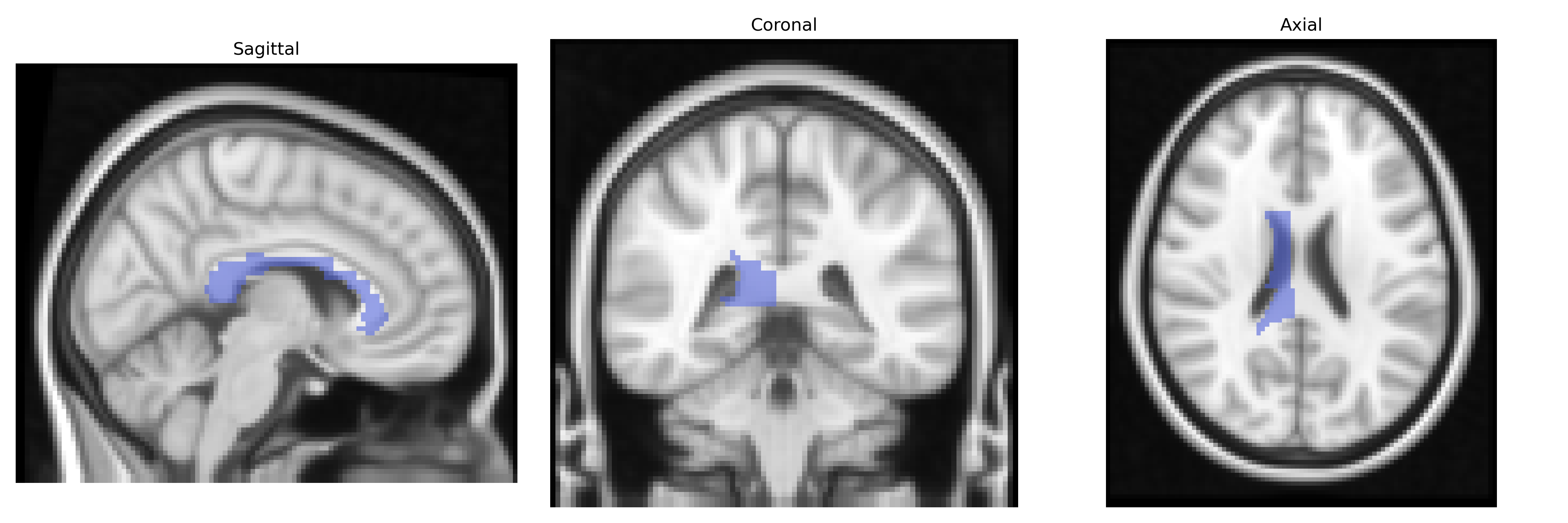
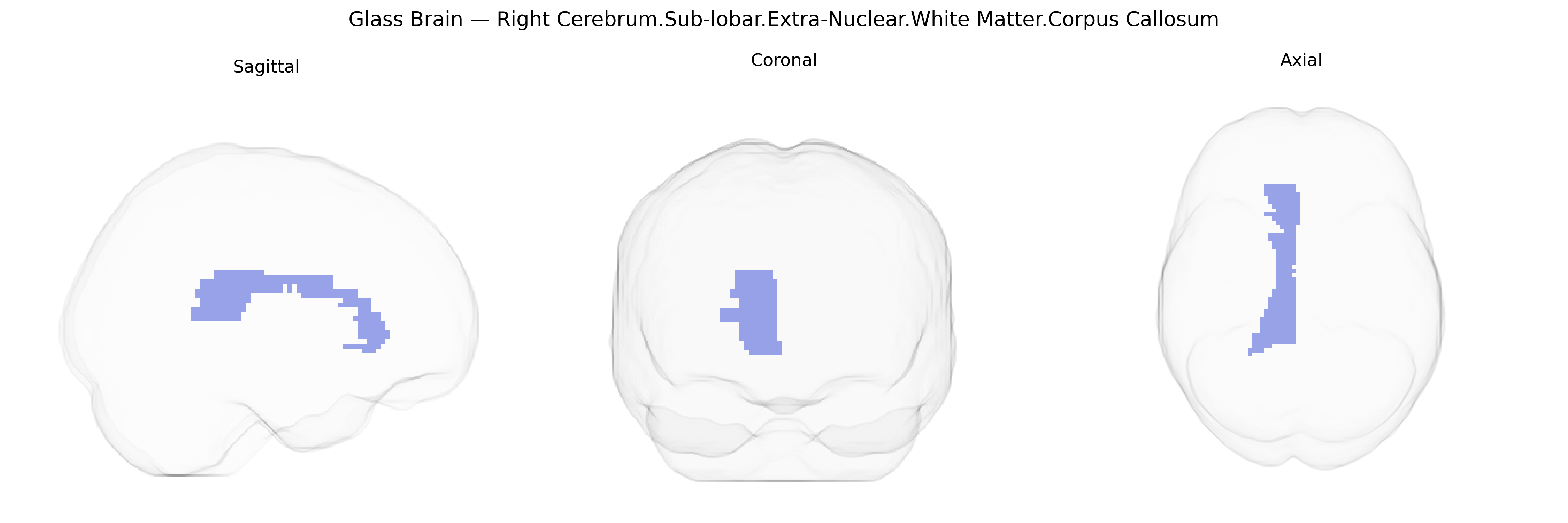
Wali Sidiqyar*, Gaurav Rudravaram*, Elyssa M. McMaster, Trent M. Schwartz, Adam M. Saunders, Kurt G. Schilling, Bennett A. Landman "Introducing SPINS: A Shared Public Visualization Library of Neuroanatomical Structures." Medical Imaging with Deep Learning- short paper
This resource is licensed under CC0 1.0 Universal (Public Domain).