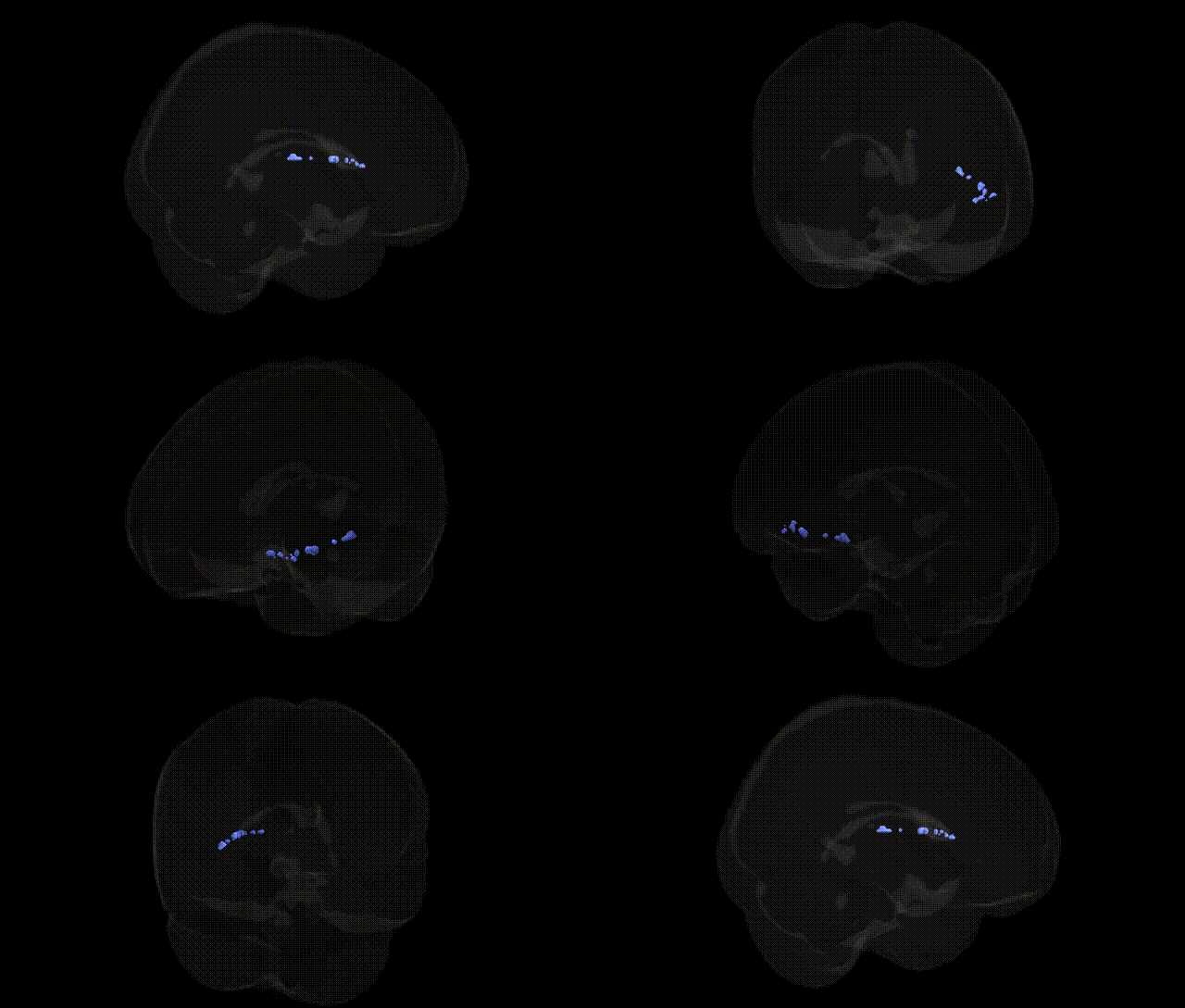
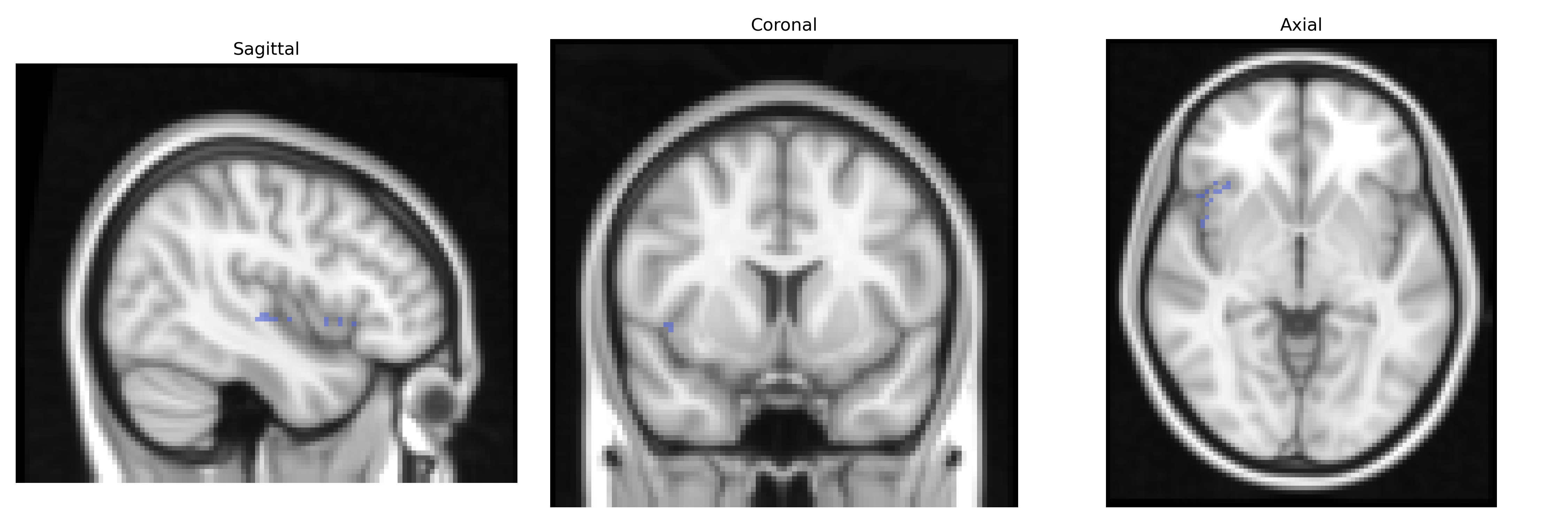
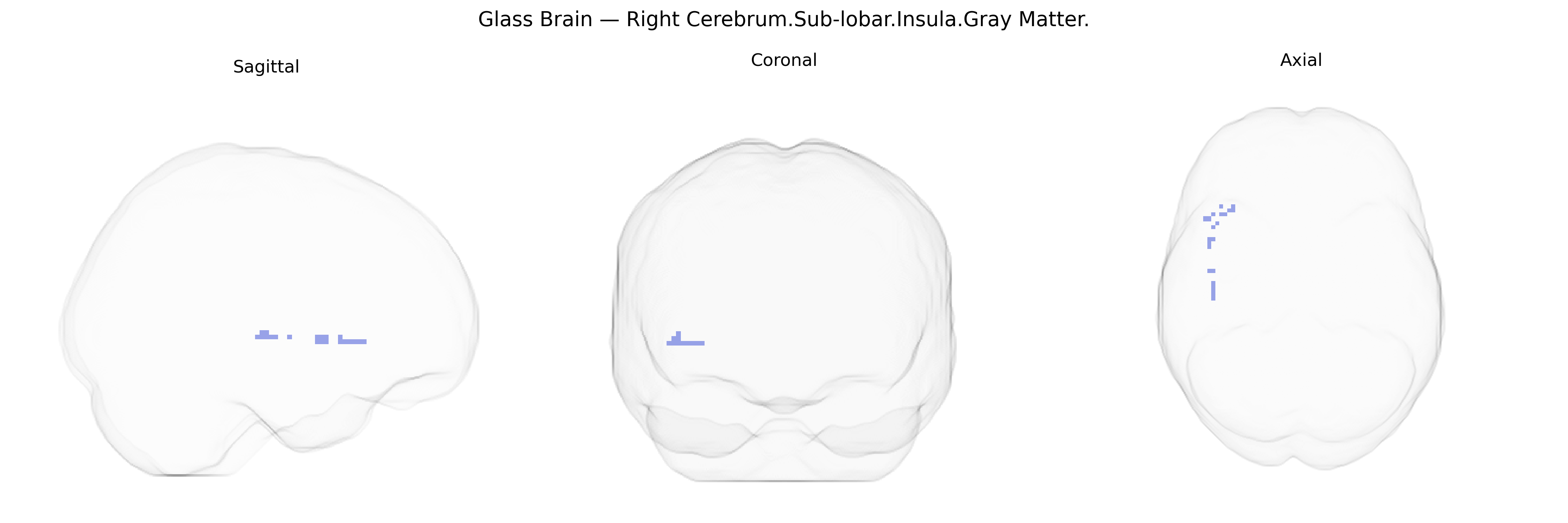
The bilateral Right Cerebrum.Sub-lobar.Insula.Gray Matter corresponds to the cortical gray matter of the insular cortex located deep within the lateral sulcus, covered by the frontal, parietal, and temporal opercula. Structurally, it is part of the sub-lobar region of the cerebral cortex and is involved in multimodal integration, including interoceptive awareness (visceral sensations, pain, temperature), emotional processing, autonomic regulation, and aspects of gustatory and auditory functions. Functionally, the insula contributes to the mapping of internal bodily states, subjective feeling states, risk and decision-making processes, and components of language and social-emotional cognition. There is no direct Wikipedia article for “Right Cerebrum.Sub-lobar.Insula.Gray Matter”; a related structure is the insular cortex: Insular cortex.
The bilateral right insular gray matter (Talairach “Right Cerebrum.Sub-lobar.Insula.Gray Matter”) has been repeatedly implicated in genetic studies through its roles in interoception, emotion, pain, and salience processing, with structural and functional measures of the insula showing heritability in twin studies and contributing to several MRI-based GWAS signals. Large neuroimaging GWAS consortia (e.g., ENIGMA, UK Biobank) have identified common variants in loci such as METTL10, KIAA0586, and regions near genes involved in neurodevelopment, synaptic function, and axon guidance that are associated with insular cortical thickness or surface area, although these effects are typically small and highly polygenic. Insular morphology and connectivity have been genetically linked, via shared variants and polygenic risk scores, to psychiatric and behavioral traits including major depressive disorder, schizophrenia, bipolar disorder, anxiety, and substance use, where risk alleles in genes like CACNA1C, GRM3, and DRD2 have been associated with altered insular activation or volume in imaging–genetics studies. Beyond psychiatry, insular structure has shown genetic correlations with pain sensitivity, somatic symptom burden, eating behavior, and autonomic regulation, and insular lesions and developmental anomalies are implicated in conditions such as frontotemporal dementia and autism spectrum disorder, where GWAS-implicated genes in synaptic and chromatin-remodeling pathways often show expression in insular cortex. Overall, genetic associations related to this specific Talairach-defined right sub-lobar insular gray matter region reflect a highly polygenic architecture that overlaps with neurodevelopmental, synaptic, and neuropsychiatric pathways, but no single gene or variant is uniquely specific to this insular subdivision.
Overview generated by GPT-4o (2026).
Region ID: 585
Hemisphere: bilateral
Atlas: Talairach labels 2mm
Full Quality Version: Download MP4
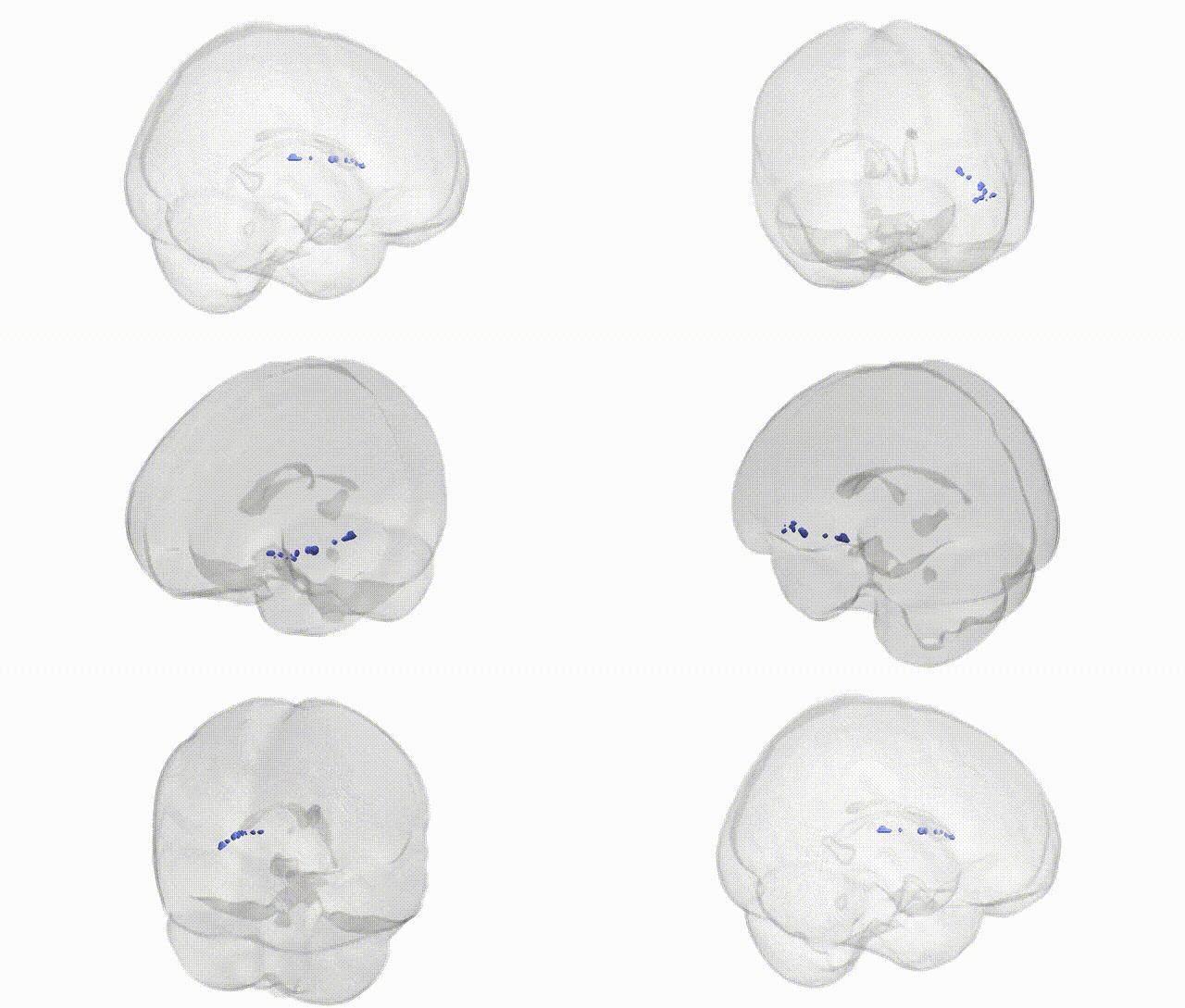
Full Quality Version: Download MP4
Wali Sidiqyar*, Gaurav Rudravaram*, Elyssa M. McMaster, Trent M. Schwartz, Adam M. Saunders, Kurt G. Schilling, Bennett A. Landman "Introducing SPINS: A Shared Public Visualization Library of Neuroanatomical Structures." Medical Imaging with Deep Learning- short paper
This resource is licensed under CC0 1.0 Universal (Public Domain).