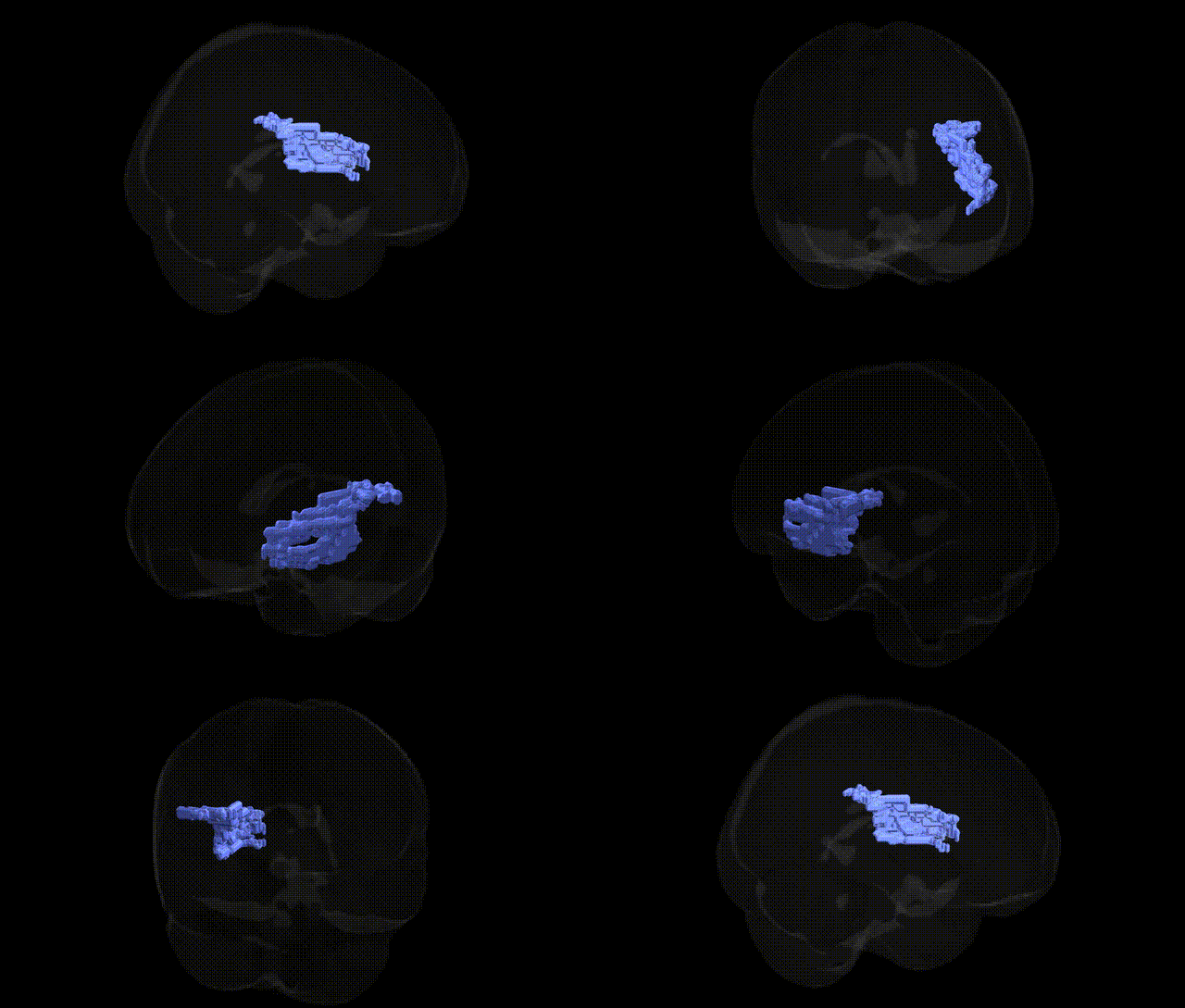
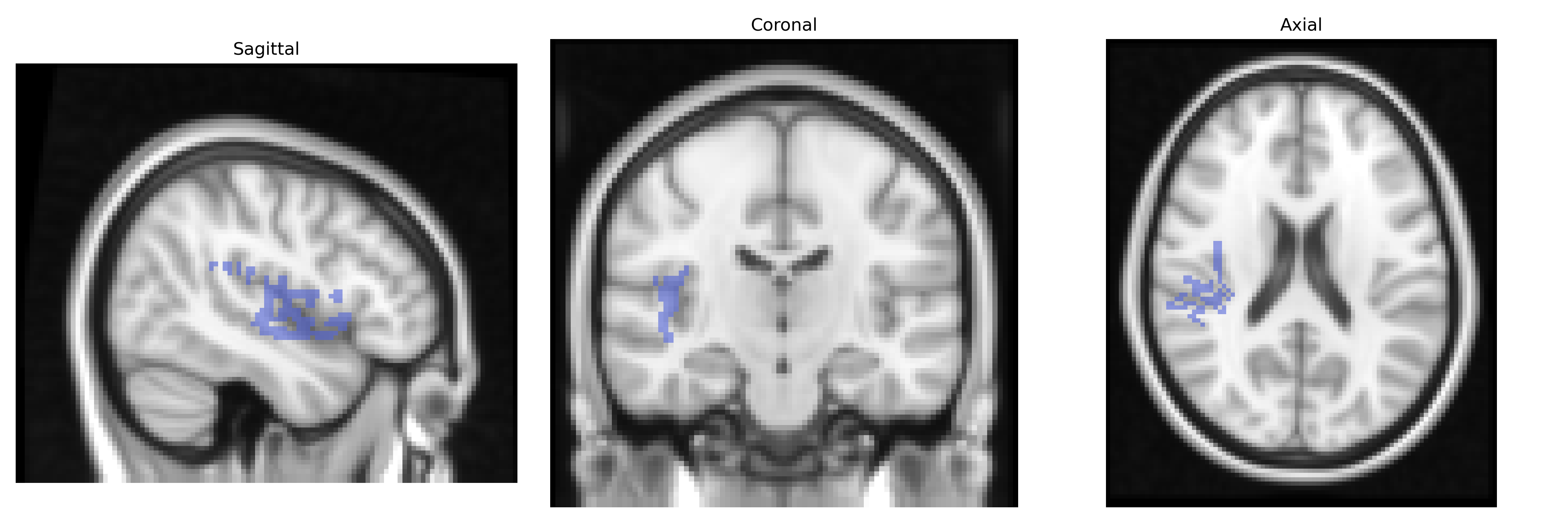
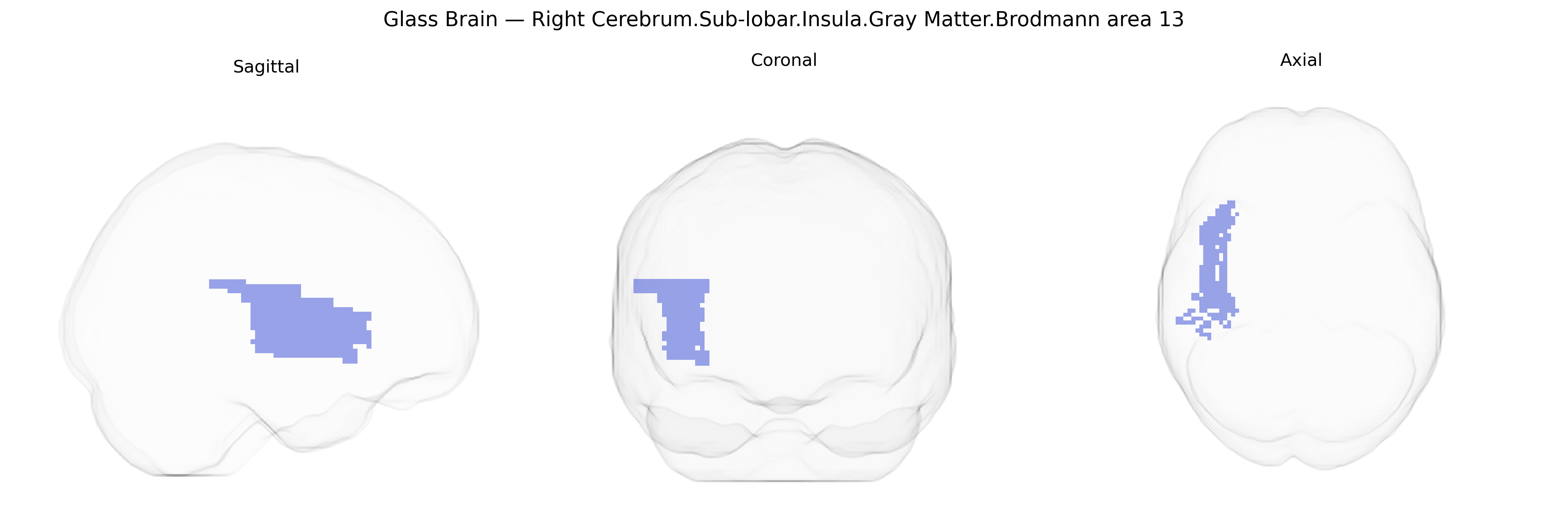
The bilateral Right Cerebrum.Sub-lobar.Insula.Gray Matter.Brodmann area 13 corresponds to agranular cortex within the insular lobe, situated deep within the lateral sulcus beneath the frontal, parietal, and temporal opercula. Brodmann area 13 forms part of the anterior insula, integrating visceral, nociceptive, gustatory, and emotional information and is strongly implicated in interoception, affective processing, and autonomic regulation. Functionally, it contributes to salience detection, subjective feeling states, and the coordination of behavioral responses to internal bodily signals, with extensive connections to limbic, prefrontal, and sensory association regions. There is no direct Wikipedia article for Brodmann area 13; a related structure entry is provided here: Insular cortex.
The bilateral right insular cortex (sub-lobar, gray matter, Brodmann area 13) has been implicated in genetic studies primarily through its role in interoception, salience processing, and affective regulation rather than through Talairach-specific labeling, with multiple GWAS and imaging-genetics analyses linking variation in insular structure and function to psychiatric and behavioral phenotypes. Common variants in genes related to synaptic function and neurodevelopment (including CACNA1C, ANK3, and others identified in large schizophrenia, bipolar disorder, and major depression GWAS) have been associated with altered insular volume, connectivity, or activation, particularly within the right anterior/mid insula as part of the salience network. GWAS of brain morphology (e.g., ENIGMA and UK Biobank cohorts) have identified loci influencing cortical thickness and surface area in insular regions, some overlapping with neuropsychiatric risk loci and genes involved in axon guidance and neuronal migration. Genetic liability for anxiety, neuroticism, and substance use disorders has been associated with insular activation patterns and structural differences, with polygenic risk scores for depression, schizophrenia, and alcohol dependence showing correlations with right insular measures in imaging-genetics work. Moreover, variants in genes affecting autonomic and pain processing (such as COMT and OPRM1) have been linked to insula-mediated responses in pain and emotional tasks, and GWAS of traits like risk-taking, empathy, and smoking behavior have reported insula-related structural or functional correlates, though often not confined specifically to Brodmann area 13 and not always lateralized to the right hemisphere. Overall, current evidence supports a genetically influenced role for the right insular cortex in mood and psychotic disorders, addiction-related traits, and interoceptive and salience-related processes, with associations emerging from polygenic architecture rather than single-gene effects.
Overview generated by GPT-4o (2026).
Region ID: 444
Hemisphere: bilateral
Atlas: Talairach labels 2mm
Full Quality Version: Download MP4
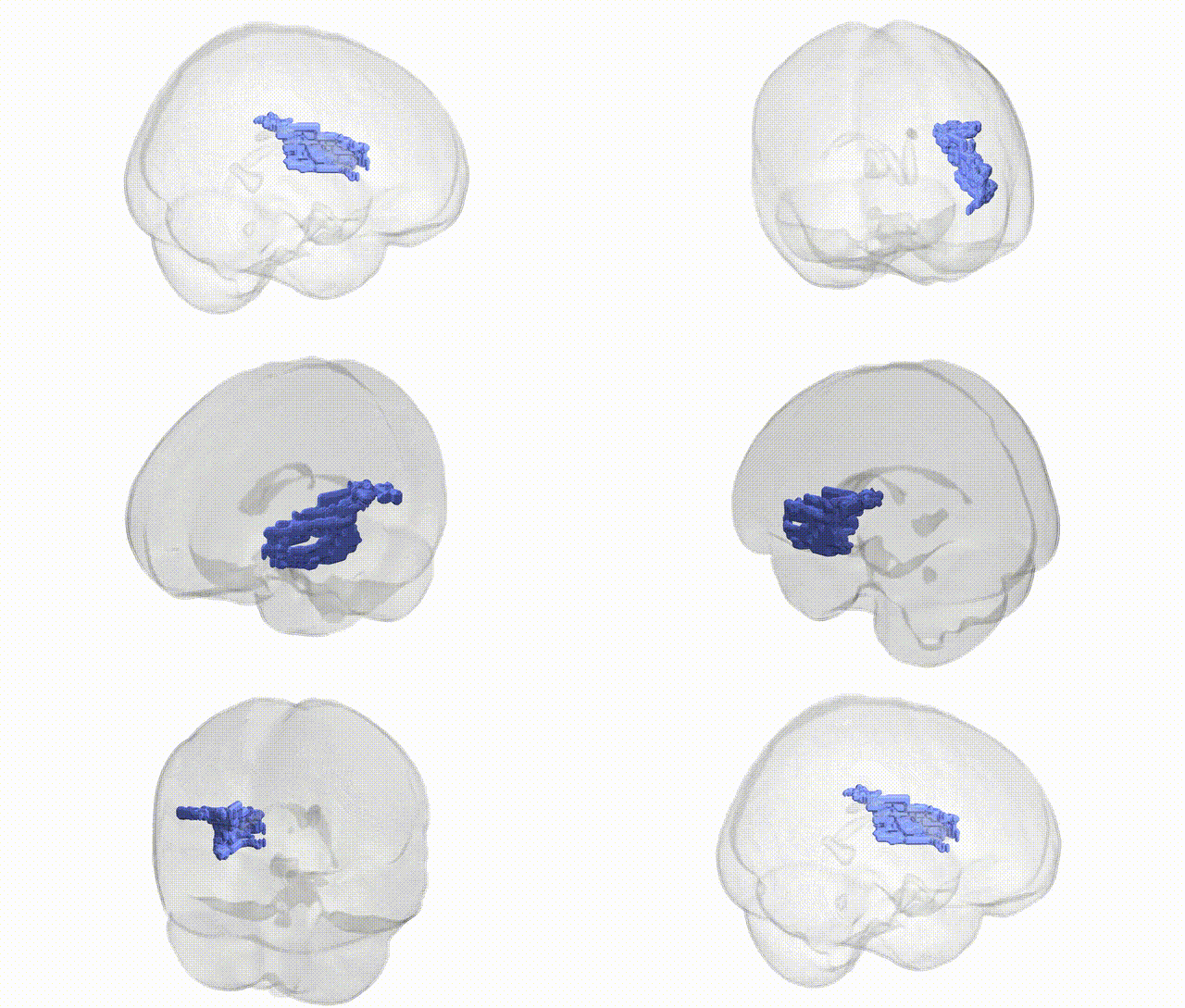
Full Quality Version: Download MP4
Wali Sidiqyar*, Gaurav Rudravaram*, Elyssa M. McMaster, Trent M. Schwartz, Adam M. Saunders, Kurt G. Schilling, Bennett A. Landman "Introducing SPINS: A Shared Public Visualization Library of Neuroanatomical Structures." Medical Imaging with Deep Learning- short paper
This resource is licensed under CC0 1.0 Universal (Public Domain).