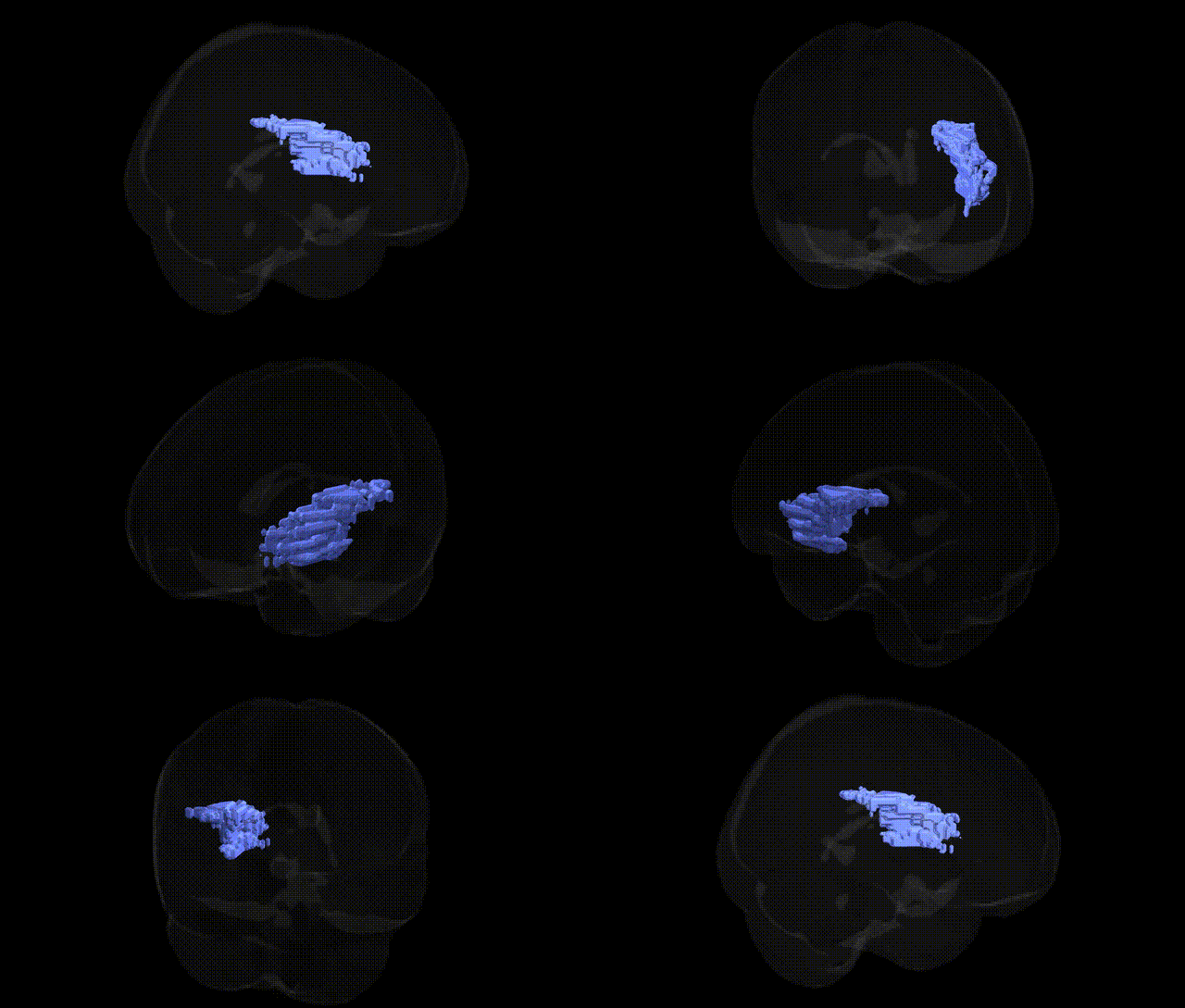
The bilateral Right Cerebrum.Sub-lobar.Insula.White Matter corresponds to the deep myelinated fiber pathways underlying the cortical mantle of the insular lobe within the right cerebral hemisphere. This white matter region includes short association fibers that connect different insular gyri, as well as longer association tracts that integrate the insula with frontal, temporal, parietal, and limbic structures involved in interoception, emotional processing, autonomic regulation, and multimodal sensory integration. As part of the sub-lobar compartment, insular white matter serves as a relay substrate for visceral and somatosensory information traveling between thalamic nuclei, insular cortex, and other higher-order cortical areas, contributing to the coordination of homeostatic, affective, and cognitive functions. There is no direct link for “Insula white matter”; a related structure is the insular cortex: Insular cortex.
The bilateral right insular white matter, as defined by the Talairach 2 mm atlas (Right Cerebrum.Sub-lobar.Insula.White Matter), has been implicated indirectly in genetic studies primarily through GWAS of brain imaging-derived phenotypes and disorders affecting insular structure and connectivity. Large-scale neuroimaging GWAS (e.g., ENIGMA, UK Biobank) have identified multiple common variants associated with insular cortical thickness, surface area, and white-matter microstructure (including fractional anisotropy and mean diffusivity in tracts traversing or connecting the insula), with notable loci in genes related to neurodevelopment, axon guidance, and myelination such as MAPT, CNTNAP2, NRG1, and genes near 17q21.31 and 3p26, although these findings typically refer to the insula as a cortical region rather than its white matter label in Talairach space. Genetic risk for psychiatric and neurological conditions—major depressive disorder, schizophrenia, bipolar disorder, anxiety disorders, substance use disorders, and frontotemporal dementia—has been associated with structural and functional alterations in the insula and its white matter connections, with polygenic risk scores for these disorders predicting insular volume, connectivity, or microstructural changes in some cohorts. Additionally, GWAS of pain sensitivity, interoception-related traits (such as autonomic regulation and cardiac awareness), and risk-taking/impulsivity have linked variants in genes involved in synaptic function, dopaminergic and glutamatergic signaling, and neuroinflammation to insula-related functional networks, though these are network-level associations rather than a direct mapping to the specific Talairach-defined right insular white matter region. Overall, genetic associations point to the insula and its white matter as a convergence zone where neurodevelopmental, psychiatric, and behavioral risk variants influence interoceptive processing, emotion, salience detection, and connectivity with limbic and frontal regions, but highly specific GWAS focused solely on the bilateral Right Cerebrum.Sub-lobar.Insula.White Matter label remain limited, with most evidence arising from broader insular or white-matter phenotypes.
Overview generated by GPT-4o (2026).
Region ID: 441
Hemisphere: bilateral
Atlas: Talairach labels 2mm
Full Quality Version: Download MP4
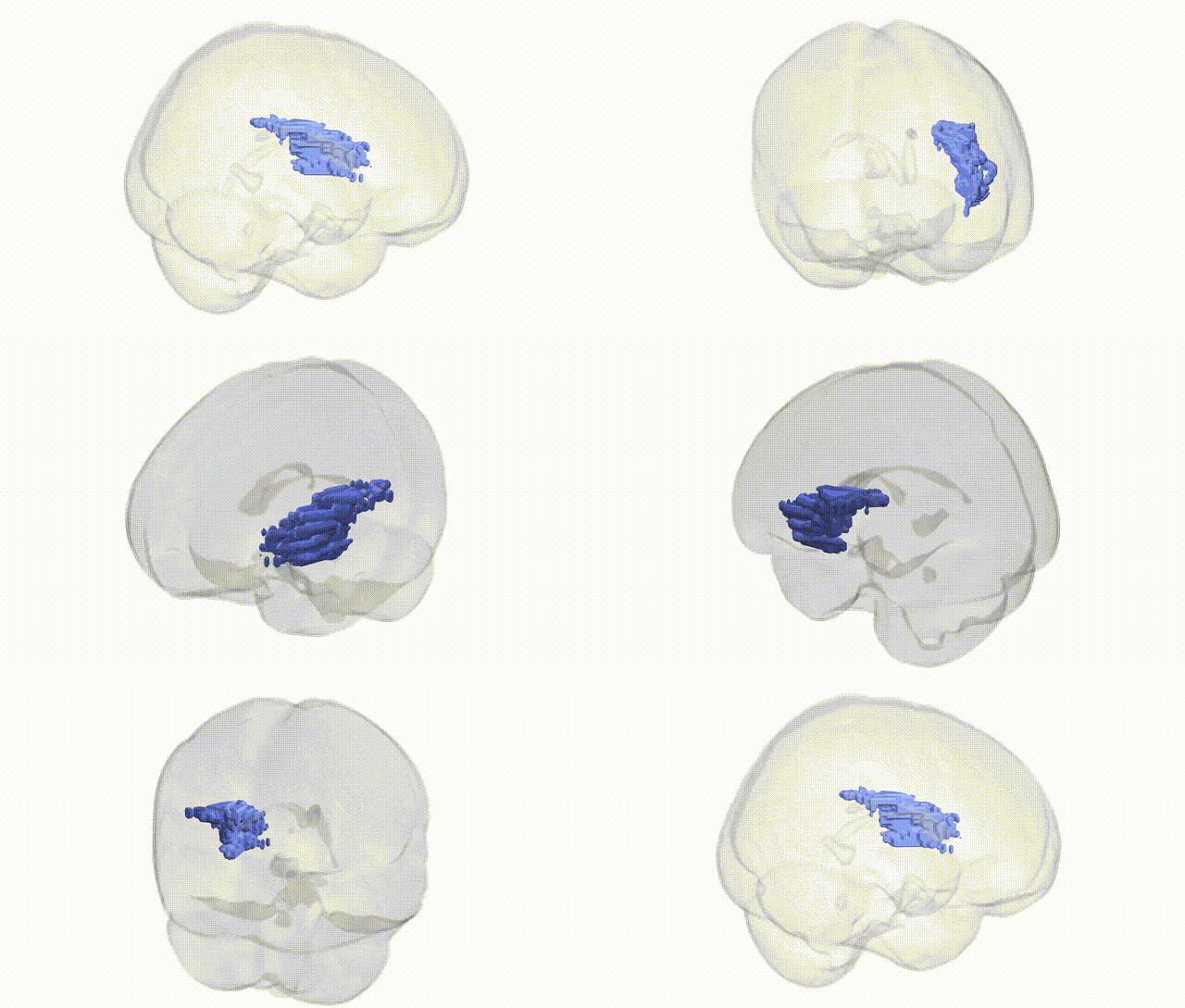
Full Quality Version: Download MP4
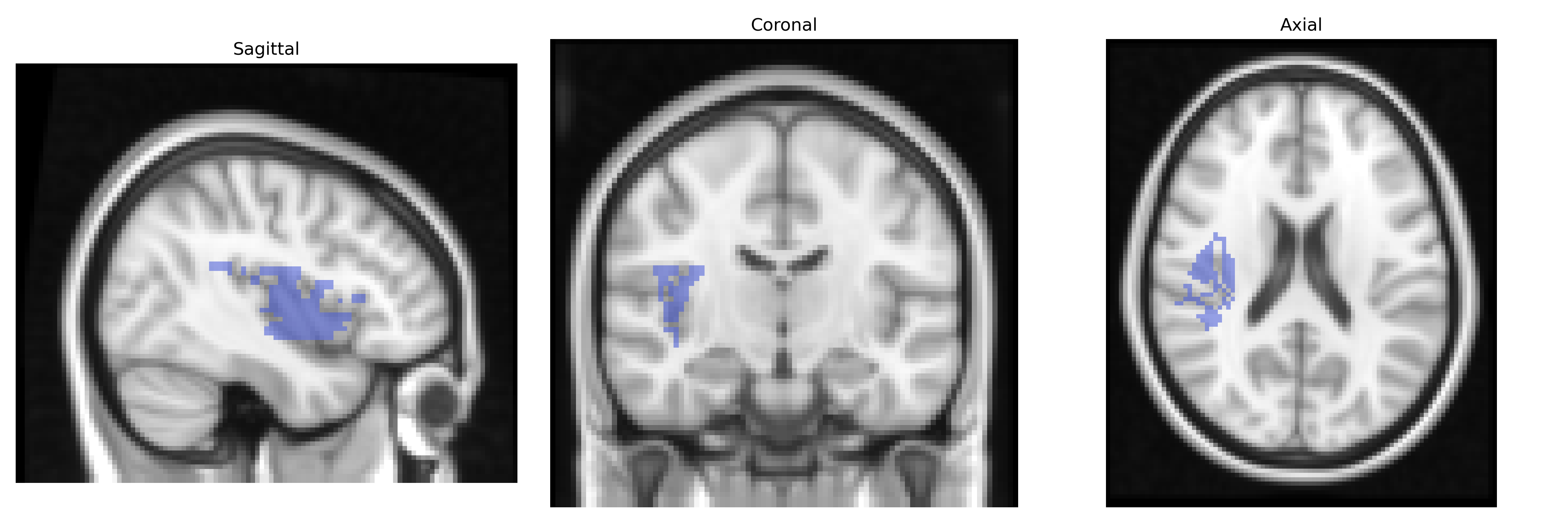
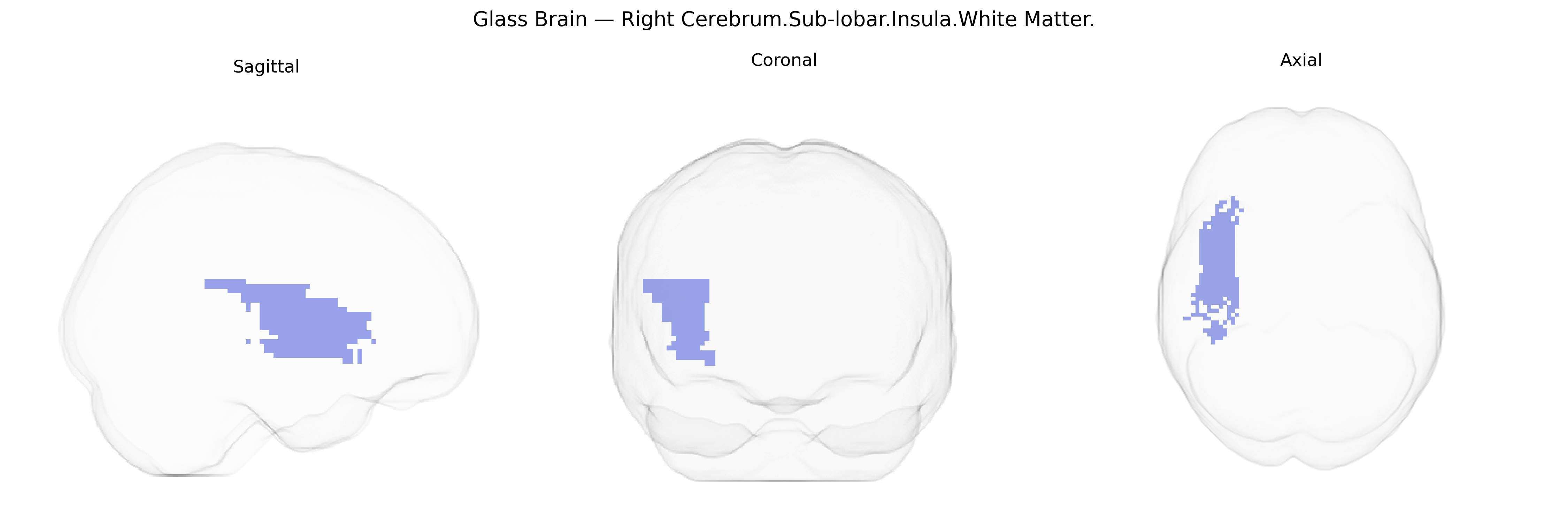
Wali Sidiqyar*, Gaurav Rudravaram*, Elyssa M. McMaster, Trent M. Schwartz, Adam M. Saunders, Kurt G. Schilling, Bennett A. Landman "Introducing SPINS: A Shared Public Visualization Library of Neuroanatomical Structures." Medical Imaging with Deep Learning- short paper
This resource is licensed under CC0 1.0 Universal (Public Domain).