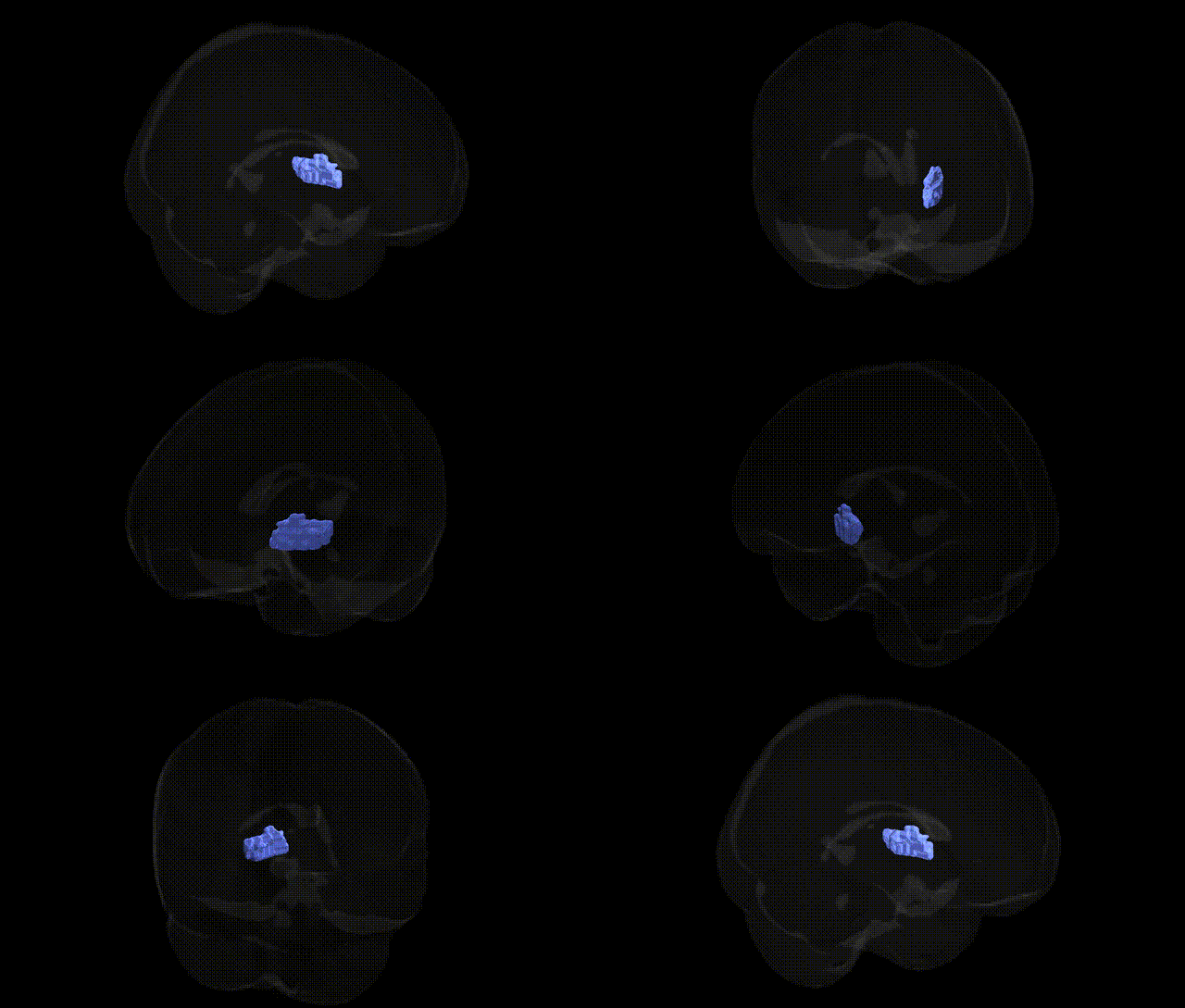
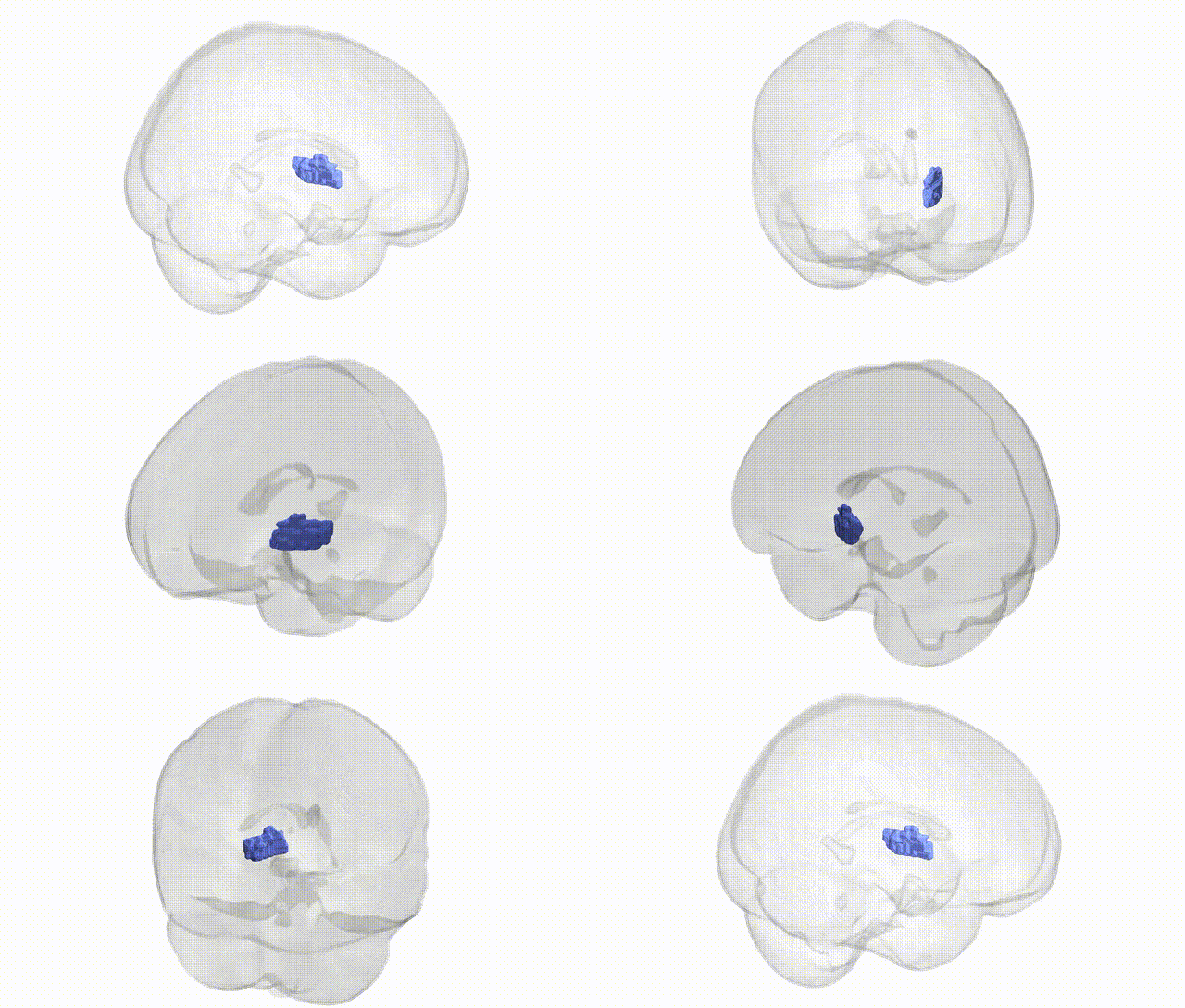
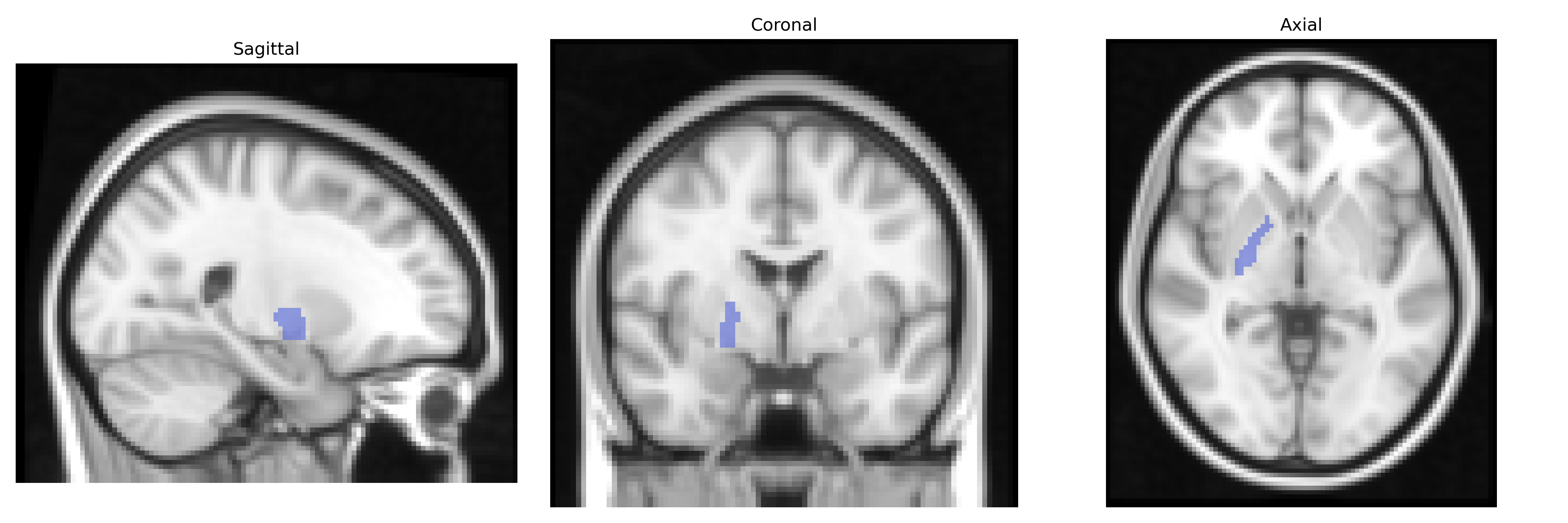
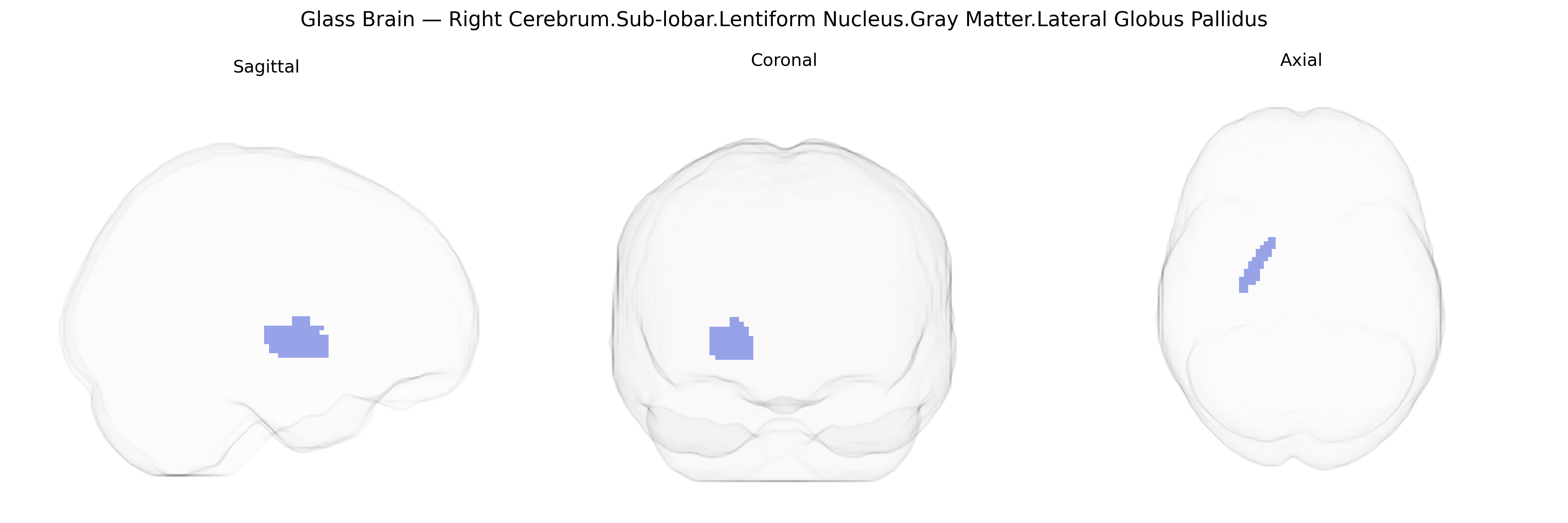
The bilateral Right Cerebrum.Sub-lobar.Lentiform Nucleus.Gray Matter.Lateral Globus Pallidus corresponds to the lateral segment of the globus pallidus within the lentiform nucleus of the basal ganglia, situated subcortically in the right cerebral hemisphere. Composed primarily of GABAergic projection neurons, this structure is a central node in the indirect pathway of motor control, receiving inhibitory input from the striatum and relaying signals via the external pallidal segment to the subthalamic nucleus. Through its role in modulating thalamocortical activity, the lateral globus pallidus contributes to the suppression of unwanted movements, fine-tuning of motor output, and aspects of motor learning and habit formation. Dysfunction in this region is implicated in movement disorders such as Parkinson’s disease, dystonia, and certain forms of chorea. There is no direct Wikipedia article for this specific Talairach-defined region; a closely related structure is the Globus pallidus.
The lateral globus pallidus (part of the lentiform nucleus gray matter in the right sub-lobar cerebrum) is strongly implicated in genetically influenced basal ganglia circuitry, particularly in movement and neuropsychiatric disorders, though most human genetic findings target the globus pallidus as a whole rather than this specific Talairach-defined subregion. Mendelian mutations in genes affecting basal ganglia structure and function—such as HTT (Huntington’s disease), ATP1A3 (dystonia/paroxysmal movement disorders), TOR1A (DYT1 dystonia), PAH (phenylketonuria), and various genes involved in Wilson’s disease and neurodegeneration with brain iron accumulation (e.g., ATP7B, PANK2)—commonly show globus pallidus involvement on neuroimaging, often including lateral portions, with characteristic pallidal atrophy or signal changes. GWAS and imaging-genetics studies have linked common variants in genes related to synaptic function, neurodevelopment, and myelination (e.g., variants near MAPT, BDNF, and several loci identified in large subcortical volume GWAS consortia such as ENIGMA) to individual differences in pallidal volume and microstructure, suggesting polygenic influences on lentiform nucleus morphology. Additionally, polygenic risk scores for schizophrenia, bipolar disorder, major depression, ADHD, and obsessive–compulsive disorder correlate with structural or functional alterations in cortico-striato-pallido-thalamic loops, implicating pallidal circuits as a downstream substrate of these genetic risks. While GWAS pinpointing variants specifically to the right lateral globus pallidus as defined in the Talairach 2 mm Atlas are not available, convergent evidence from structural and functional imaging genetics, disease gene mapping, and polygenic risk analyses supports a role for genetically mediated variation in this region in movement regulation, reward and motivation circuitry, and vulnerability to several neuropsychiatric and neurodegenerative conditions.
Overview generated by GPT-4o (2026).
Region ID: 455
Hemisphere: bilateral
Atlas: Talairach labels 2mm
Full Quality Version: Download MP4
Full Quality Version: Download MP4
Wali Sidiqyar*, Gaurav Rudravaram*, Elyssa M. McMaster, Trent M. Schwartz, Adam M. Saunders, Kurt G. Schilling, Bennett A. Landman "Introducing SPINS: A Shared Public Visualization Library of Neuroanatomical Structures." Medical Imaging with Deep Learning- short paper
This resource is licensed under CC0 1.0 Universal (Public Domain).