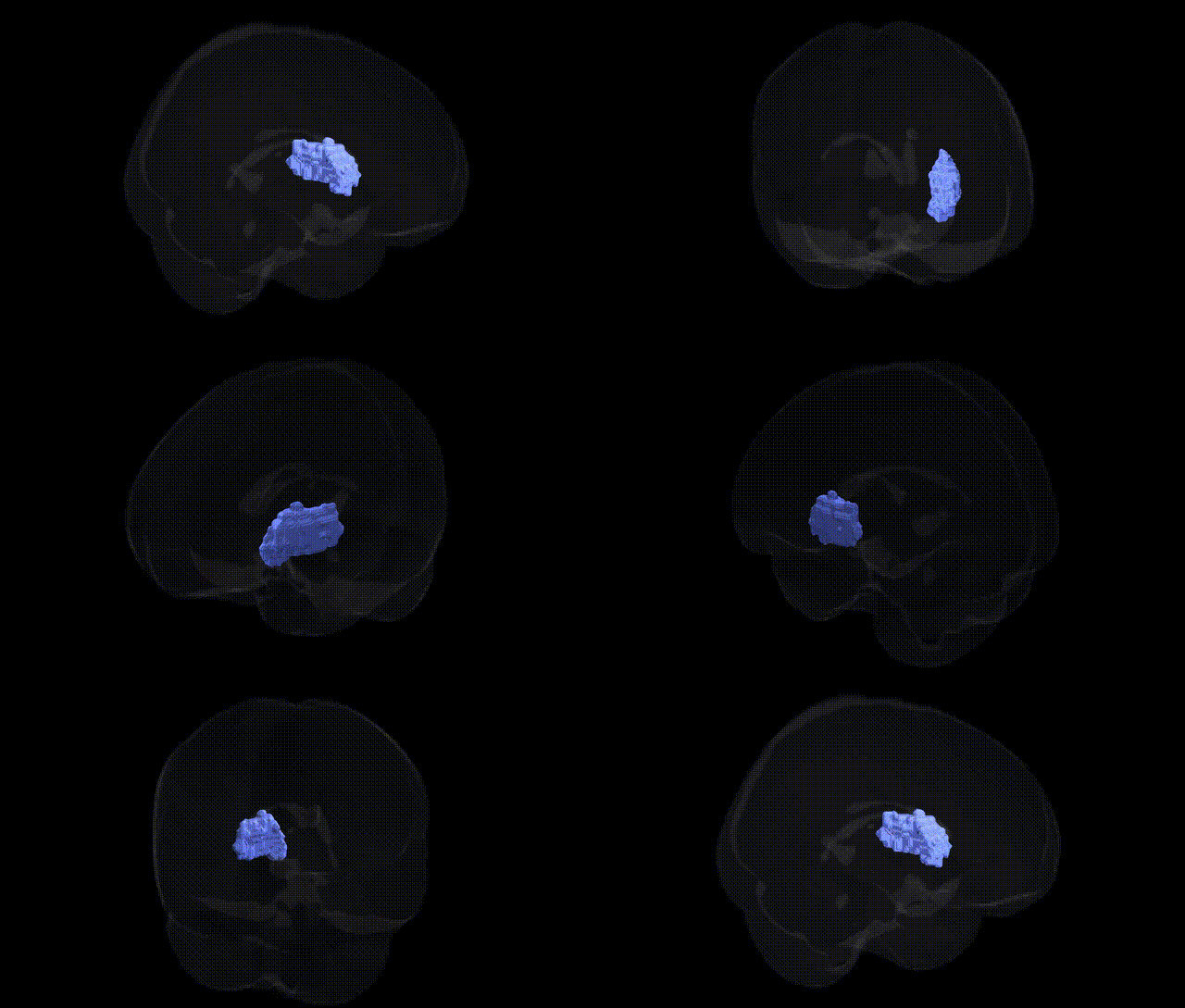
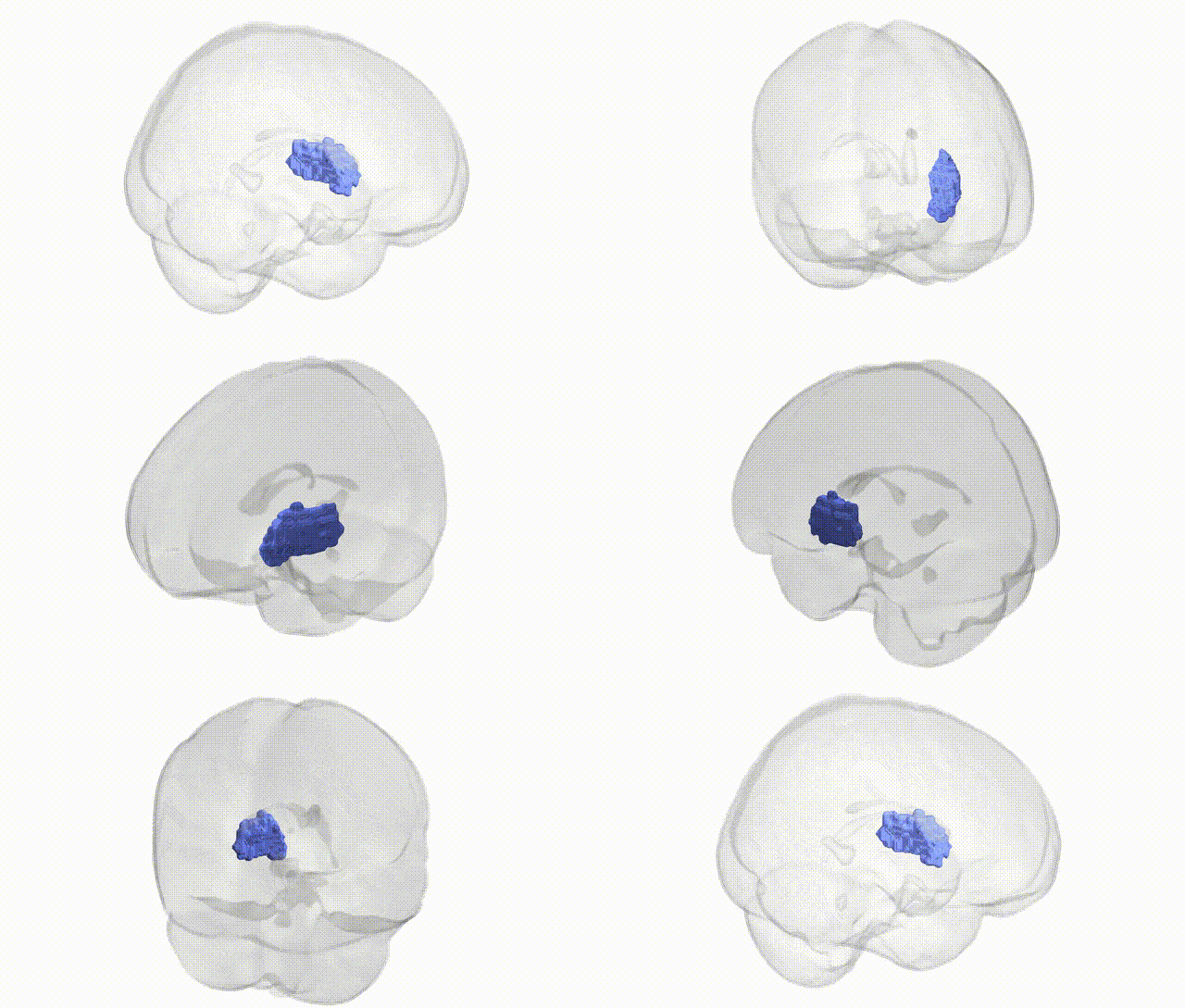
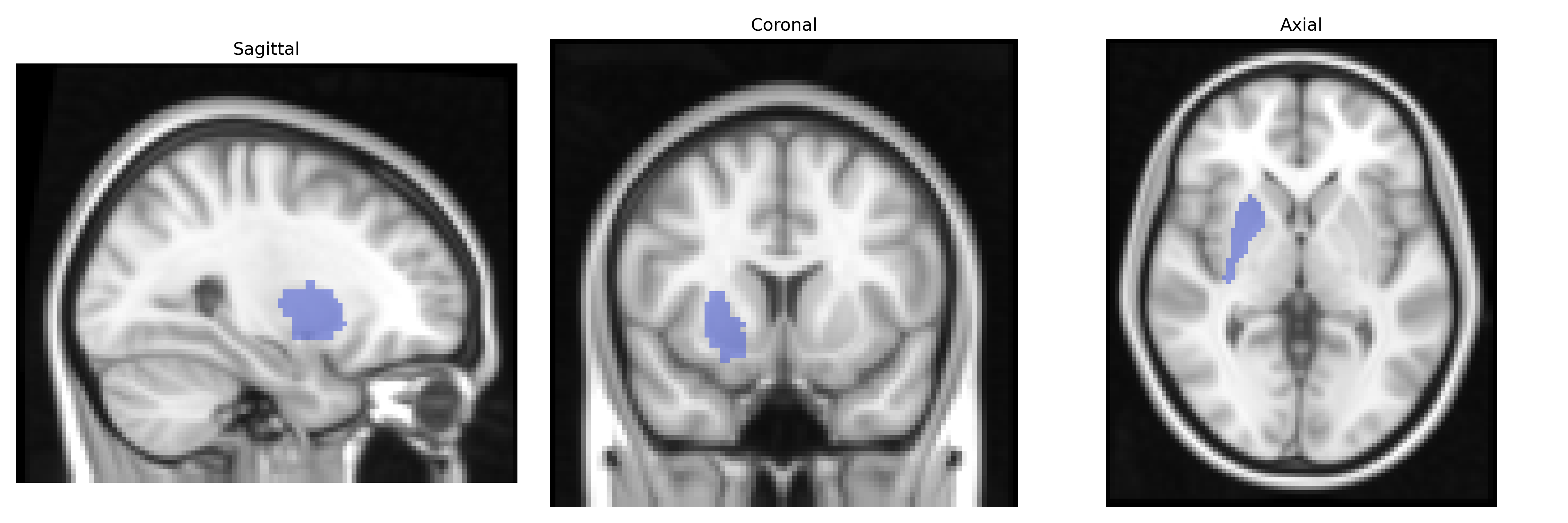
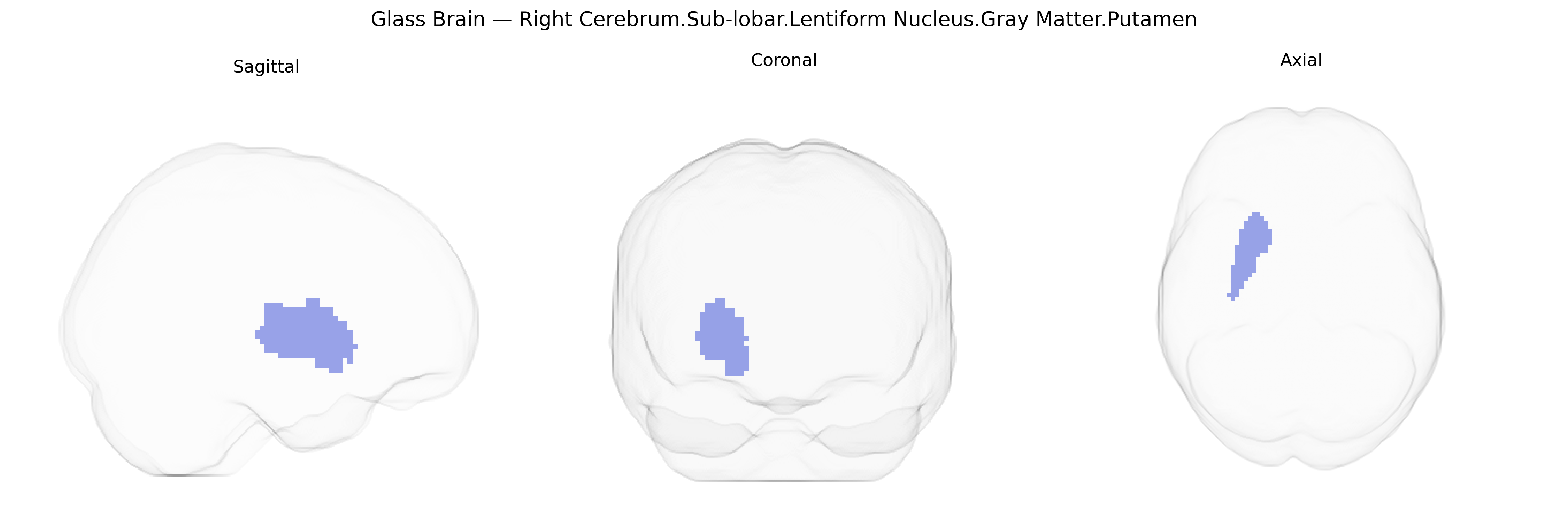
The bilateral Right Cerebrum.Sub-lobar.Lentiform Nucleus.Gray Matter.Putamen corresponds to the right putamen, a large, gray matter structure forming the lateral portion of the lentiform nucleus within the basal ganglia. It is primarily involved in motor control, including the regulation of voluntary movement, motor learning, and the execution of habitual actions, and it participates in cortico-striato-thalamo-cortical loops integrating motor, cognitive, and limbic information. Neurons in the putamen receive dense glutamatergic input from motor and premotor cortices and modulatory dopaminergic input from the substantia nigra, and project via the globus pallidus to thalamic nuclei that influence cortical activity. Dysfunction or degeneration of the putamen is implicated in movement disorders such as Parkinson’s disease, Huntington’s disease, and dystonia, as well as in certain compulsive and addictive behaviors. Putamen
The putamen, part of the lentiform nucleus in the sub-lobar gray matter of the right cerebrum, is strongly implicated in genetic studies of motor control, reward processing, and neuropsychiatric disorders. GWAS of brain structure have repeatedly linked putamen volume and morphology to common variants in genes related to synaptic function and neurodevelopment, including associations in or near genes such as KTN1, DCC, BDNF, and others identified in large consortia like ENIGMA. Genetic variants influencing dopamine signaling (e.g., DRD2, COMT) and cortico-striatal connectivity have been associated with putaminal structural and functional differences, which in turn relate to risk for Parkinson’s disease, Huntington’s disease, and dystonia, where monogenic mutations (e.g., HTT, TOR1A) produce characteristic degeneration or dysfunction of striatal nuclei including the putamen. Schizophrenia, bipolar disorder, major depressive disorder, and substance use disorders show replicated genetic correlations with striatal measures, with polygenic risk scores for these conditions often predicting putamen volume or activity, consistent with its role in reward and habit circuitry. Additional GWAS have tied putamen structure to cognitive traits (such as intelligence and processing speed), personality dimensions (e.g., neuroticism, impulsivity), and risk for addiction and obesity, suggesting that genetically driven variation in putamen development and plasticity contributes to a broad spectrum of behavioral and clinical phenotypes.
Overview generated by GPT-4o (2026).
Region ID: 382
Hemisphere: bilateral
Atlas: Talairach labels 2mm
Full Quality Version: Download MP4
Full Quality Version: Download MP4
Wali Sidiqyar*, Gaurav Rudravaram*, Elyssa M. McMaster, Trent M. Schwartz, Adam M. Saunders, Kurt G. Schilling, Bennett A. Landman "Introducing SPINS: A Shared Public Visualization Library of Neuroanatomical Structures." Medical Imaging with Deep Learning- short paper
This resource is licensed under CC0 1.0 Universal (Public Domain).