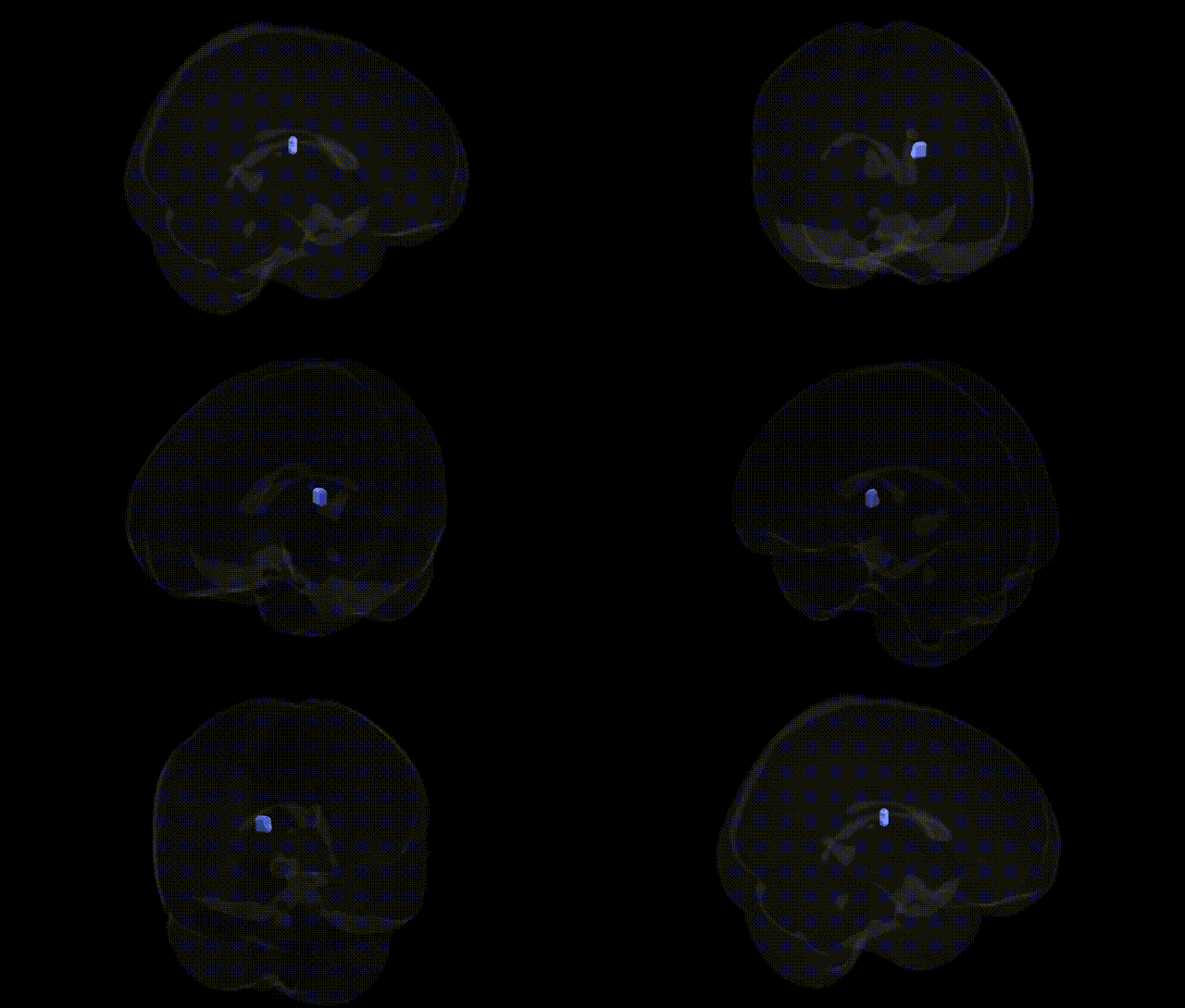
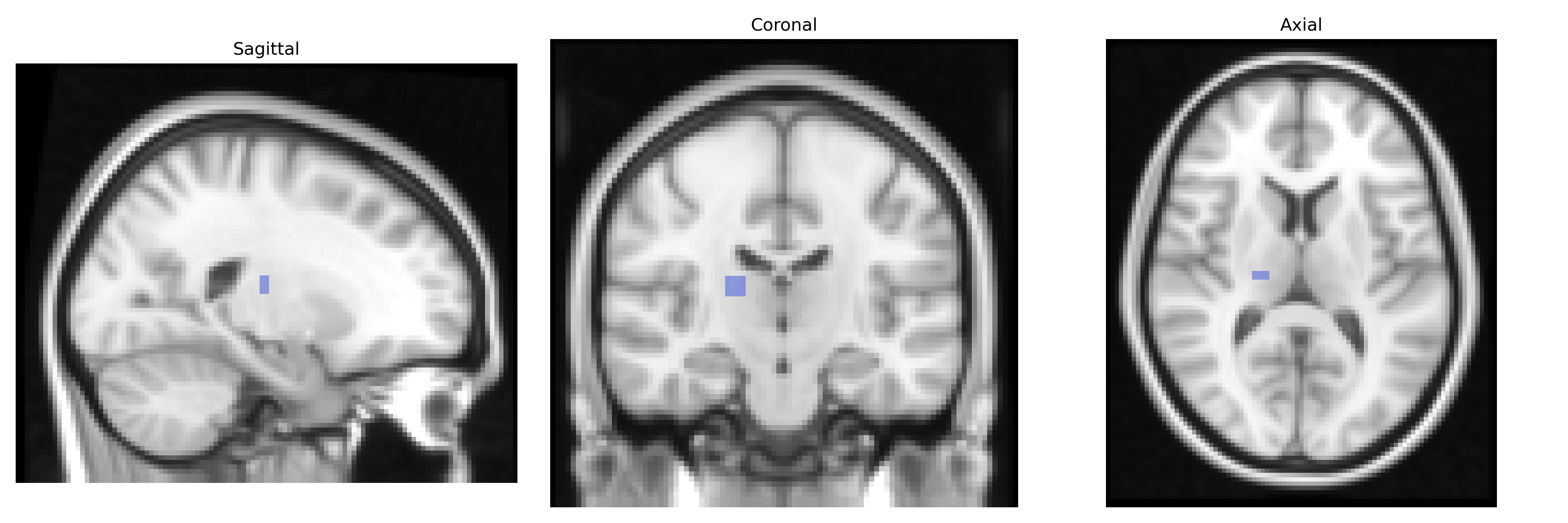
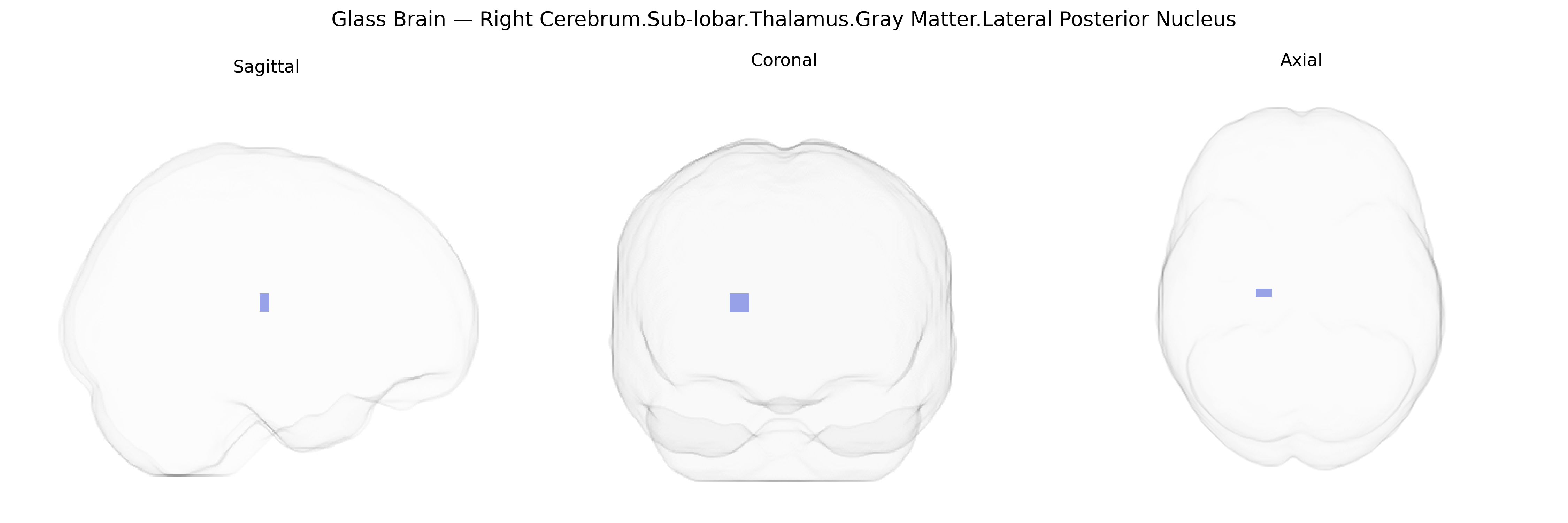
The bilateral Right Cerebrum.Sub-lobar.Thalamus.Gray Matter.Lateral Posterior Nucleus corresponds to a posterior thalamic relay nucleus situated within the pulvinar–lateral nuclear complex of the dorsal thalamus. This gray matter structure receives convergent inputs primarily from cortical association areas and subcortical visual and multimodal pathways, and in turn projects to parietal and temporal association cortices. Functionally, the lateral posterior nucleus participates in higher-order sensory integration, visuospatial attention, and modulation of cortico-cortical communication, contributing to the coordination of perceptual processing and attentional orienting. It is also implicated in large-scale thalamocortical networks that support cognition and adaptive behavior. There is no direct link; a closely related structure is the Pulvinar.
The lateral posterior nucleus of the thalamus, as defined in the Talairach 2 mm atlas, has no large body of region-specific GWAS focused strictly on its bilateral gray-matter volume, but genetic studies implicating thalamic structure and function broadly provide relevant context. Genome-wide association meta-analyses of subcortical brain volumes (e.g., ENIGMA) have identified common variants in genes such as APOE, HMGA2, and others influencing overall thalamic volume, which likely extend to lateral posterior subregions given the high intercorrelation of thalamic nuclei measures. Polygenic risk for schizophrenia, bipolar disorder, and major depression has been associated with thalamic volumetric and connectivity alterations, and imaging–genetics work suggests that risk alleles in genes related to glutamatergic signaling (e.g., GRM3), synaptic plasticity (e.g., CACNA1C), and neurodevelopment (e.g., ZNF804A) are linked to thalamo-cortical circuit changes that encompass posterior thalamic nuclei involved in attention and higher-order sensory integration. Thalamic nuclei, including lateral posterior regions, also show structural and functional changes in GWAS-linked traits such as cognitive performance, educational attainment, and sleep duration, with polygenic scores for these traits correlating with thalamic morphology or activation patterns. Additionally, rare variants and copy-number changes affecting thalamic development genes have been reported in neurodevelopmental disorders like autism spectrum disorder and intellectual disability, where altered thalamo-cortical connectivity can involve posterior nuclei; however, most existing genetic evidence remains at the level of the thalamus as a whole rather than pinpointing the lateral posterior nucleus specifically.
Overview generated by GPT-4o (2026).
Region ID: 726
Hemisphere: bilateral
Atlas: Talairach labels 2mm
Full Quality Version: Download MP4
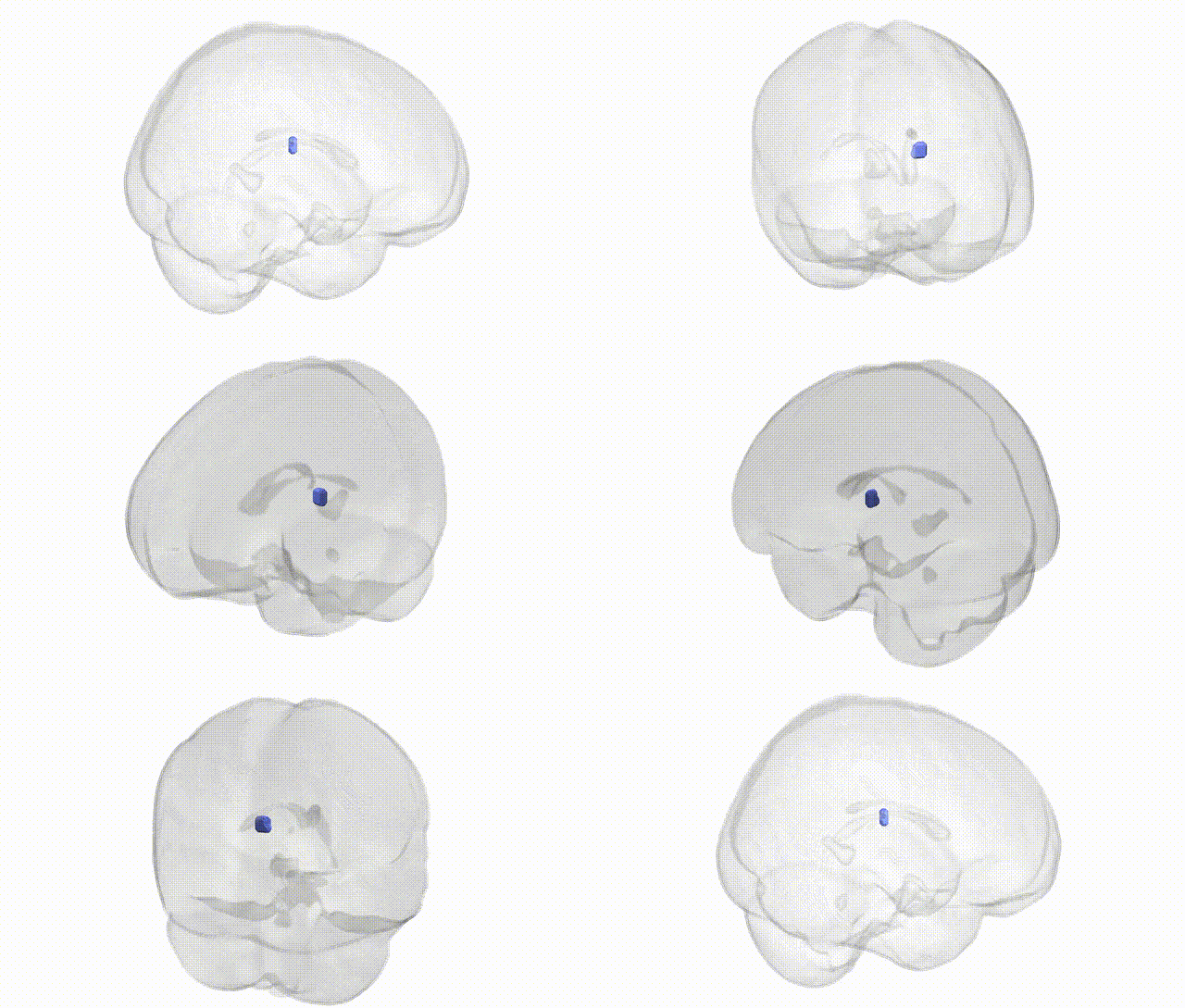
Full Quality Version: Download MP4
Wali Sidiqyar*, Gaurav Rudravaram*, Elyssa M. McMaster, Trent M. Schwartz, Adam M. Saunders, Kurt G. Schilling, Bennett A. Landman "Introducing SPINS: A Shared Public Visualization Library of Neuroanatomical Structures." Medical Imaging with Deep Learning- short paper
This resource is licensed under CC0 1.0 Universal (Public Domain).