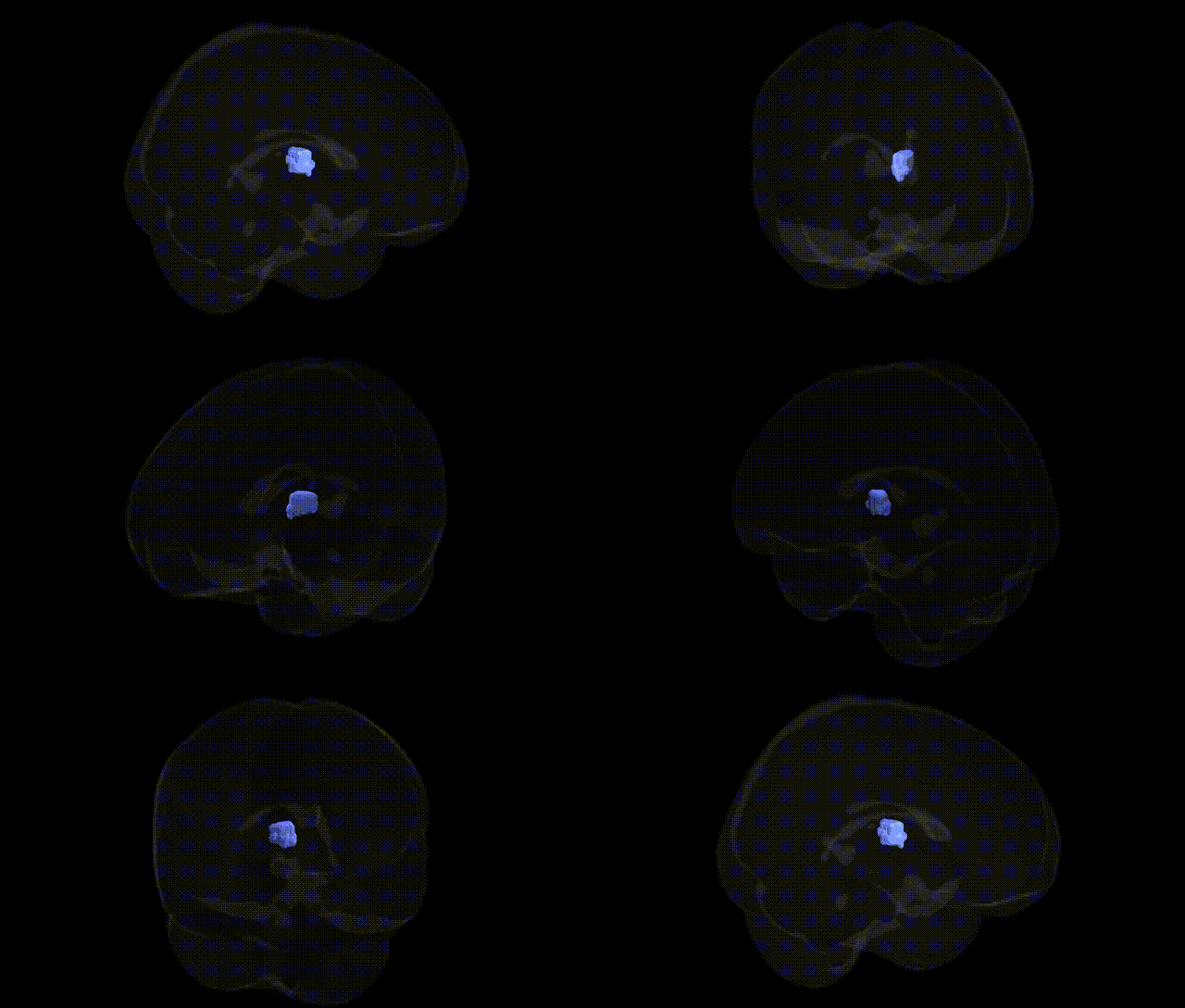
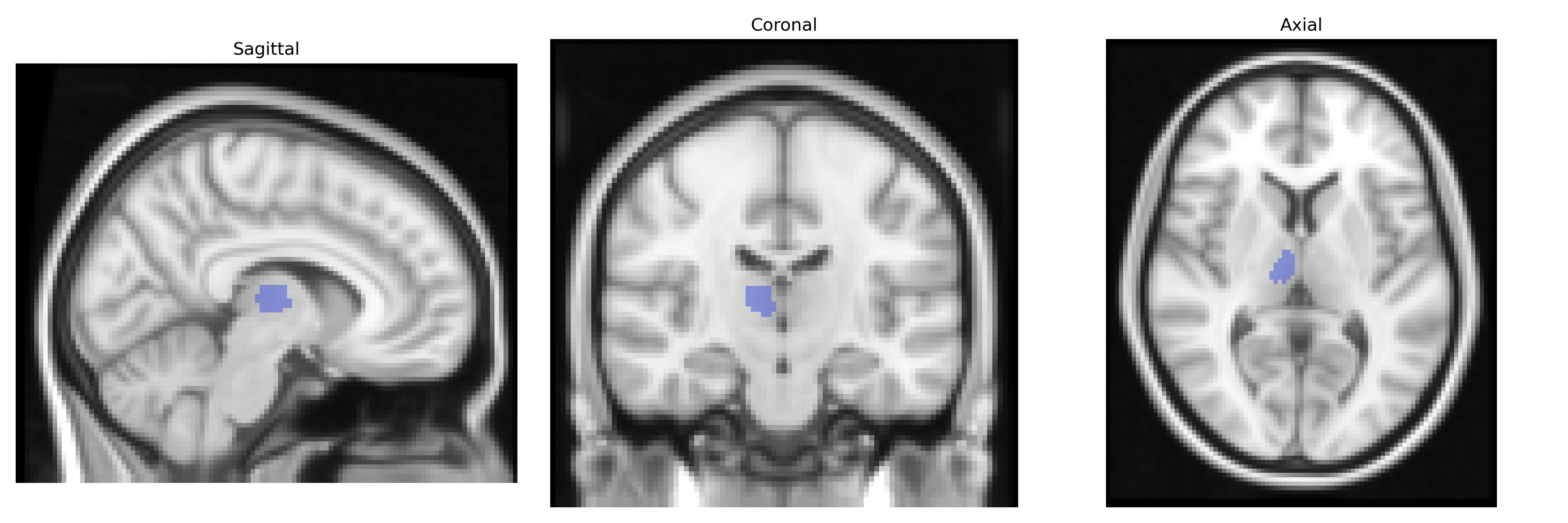
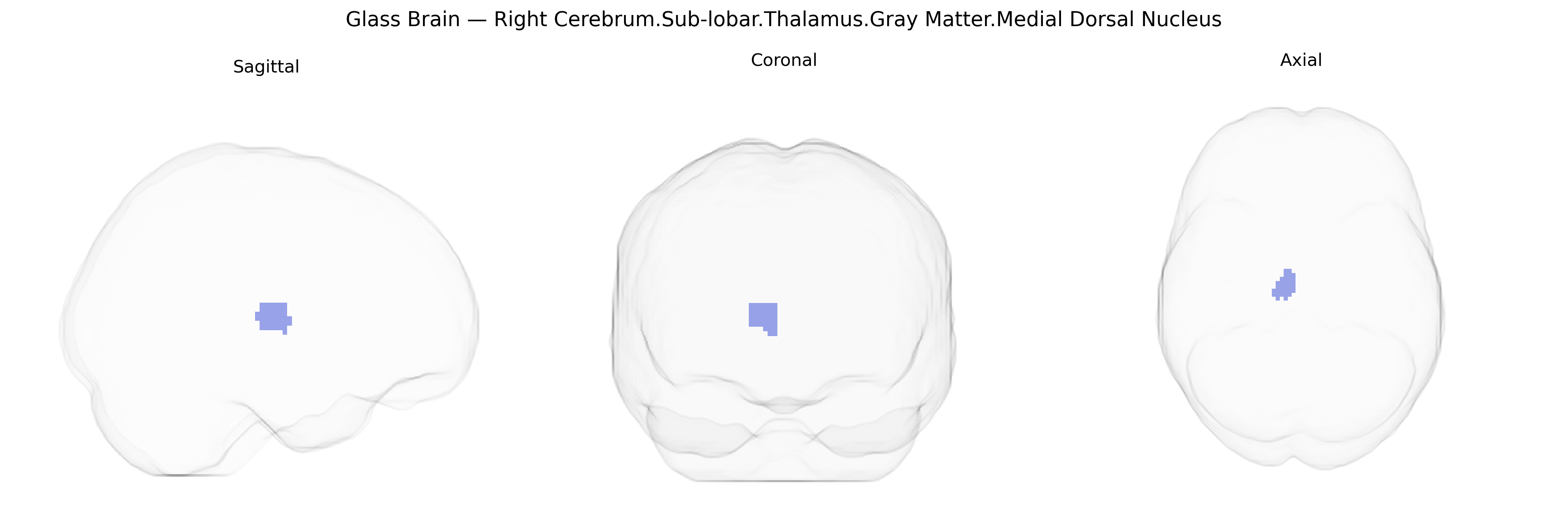
The bilateral Right Cerebrum.Sub-lobar.Thalamus.Gray Matter.Medial Dorsal Nucleus corresponds to the mediodorsal (medial dorsal) nucleus of the thalamus, a higher-order thalamic relay nucleus with dense reciprocal connections to the prefrontal cortex, limbic structures (including the amygdala), and other associative cortical areas. This nucleus plays a key role in executive functions, working memory, decision-making, and emotional regulation by integrating multimodal sensory and limbic information before relaying it to frontal cortical regions. Lesions or dysfunction in the mediodorsal thalamus have been associated with cognitive impairments, altered affect, and deficits in attention and planning, reflecting its central position in thalamo-cortical and thalamo-limbic circuits that modulate complex behavior and cognition. There is no direct link for the “Medial Dorsal Nucleus of the thalamus”; a related structure is the thalamus: Thalamus.
The medial dorsal (mediodorsal) nucleus of the thalamus, a sub-lobar gray matter structure in the right cerebrum, has been implicated in multiple genetic and GWAS-based associations largely through imaging-genetics and disorder-focused studies rather than direct Talairach-annotated analyses. Variants in genes involved in synaptic transmission, neurodevelopment, and glutamatergic/GABAergic signaling (e.g., CACNA1C, GRM3, NRG1, and other schizophrenia and bipolar disorder risk loci) have shown associations with thalamic volume, connectivity, or functional activation patterns, including in medial dorsal territories, in large-scale imaging GWAS consortia such as ENIGMA and UK Biobank-derived studies. Medial dorsal thalamic structure and function have repeatedly been linked to schizophrenia, major depressive disorder, bipolar disorder, and autism spectrum disorder through genetic risk scores that correlate with thalamic morphometry or thalamocortical connectivity, especially with prefrontal and limbic regions. GWAS of cognitive traits (e.g., general cognitive ability, working memory, executive function) and personality dimensions (e.g., neuroticism, cognitive control-related traits) have identified polygenic profiles that partly act through thalamic-prefrontal circuits, with imaging-genetics work showing that polygenic risk scores for cognition and psychiatric illness predict variation in mediodorsal thalamic volume and connectivity. Additionally, rare variants and copy number variants associated with neurodevelopmental syndromes and psychosis (such as 22q11.2 deletions) are linked to structural and functional abnormalities of the medial dorsal thalamus. Overall, genetic influences on this region appear to converge on pathways affecting cortico-thalamic circuitry, cognitive control, emotional regulation, and risk for major psychiatric and neurodevelopmental disorders, though specific single-locus GWAS hits tied uniquely and exclusively to the bilateral right medial dorsal thalamic nucleus remain limited and are typically inferred via broader thalamic or network-level imaging-genetic associations.
Overview generated by GPT-4o (2026).
Region ID: 637
Hemisphere: bilateral
Atlas: Talairach labels 2mm
Full Quality Version: Download MP4
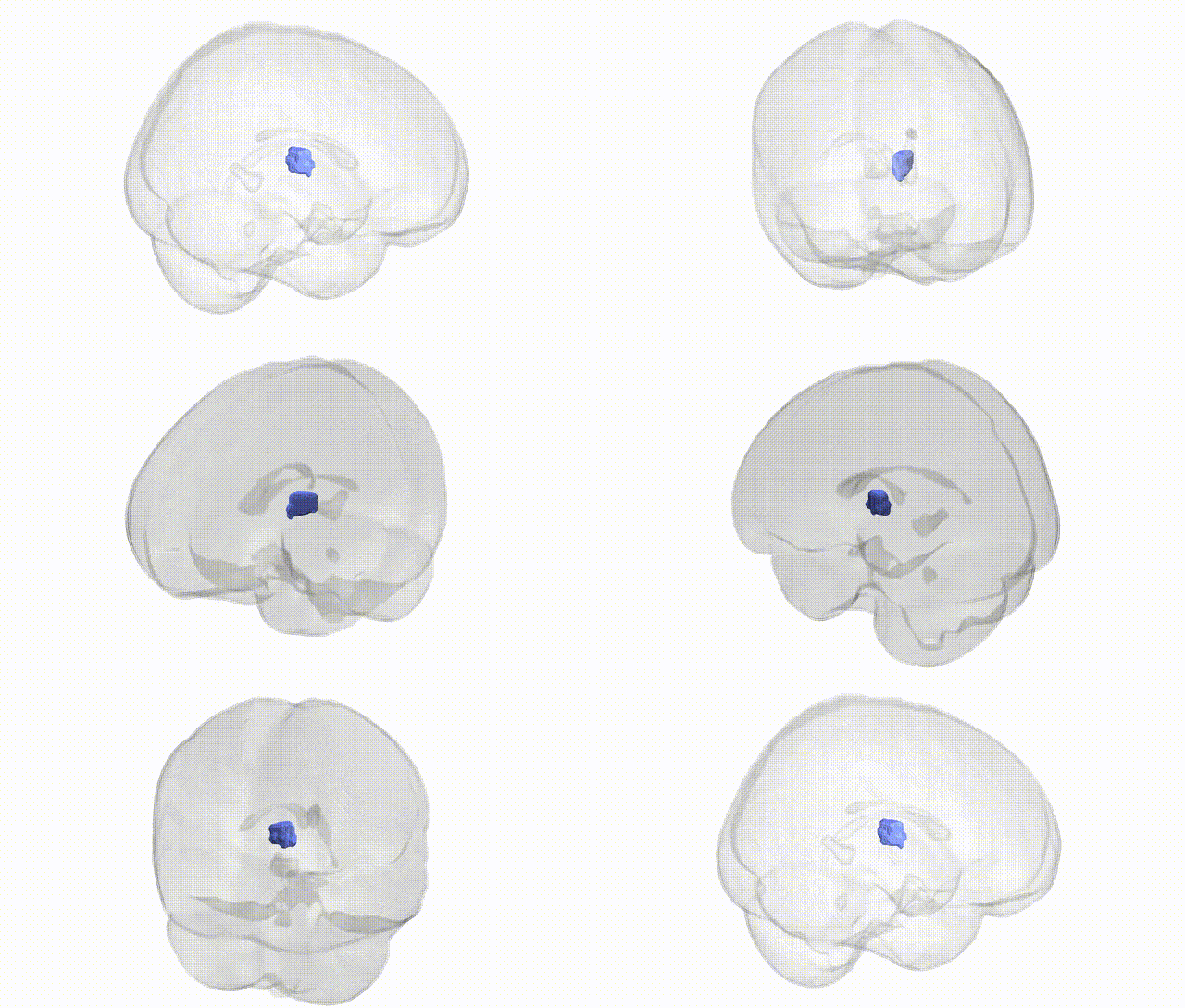
Full Quality Version: Download MP4
Wali Sidiqyar*, Gaurav Rudravaram*, Elyssa M. McMaster, Trent M. Schwartz, Adam M. Saunders, Kurt G. Schilling, Bennett A. Landman "Introducing SPINS: A Shared Public Visualization Library of Neuroanatomical Structures." Medical Imaging with Deep Learning- short paper
This resource is licensed under CC0 1.0 Universal (Public Domain).