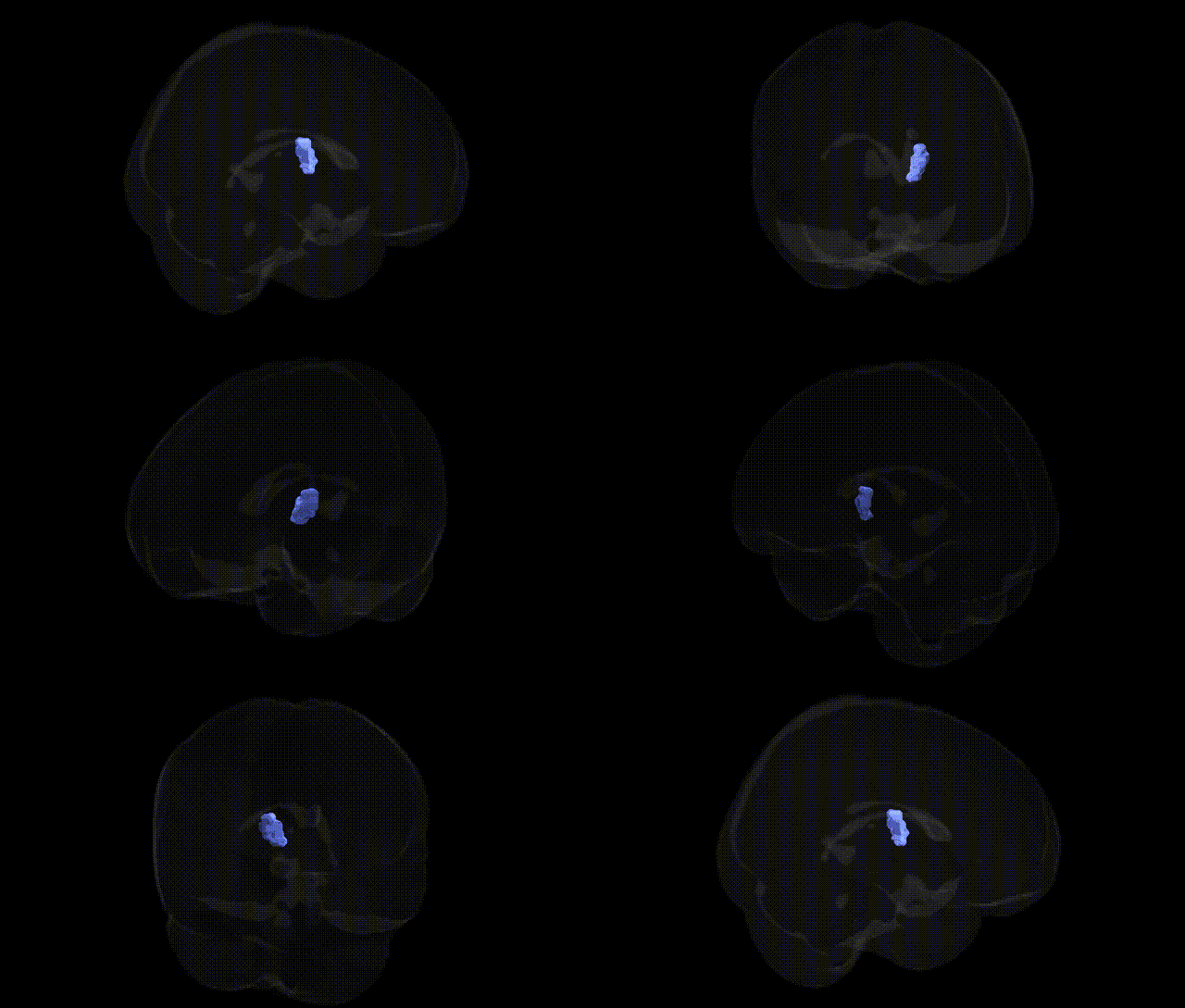
The bilateral Right Cerebrum.Sub-lobar.Thalamus.Gray Matter.Ventral Lateral Nucleus corresponds to the ventral lateral nucleus (VL) of the thalamus, a key motor relay structure situated within the sub-lobar gray matter of the diencephalon. This nucleus receives major inputs from the cerebellum and basal ganglia and projects primarily to the primary motor cortex and premotor areas, playing a central role in the integration and modulation of motor signals involved in movement planning, coordination, and execution. Functionally, the VL contributes to motor learning, precision of voluntary movements, and the regulation of muscle tone, and it is implicated in movement disorders when its circuitry is disrupted. There is no direct link for the specific “ventral lateral nucleus” as an individual page; a closely related and encompassing structure is the thalamus: Thalamus.
The ventral lateral nucleus of the thalamus, a motor-related subcortical region, is implicated in several genetically influenced traits and disorders, though most associations derive from broader thalamic or subcortical volume GWAS rather than Talairach-specific labeling. Large neuroimaging GWAS consortia such as ENIGMA and UK Biobank have identified multiple common variants affecting thalamic volumes and microstructure, including loci near genes involved in neurodevelopment, axon guidance, and synaptic signaling (e.g., variants in or near DLG2, SLC39A8, and other brain-expressed genes), with some studies suggesting nucleus-specific effects in motor-related thalamic territories encompassing the ventral lateral region. Thalamic volume and connectivity show polygenic overlap with schizophrenia, major depressive disorder, bipolar disorder, ADHD, and autism spectrum disorder, consistent with altered thalamocortical circuitry in these conditions. Thalamic and basal ganglia structures, including motor thalamus, have also been genetically linked to movement disorders such as Parkinson’s disease and essential tremor, with risk loci in genes like LRRK2 and others influencing subcortical circuitry, although these findings typically do not isolate the ventral lateral nucleus alone. Additional GWAS have reported associations between thalamic metrics and traits such as cognitive performance, intelligence, sleep characteristics, and pain sensitivity, reflecting the thalamus’s role as a relay integrating motor, sensory, and cognitive information. Overall, current genetic evidence supports a polygenic architecture affecting thalamic structure and function, with motor thalamic regions like the ventral lateral nucleus contributing to the neural substrates of psychiatric, movement, and cognitive phenotypes, but highly specific genetic associations targeting this particular nucleus remain limited.
Overview generated by GPT-4o (2026).
Region ID: 644
Hemisphere: bilateral
Atlas: Talairach labels 2mm
Full Quality Version: Download MP4
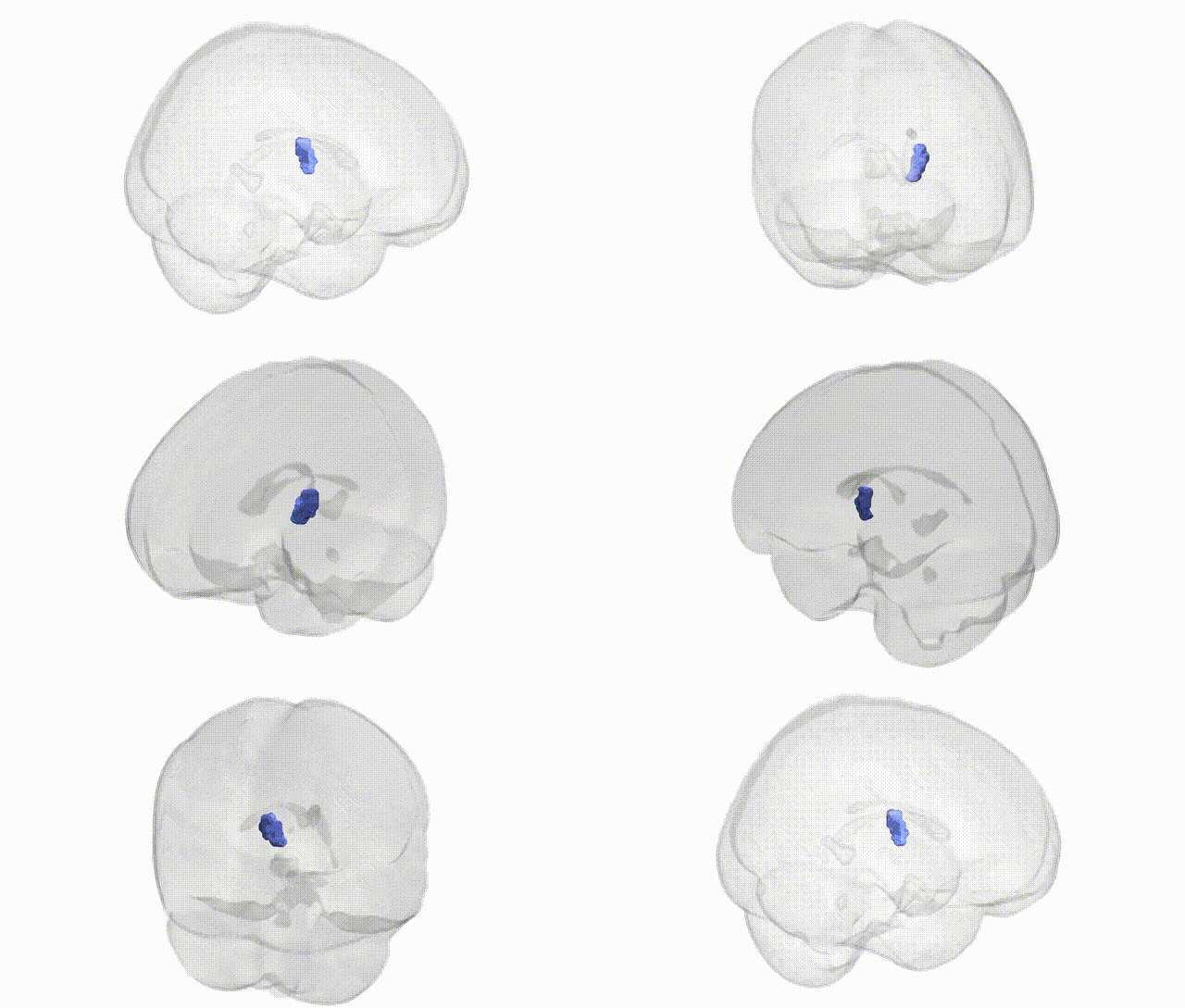
Full Quality Version: Download MP4
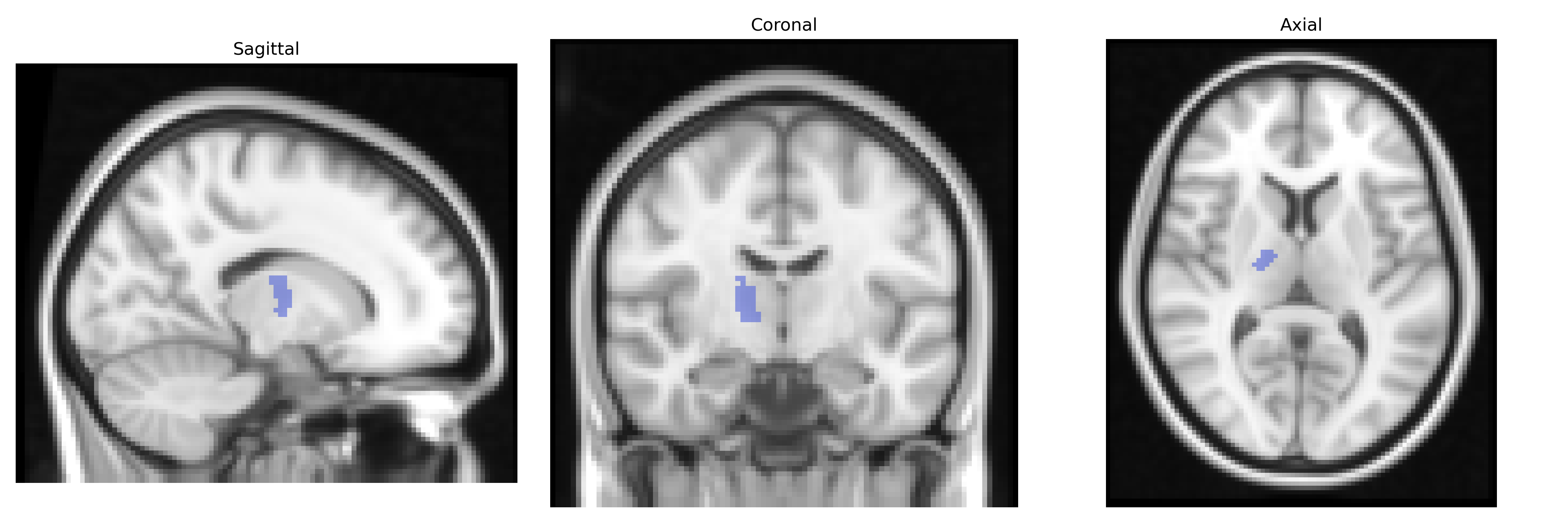
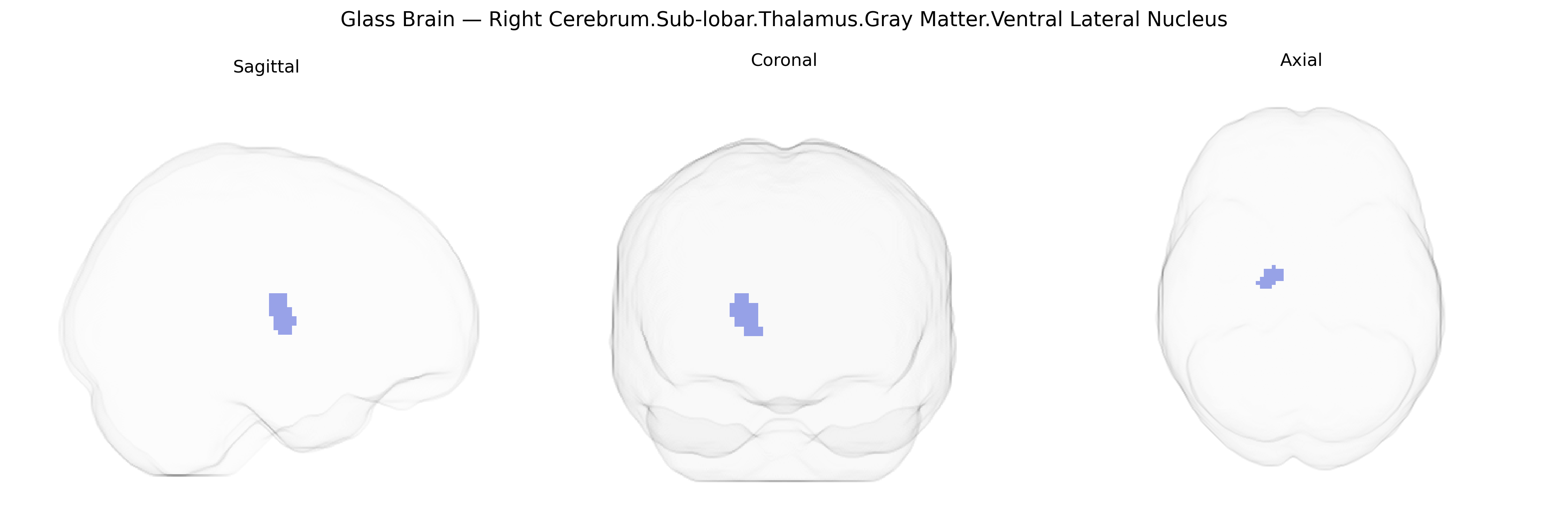
Wali Sidiqyar*, Gaurav Rudravaram*, Elyssa M. McMaster, Trent M. Schwartz, Adam M. Saunders, Kurt G. Schilling, Bennett A. Landman "Introducing SPINS: A Shared Public Visualization Library of Neuroanatomical Structures." Medical Imaging with Deep Learning- short paper
This resource is licensed under CC0 1.0 Universal (Public Domain).