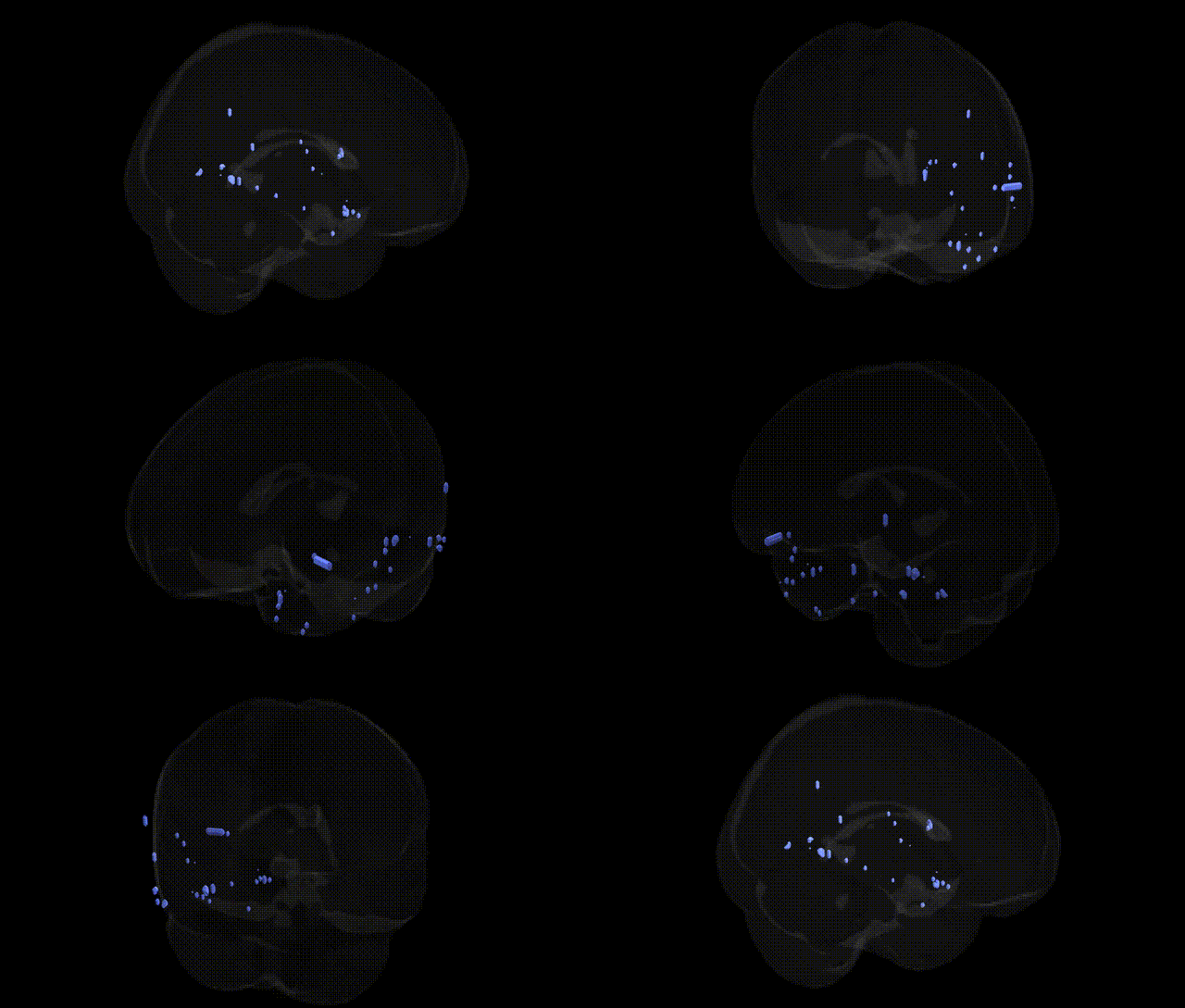
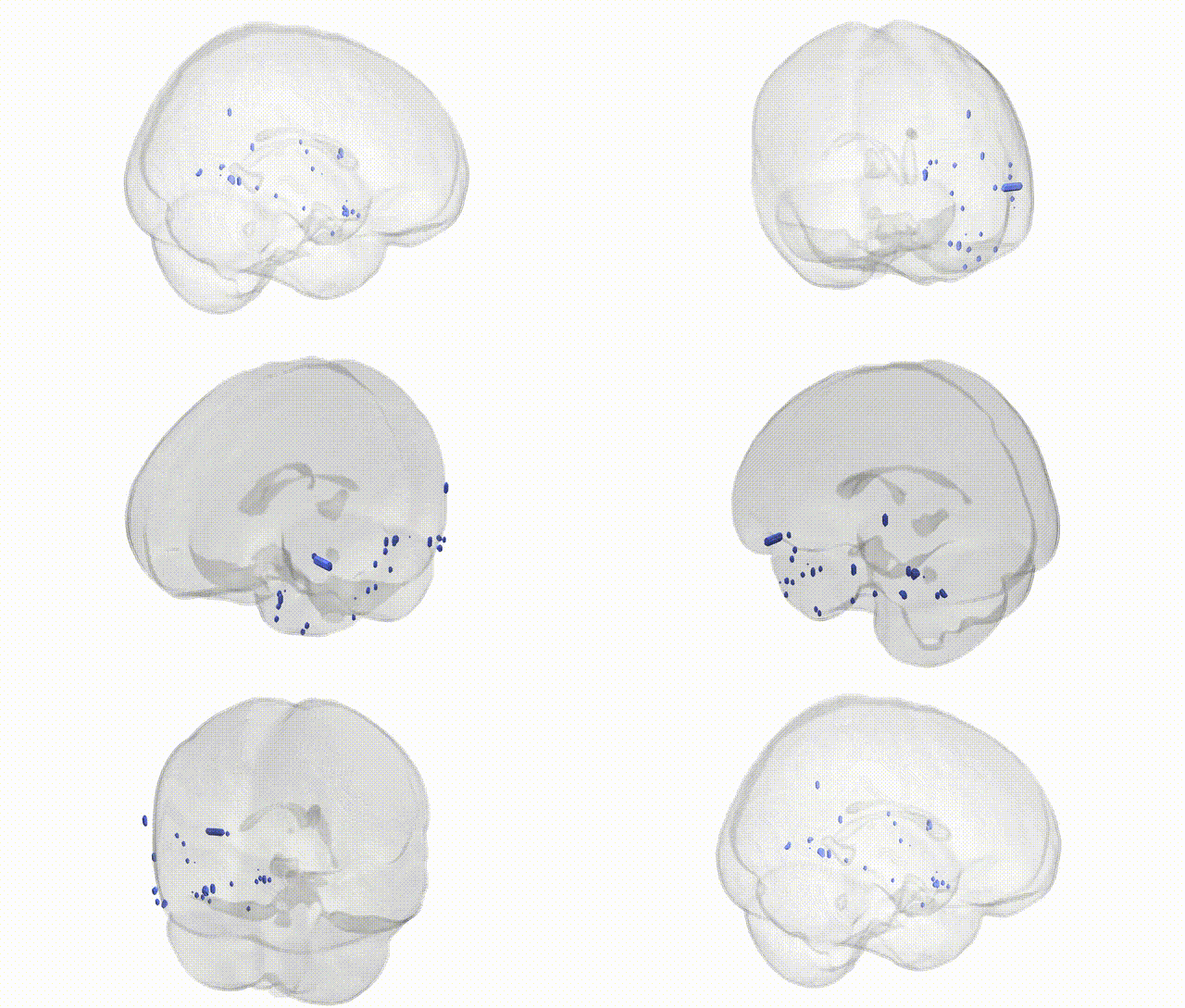
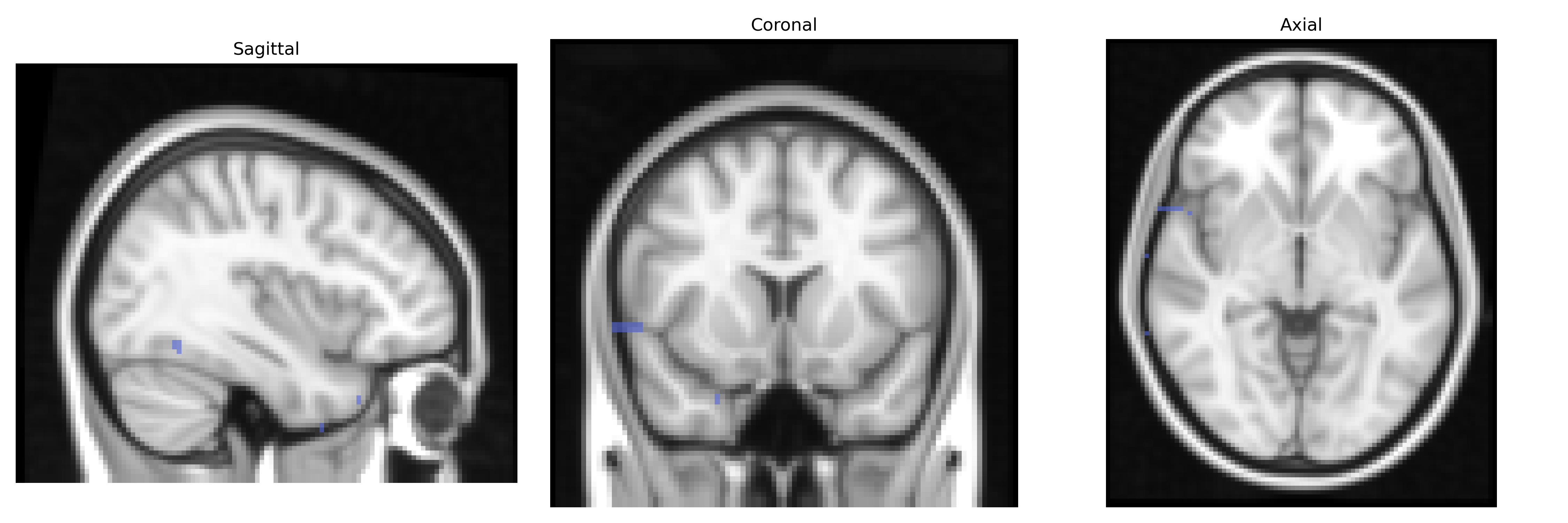
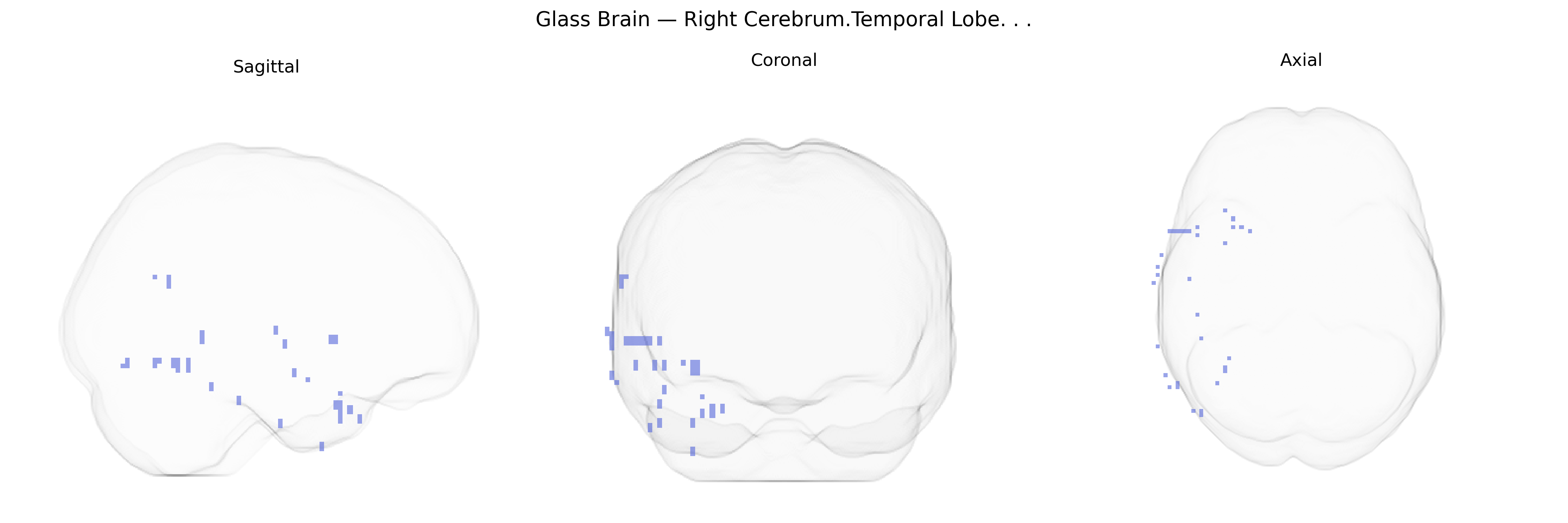
The bilateral Right Cerebrum, Temporal Lobe refers to cortical and subcortical structures located in the right cerebral hemisphere’s temporal lobe, which lies inferior to the lateral (Sylvian) fissure and anterior to the occipital lobe. This region encompasses areas involved in auditory perception (including primary and secondary auditory cortex), higher-order processing of complex sounds and speech prosody, aspects of language comprehension, and integration of multimodal sensory information. The right temporal lobe also contributes to semantic memory, facial recognition, social and emotional processing, and certain components of visual object recognition via connections with limbic and association cortices. It receives input from the auditory pathways and projects widely to frontal, parietal, and limbic regions, supporting roles in memory encoding and retrieval, spatial and contextual associations, and affective evaluation of sensory stimuli.
The bilateral right temporal lobe (Talairach 2 mm atlas, “Right Cerebrum.Temporal Lobe”) has been repeatedly implicated in genetic studies of neuropsychiatric and neurodevelopmental traits, particularly through imaging genetics and GWAS of brain structure and function. Large-scale consortia (e.g., ENIGMA, UK Biobank) have identified common variants in genes such as HMGA2, KIAA0586, DPP4, and others associated with temporal lobe cortical thickness, surface area, and volume, as well as right-lateralized temporal measures linked to language and social cognition. Polygenic risk scores for schizophrenia, bipolar disorder, major depressive disorder, and autism spectrum disorder show robust associations with structural and functional alterations in the right temporal lobe, including the superior and middle temporal gyri and temporal pole. Variants in genes involved in synaptic signaling and neurodevelopment (e.g., CNTNAP2, NRGN, GRIN2A, FOXP2-related pathways) have been associated with temporal lobe activation patterns and connectivity in tasks involving speech perception, semantic processing, and social communication. Temporal lobe regions, including right medial and lateral aspects, are also frequently implicated in GWAS of epilepsy (especially temporal lobe epilepsy), Alzheimer’s disease and other dementias, and in studies linking APOE, CLU, and BIN1 risk alleles to medial temporal atrophy and functional decline, though these findings are often reported for bilateral or medial temporal structures rather than strictly right-sided regions. Overall, genetic influences on right temporal lobe morphology and function appear highly polygenic and shared across multiple cognitive and psychiatric phenotypes, reflecting widespread overlap between risk loci for brain structural variation and those for complex behavioral and clinical traits.
Overview generated by GPT-4o (2026).
Region ID: 11
Hemisphere: bilateral
Atlas: Talairach labels 2mm
Full Quality Version: Download MP4
Full Quality Version: Download MP4
Wali Sidiqyar*, Gaurav Rudravaram*, Elyssa M. McMaster, Trent M. Schwartz, Adam M. Saunders, Kurt G. Schilling, Bennett A. Landman "Introducing SPINS: A Shared Public Visualization Library of Neuroanatomical Structures." Medical Imaging with Deep Learning- short paper
This resource is licensed under CC0 1.0 Universal (Public Domain).