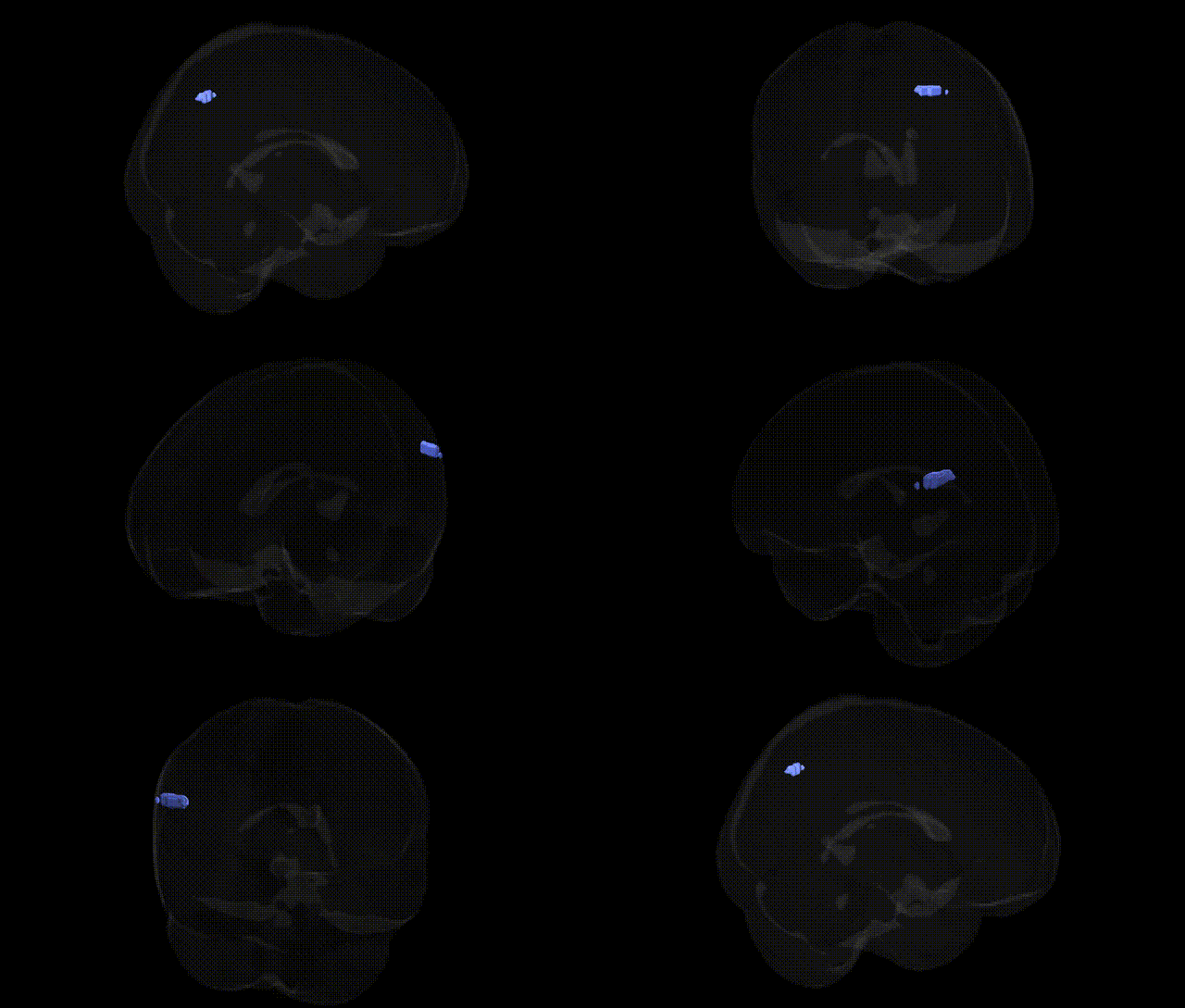
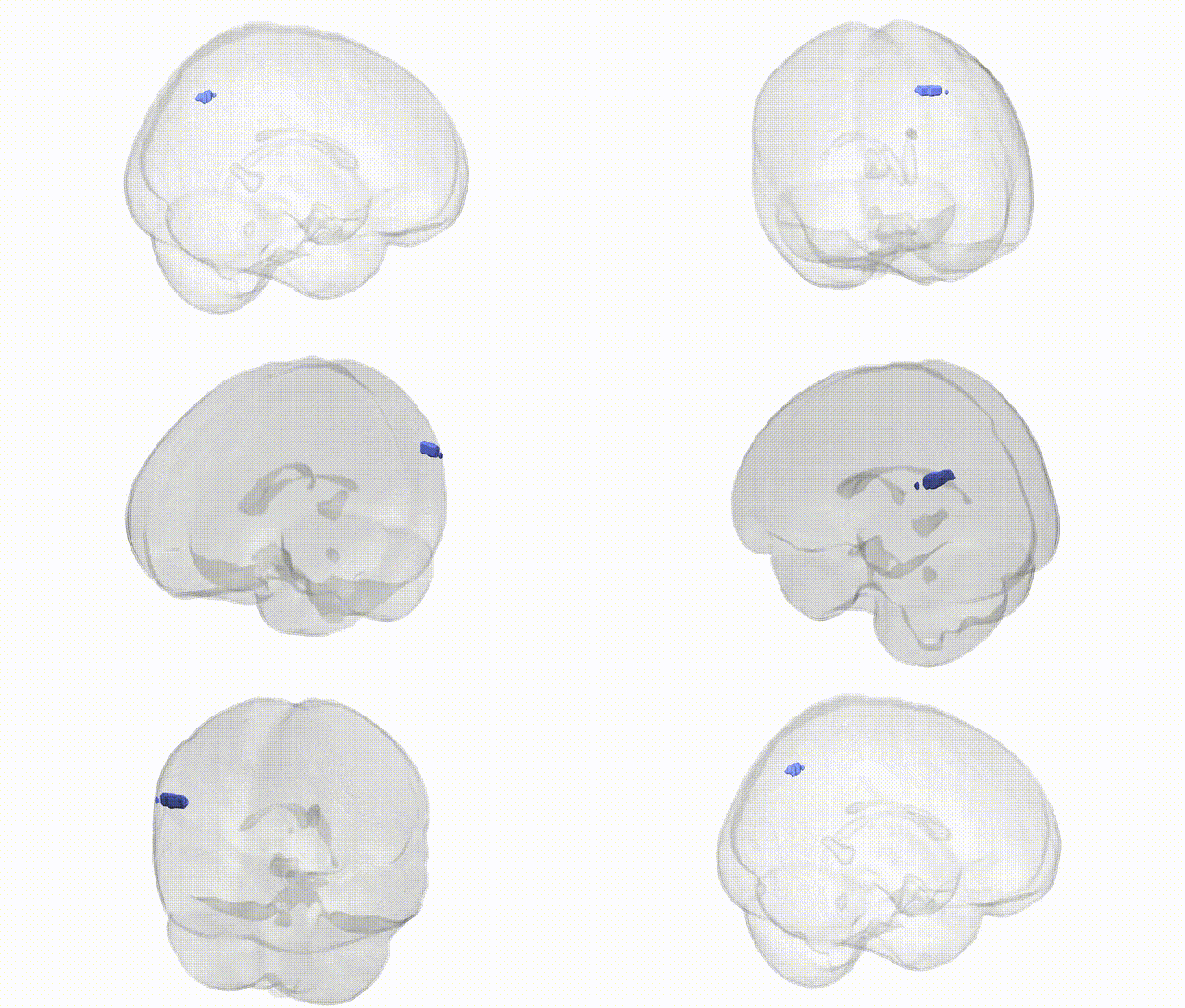
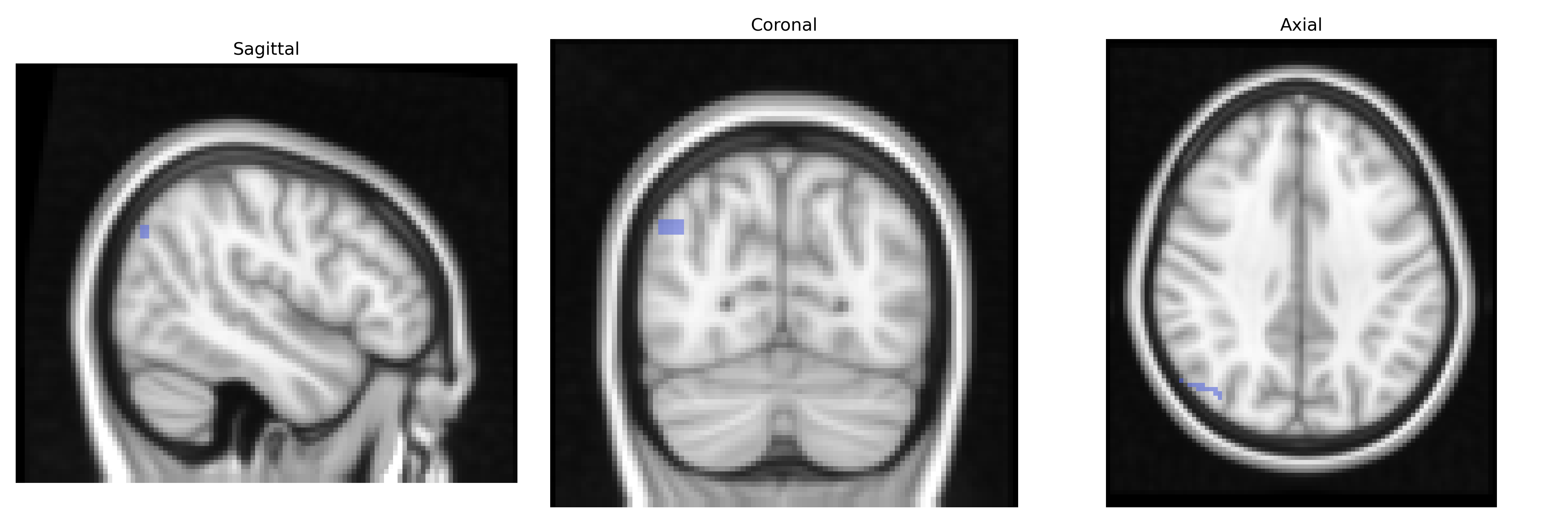
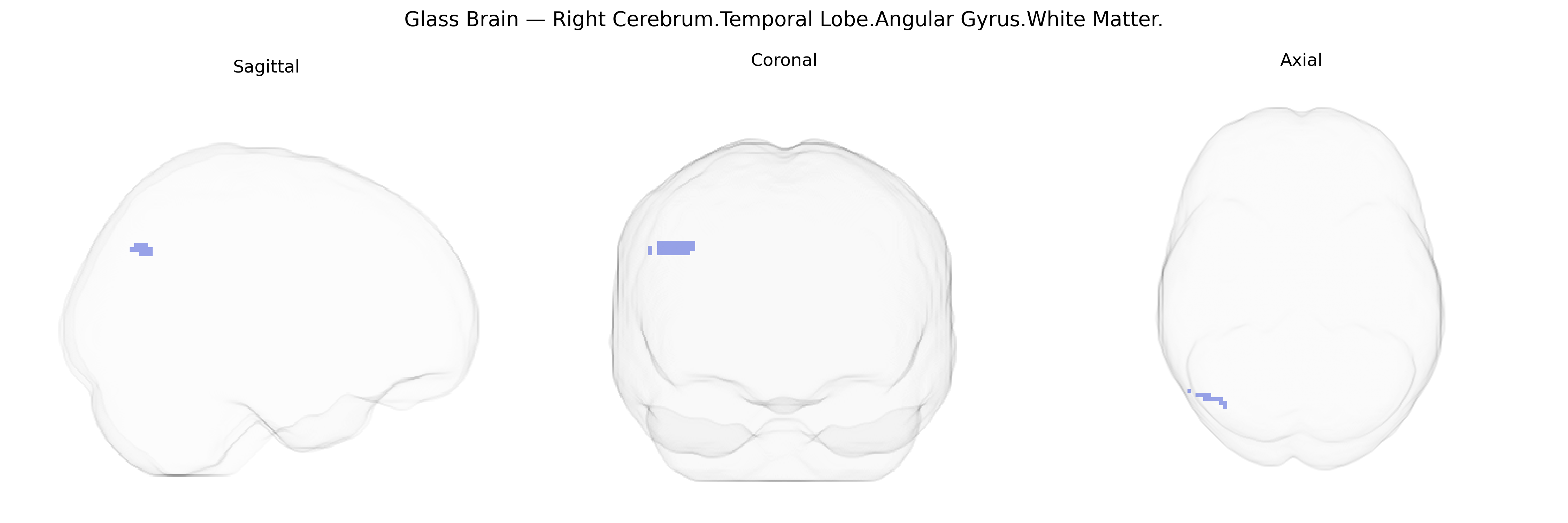
The bilateral Right Cerebrum.Temporal Lobe.Angular Gyrus.White Matter corresponds to the subcortical fiber pathways underlying the angular gyrus in the temporal–parietal junction of the right hemisphere. These white matter tracts form part of the associative networks connecting temporal, parietal, and occipital cortices, supporting multimodal integration of visual, auditory, and linguistic information. Functionally, the angular gyrus and its underlying white matter are implicated in language comprehension, reading, number processing, spatial cognition, and aspects of semantic and conceptual integration, with right-hemisphere contributions particularly relevant to visuospatial processing, attention, and certain components of social cognition. There is no direct link for the specific white matter designation; a related cortical region is the Angular gyrus.
The bilateral right temporal lobe angular gyrus white matter, as defined in the Talairach 2 mm atlas, lies beneath the cortical angular gyrus, a multimodal association region implicated in language, number processing, and episodic memory, and thus participates in distributed networks whose structure and function show significant heritability. While few GWAS directly target white matter in this exact parcel, large imaging-genetics studies (e.g., ENIGMA, UK Biobank) have identified common variants influencing nearby temporo-parietal white matter microstructure (often indexed by diffusion MRI metrics such as fractional anisotropy) in genes involved in axon guidance, myelination, and neurodevelopment (including loci near genes like CNTNAP2, NTRK3, and various oligodendrocyte-related genes), and these variants frequently overlap with risk loci for schizophrenia, major depressive disorder, bipolar disorder, autism spectrum disorder, and attention-deficit/hyperactivity disorder. Polygenic scores for cognitive performance and educational attainment have been associated with structural and connectivity measures in the temporo-parietal junction and angular gyrus networks, suggesting that genetic influences on cognitive traits may be partially mediated via this region’s white matter tracts. Additionally, GWAS of language-related traits and dyslexia have highlighted genes affecting temporo-parietal circuitry, and genetic risk for Alzheimer’s disease and other dementias has been linked to atrophy and disconnection in angular gyrus–related networks, although these associations are generally reported at the level of broader cortical and white matter systems rather than the specific Talairach-defined Right Cerebrum.Temporal Lobe.Angular Gyrus.White Matter parcel.
Overview generated by GPT-4o (2026).
Region ID: 962
Hemisphere: bilateral
Atlas: Talairach labels 2mm
Full Quality Version: Download MP4
Full Quality Version: Download MP4
Wali Sidiqyar*, Gaurav Rudravaram*, Elyssa M. McMaster, Trent M. Schwartz, Adam M. Saunders, Kurt G. Schilling, Bennett A. Landman "Introducing SPINS: A Shared Public Visualization Library of Neuroanatomical Structures." Medical Imaging with Deep Learning- short paper
This resource is licensed under CC0 1.0 Universal (Public Domain).