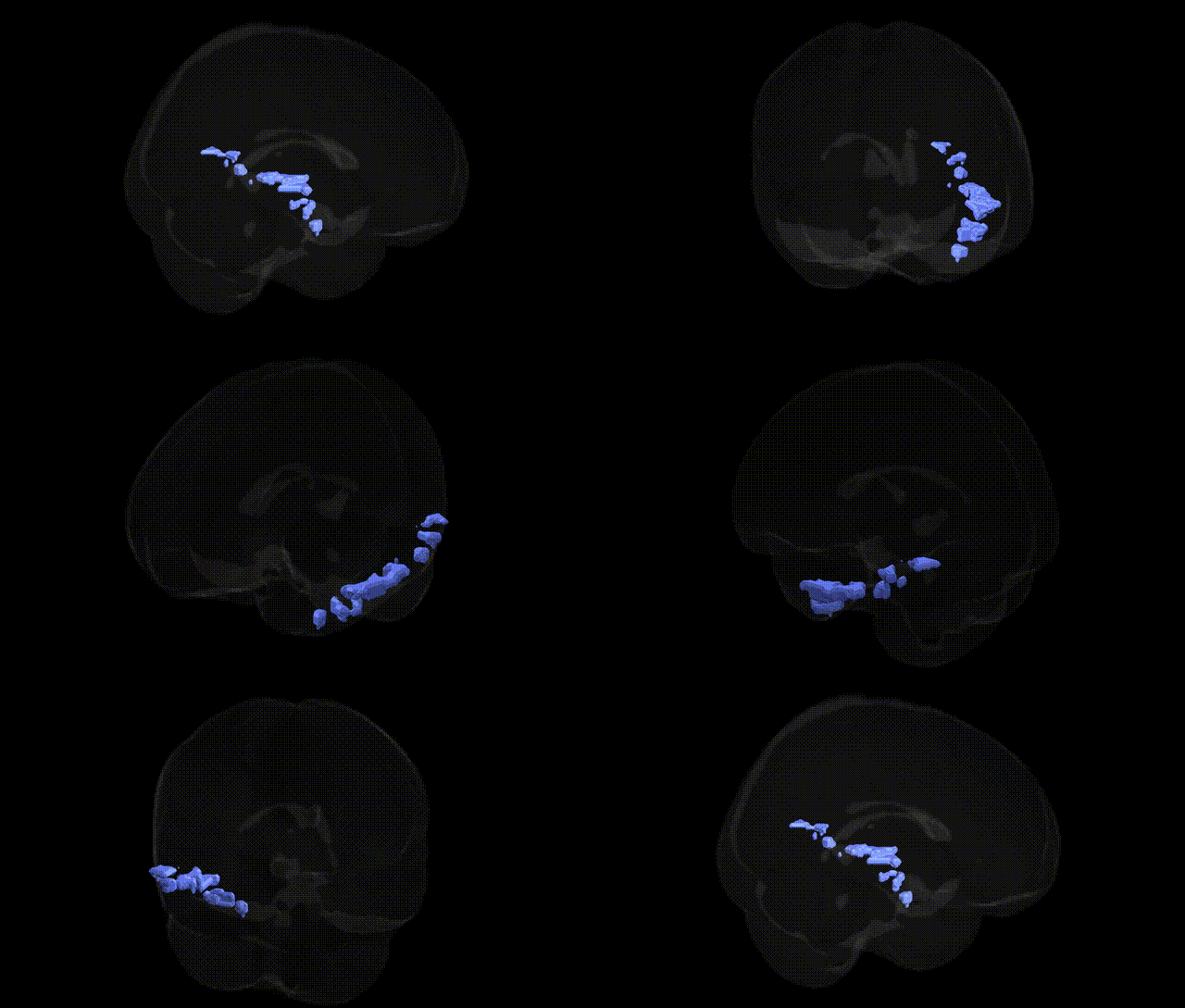
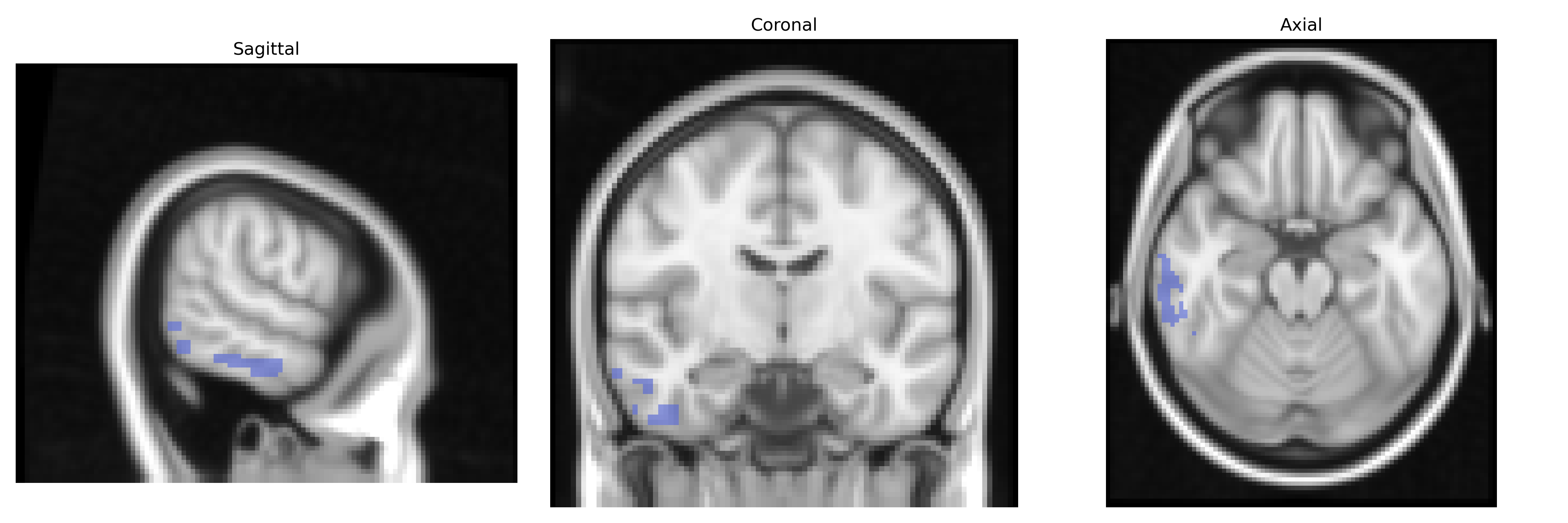
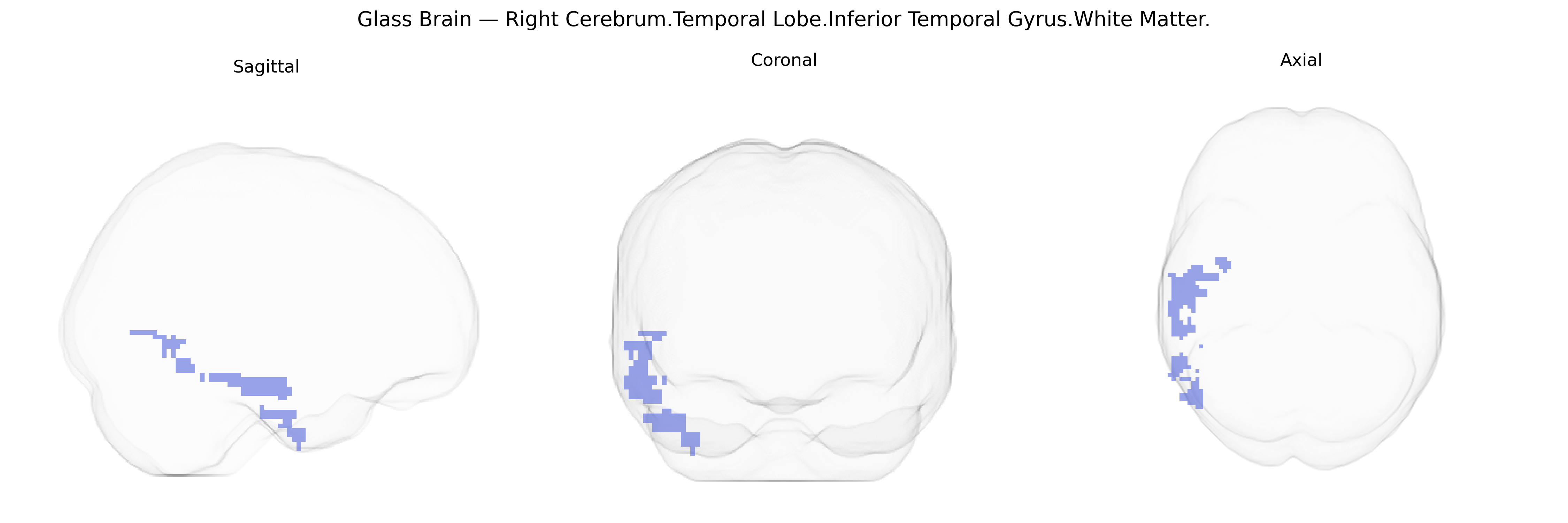
The bilateral Right Cerebrum.Temporal Lobe.Inferior Temporal Gyrus.White Matter corresponds to the subcortical fiber tracts underlying the inferior temporal gyrus in the right temporal lobe. This white matter region contains association fibers that interconnect inferior temporal cortex with adjacent temporal areas, occipital visual regions, and higher-order polymodal association cortices, contributing to the integration of complex visual information, object recognition, and aspects of semantic processing. It forms part of larger temporal lobe white matter systems, including segments of the inferior longitudinal fasciculus and other ventral stream pathways that link visual input to memory and meaning. As a deep structural substrate, it supports the coordinated activity of the overlying inferior temporal cortex rather than having a distinct, isolated functional role. There is no direct link for this specific white matter subdivision; see the related cortical region: Inferior temporal gyrus.
Genetic associations specific to the bilateral Right Cerebrum.Temporal Lobe.Inferior Temporal Gyrus.White Matter as defined in the Talairach 2 mm atlas are not typically reported at that fine-grained level, but GWAS and imaging–genetics studies implicate genes and loci that influence temporal lobe white matter microstructure and connectivity more broadly. Variants in genes involved in axonal guidance, synaptic development, and myelination—such as NRG1, DISC1, CNTNAP2, and several oligodendrocyte-related genes—have been associated with altered temporal lobe white matter integrity and connectivity, often measured via diffusion tensor imaging. Temporal lobe white matter, including fibers traversing the inferior temporal gyrus, has been repeatedly implicated in schizophrenia, bipolar disorder, major depression, autism spectrum disorder, and language/reading abilities, with polygenic risk scores for these conditions correlating with temporal lobe white matter changes. GWAS of brain structural measures (e.g., ENIGMA consortium studies) have identified multiple loci associated with temporal lobe volumes and white matter fractional anisotropy, including regions on chromosomes 3, 5, 10, and 17, though these are typically mapped to large tracts and lobar measures rather than to the inferior temporal gyrus white matter specifically. Overall, genetic influences on this region appear to be part of a distributed polygenic architecture affecting temporal lobe white matter pathways involved in higher-order visual processing, semantic memory, language, and socio-emotional functions, rather than region-exclusive, single-gene effects.
Overview generated by GPT-4o (2026).
Region ID: 20
Hemisphere: bilateral
Atlas: Talairach labels 2mm
Full Quality Version: Download MP4
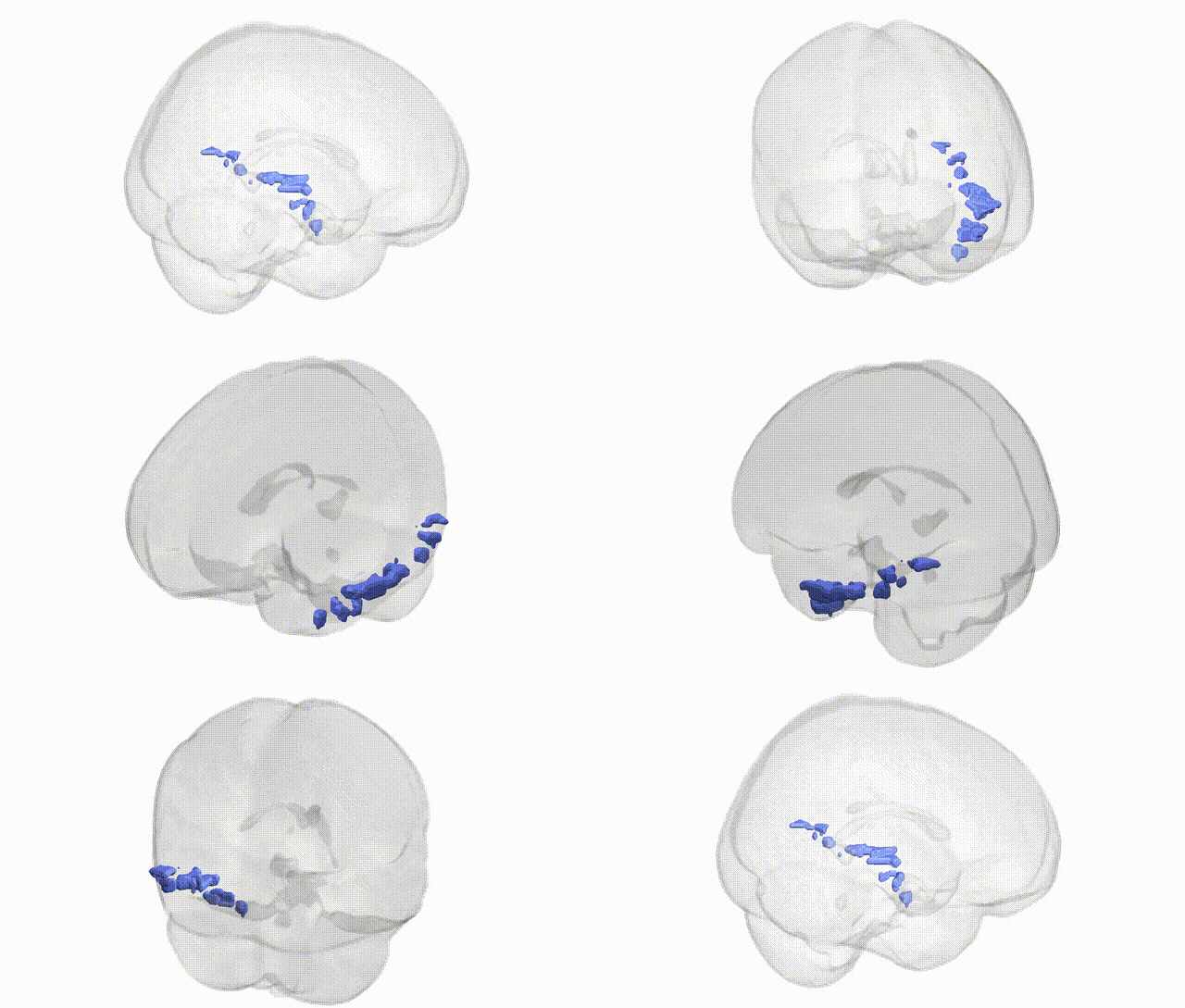
Full Quality Version: Download MP4
Wali Sidiqyar*, Gaurav Rudravaram*, Elyssa M. McMaster, Trent M. Schwartz, Adam M. Saunders, Kurt G. Schilling, Bennett A. Landman "Introducing SPINS: A Shared Public Visualization Library of Neuroanatomical Structures." Medical Imaging with Deep Learning- short paper
This resource is licensed under CC0 1.0 Universal (Public Domain).