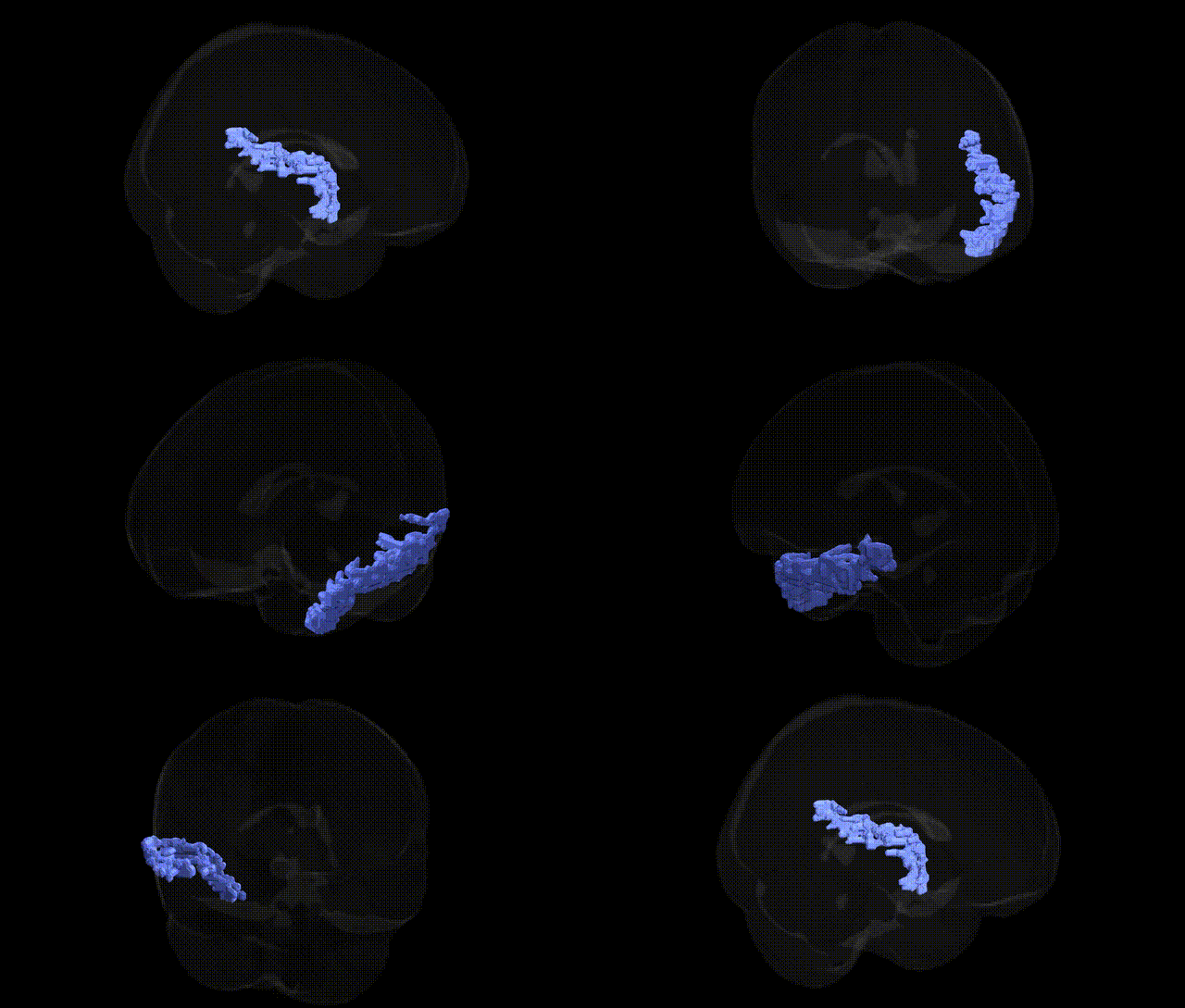
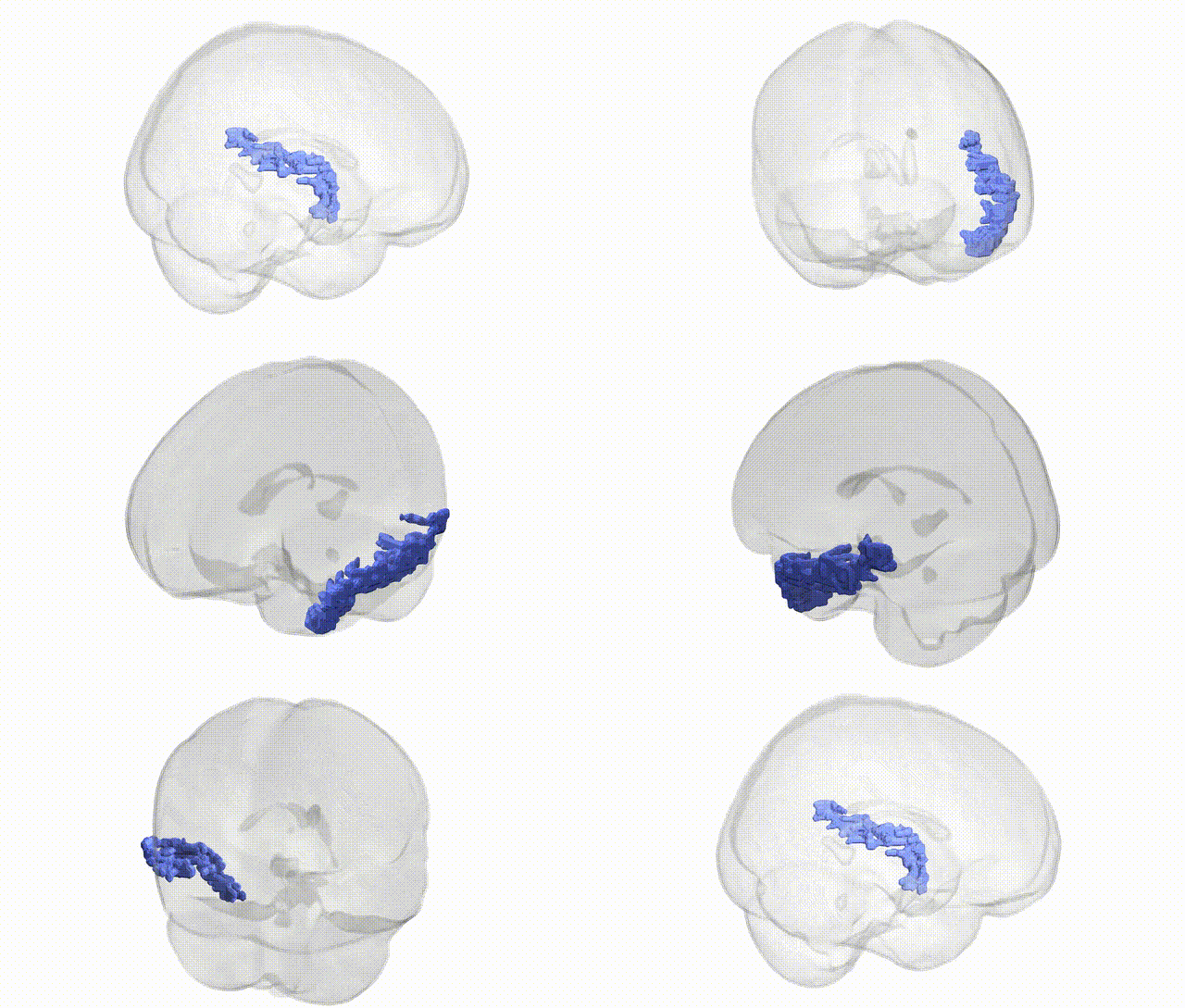
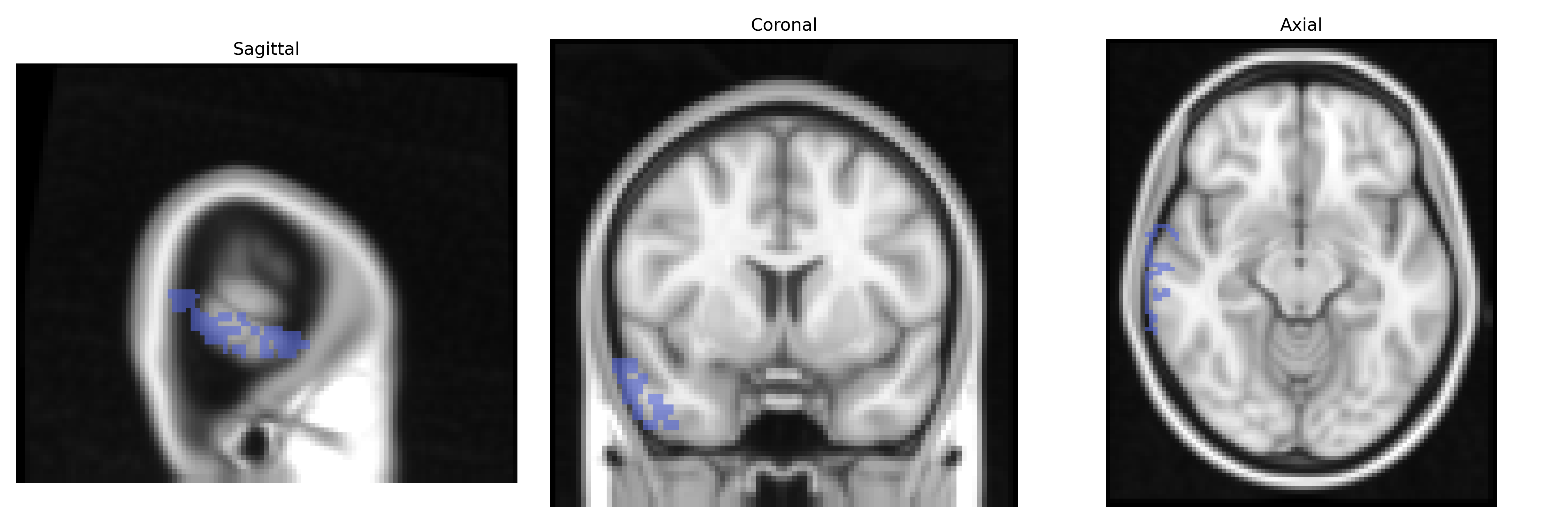
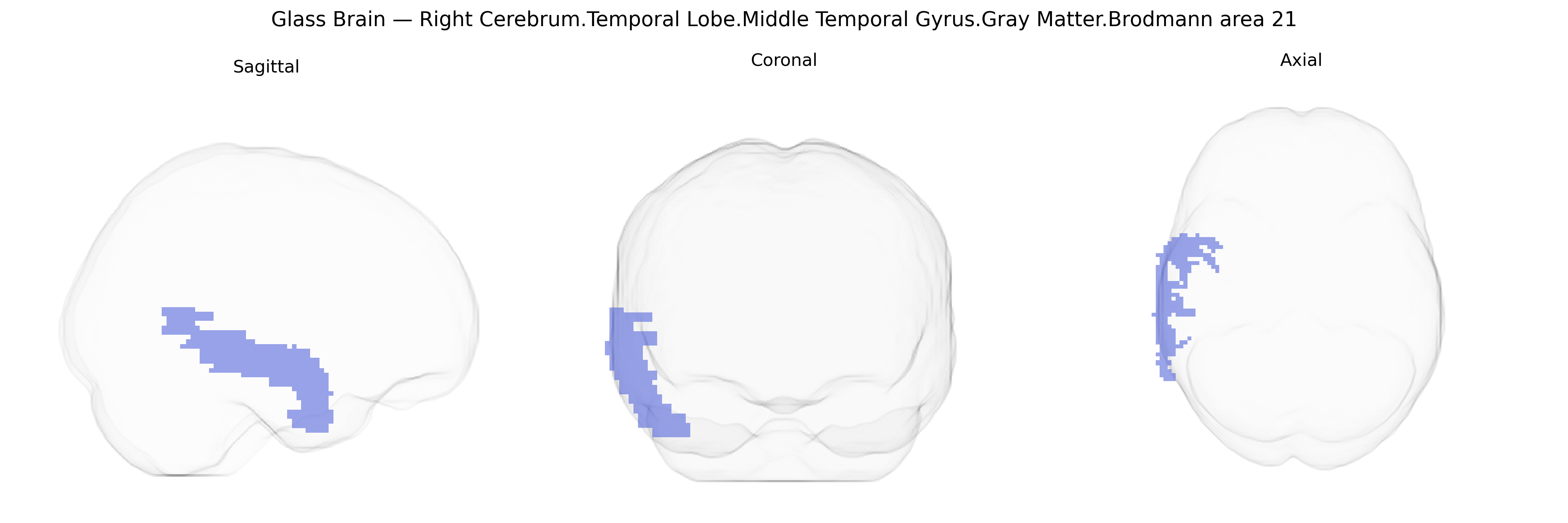
The bilateral Right Cerebrum.Temporal Lobe.Middle Temporal Gyrus.Gray Matter.Brodmann area 21 corresponds to cortical territory in the middle temporal gyrus of the temporal lobe, primarily involved in higher-order auditory processing, semantic aspects of language, and integration of visual and auditory information relevant to object recognition and social cognition. Cytoarchitectonically, Brodmann area 21 is characterized by a granular isocortical structure with distinct laminar organization that supports complex associative functions, including lexical-semantic processing and aspects of memory retrieval. Functionally, activation in this region has been associated with comprehension of spoken and written language, interpretation of meaningful stimuli, and participation in distributed networks for multimodal integration and conceptual knowledge. There is no direct Wikipedia article for this exact Talairach label; a closely related structure is Brodmann area 21.
The bilateral right middle temporal gyrus gray matter in Brodmann area 21 (BA21), as defined in the Talairach 2 mm atlas, has been implicated genetically mainly through imaging genetics and GWAS of brain structure and language-related traits. Variants in genes influencing cortical morphology—such as those identified by ENIGMA and UK Biobank studies (including loci near KIAA0586, CENPW, HMGA2, and others affecting global and regional cortical thickness and surface area)—have shown associations with temporal lobe volumes encompassing BA21. Language and semantic processing, core functions of BA21, have been linked to genetic risk for developmental language disorder and dyslexia through GWAS implicating genes such as FOXP2 and DCDC2, with imaging-genetic work showing altered temporal activation and structure in carriers of risk variants. Schizophrenia and autism spectrum disorder GWAS, which highlight synaptic and neurodevelopmental genes (e.g., CACNA1C, GRIN2A, NRXN1, CNTNAP2), have been connected via imaging genetics to abnormal middle temporal gyrus volume and functional connectivity, including BA21, correlating with deficits in social cognition and language. Additionally, polygenic risk scores for major depressive disorder and bipolar disorder have been associated with structural and functional variation in temporal regions overlapping BA21, while GWAS of cognitive performance and educational attainment (including loci near genes such as MAPT and SLC39A8) show correlations with temporal cortical anatomy. Overall, genetic influences on synaptic plasticity, neurodevelopment, and cortical microstructure appear to contribute to BA21 variation, which in turn is linked to risk for language-related and neuropsychiatric phenotypes, although specific locus-level associations uniquely targeting BA21 remain uncommon and typically arise in the context of broader temporal lobe or whole-brain analyses.
Overview generated by GPT-4o (2026).
Region ID: 79
Hemisphere: bilateral
Atlas: Talairach labels 2mm
Full Quality Version: Download MP4
Full Quality Version: Download MP4
Wali Sidiqyar*, Gaurav Rudravaram*, Elyssa M. McMaster, Trent M. Schwartz, Adam M. Saunders, Kurt G. Schilling, Bennett A. Landman "Introducing SPINS: A Shared Public Visualization Library of Neuroanatomical Structures." Medical Imaging with Deep Learning- short paper
This resource is licensed under CC0 1.0 Universal (Public Domain).