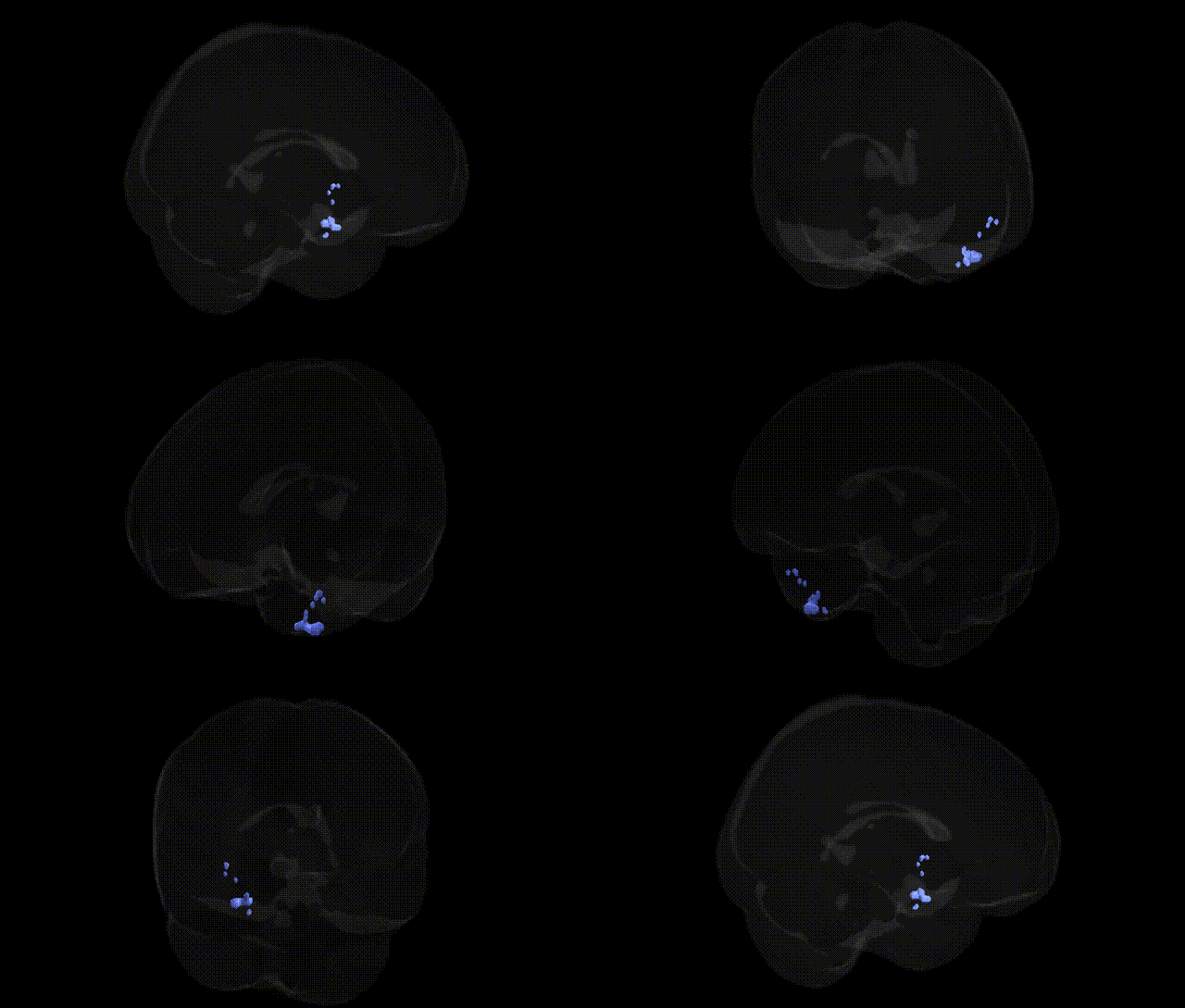
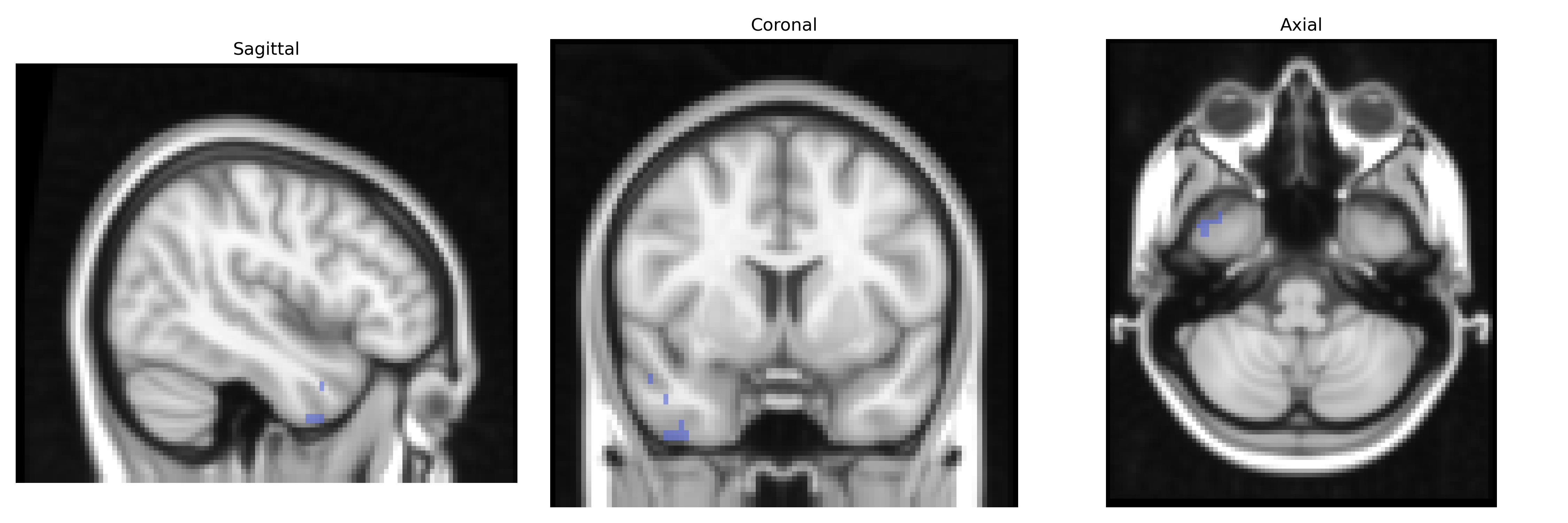
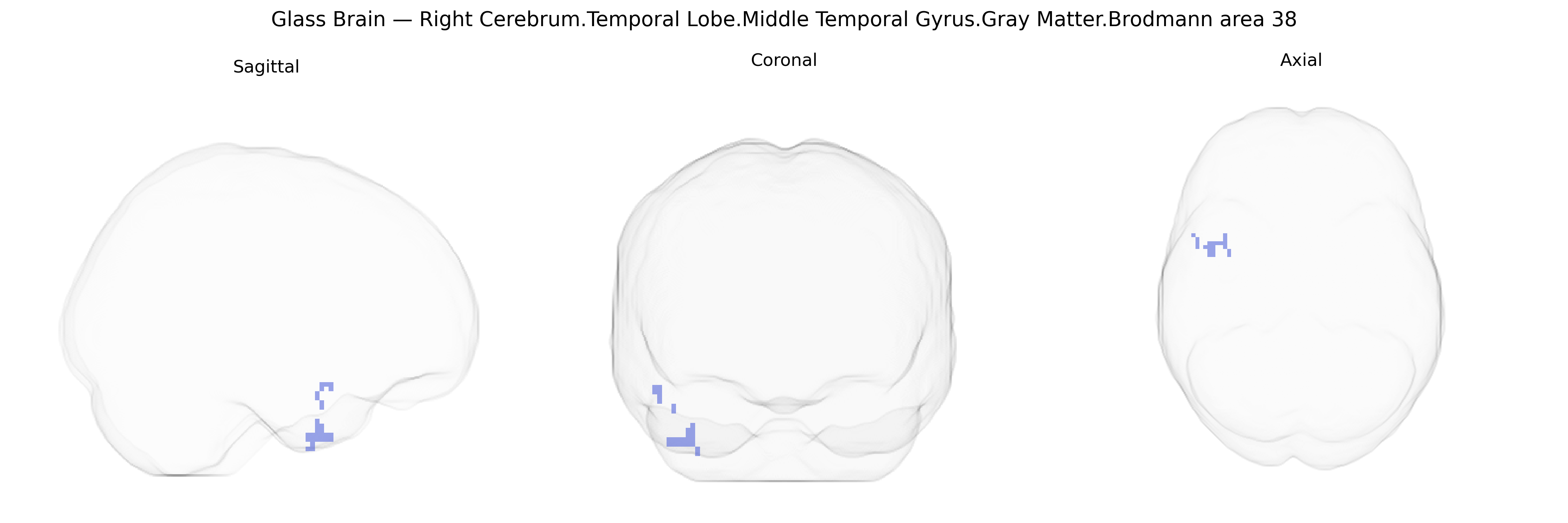
The bilateral Right Cerebrum.Temporal Lobe.Middle Temporal Gyrus.Gray Matter.Brodmann area 38 corresponds to the right-sided portion of the temporopolar cortex (temporal pole), a paralimbic region at the most anterior end of the temporal lobe. Brodmann area 38 is cytoarchitectonically distinct and is implicated in high-level socio-emotional and multimodal associative processing, including semantic memory, emotional evaluation of sensory inputs, and integration of auditory, visual, and visceral information. It maintains dense reciprocal connections with the amygdala, orbitofrontal cortex, hippocampal formation, and other temporal association areas, positioning it as a hub for linking perceptual representations with affective and mnemonic processes. There is no direct link for “Brodmann area 38”; a related structure is the Temporal pole.
The bilateral right middle temporal gyrus gray matter in Brodmann area 38 (anterior temporal pole region) has been implicated in several genetic and GWAS-based findings, largely through imaging genetics and disorder studies rather than region-specific SNP associations. Variants affecting cortical thickness and surface area in temporal pole and adjacent middle temporal regions have emerged in large neuroimaging GWAS (e.g., ENIGMA and UK Biobank), identifying loci in genes involved in neurodevelopment and synaptic function such as MAPT, KIAA0586, DACT1, and others that broadly influence temporal lobe morphology. BA38 is consistently associated with semantic memory, social cognition, and emotional processing, and genetic risk for neuropsychiatric and neurodegenerative disorders that show structural or functional alterations in this region—such as frontotemporal dementia (notably MAPT and GRN mutations), temporal lobe epilepsy (e.g., SCN1A, GABRA1 and other ion-channel genes), and schizophrenia and bipolar disorder (with polygenic risk scores linked to temporal lobe cortical thinning)—has been shown to correlate with temporal pole and middle temporal gyrus changes. Autism spectrum conditions and social cognition traits influenced by genes such as CNTNAP2, SHANK3, and oxytocin pathway genes have also been associated with altered activation or structure in anterior and middle temporal regions encompassing BA38, while language and semantic processing GWAS (including FOXP2-related pathways) implicate temporal lobe networks where BA38 is a key node, though direct, atlas-specific genetic associations to “Talairach labels 2mm BA38” remain limited and typically inferred from broader temporal lobe or temporal pole analyses.
Overview generated by GPT-4o (2026).
Region ID: 36
Hemisphere: bilateral
Atlas: Talairach labels 2mm
Full Quality Version: Download MP4
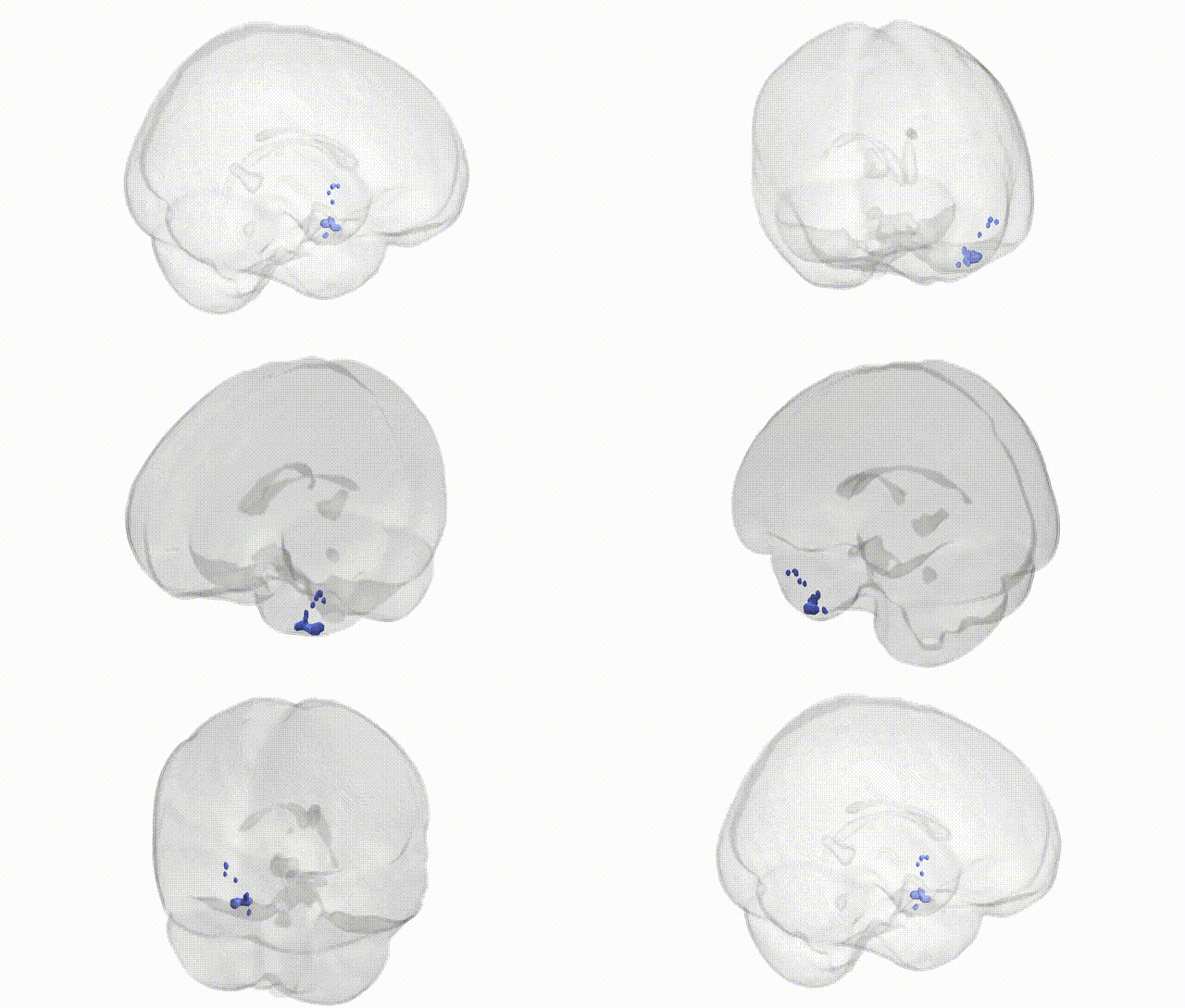
Full Quality Version: Download MP4
Wali Sidiqyar*, Gaurav Rudravaram*, Elyssa M. McMaster, Trent M. Schwartz, Adam M. Saunders, Kurt G. Schilling, Bennett A. Landman "Introducing SPINS: A Shared Public Visualization Library of Neuroanatomical Structures." Medical Imaging with Deep Learning- short paper
This resource is licensed under CC0 1.0 Universal (Public Domain).