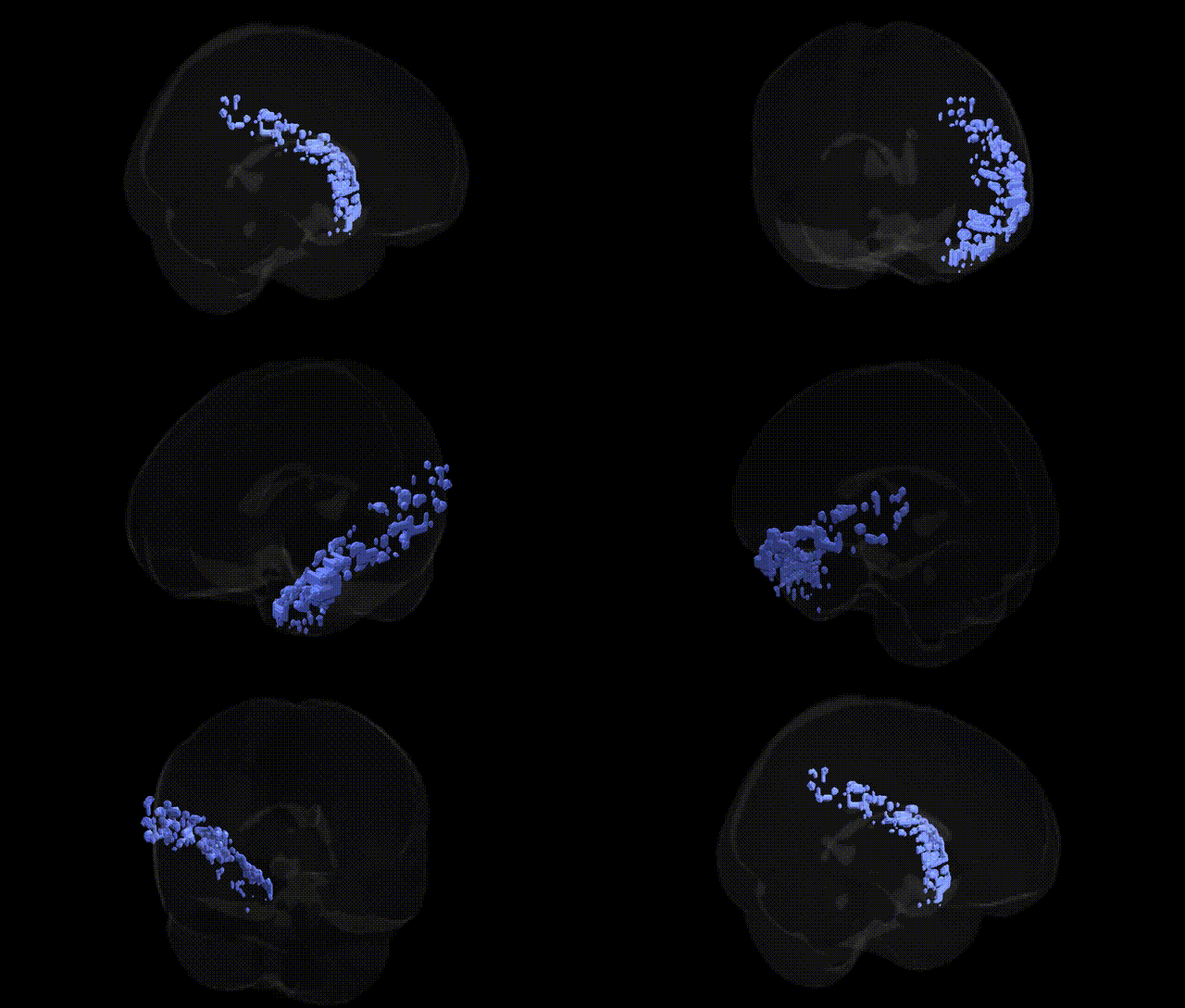
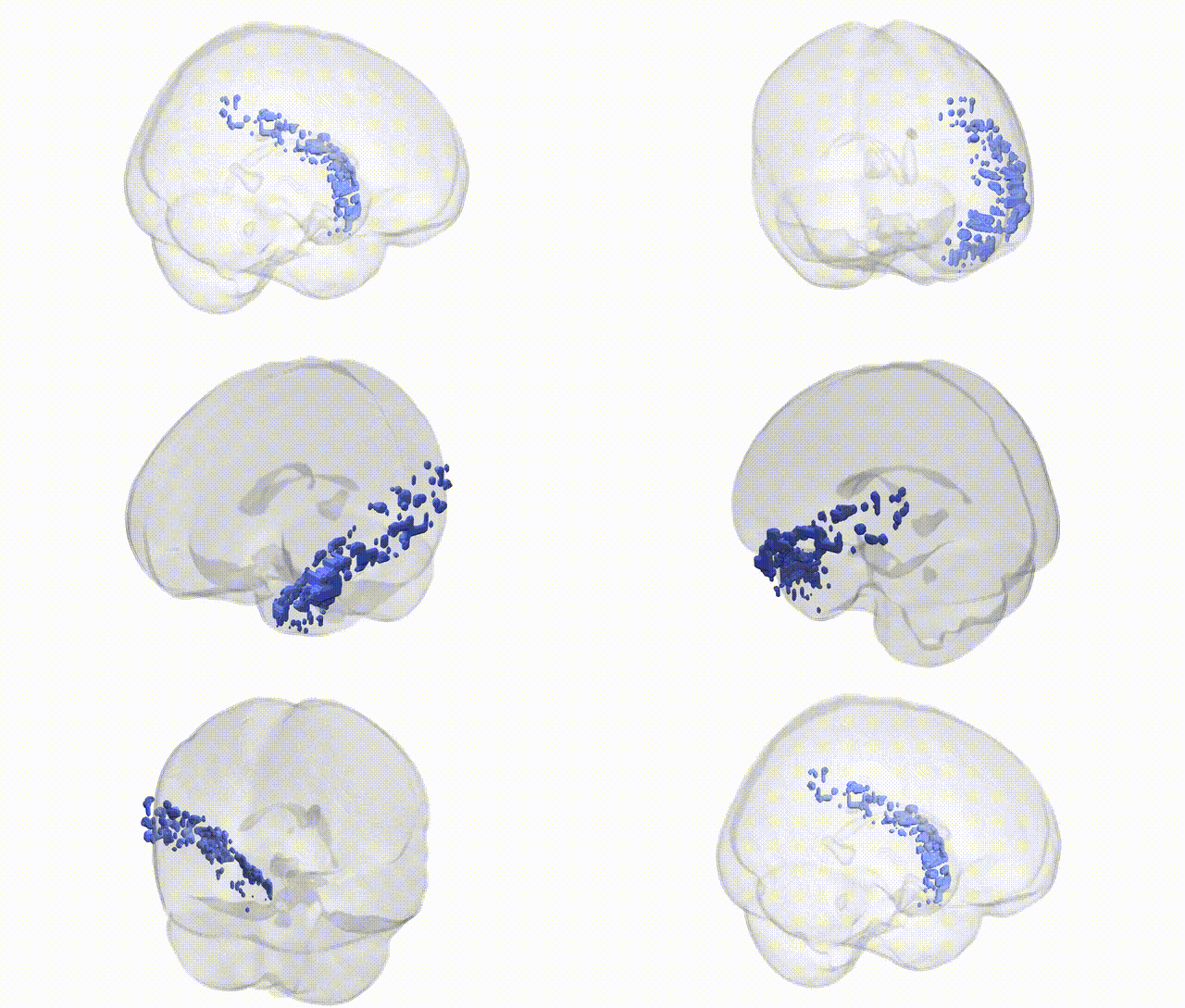
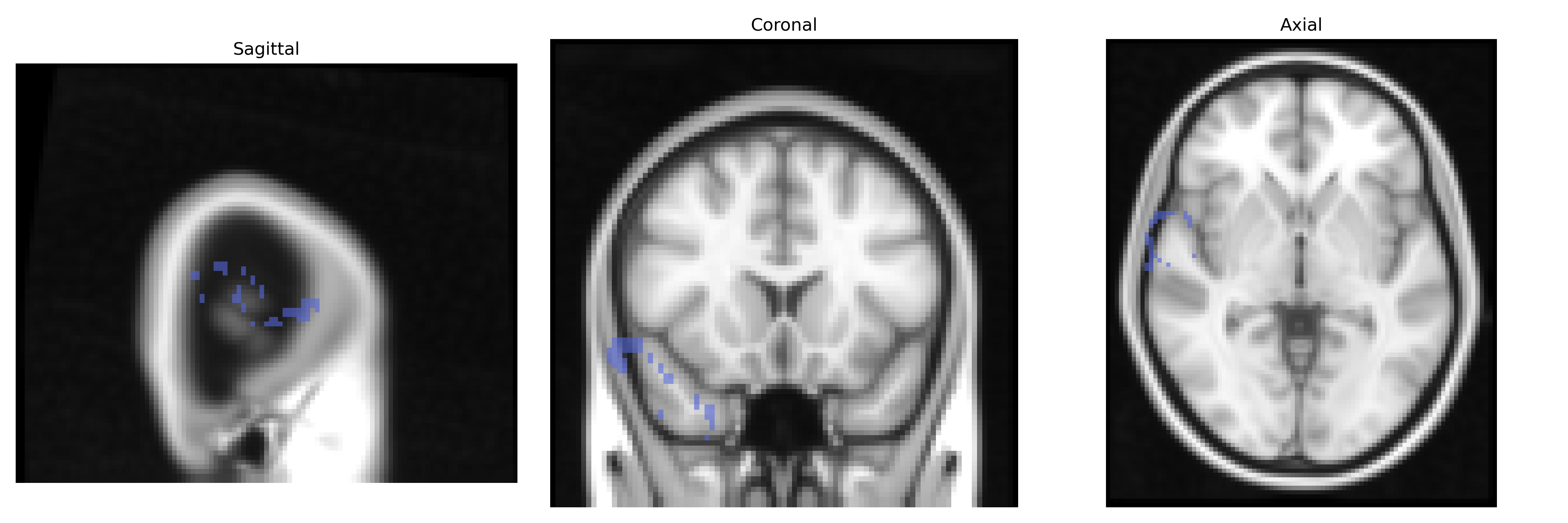
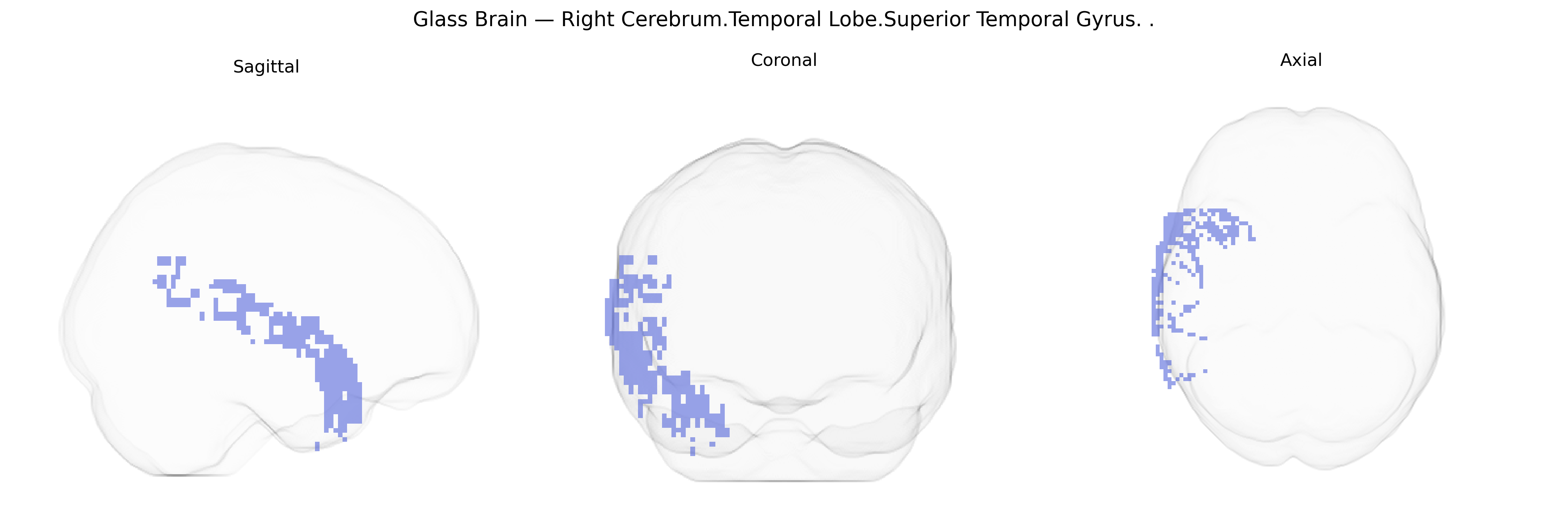
The bilateral Right Cerebrum.Temporal Lobe.Superior Temporal Gyrus, as defined in the Talairach 2 mm Atlas, corresponds to the right superior temporal gyrus, a cortical region extending along the dorsal aspect of the temporal lobe lateral surface. Cytoarchitectonically overlapping primarily with Brodmann areas 22 and parts of 41/42, it is a key component of the auditory association cortex and language-related networks, particularly involved in processing complex acoustic patterns, speech perception, and aspects of social cognition such as voice recognition and interpretation of prosody. Functionally, this region integrates auditory input with multimodal information from frontal and parietal areas, participates in phonological and lexical-semantic processing in the dominant hemisphere (often left, but with complementary roles on the right), and contributes to higher-order processing of music and environmental sounds. Lesions or dysfunction in the right superior temporal gyrus can lead to deficits in nonverbal auditory processing, impaired perception of affective prosody, and disturbances in social and communicative behaviors.
Superior temporal gyrus
The bilateral right superior temporal gyrus (STG) is a core node in auditory and language processing, social cognition, and aspects of psychosis, and a wide range of genetic and GWAS findings converge on this region. Variants in FOXP2, CNTNAP2, DCDC2, KIAA0319, ROBO1 and other language/reading-related genes have been associated with structural and functional differences in the STG, including cortical thickness and activation during speech and phonological tasks. Large-scale imaging genetics studies (e.g., ENIGMA, UK Biobank) have shown that common variants in genes involved in neurodevelopment, synaptic function, and axon guidance (such as BDNF, NRG1, GRIN2A/B, DISC1, and multiple loci in the MHC region) are associated with STG volume, cortical surface area, and asymmetry, often in the context of schizophrenia, schizoaffective disorder, and bipolar disorder, where right STG thinning or reduced volume is a replicated finding. GWAS of auditory hallucinations and psychosis-related traits have implicated loci affecting temporal lobe structure and connectivity, and polygenic risk scores for schizophrenia, autism spectrum disorder, and major depression show correlations with temporal lobe morphology, including the superior temporal cortex. Additionally, variants linked to social communication, empathy, and autism (for example in SHANK3, NRXN1, and other synaptic genes) have been associated with altered superior temporal activation during social and face-voice processing, while GWAS of general cognitive ability and educational attainment report associations with temporal lobe measures that include the STG, suggesting that its genetically influenced structure and function contribute to individual differences in language, social cognition, and vulnerability to neuropsychiatric disorders.
Overview generated by GPT-4o (2026).
Region ID: 43
Hemisphere: bilateral
Atlas: Talairach labels 2mm
Full Quality Version: Download MP4
Full Quality Version: Download MP4
Wali Sidiqyar*, Gaurav Rudravaram*, Elyssa M. McMaster, Trent M. Schwartz, Adam M. Saunders, Kurt G. Schilling, Bennett A. Landman "Introducing SPINS: A Shared Public Visualization Library of Neuroanatomical Structures." Medical Imaging with Deep Learning- short paper
This resource is licensed under CC0 1.0 Universal (Public Domain).