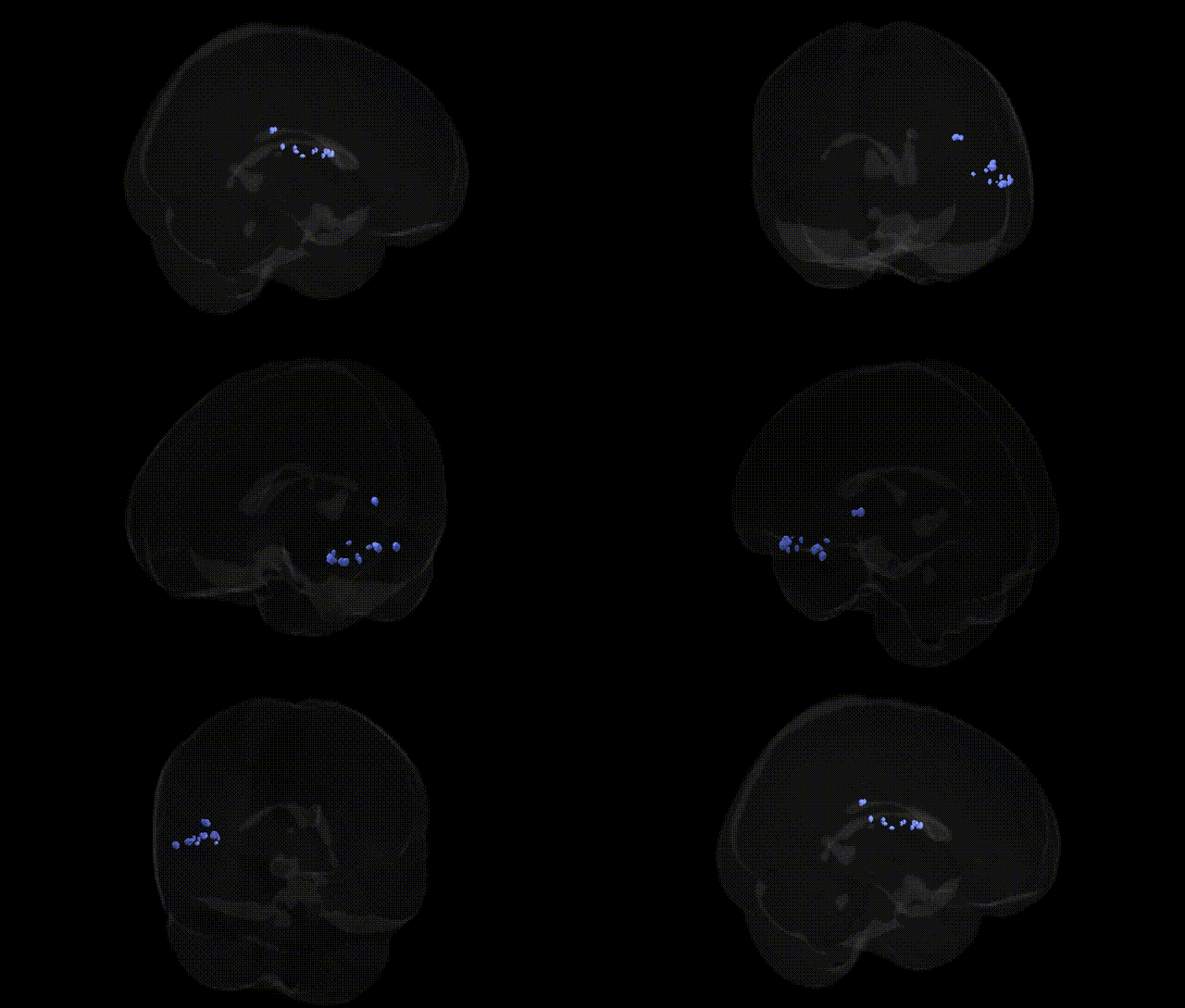
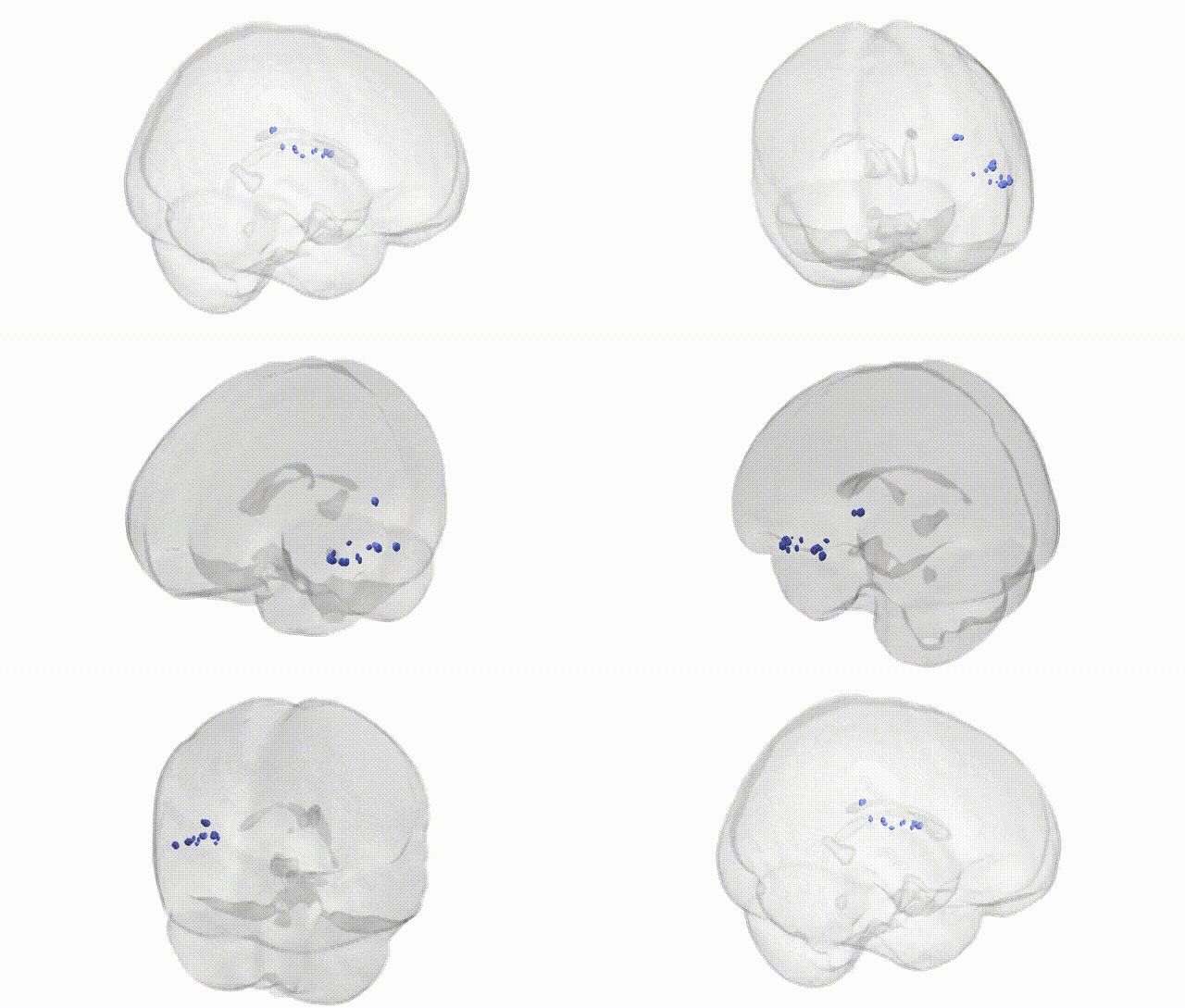
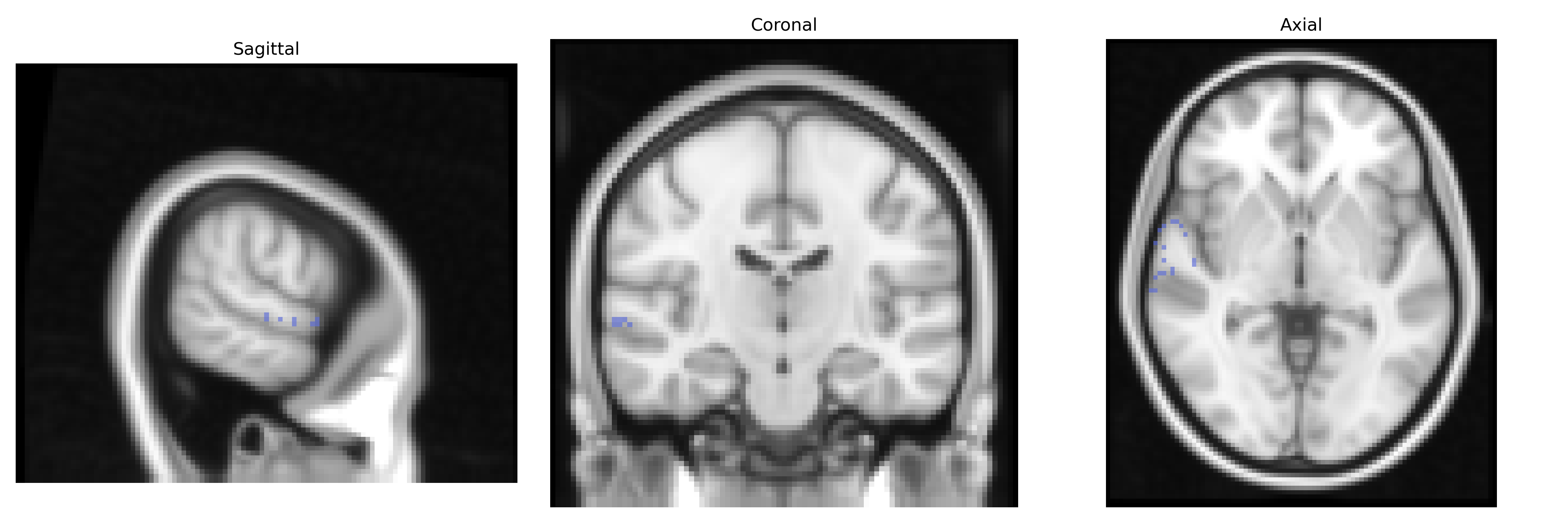
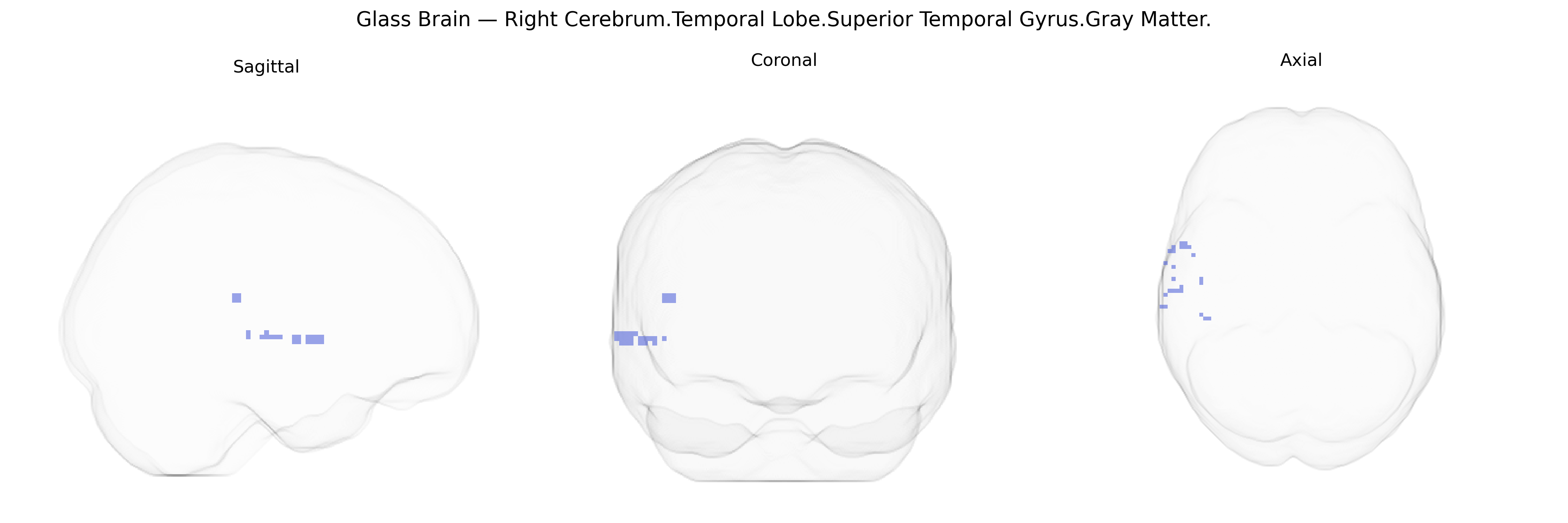
The bilateral Right Cerebrum.Temporal Lobe.Superior Temporal Gyrus.Gray Matter corresponds to cortical tissue in the right superior temporal gyrus (STG), a key component of the lateral temporal neocortex involved in auditory perception, speech processing, and aspects of social cognition. Cytoarchitectonically, this region encompasses primary and higher-order auditory areas (including portions of Brodmann areas 22 and 41/42), receiving input from the medial geniculate nucleus of the thalamus and projecting to multimodal association cortices. Functionally, the right STG is particularly implicated in processing nonverbal auditory features such as prosody, music, and environmental sounds, and contributes to the integration of auditory information with visual and somatosensory inputs for complex perceptual and communicative behaviors. Lesions in this region can result in deficits in auditory scene analysis, impaired perception of emotional intonation, and disturbances in higher-order auditory comprehension.
Superior temporal gyrus
The bilateral right superior temporal gyrus gray matter (as defined in the Talairach 2 mm atlas) has been repeatedly implicated in genetic studies of language, social cognition, and psychiatric and neurodevelopmental disorders. GWAS and imaging genetics work show that common variants influencing cortical surface area and thickness in this region include loci near genes such as FOXP2, CNTNAP2, DCDC2, KIAA0319, and other neurodevelopmental and synaptic genes, many of which are also associated with speech and language impairment, dyslexia, autism spectrum disorder, and schizophrenia. Polygenic scores for schizophrenia, bipolar disorder, and major depression have been linked to altered gray matter volume and cortical thickness in temporal lobe regions that encompass the superior temporal gyrus, particularly in studies from large consortia such as ENIGMA. Variants in complement and synaptic pruning pathways (e.g., near C4) and glutamatergic and GABAergic signaling genes have shown associations with temporal lobe structural changes in psychosis. Additionally, GWAS of auditory processing and musical aptitude, as well as social communication traits and theory-of-mind performance, have identified overlapping genetic architectures that modulate structure and function of the superior temporal gyrus, consistent with its role in speech perception, prosody, and social-emotional processing. Overall, genetic influences on this region appear highly polygenic, with shared risk across language-related traits, cognitive abilities, and major psychiatric disorders.
Overview generated by GPT-4o (2026).
Region ID: 575
Hemisphere: bilateral
Atlas: Talairach labels 2mm
Full Quality Version: Download MP4
Full Quality Version: Download MP4
Wali Sidiqyar*, Gaurav Rudravaram*, Elyssa M. McMaster, Trent M. Schwartz, Adam M. Saunders, Kurt G. Schilling, Bennett A. Landman "Introducing SPINS: A Shared Public Visualization Library of Neuroanatomical Structures." Medical Imaging with Deep Learning- short paper
This resource is licensed under CC0 1.0 Universal (Public Domain).