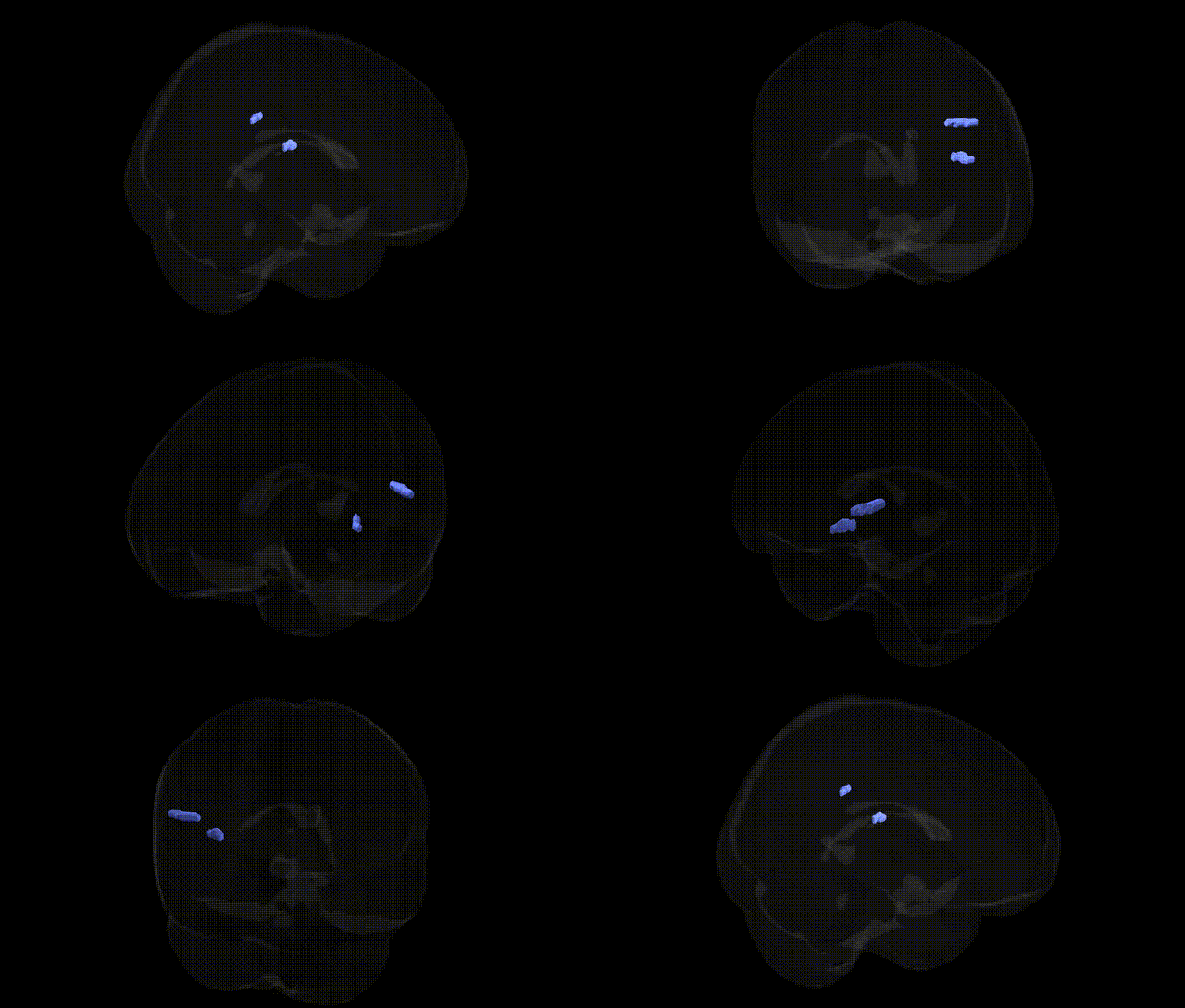
The bilateral Right Cerebrum.Temporal Lobe.Superior Temporal Gyrus.Gray Matter.Brodmann area 13, as labeled in the Talairach 2 mm Atlas, corresponds cytoarchitectonically to a portion of the insular cortex rather than the superficial superior temporal gyrus, reflecting the atlas’s internal mapping conventions. Brodmann area 13 is situated deep within the lateral sulcus, forming part of the insula, and is implicated in multimodal integration of autonomic, visceral, and emotional information, as well as aspects of gustatory processing and interoception. Functionally, it participates in salience detection and contributes to networks underlying affective experience, subjective feeling states, and coordination of homeostatic responses. There is no direct Wikipedia article for “Brodmann area 13”; a closely related structure is the insular cortex: Insular cortex.
The bilateral right superior temporal gyrus (STG) gray matter, including cortex mapped to Brodmann area 13 in the Talairach 2 mm atlas, has been implicated in genetic studies of language, social cognition, and psychiatric risk, although BA13 itself is more classically associated with insular and anterior temporal regions and precise Talairach subdivisions are not directly targeted in most GWAS. Twin and imaging‑genetics studies consistently show high heritability of STG volume and cortical thickness, with variants in genes such as FOXP2, CNTNAP2, NRGN, and GRIN2A linked to speech and language abilities, auditory processing, and temporal lobe structural variation. Large GWAS of brain imaging phenotypes (e.g., ENIGMA, UK Biobank) have identified multiple loci (including common variants near genes involved in synaptic function, neurodevelopment, and axon guidance) associated with temporal lobe cortical thickness and surface area, though these are typically reported at the lobe or gyral level rather than at a specific Brodmann area. Genetic risk for schizophrenia, bipolar disorder, and major depressive disorder—indexed by polygenic risk scores—has been associated with altered right STG gray‑matter volume and functional responses during auditory and social‑cognitive tasks, and loci in complement pathway genes (such as C4) and calcium‑channel or synaptic genes (e.g., CACNA1C, ZNF804A) have been linked to temporal cortical abnormalities. Autism spectrum disorder and social‑communication GWAS similarly implicate variants in genes involved in synapse formation and neuronal migration (e.g., genes in the neurexin–neuroligin pathway), which relate to structural and functional differences in the superior temporal and adjacent insular/anterior temporal cortices supporting social perception. Additionally, GWAS of risk‑taking, empathy, and personality traits have reported associations between polygenic scores and gray‑matter or activation differences in right temporal and insular regions, suggesting that genetic variation contributing to social and affective traits partly acts through this circuitry; however, the resolution of current genetic studies generally does not allow definitive attribution to Brodmann area 13 as distinguished in the Talairach 2 mm atlas.
Overview generated by GPT-4o (2026).
Region ID: 367
Hemisphere: bilateral
Atlas: Talairach labels 2mm
Full Quality Version: Download MP4
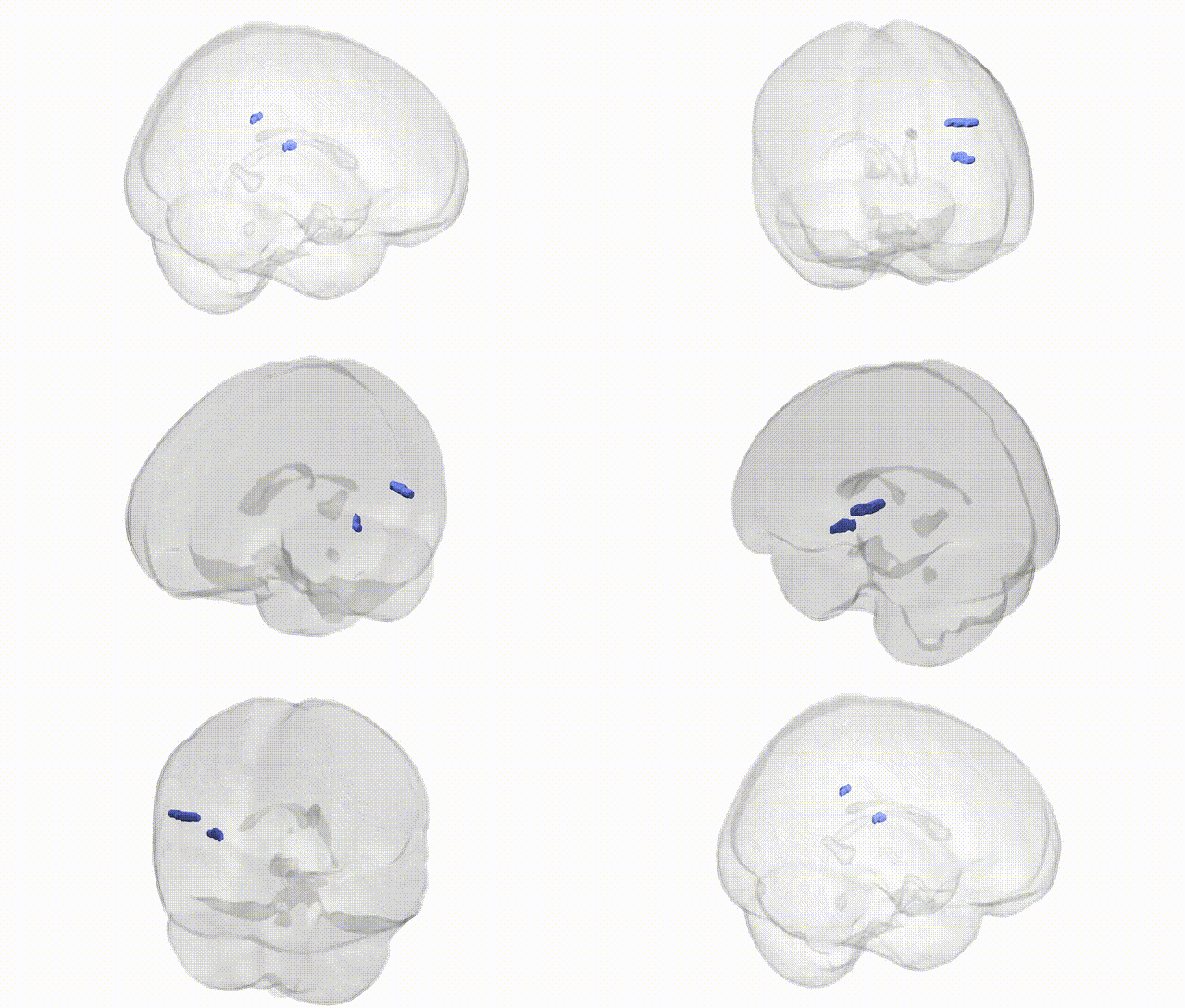
Full Quality Version: Download MP4
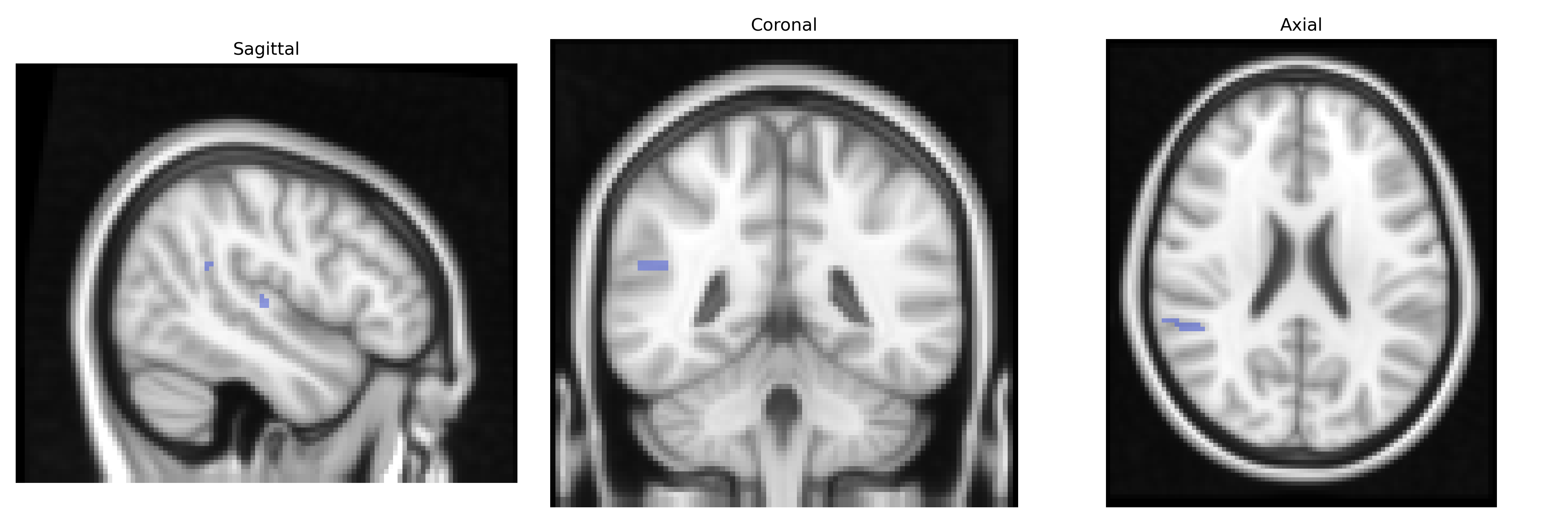
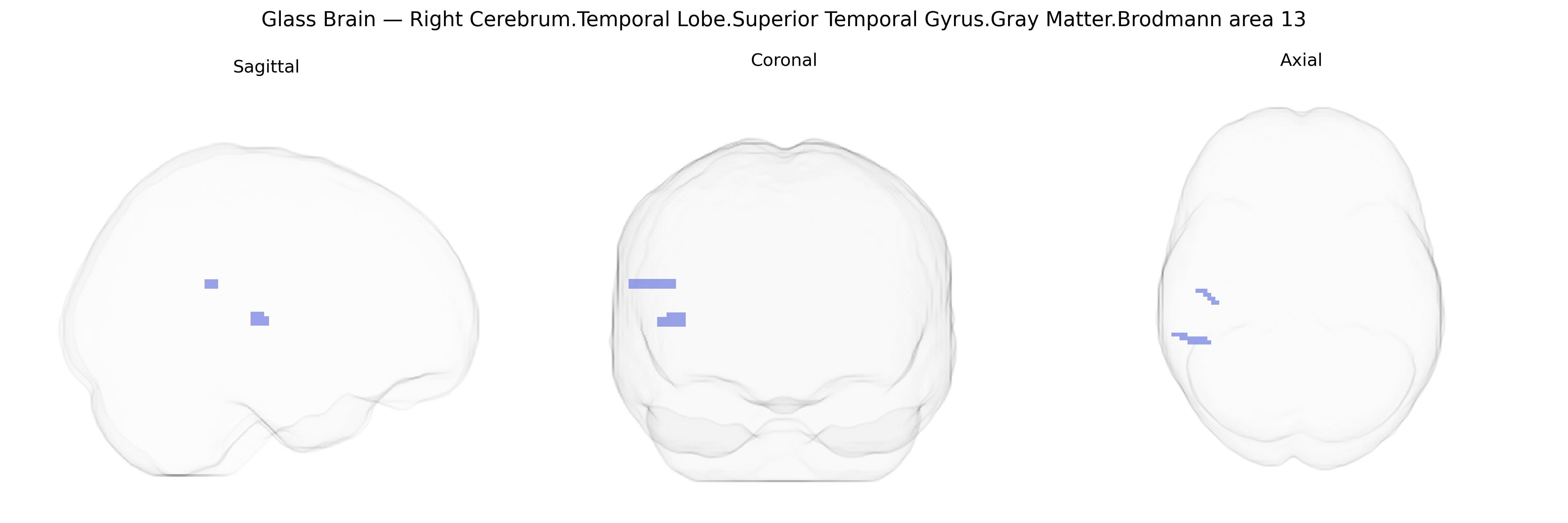
Wali Sidiqyar*, Gaurav Rudravaram*, Elyssa M. McMaster, Trent M. Schwartz, Adam M. Saunders, Kurt G. Schilling, Bennett A. Landman "Introducing SPINS: A Shared Public Visualization Library of Neuroanatomical Structures." Medical Imaging with Deep Learning- short paper
This resource is licensed under CC0 1.0 Universal (Public Domain).