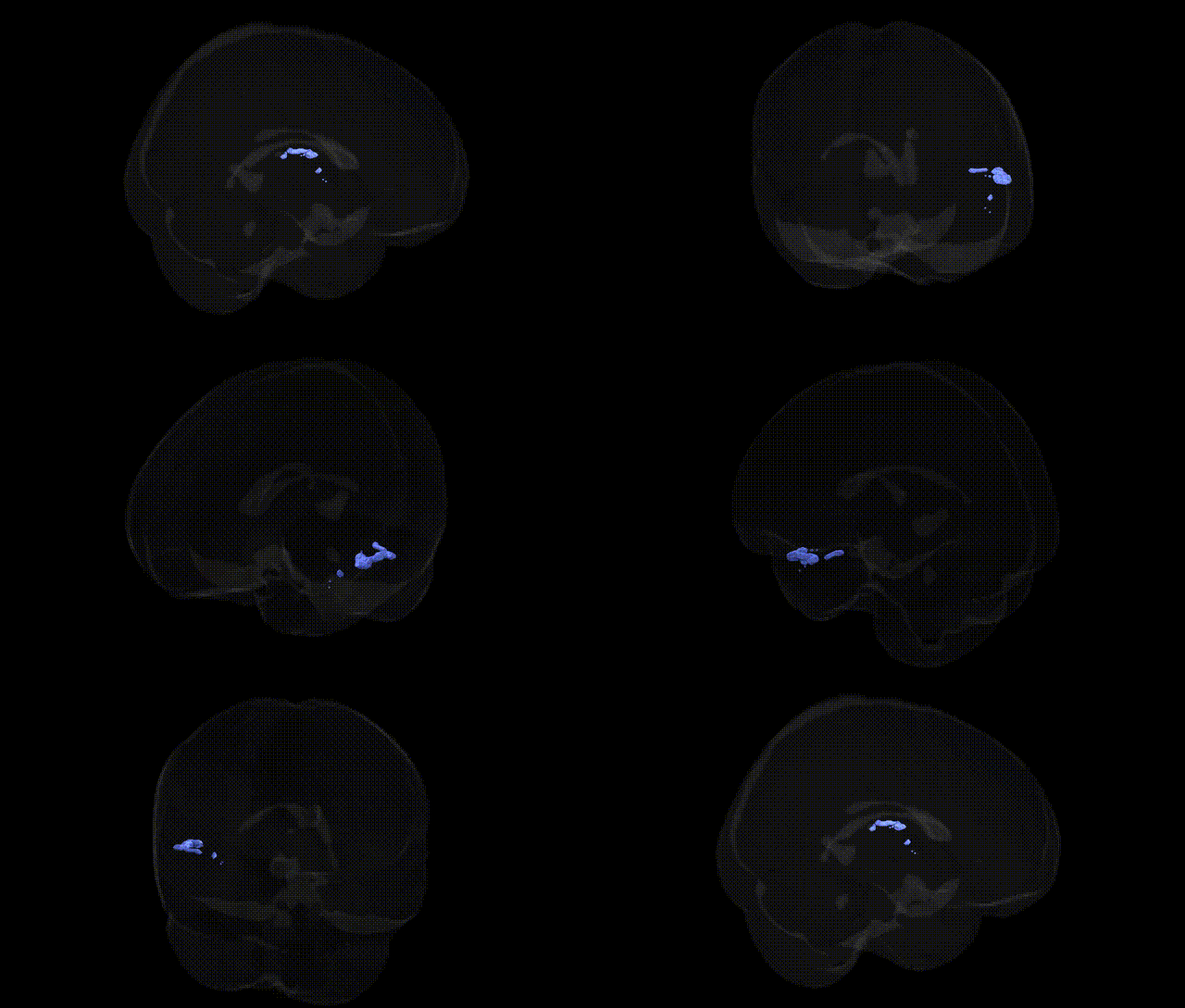
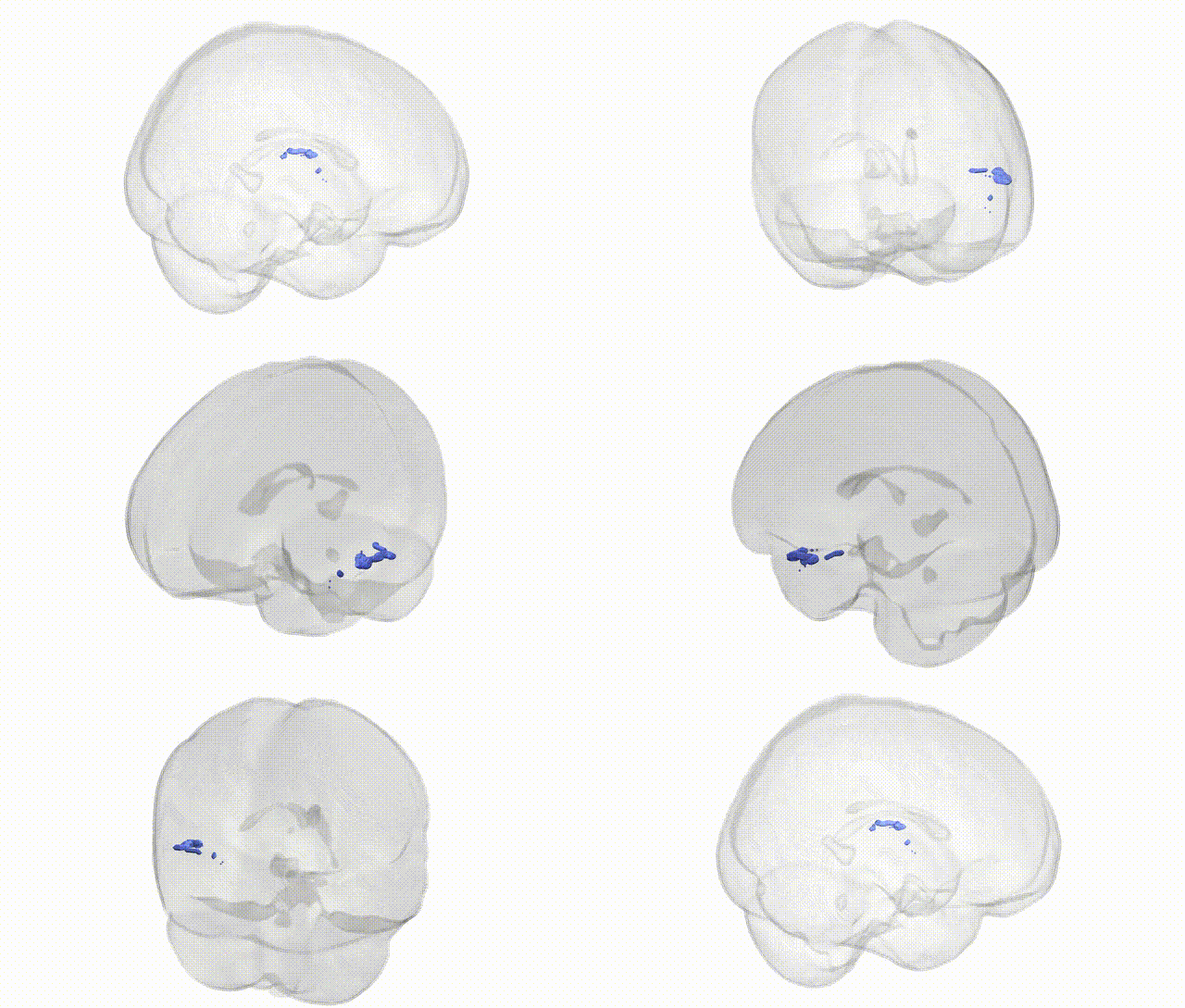
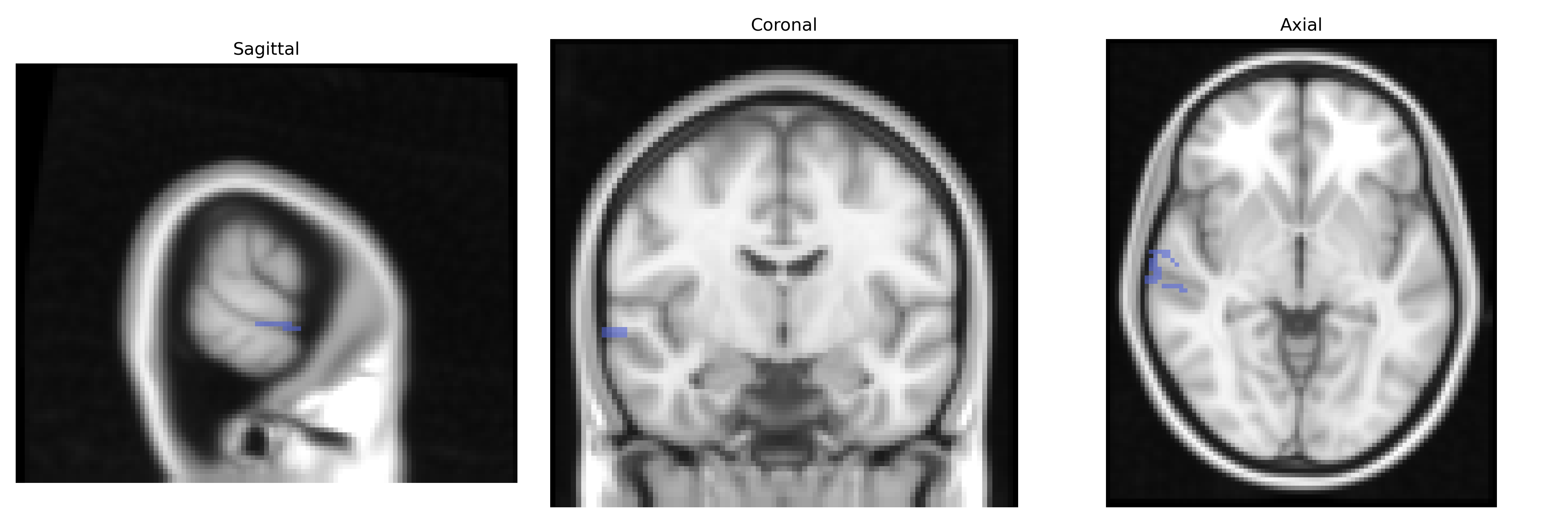
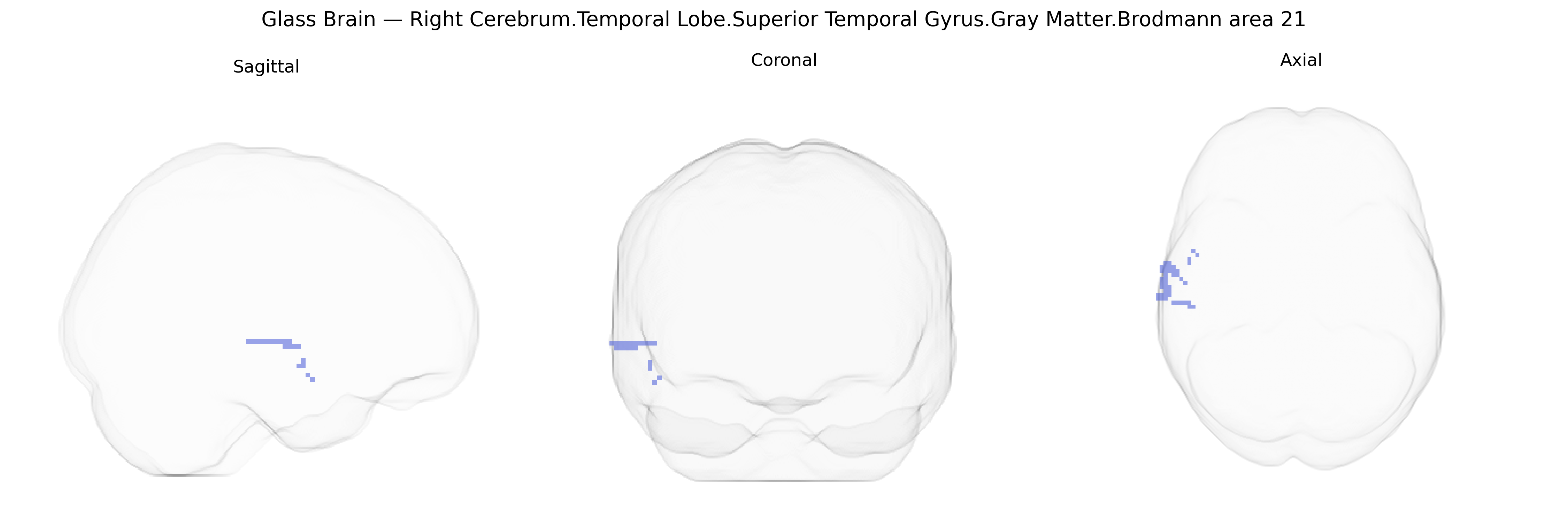
The bilateral Right Cerebrum.Temporal Lobe.Superior Temporal Gyrus.Gray Matter.Brodmann area 21 corresponds to association cortex within the middle and posterior portions of the superior temporal region, primarily involved in higher-order auditory processing, language comprehension, and multimodal integration of auditory with visual and somatosensory inputs. Cytoarchitectonically defined, Brodmann area 21 is part of the lateral temporal neocortex and is functionally linked to semantic processing, lexical retrieval, and aspects of social cognition, receiving convergent input from primary and secondary auditory areas and projecting to frontal and parietal association networks. Lesions in this region have been associated with impairments in word comprehension, semantic dementia, and disturbances of auditory recognition. There is no single Wikipedia entry specifically for “Right Cerebrum.Temporal Lobe.Superior Temporal Gyrus.Gray Matter.Brodmann area 21”; a closely related structure is Brodmann area 21.
The bilateral right superior temporal gyrus (STG; Brodmann area 21) gray matter has been repeatedly implicated in genetic studies of language, social cognition, and neuropsychiatric disorders. Twin and family studies show substantial heritability of STG volume and cortical thickness, with variants in genes related to synaptic function and neurodevelopment—such as CNTNAP2, FOXP2, DCDC2, KIAA0319, ROBO1, and NRGN—linked to structural and functional differences in temporal language areas, including BA21. GWAS of schizophrenia, bipolar disorder, and major depression have identified risk loci in genes like CACNA1C, GRIN2A, and ZNF804A that correlate with altered STG gray matter measures or activation during auditory and language tasks, while autism spectrum disorder and social communication GWAS highlight temporal lobe involvement for loci affecting synapse formation and neuronal migration (e.g., SHANK3, NRXN1, MET). Large imaging-genetics consortia (e.g., ENIGMA) report polygenic influences on temporal lobe morphometry, with common variants across thousands of loci contributing to right STG thickness, surface area, and volume, which in turn are associated with traits such as verbal ability, reading skill, musical perception, and susceptibility to auditory hallucinations. Additionally, GWAS of educational attainment and cognitive performance show that polygenic scores for these traits correlate with structural properties of BA21, underscoring its role as a genetically modulated hub for language and higher-order auditory processing.
Overview generated by GPT-4o (2026).
Region ID: 276
Hemisphere: bilateral
Atlas: Talairach labels 2mm
Full Quality Version: Download MP4
Full Quality Version: Download MP4
Wali Sidiqyar*, Gaurav Rudravaram*, Elyssa M. McMaster, Trent M. Schwartz, Adam M. Saunders, Kurt G. Schilling, Bennett A. Landman "Introducing SPINS: A Shared Public Visualization Library of Neuroanatomical Structures." Medical Imaging with Deep Learning- short paper
This resource is licensed under CC0 1.0 Universal (Public Domain).