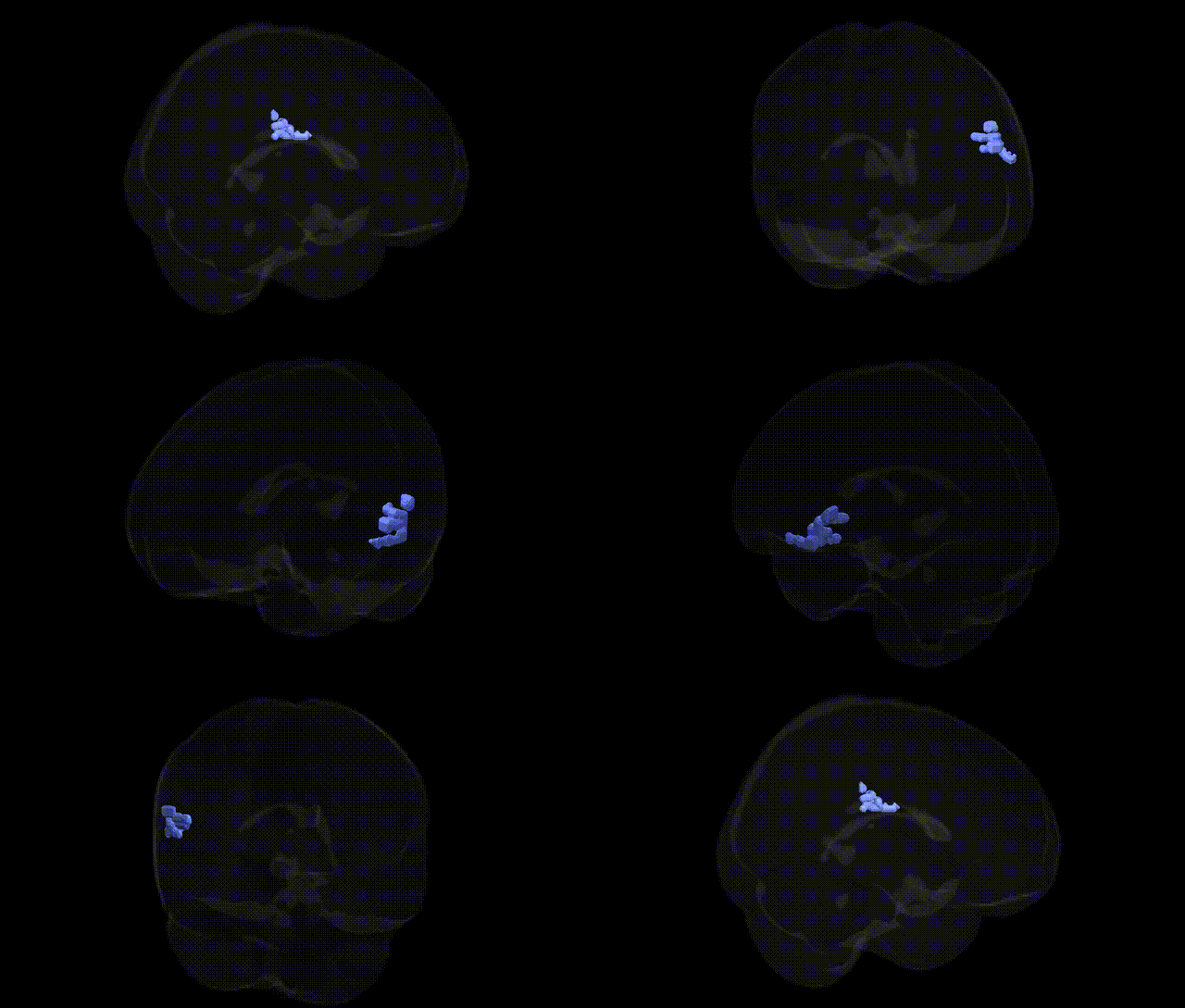
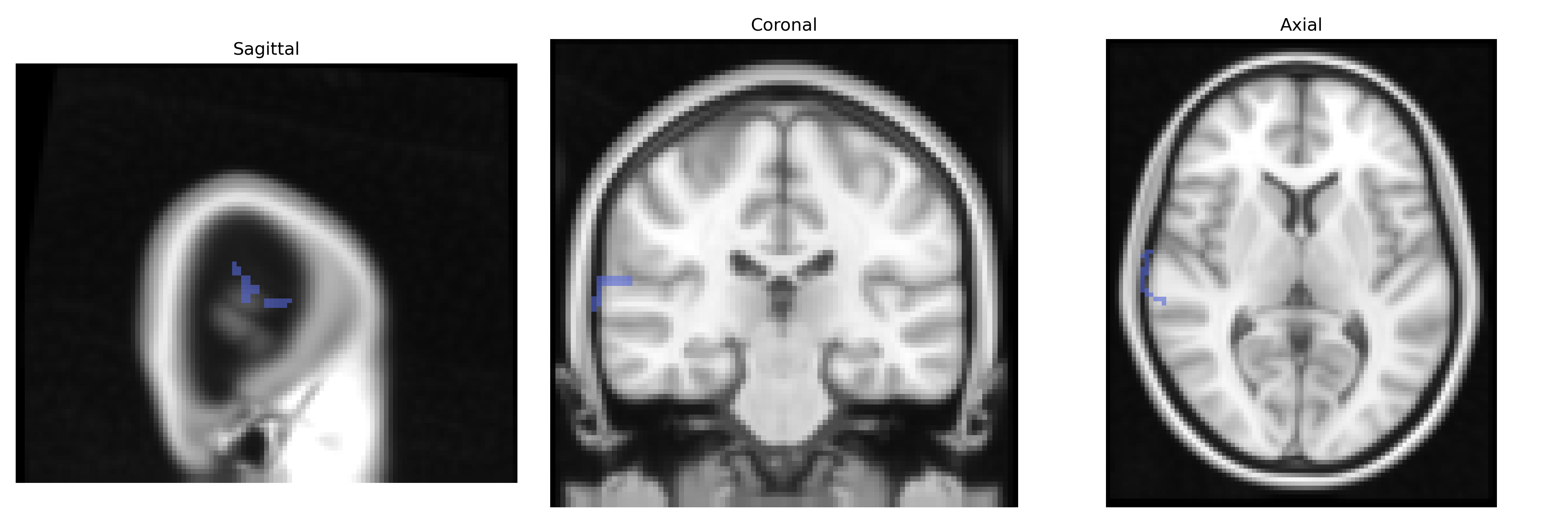
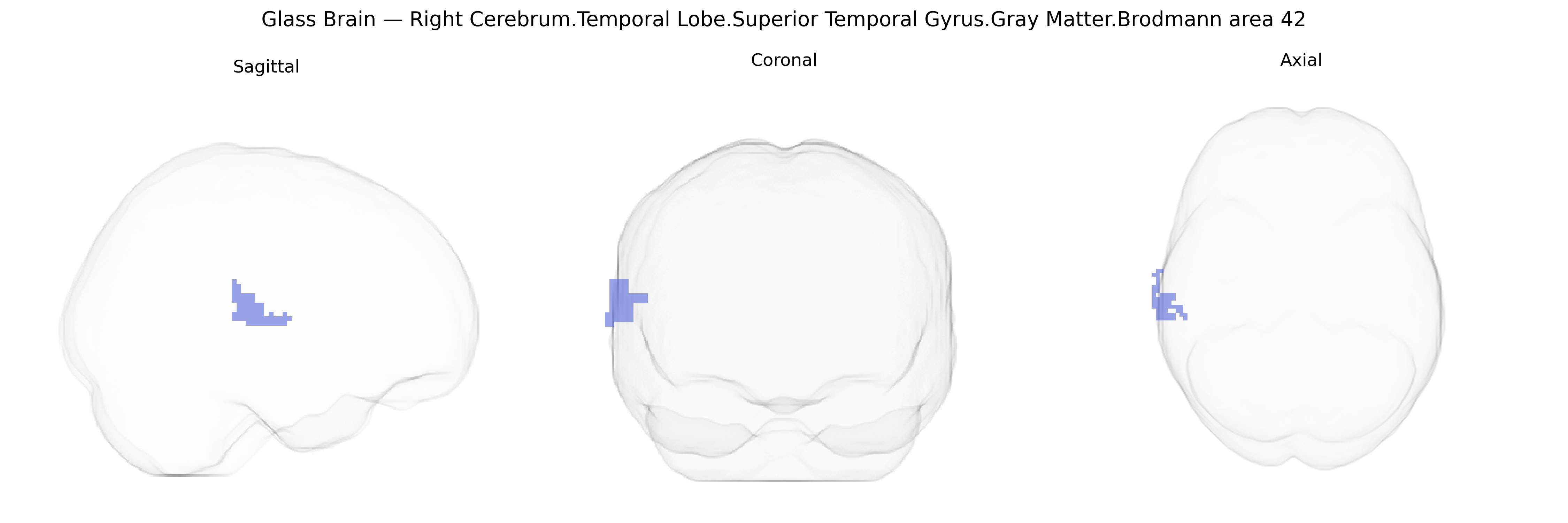
The bilateral Right Cerebrum.Temporal Lobe.Superior Temporal Gyrus.Gray Matter.Brodmann area 42 corresponds to primary and early association auditory cortex located on the superior temporal gyrus, adjacent to Heschl’s gyrus within the lateral temporal lobe. Cytoarchitectonically defined by Brodmann as area 42, this region participates in detailed analysis of acoustic features, including complex sound patterns and aspects of speech perception, and serves as a transitional zone between core primary auditory cortex (BA41) and higher-order auditory association areas (e.g., BA22). Neurons in this gray matter field receive input from subcortical auditory relays (notably the medial geniculate nucleus) and project to broader temporal and frontal networks involved in language, music, and environmental sound processing. There is no direct Wikipedia article for Brodmann area 42; see the related region Auditory cortex.
The bilateral right superior temporal gyrus gray matter in Brodmann area 42, a core auditory association region, has been implicated in several genetic and GWAS-based findings largely through imaging genetics and neuropsychiatric studies rather than region-specific GWAS alone. Variants in genes involved in synaptic function and neurodevelopment, such as CNTNAP2, FOXP2, GRIN2B, and DCDC2, have been associated with structural and functional differences in superior temporal regions supporting language, phonological processing, and auditory perception, including BA42. Large imaging–genetics consortia (e.g., ENIGMA) have identified polygenic influences on temporal lobe cortical thickness and surface area, with aggregated common variants across the genome contributing to volumetric features that include superior temporal gyri. GWAS and candidate gene studies in schizophrenia, bipolar disorder, and major depression have linked risk variants (for example in CACNA1C, ZNF804A, and other synaptic or calcium-channel genes) to abnormal activation or gray matter reductions in the superior temporal cortex, including auditory hallucinations and language-processing deficits. Autism spectrum disorder genetics (e.g., variants in genes such as SHANK3, NRXN1, and CHD8) are associated with altered superior temporal gyrus structure and connectivity, consistent with social communication and language impairments. In dyslexia and specific language impairment, risk loci near KIAA0319, DCDC2, and ROBO1 have been connected to atypical superior temporal and planum temporale morphology. Additionally, GWAS of tinnitus and auditory traits have identified variants in genes related to cochlear and central auditory processing that show functional correlates in auditory cortex regions overlapping BA42, although specific right-hemisphere BA42 genetic associations remain indirect and are inferred from broader superior temporal and auditory cortex findings.
Overview generated by GPT-4o (2026).
Region ID: 675
Hemisphere: bilateral
Atlas: Talairach labels 2mm
Full Quality Version: Download MP4
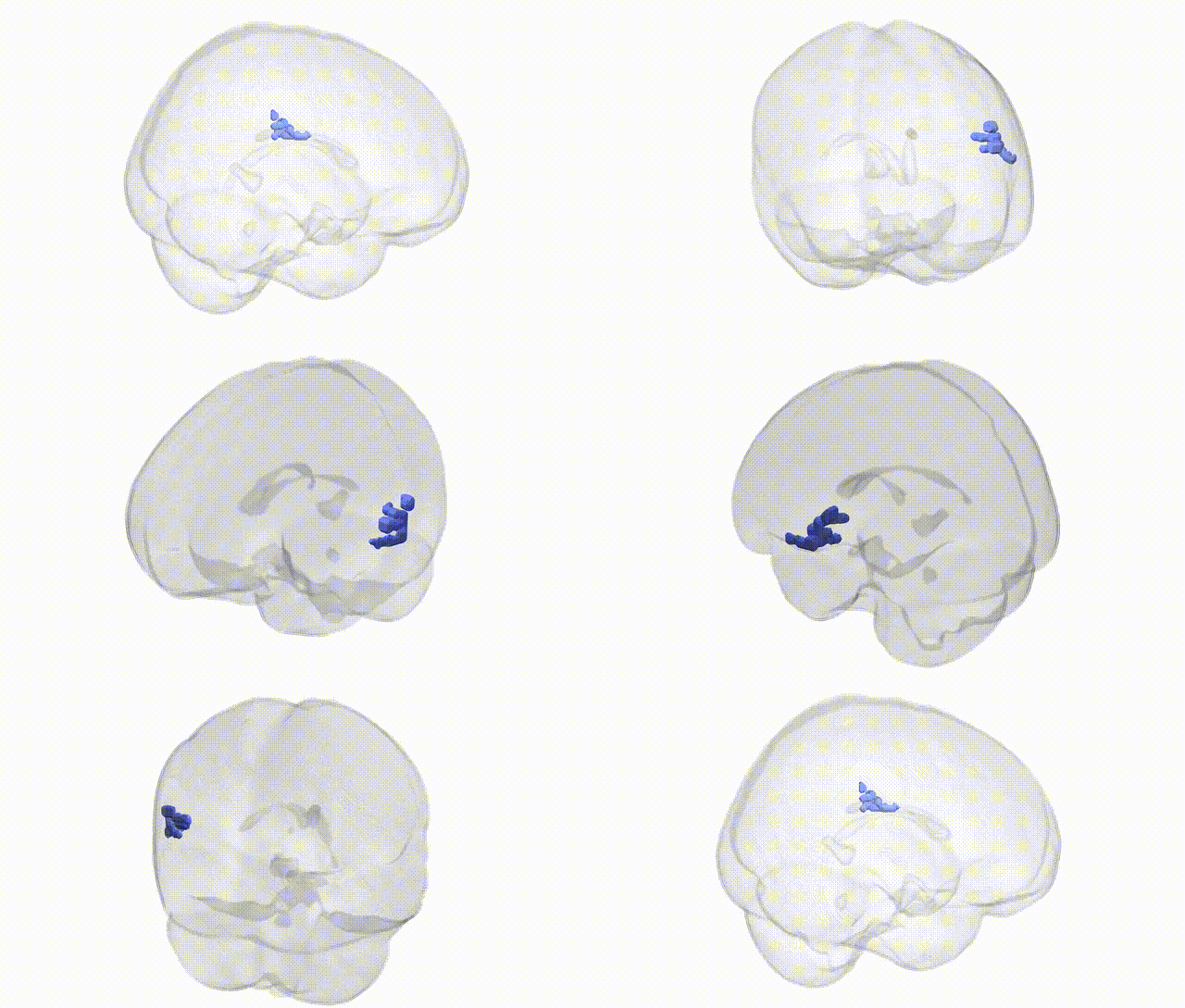
Full Quality Version: Download MP4
Wali Sidiqyar*, Gaurav Rudravaram*, Elyssa M. McMaster, Trent M. Schwartz, Adam M. Saunders, Kurt G. Schilling, Bennett A. Landman "Introducing SPINS: A Shared Public Visualization Library of Neuroanatomical Structures." Medical Imaging with Deep Learning- short paper
This resource is licensed under CC0 1.0 Universal (Public Domain).