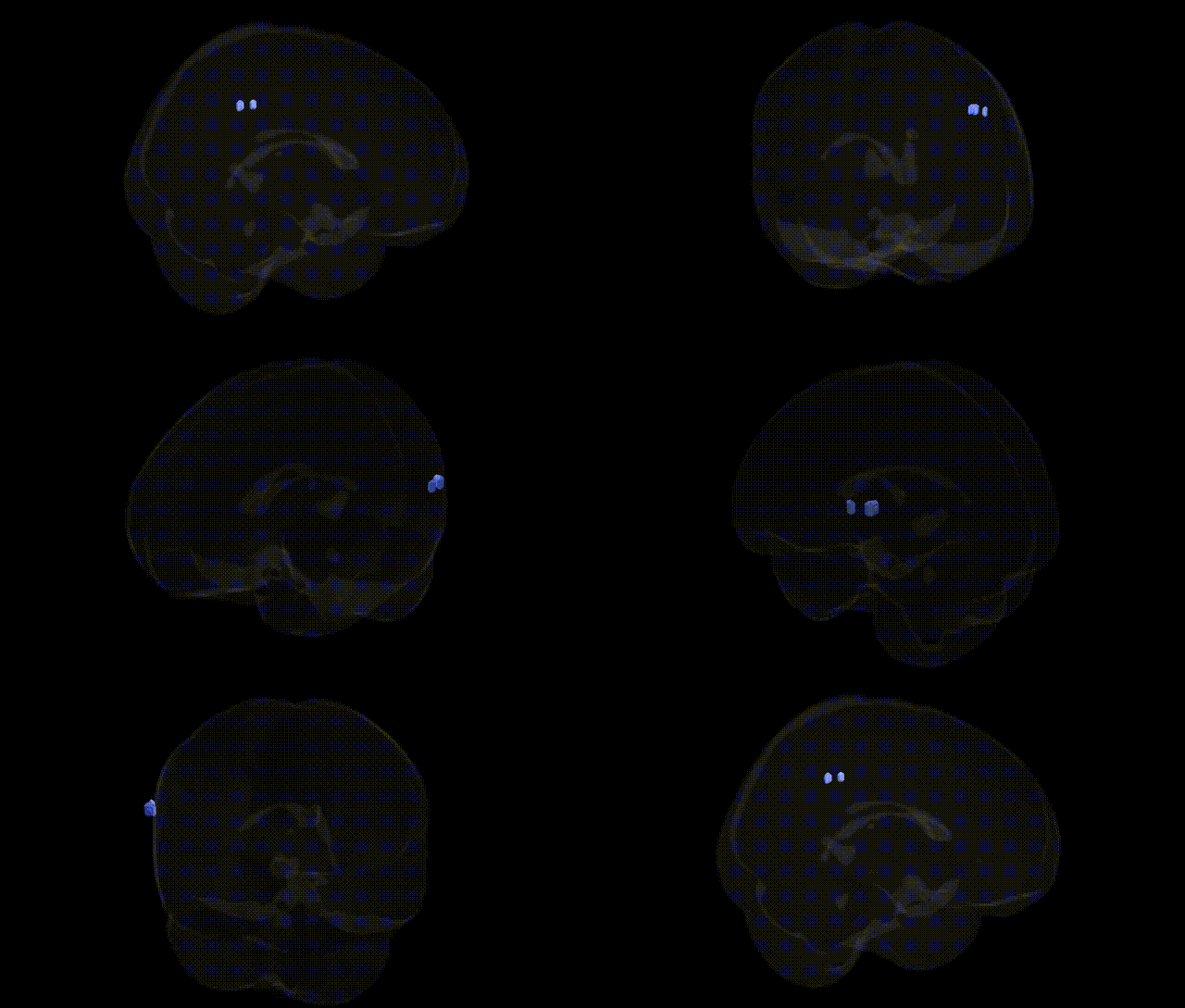
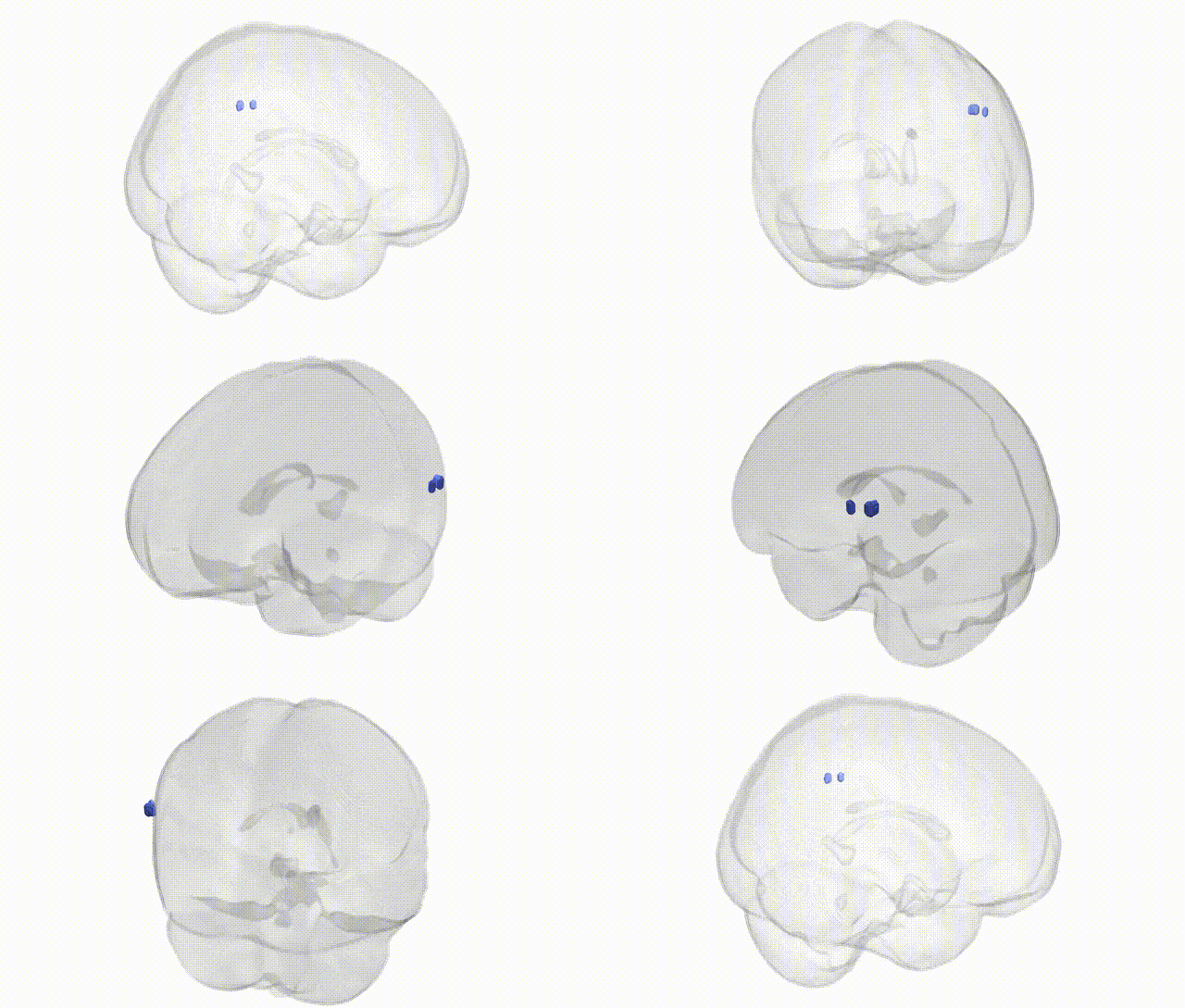
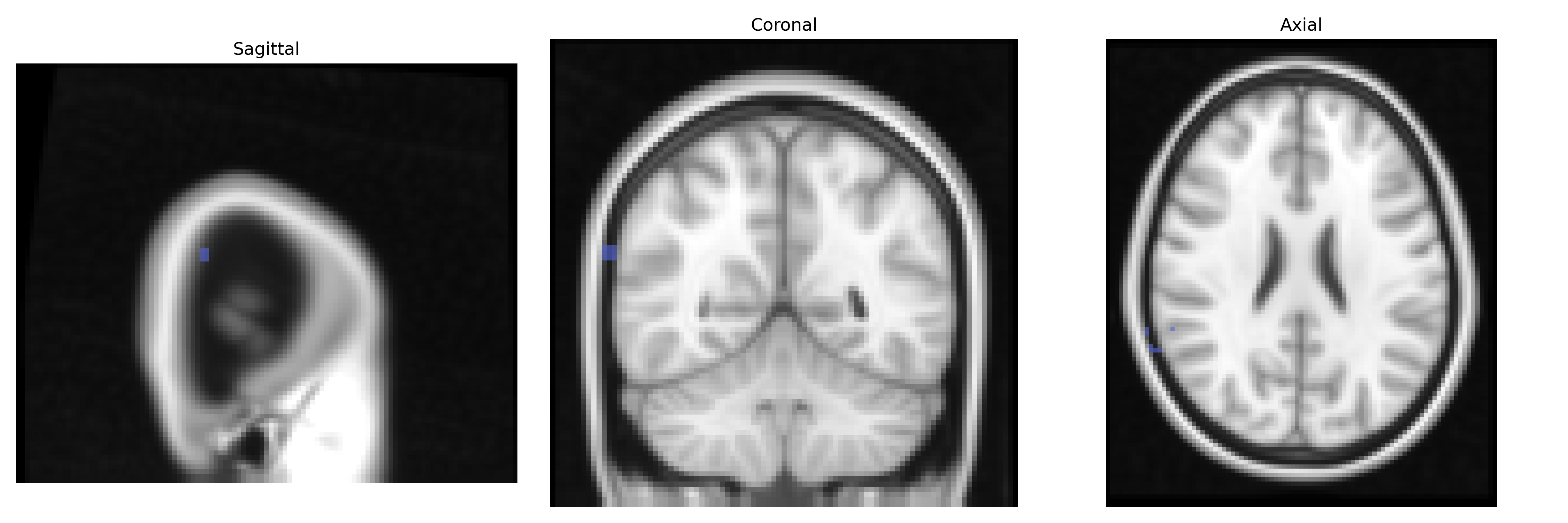
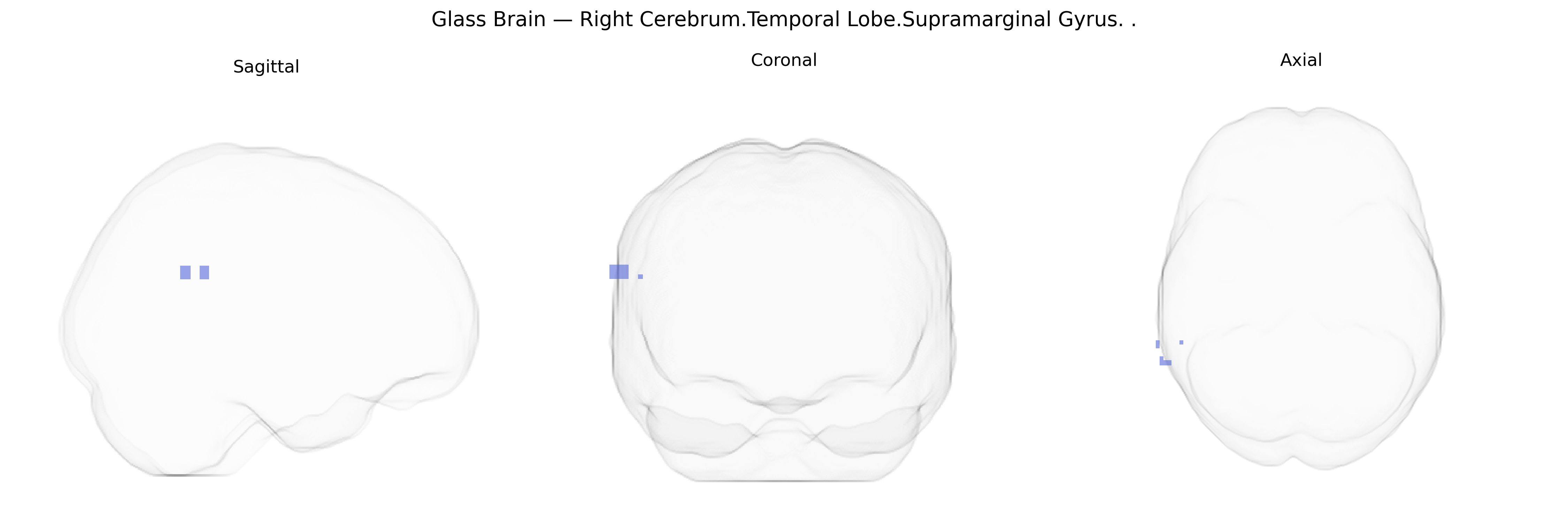
The bilateral Right Cerebrum.Temporal Lobe.Supramarginal Gyrus, as labeled in the Talairach 2 mm Atlas, refers to the supramarginal gyrus located at the posterior portion of the temporal lobe, wrapping around the end of the lateral (Sylvian) fissure and bordering the inferior parietal lobule. This cortical region is involved in higher-order language processing, including phonological decoding, speech perception, and aspects of reading and writing, as well as in multimodal sensory integration and social cognition processes such as empathy and theory of mind. Functionally, it contributes to linking auditory, visual, and somatosensory information, supporting the mapping of sounds to meaning and the interpretation of others’ actions and intentions. There is no direct Wikipedia article specifically for “Right Cerebrum.Temporal Lobe.Supramarginal Gyrus”; a closely related structure is the Supramarginal gyrus.
The supramarginal gyrus, part of the inferior parietal lobule bordering the temporal lobe, has been implicated in multiple genetic and GWAS findings related to language, reading, social cognition, and psychiatric disorders, although few studies target the bilateral right supramarginal gyrus specifically at Talairach 2 mm resolution. Neuroimaging genetics work shows that common variants in FOXP2, CNTNAP2, DCDC2, KIAA0319, and ROBO1—genes associated with language impairment and dyslexia—are linked to altered structure and activation in perisylvian regions that include the supramarginal gyrus, especially in phonological processing and reading tasks. Polygenic risk for schizophrenia, bipolar disorder, and major depression has been associated with cortical thickness and surface area changes in the inferior parietal/supramarginal region in large ENIGMA and UK Biobank samples, suggesting shared genetic influences on this area and psychiatric vulnerability. GWAS of brain morphology (e.g., ENIGMA, CHARGE) have identified loci near genes involved in neuronal development and synaptic function (such as MCPH1, TBR1, and others) that influence parietal and temporoparietal cortical measures encompassing the supramarginal gyrus. Additionally, genetic risk for autism spectrum disorder and social communication traits has been linked to atypical activation and connectivity of the temporoparietal junction and adjacent supramarginal cortex, regions central to empathy, perspective-taking, and theory of mind. Overall, genetic associations for this region are primarily inferred from broader inferior parietal and temporoparietal measures rather than from highly specific right supramarginal gyrus GWAS, but converging evidence supports a genetically influenced role in language, reading, social cognition, and psychiatric risk.
Overview generated by GPT-4o (2026).
Region ID: 873
Hemisphere: bilateral
Atlas: Talairach labels 2mm
Full Quality Version: Download MP4
Full Quality Version: Download MP4
Wali Sidiqyar*, Gaurav Rudravaram*, Elyssa M. McMaster, Trent M. Schwartz, Adam M. Saunders, Kurt G. Schilling, Bennett A. Landman "Introducing SPINS: A Shared Public Visualization Library of Neuroanatomical Structures." Medical Imaging with Deep Learning- short paper
This resource is licensed under CC0 1.0 Universal (Public Domain).