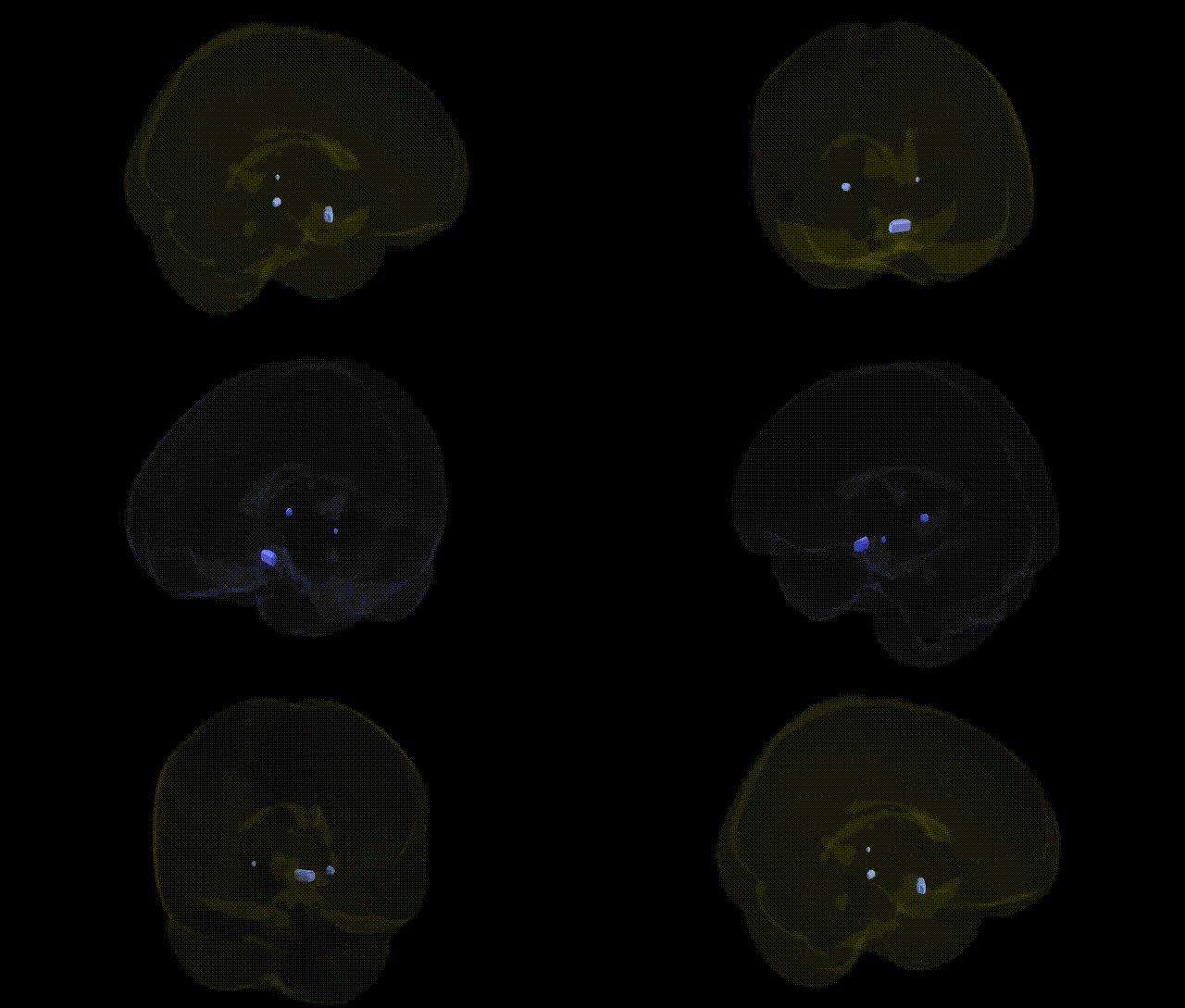
White matter refers to regions of the central nervous system composed primarily of myelinated axons, which form long-range tracts that enable rapid communication between different brain areas. In the cerebrum, bilateral white matter lies beneath the cortical gray matter and includes association fibers connecting cortical regions within the same hemisphere, commissural fibers such as the corpus callosum linking the two hemispheres, and projection fibers transmitting signals between the cortex and subcortical structures, brainstem, and spinal cord. The myelin sheath produced by oligodendrocytes increases conduction velocity and supports efficient information transfer, while the structural organization of white matter tracts underlies complex cognitive, sensory, and motor functions.
White matter
The bilateral white matter as defined in the Talairach 2 mm Atlas encompasses widespread myelinated fiber tracts that have been implicated in numerous genetic studies, primarily through imaging genetics and large-scale GWAS of brain structure and connectivity rather than region-specific gene mapping. Variants influencing axon guidance (e.g., ROBO1/2, DCC), myelination (e.g., MBP, MAL, PLP1), oligodendrocyte function (e.g., OLIG2), and neurodevelopmental signaling pathways (e.g., genes in Wnt, Notch, and MAPK cascades) have been associated with global and regional white matter microstructure, as indexed by diffusion tensor imaging metrics such as fractional anisotropy and mean diffusivity. GWAS from consortia such as ENIGMA and UK Biobank have identified polygenic influences on white matter integrity that overlap with risk loci for schizophrenia, bipolar disorder, major depressive disorder, autism spectrum disorder, ADHD, and cognitive traits including intelligence and educational attainment, suggesting pleiotropy between genes shaping white matter and those conferring risk for psychiatric and neurodevelopmental conditions. Additional associations have been reported between white matter characteristics and loci related to neurodegeneration (e.g., APOE in Alzheimer’s disease), demyelinating disorders (e.g., HLA region and other immune-related genes in multiple sclerosis), and vascular risk factors (e.g., genes impacting blood pressure and small vessel disease that contribute to white matter hyperintensities). Overall, genetic influences on the bilateral white matter are highly polygenic, distributed, and overlapping with pathways that govern neuronal development, myelin formation, immune function, and brain connectivity, rather than being attributable to single, region-specific genes.
Overview generated by GPT-4o (2026).
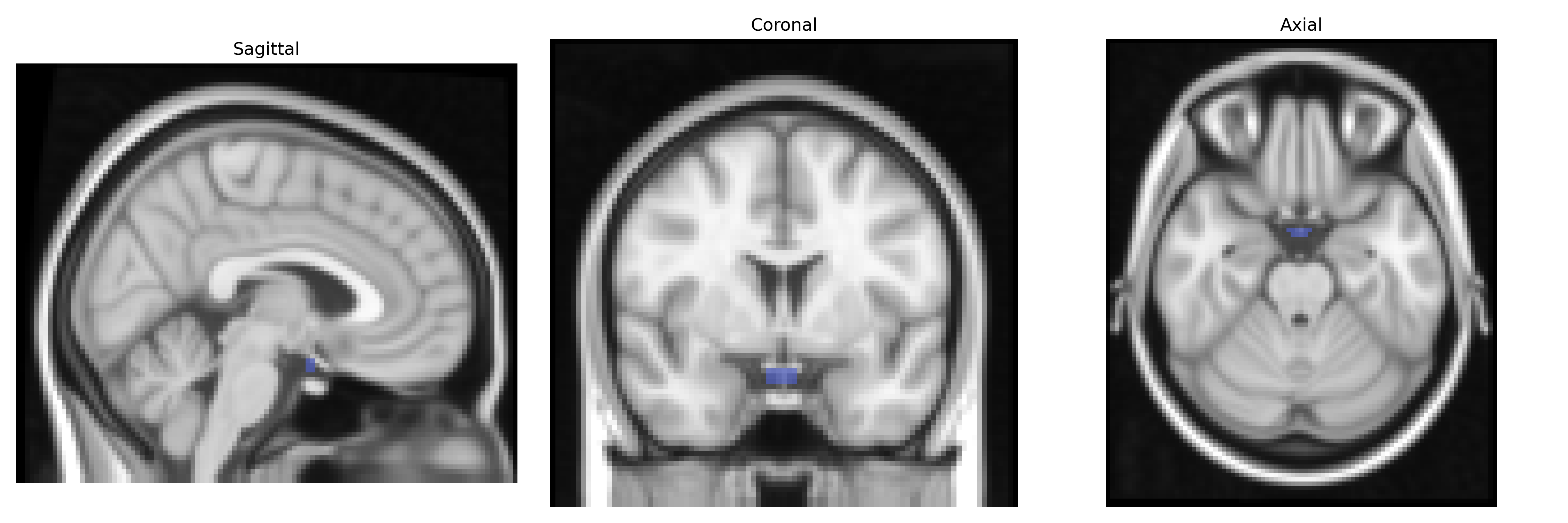
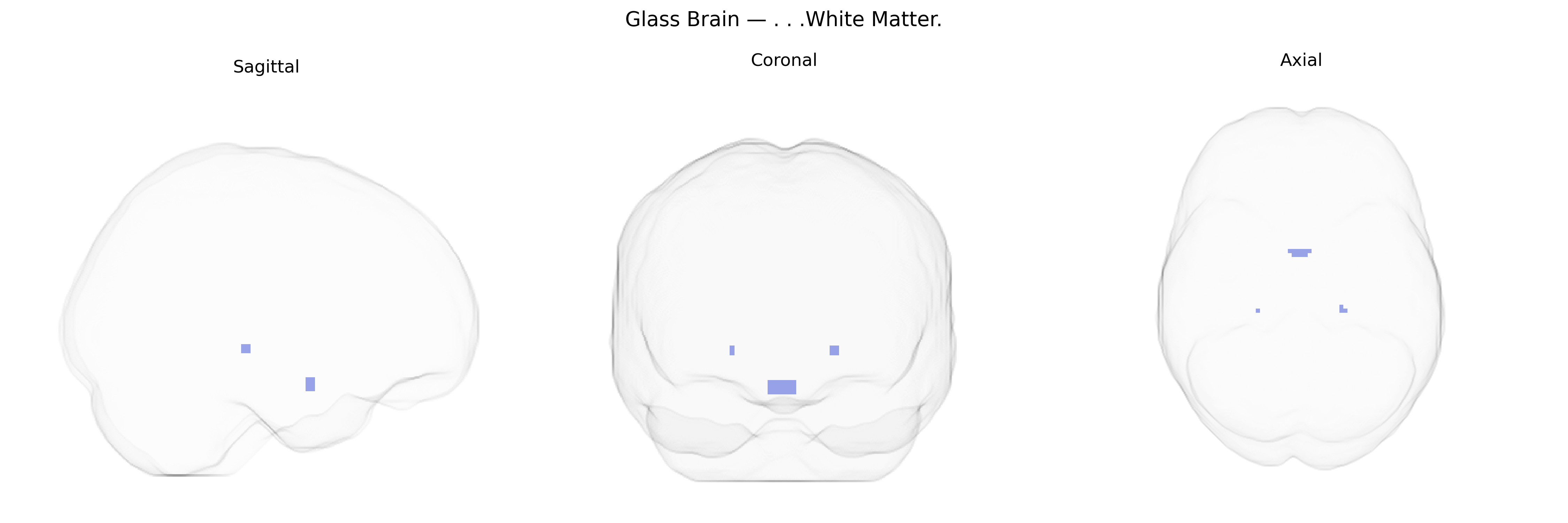
Region ID: 220
Hemisphere: bilateral
Atlas: Talairach labels 2mm
Full Quality Version: Download MP4
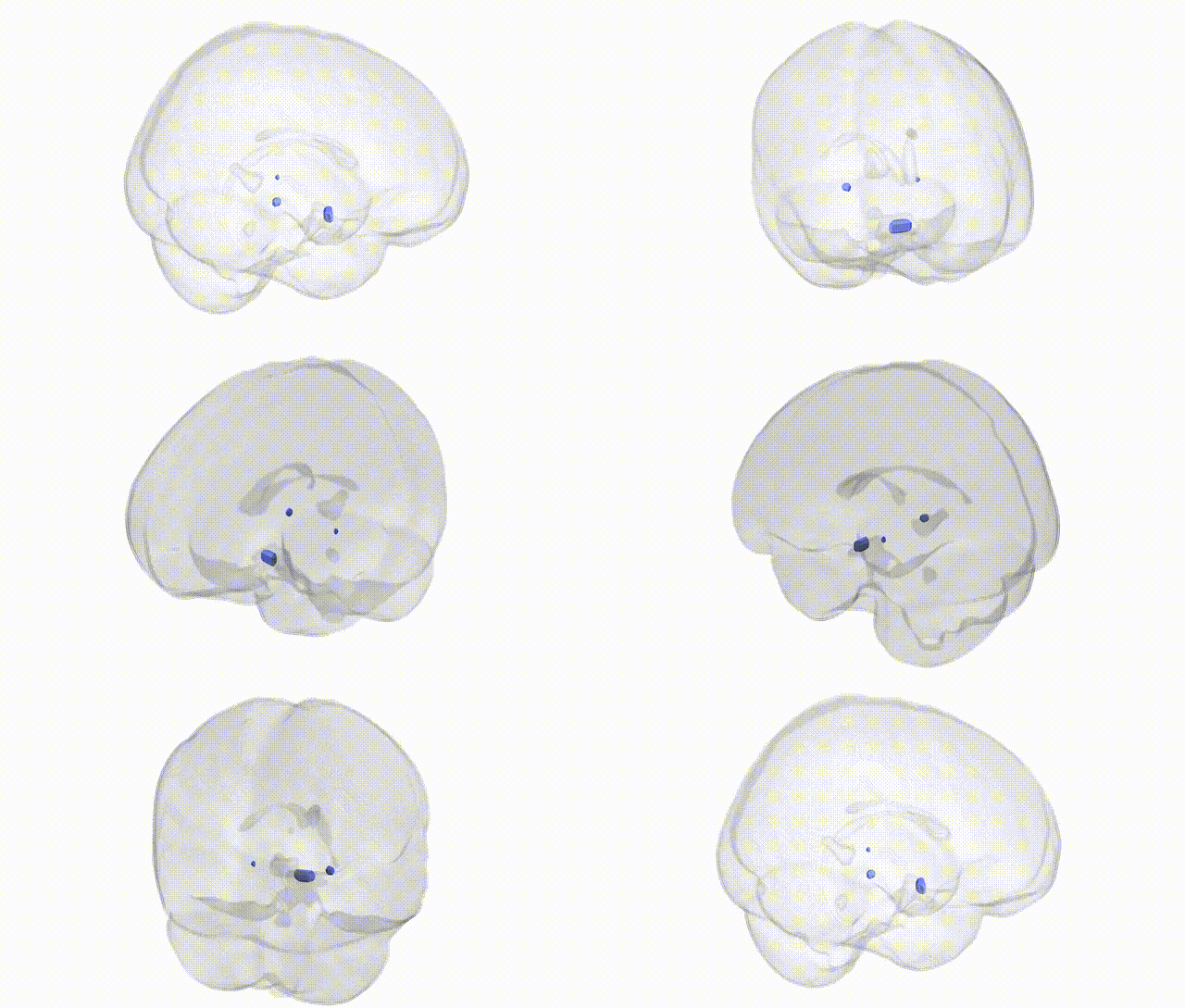
Full Quality Version: Download MP4
Wali Sidiqyar*, Gaurav Rudravaram*, Elyssa M. McMaster, Trent M. Schwartz, Adam M. Saunders, Kurt G. Schilling, Bennett A. Landman "Introducing SPINS: A Shared Public Visualization Library of Neuroanatomical Structures." Medical Imaging with Deep Learning- short paper
This resource is licensed under CC0 1.0 Universal (Public Domain).