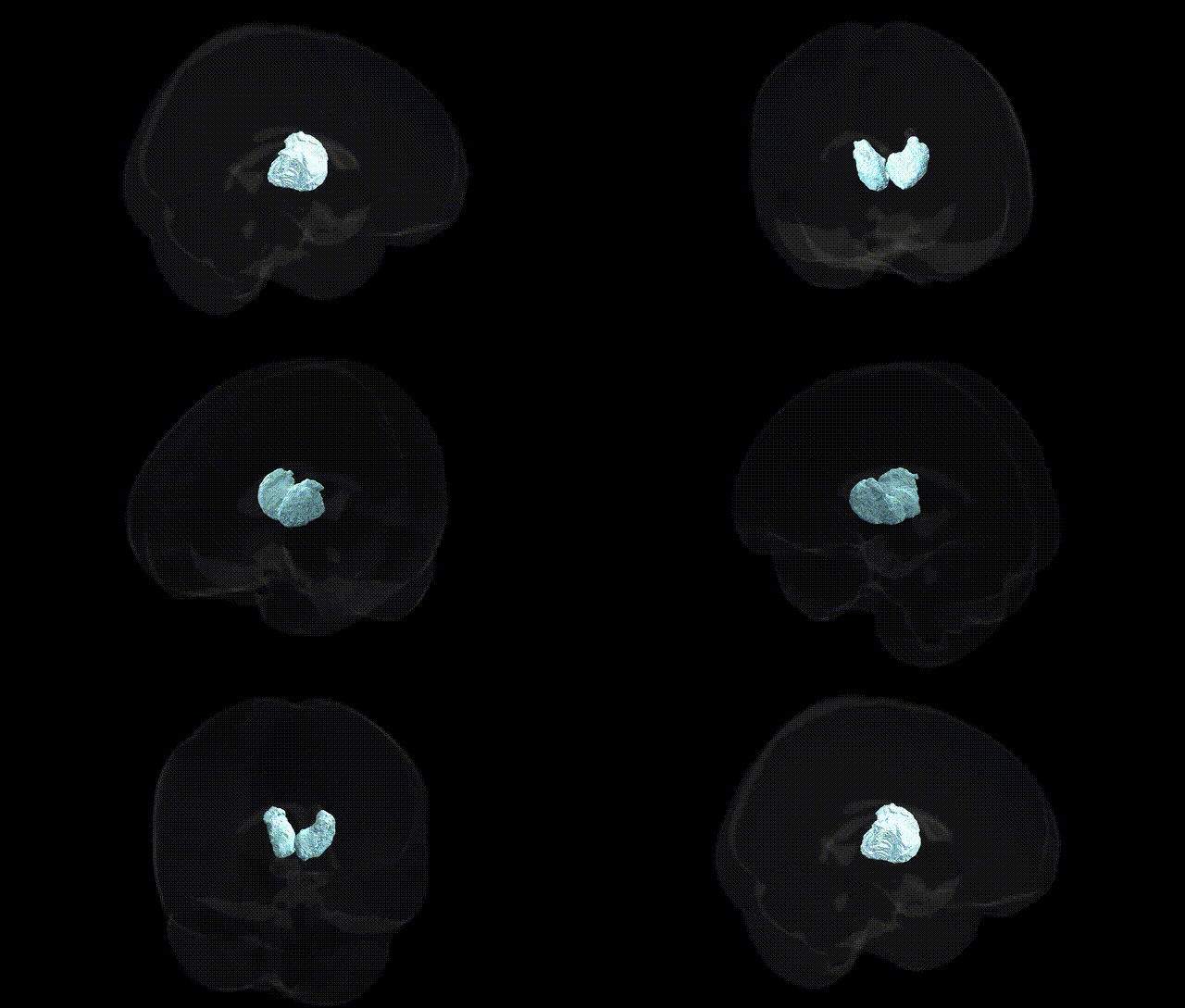
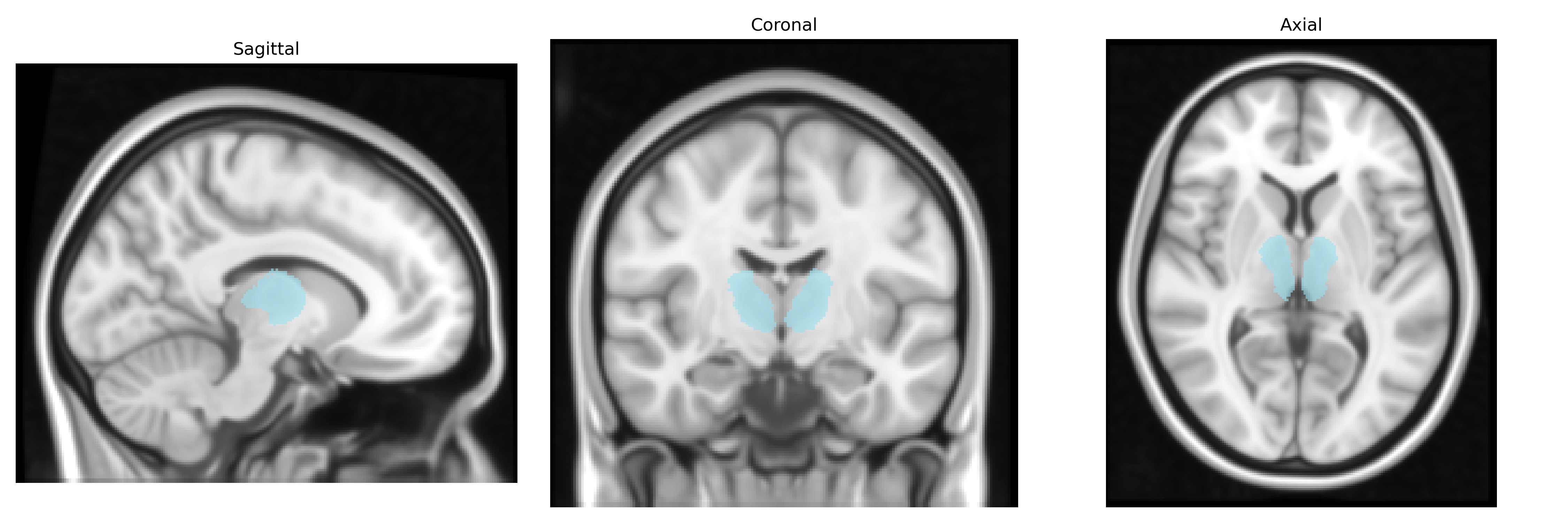
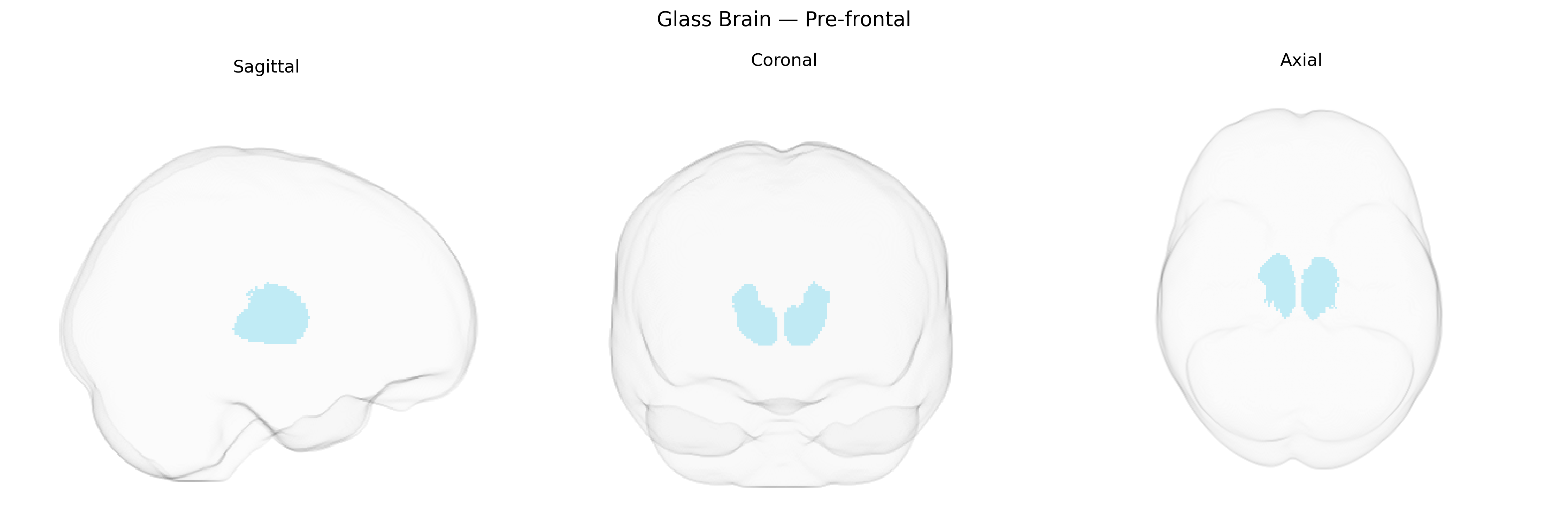
The bilateral prefrontal region in the Thalamus maxprob thr25 1 mm atlas corresponds primarily to the mediodorsal (MD) nucleus and adjacent higher-order thalamic nuclei that project extensively to the prefrontal cortex, forming part of the thalamo-cortical circuitry underlying executive functions, working memory, motivation, and aspects of affective regulation. These thalamic nuclei receive convergent input from limbic structures (including the amygdala and basal ganglia), brainstem modulatory systems, and cortical association areas, and relay processed signals back to dorsolateral, orbitofrontal, and medial prefrontal cortices. Through these reciprocal connections, the prefrontal thalamic group supports goal-directed behavior, decision-making, and integration of cognitive and emotional information. There is no direct Wikipedia article for this specific atlas-defined “bilateral Pre-frontal” thalamic region; a closely related structure is the Mediodorsal nucleus of thalamus.
Genetic associations involving the bilateral prefrontal projections of the thalamus (as defined in the Thalamus maxprob thr25 1 mm atlas) converge on variants influencing cortico-thalamic connectivity, executive function, and neuropsychiatric risk. GWAS and imaging-genetics studies have implicated common variants in genes regulating synaptic plasticity and neurodevelopment—such as CACNA1C, GRIN2B, DRD2, and MIR137—in altered prefrontal–thalamic structure and function, often manifesting as changes in thalamic volume, prefrontal cortical thickness, and connectivity strength. These genetic effects are enriched in disorders characterized by executive dysfunction and cognitive control deficits, including schizophrenia, bipolar disorder, major depressive disorder, attention-deficit/hyperactivity disorder, and obsessive–compulsive disorder, where risk loci frequently show preferential expression in thalamic and prefrontal circuits. Additional associations arise in GWAS of general cognitive ability, educational attainment, working memory, and response inhibition, linking polygenic scores for these traits to prefrontal–thalamic network integrity and activity. Collectively, the evidence supports a polygenic architecture in which variants affecting ion channel function, glutamatergic and dopaminergic signaling, and neurodevelopmental transcriptional programs modulate the structure and connectivity of the bilateral prefrontal thalamic region, thereby contributing to susceptibility for cognitive and psychiatric phenotypes.
Overview generated by GPT-4o (2026).
Region ID: 4
Hemisphere: bilateral
Atlas: Thalamus maxprob thr25 1mm
Full Quality Version: Download MP4
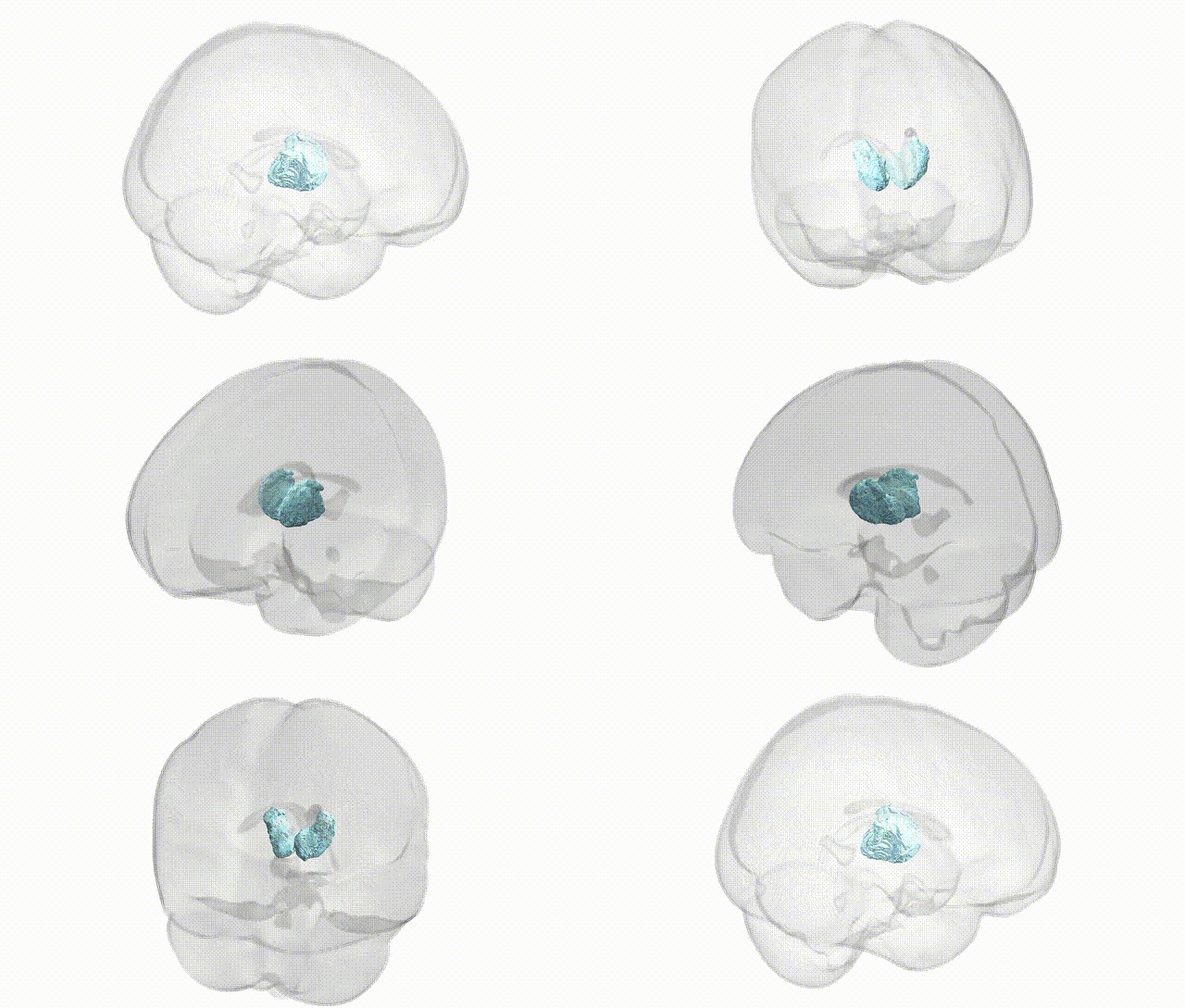
Full Quality Version: Download MP4
Wali Sidiqyar*, Gaurav Rudravaram*, Elyssa M. McMaster, Trent M. Schwartz, Adam M. Saunders, Kurt G. Schilling, Bennett A. Landman "Introducing SPINS: A Shared Public Visualization Library of Neuroanatomical Structures." Medical Imaging with Deep Learning- short paper
This resource is licensed under CC0 1.0 Universal (Public Domain).