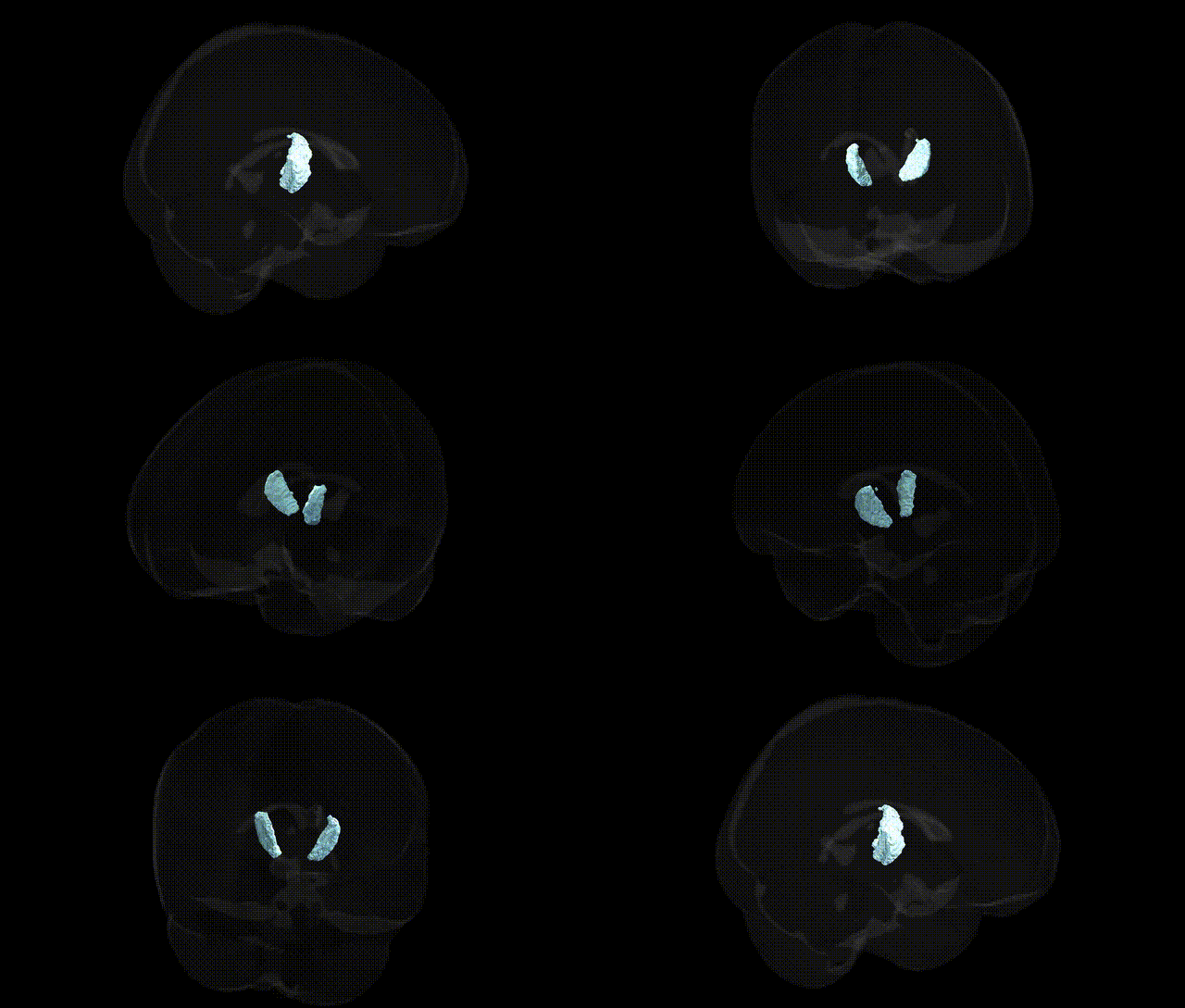
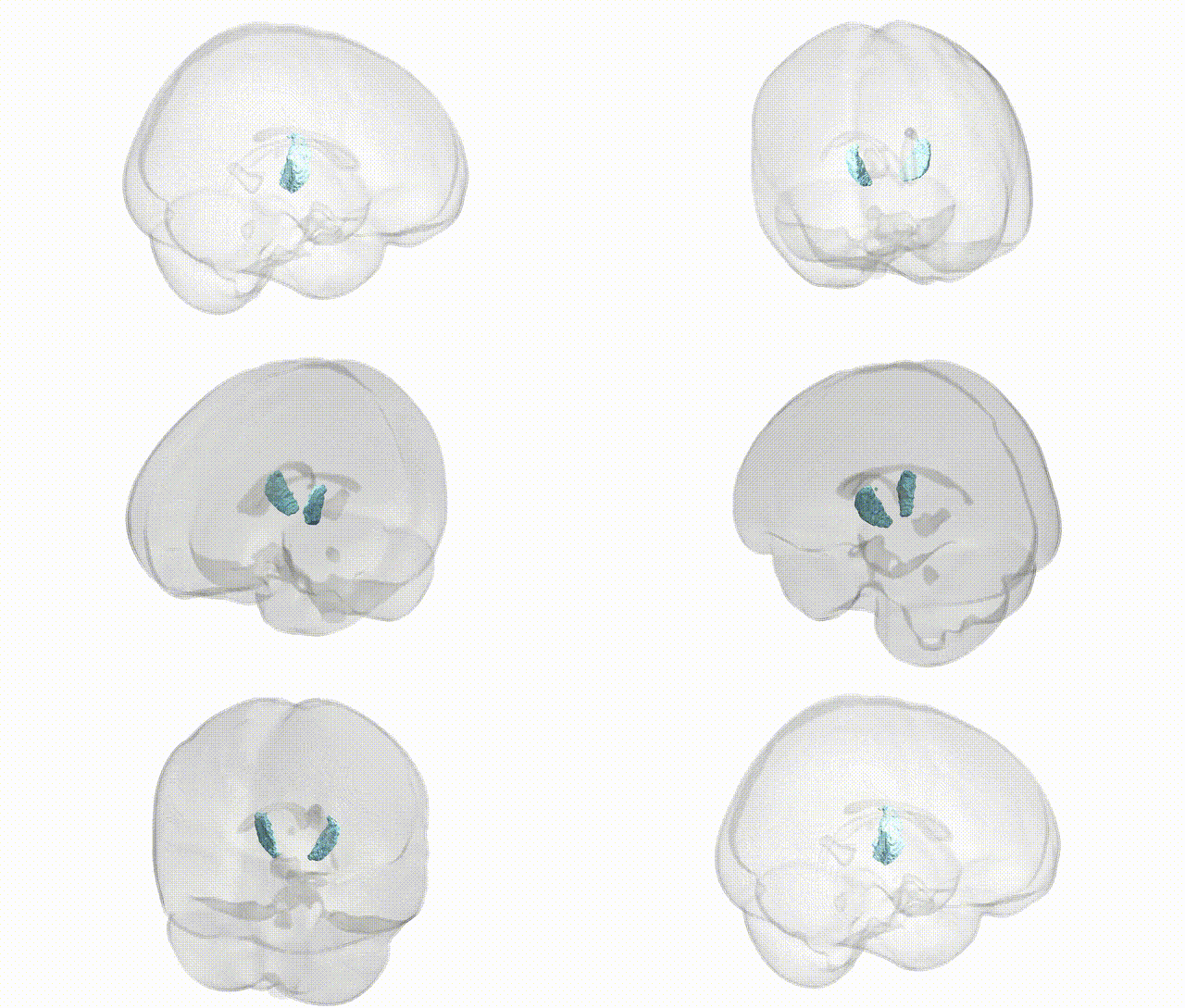
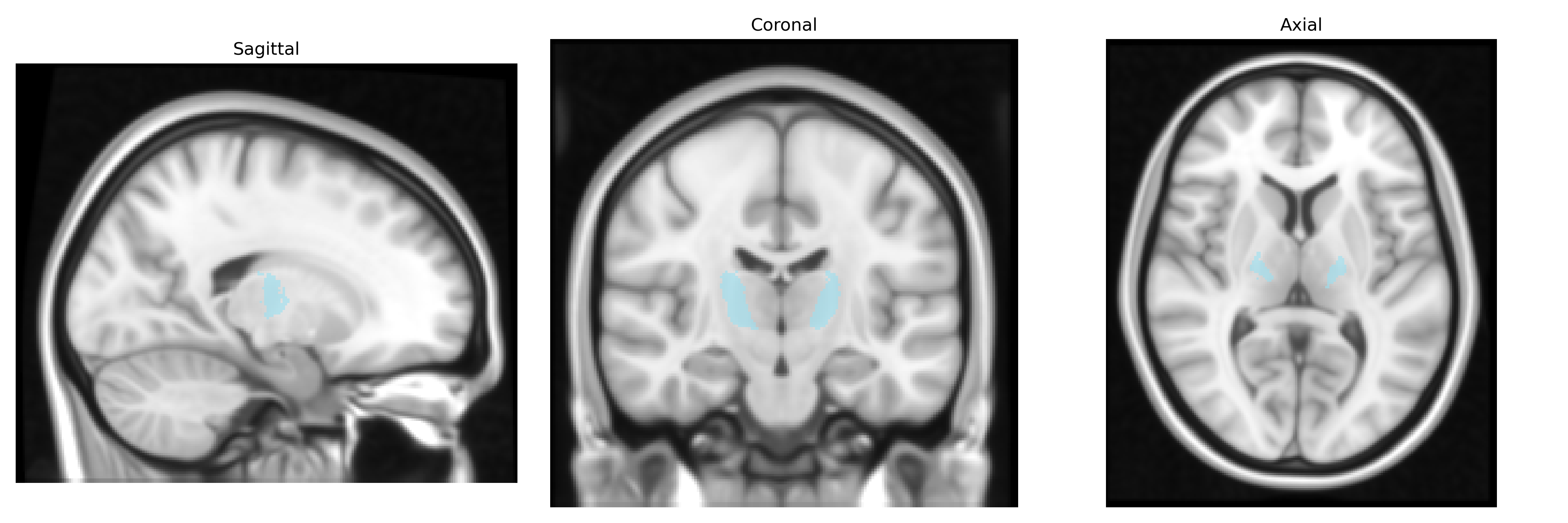
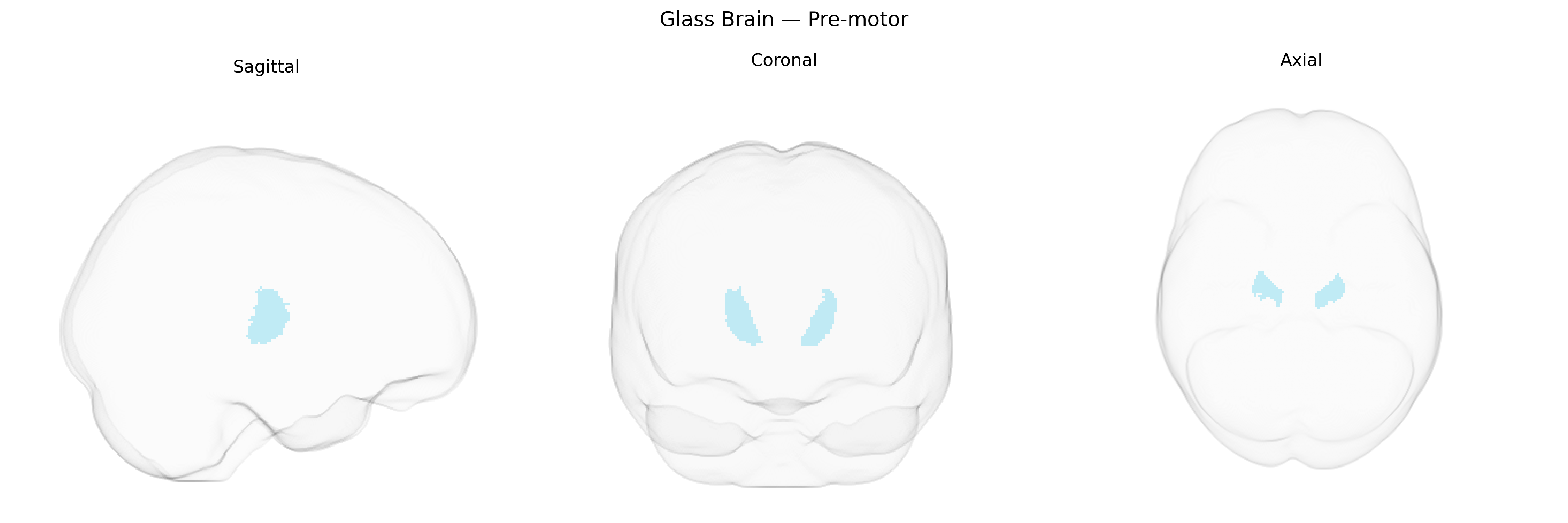
The bilateral Pre-motor region in the Thalamus maxprob thr25 1mm Atlas likely corresponds to thalamic nuclei that relay and integrate information between motor-related cortical areas (particularly premotor and supplementary motor cortices) and subcortical motor structures such as the basal ganglia and cerebellum. Functionally, these nuclei participate in the planning, selection, and initiation of voluntary movements, refining motor commands and contributing to motor learning and sensorimotor integration. They receive inputs from cerebellar and basal ganglia circuits and project to frontal motor and premotor regions, thereby influencing movement timing, coordination, and preparation. Although there is no direct Wikipedia article specifically titled “Pre-motor thalamus,” these nuclei are commonly discussed within the broader context of the Thalamus.
Genetic associations involving the bilateral premotor-related thalamic regions (as defined in the Thalamus maxprob thr25 1mm atlas, which parcellates thalamic nuclei by cortical connectivity) converge on motor control, movement disorders, and broader neuropsychiatric traits rather than a single specific gene set. GWAS and imaging-genetics studies of thalamic volume and connectivity implicate common variants in genes involved in neurodevelopment, synaptic signaling, and myelination (for example, variants near genes such as MAPT, GRIN2B, and others identified in large ENIGMA and UK Biobank analyses) that influence thalamocortical circuitry, including premotor-projecting nuclei. Disorders with robust genetic links to thalamic–premotor networks include Parkinson’s disease and other movement disorders (where risk loci in genes such as LRRK2, GBA, and SNCA are associated with altered thalamocortical and basal ganglia circuitry), essential tremor (linked to loci affecting cerebellothalamic pathways), and dystonia, all of which involve premotor-related thalamic relay dysfunction. Psychiatric GWAS of schizophrenia, bipolar disorder, major depression, ADHD, and autism spectrum conditions also implicate polygenic risk converging on thalamic structure and functional connectivity, with premotor thalamic regions frequently highlighted in imaging-genetics work on motor planning, response inhibition, and cognitive control, though associations are typically distributed and polygenic rather than region-specific.
Overview generated by GPT-4o (2026).
Region ID: 5
Hemisphere: bilateral
Atlas: Thalamus maxprob thr25 1mm
Full Quality Version: Download MP4
Full Quality Version: Download MP4
Wali Sidiqyar*, Gaurav Rudravaram*, Elyssa M. McMaster, Trent M. Schwartz, Adam M. Saunders, Kurt G. Schilling, Bennett A. Landman "Introducing SPINS: A Shared Public Visualization Library of Neuroanatomical Structures." Medical Imaging with Deep Learning- short paper
This resource is licensed under CC0 1.0 Universal (Public Domain).