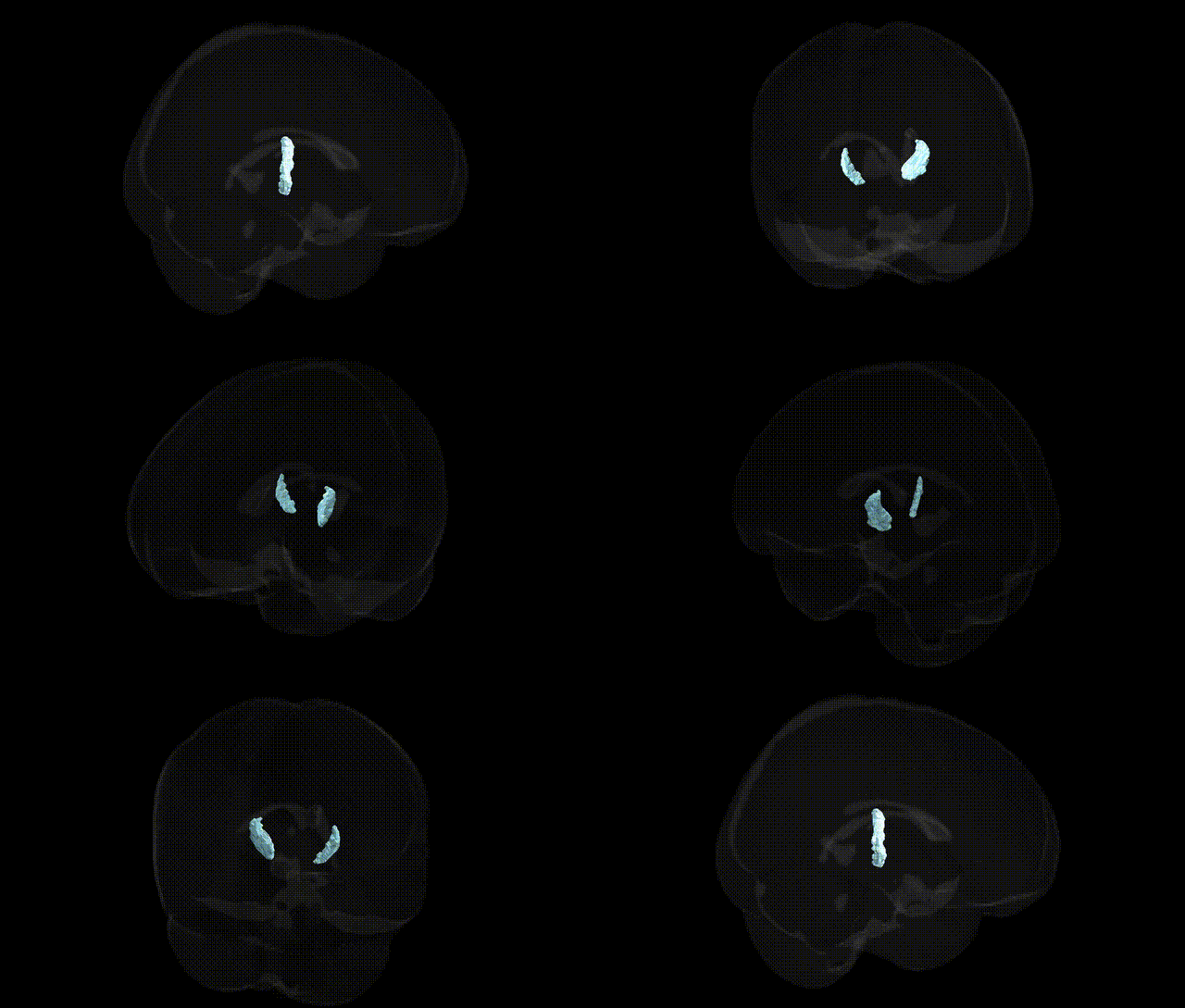
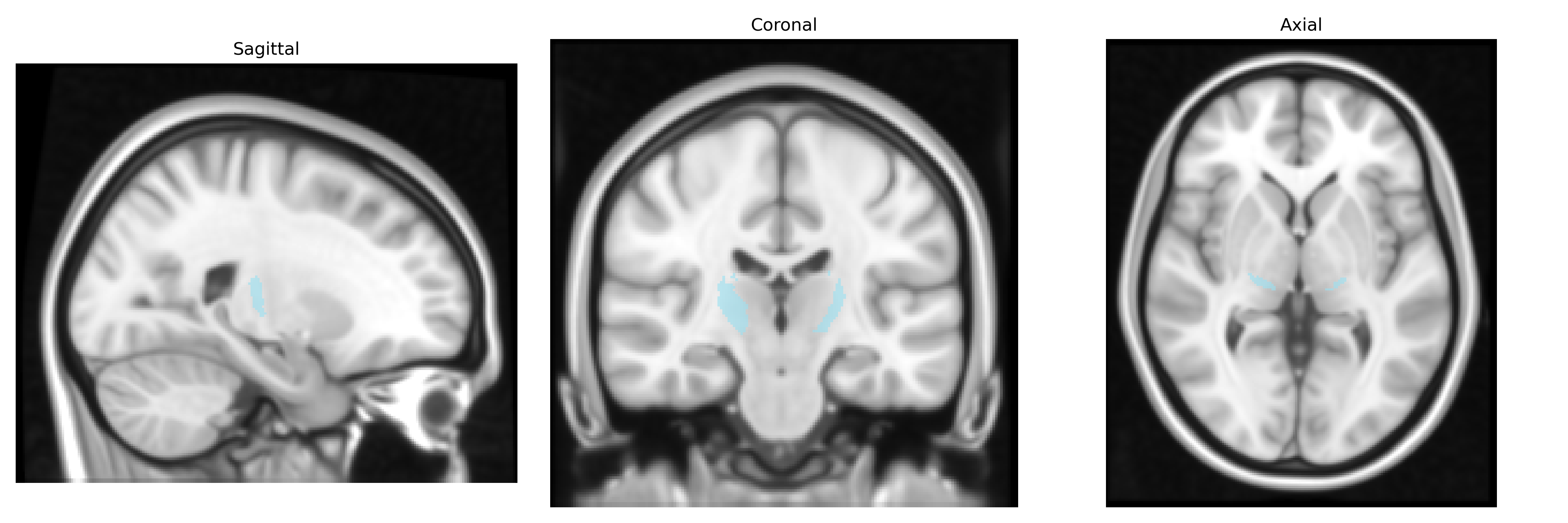
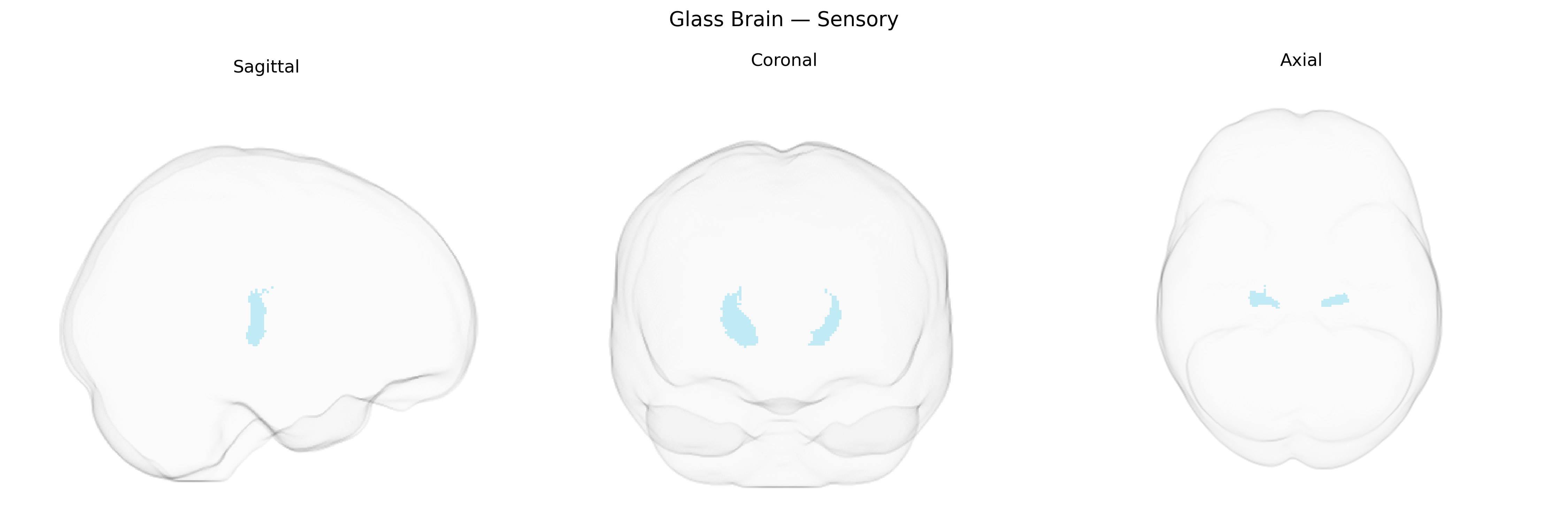
The bilateral sensory thalamic region in the Thalamus maxprob thr25 1 mm atlas typically corresponds to nuclei involved in relaying somatosensory information, most prominently the ventral posterior complex (including ventral posterolateral and ventral posteromedial nuclei). These nuclei receive afferent input from the medial lemniscus and spinothalamic pathways, conveying tactile, proprioceptive, pain, and temperature signals from the body and face to primary and secondary somatosensory cortices. Functionally, this region supports conscious perception and discrimination of somatic stimuli, as well as integration of sensory signals necessary for fine motor coordination and sensorimotor feedback. It exhibits somatotopic organization, with distinct representations for different body parts, and participates in both rapid sensory transmission and modulation via reciprocal corticothalamic connections. There is no direct Wikipedia article for “bilateral sensory thalamus” as an atlas-defined label; a closely related structure is the Ventral posterior nucleus of thalamus.
The bilateral sensory nuclei of the thalamus, as defined in the Thalamus maxprob thr25 1 mm atlas, have been implicated in several genetic and GWAS-based associations, particularly through imaging-genetics studies linking thalamic volume, microstructure, and connectivity to specific variants and polygenic architectures. Common variants near genes such as HMGA2, NME8, and others identified in large-scale ENIGMA and UK Biobank analyses show robust associations with thalamic volume and subnuclear morphology, while polygenic scores for schizophrenia, bipolar disorder, major depressive disorder, and autism spectrum disorder have been associated with altered thalamic structure and thalamo-cortical connectivity, especially in sensory relay regions. GWAS of chronic pain, migraine, and somatosensory phenotypes also implicate thalamic sensory nuclei via shared genetic architecture with pain-sensitivity genes (for example, variants near TRPM8 and other nociception-related loci), and genetic liability to disorders such as multiple sclerosis and epilepsy corresponds to structural and functional alterations in sensory thalamus. Overall, the bilateral sensory thalamus emerges as a convergence point where genetic influences on neurodevelopment, synaptic transmission, and myelination manifest as variability in sensory relays, contributing to susceptibility for neuropsychiatric disorders, chronic pain conditions, and trait-level differences in sensory processing.
Overview generated by GPT-4o (2026).
Region ID: 2
Hemisphere: bilateral
Atlas: Thalamus maxprob thr25 1mm
Full Quality Version: Download MP4
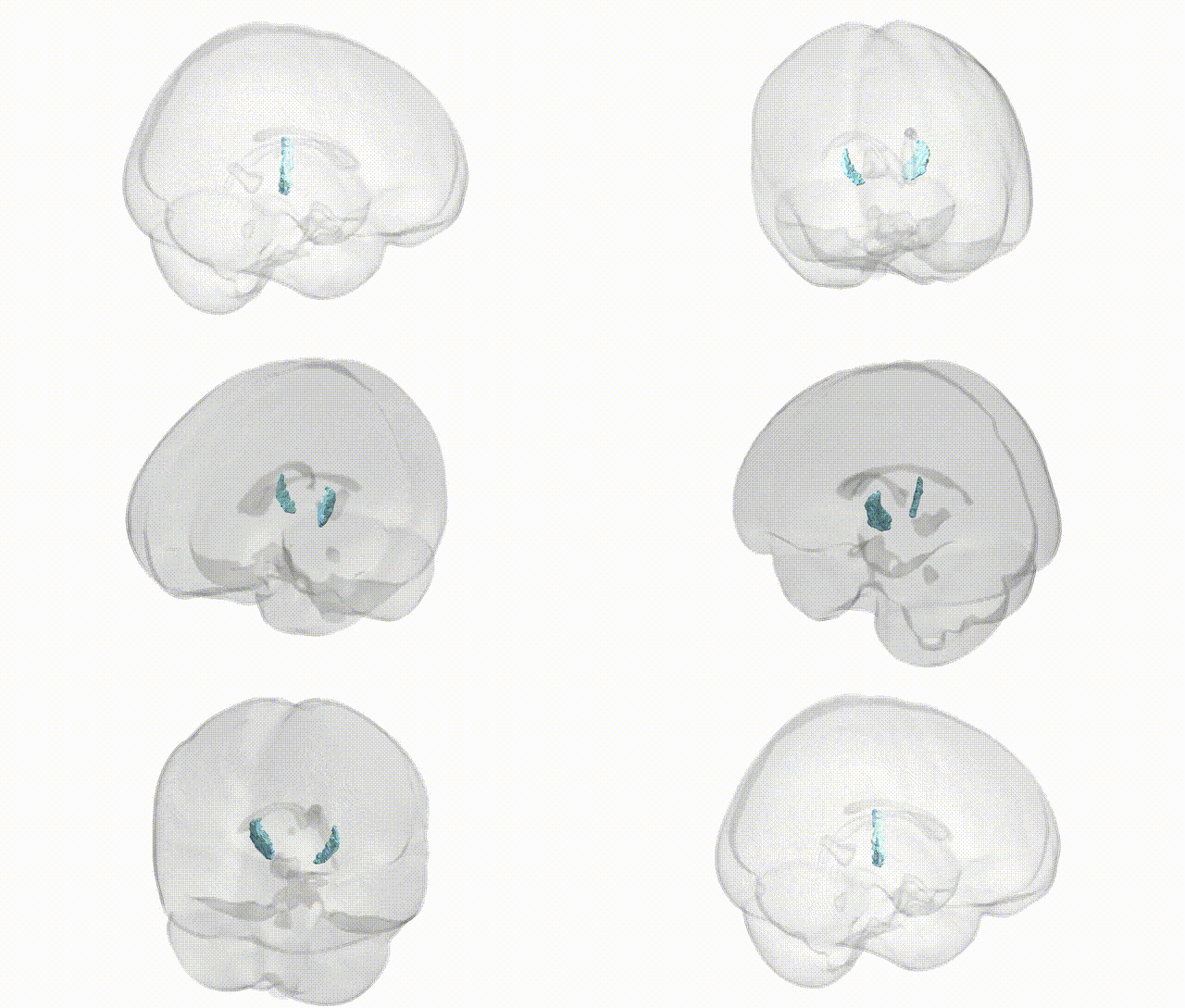
Full Quality Version: Download MP4
Wali Sidiqyar*, Gaurav Rudravaram*, Elyssa M. McMaster, Trent M. Schwartz, Adam M. Saunders, Kurt G. Schilling, Bennett A. Landman "Introducing SPINS: A Shared Public Visualization Library of Neuroanatomical Structures." Medical Imaging with Deep Learning- short paper
This resource is licensed under CC0 1.0 Universal (Public Domain).