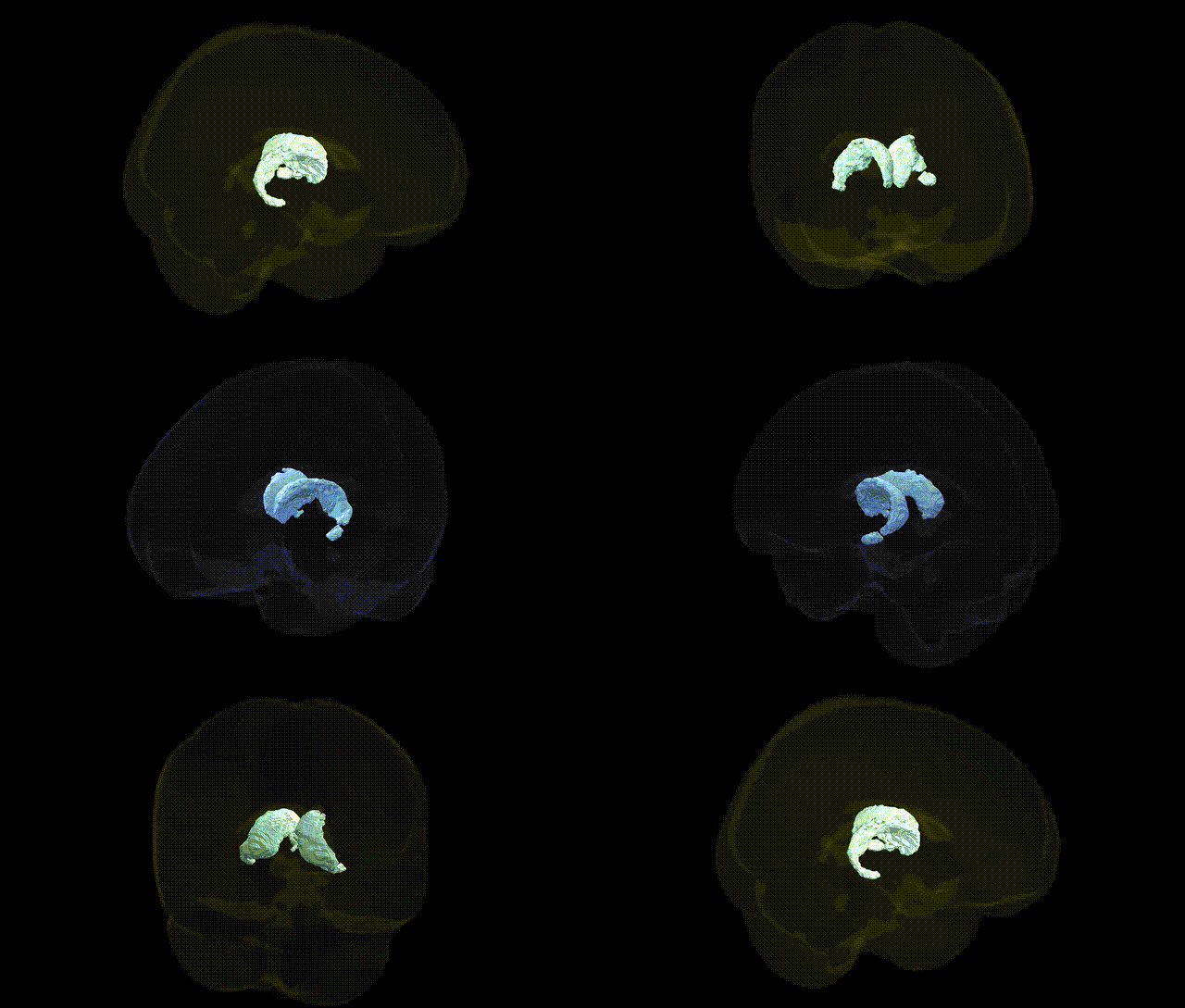
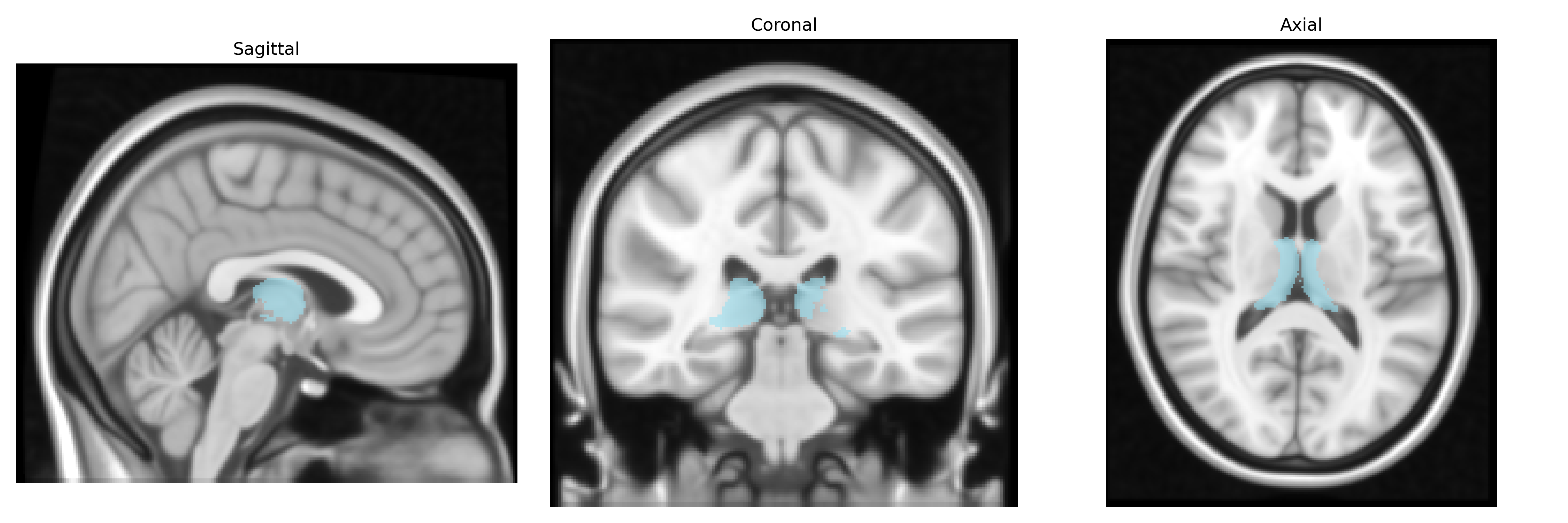
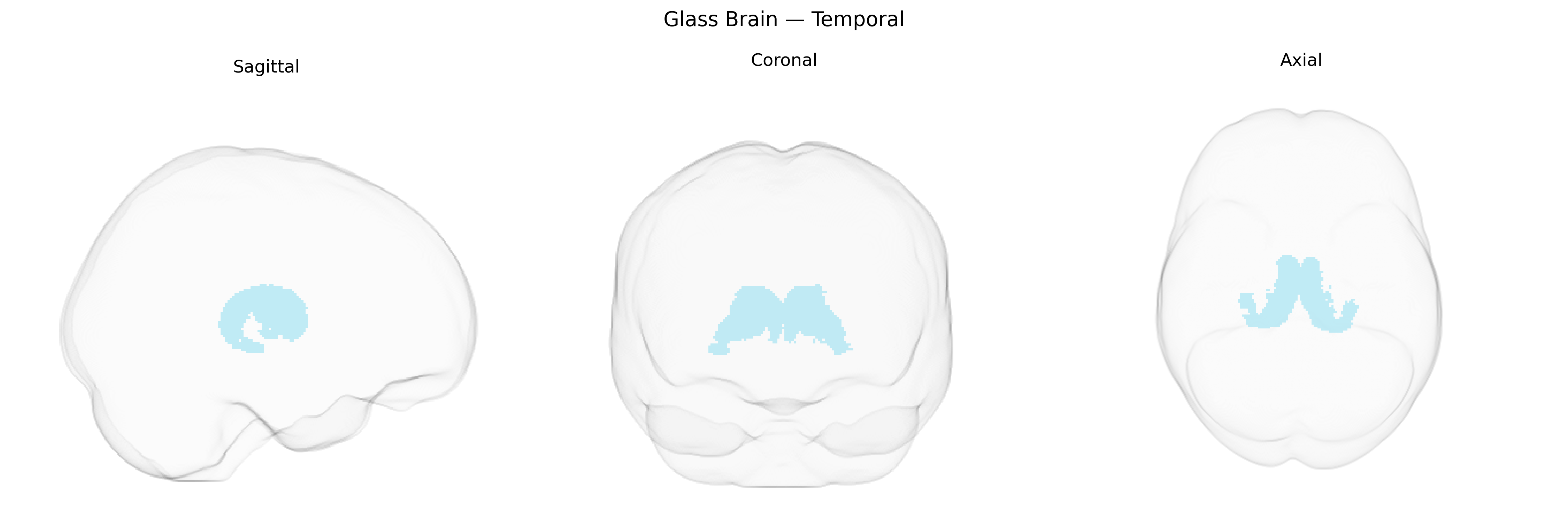
The bilateral Temporal region in the Thalamus maxprob thr25 1mm Atlas refers to thalamic nuclei whose probabilistic connectivity and functional associations are predominantly with the temporal lobes, including areas involved in auditory processing, language, memory, and multimodal integration. These thalamic territories typically encompass or overlap with portions of the medial geniculate body and pulvinar, which relay and modulate sensory information (especially auditory) and contribute to higher-order cortical processing in temporal cortices. Functionally, this thalamic-temporal network participates in the encoding and retrieval of declarative memory, the processing of complex acoustic stimuli such as speech, and the integration of sensory inputs for contextual and emotional interpretation. There is no direct Wikipedia article for the “bilateral Temporal” thalamic region; a closely related and encompassing cortical structure is the Temporal lobe.
Genetic associations implicating the bilateral temporal portions of thalamic projection zones (as defined in a Thalamus maxprob thr25 1 mm atlas) converge on neurodevelopmental, cognitive, and psychiatric traits rather than a single disorder-specific signal. GWAS of thalamic and temporal lobe volumes and connectivity have highlighted loci in genes involved in synaptic development and glutamatergic signaling (e.g., variants in GRIN2A, GRM3, and DLG2), with some studies showing correlations between polygenic risk for schizophrenia or bipolar disorder and altered thalamus–temporal connectivity or microstructure. Large-scale imaging genetics consortia (such as ENIGMA) have reported associations between common variants in genes regulating neuronal migration, axonal guidance, and myelination (including CNTNAP2, NRG1, and several intracranial-volume and cortical-thickness loci) and variability in temporal cortical measures that are tightly coupled to thalamic relay regions. In psychiatric GWAS, risk alleles for schizophrenia, major depression, and autism spectrum conditions often show downstream effects on thalamocortical circuits, including temporal projections, as inferred from expression quantitative trait loci and functional annotation in thalamus and temporal cortex. Additionally, GWAS of cognitive performance and language-related traits have linked variants near FOXP2 and other neurodevelopmental genes to structural and functional measures in temporal cortices and associated thalamic nuclei, suggesting that genetic influences on higher-order auditory, language, and memory functions are partly mediated via this bilateral temporal thalamocortical network.
Overview generated by GPT-4o (2026).
Region ID: 7
Hemisphere: bilateral
Atlas: Thalamus maxprob thr25 1mm
Full Quality Version: Download MP4
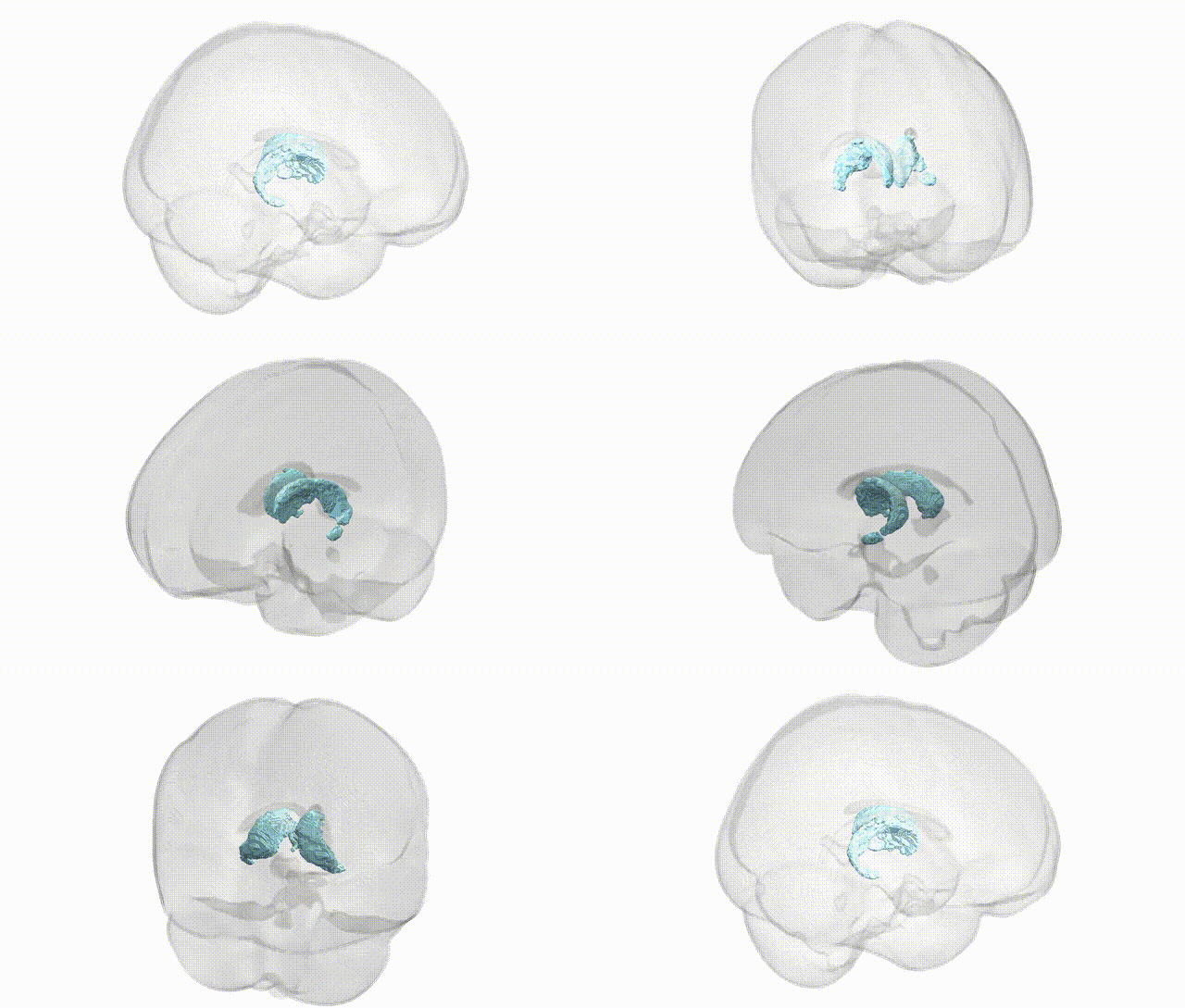
Full Quality Version: Download MP4
Wali Sidiqyar*, Gaurav Rudravaram*, Elyssa M. McMaster, Trent M. Schwartz, Adam M. Saunders, Kurt G. Schilling, Bennett A. Landman "Introducing SPINS: A Shared Public Visualization Library of Neuroanatomical Structures." Medical Imaging with Deep Learning- short paper
This resource is licensed under CC0 1.0 Universal (Public Domain).