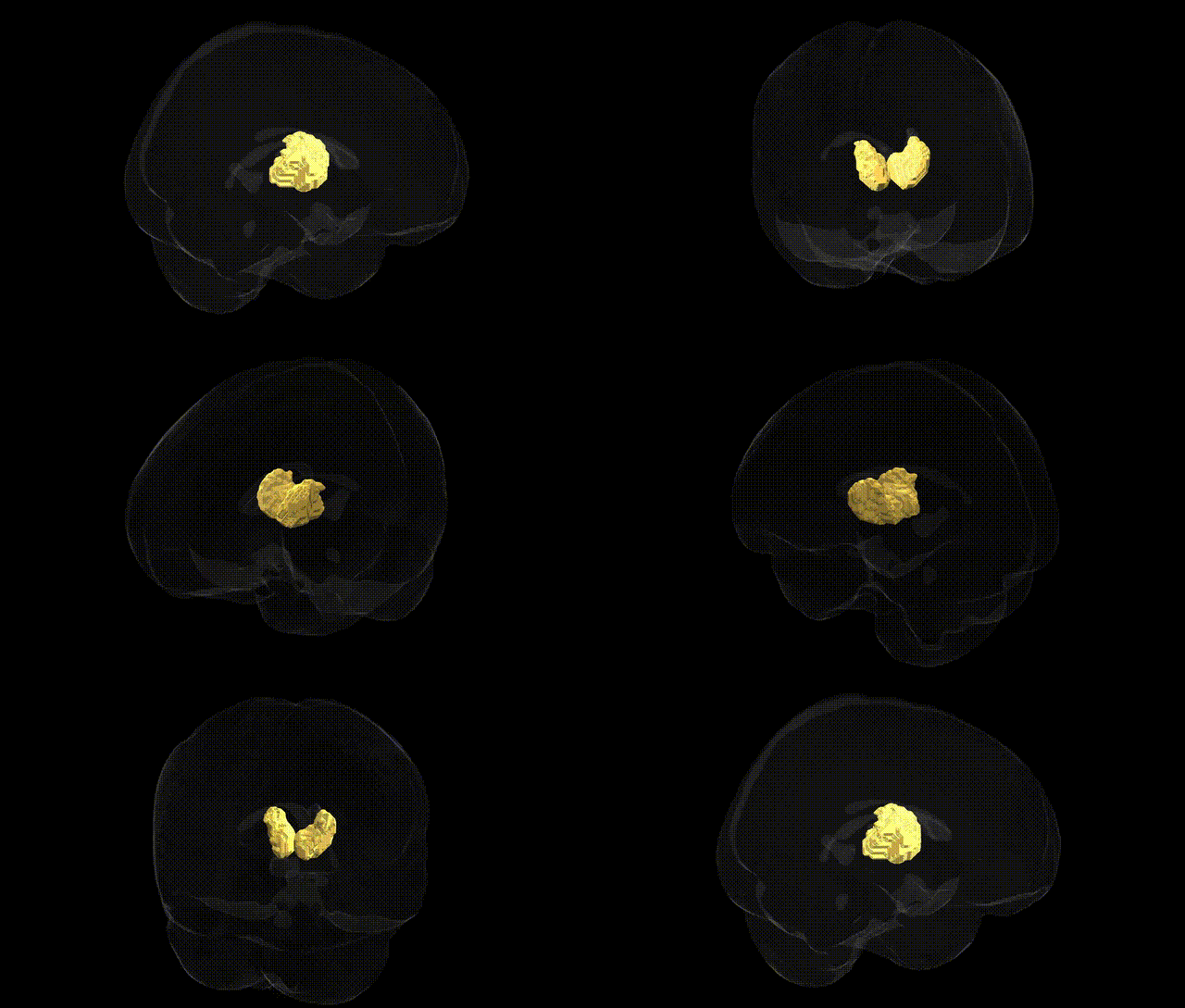
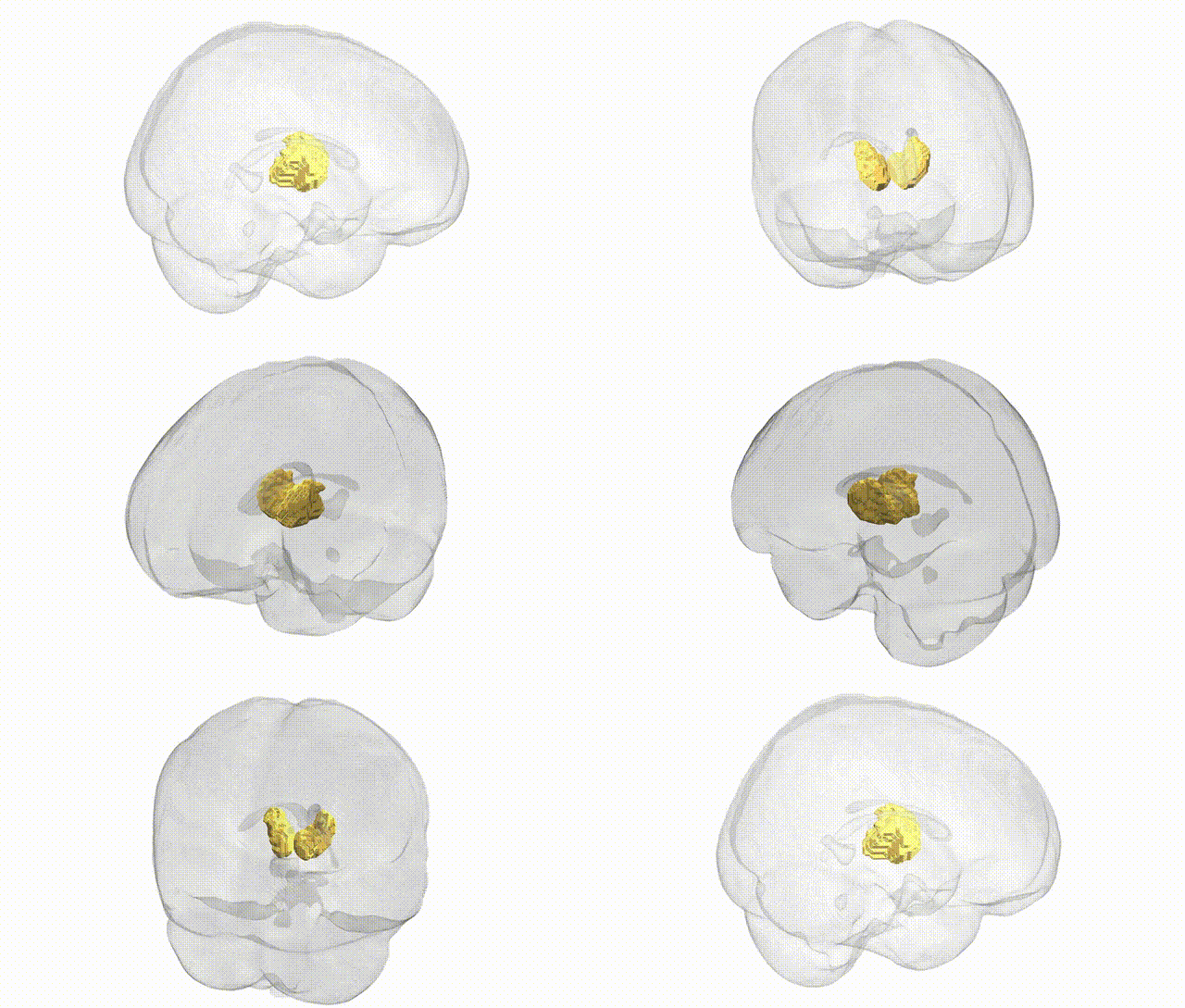
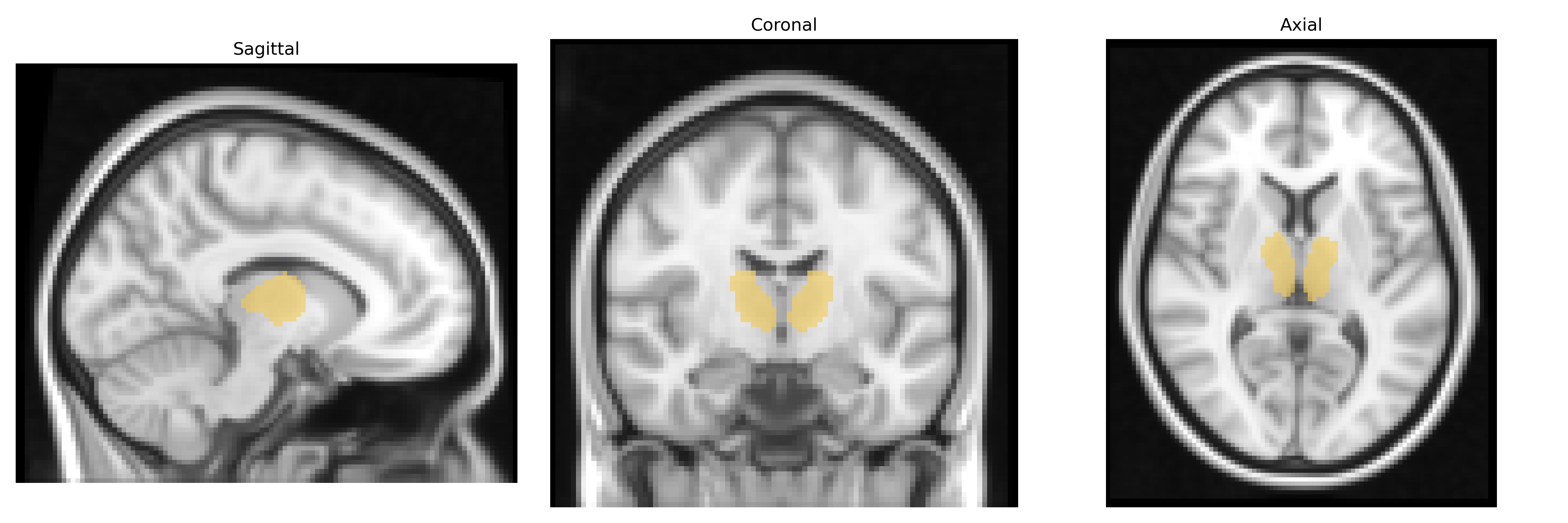
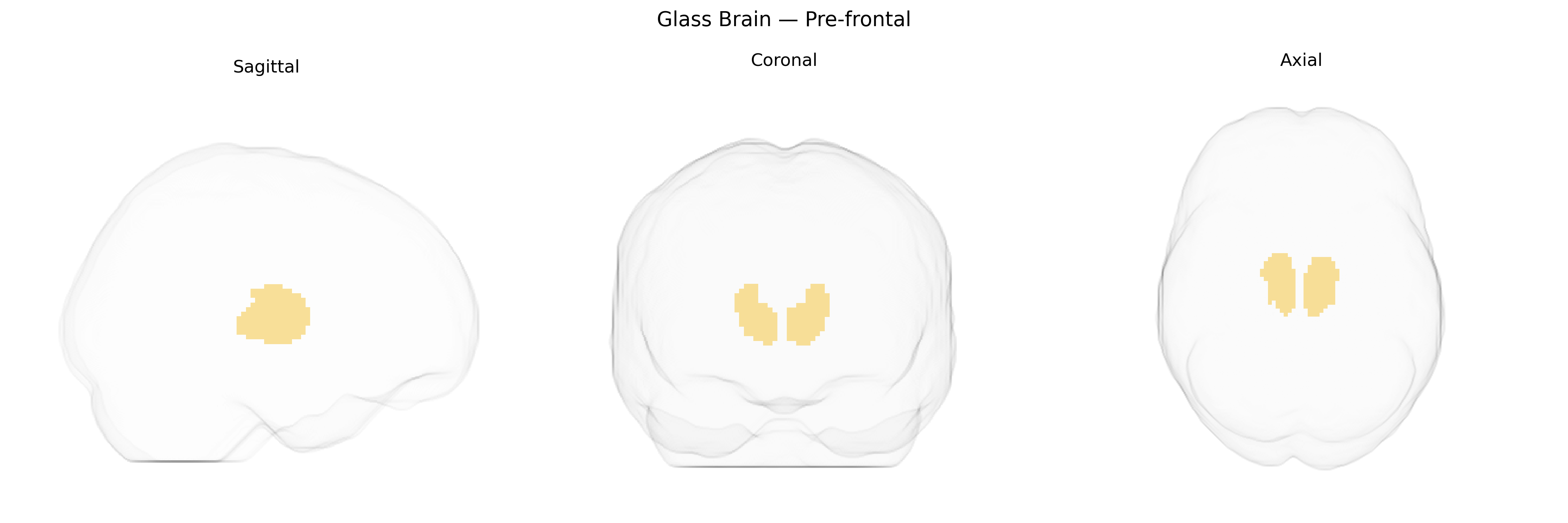
The bilateral prefrontal region in the Thalamus maxprob thr25 2mm atlas corresponds primarily to mediodorsal (medial dorsal) thalamic nuclei projections that are reciprocally connected with the prefrontal cortex and participate in higher-order cognitive and executive functions. These thalamic territories relay and integrate information related to working memory, decision-making, planning, and behavioral flexibility, and they contribute to the regulation of attention, emotional processing, and goal-directed behavior via cortico-thalamo-cortical loops. Functionally, this prefrontal-related thalamic group is involved in modulating activity across dorsal and ventral prefrontal circuits, including dorsolateral, orbitofrontal, and medial prefrontal regions, thereby influencing both cognitive control and affective regulation. There is no direct Wikipedia article for this specific atlas-defined thalamic “prefrontal” region; a closely related structure is the mediodorsal thalamic nucleus: Mediodorsal nucleus of thalamus.
The bilateral prefrontal region defined in the Thalamus maxprob thr25 2 mm atlas corresponds to thalamic nuclei that project heavily to dorsolateral and medial prefrontal cortex, and genetic studies implicate this circuitry in several neuropsychiatric and cognitive traits. GWAS and imaging-genetics work show that common variants in genes involved in thalamocortical development, synaptic function, and myelination (for example, CACNA1C, GRIN2B, DRD2, NRG1, and several polygenic schizophrenia and bipolar risk loci) are associated with structural and functional variation in prefrontal–thalamic loops, including volume and connectivity of these prefrontal-projecting thalamic nuclei. Polygenic risk for schizophrenia, bipolar disorder, major depressive disorder, and ADHD has been linked to altered thalamus–prefrontal connectivity, and large consortia (e.g., ENIGMA, UK Biobank) report that genome-wide SNP-based heritability explains a substantial fraction of interindividual differences in thalamic volume and its coupling with prefrontal cortex. In addition, GWAS of cognitive performance, educational attainment, and working memory implicate variants that modulate prefrontal–thalamic structure and function, and genetic risk for disorders such as Tourette syndrome, OCD, and autism spectrum disorder has been associated with atypical development and connectivity of these prefrontal thalamic nuclei, highlighting their role as a genetically influenced hub in higher-order cognitive and affective regulation.
Overview generated by GPT-4o (2026).
Region ID: 4
Hemisphere: bilateral
Atlas: Thalamus maxprob thr25 2mm
Full Quality Version: Download MP4
Full Quality Version: Download MP4
Wali Sidiqyar*, Gaurav Rudravaram*, Elyssa M. McMaster, Trent M. Schwartz, Adam M. Saunders, Kurt G. Schilling, Bennett A. Landman "Introducing SPINS: A Shared Public Visualization Library of Neuroanatomical Structures." Medical Imaging with Deep Learning- short paper
This resource is licensed under CC0 1.0 Universal (Public Domain).