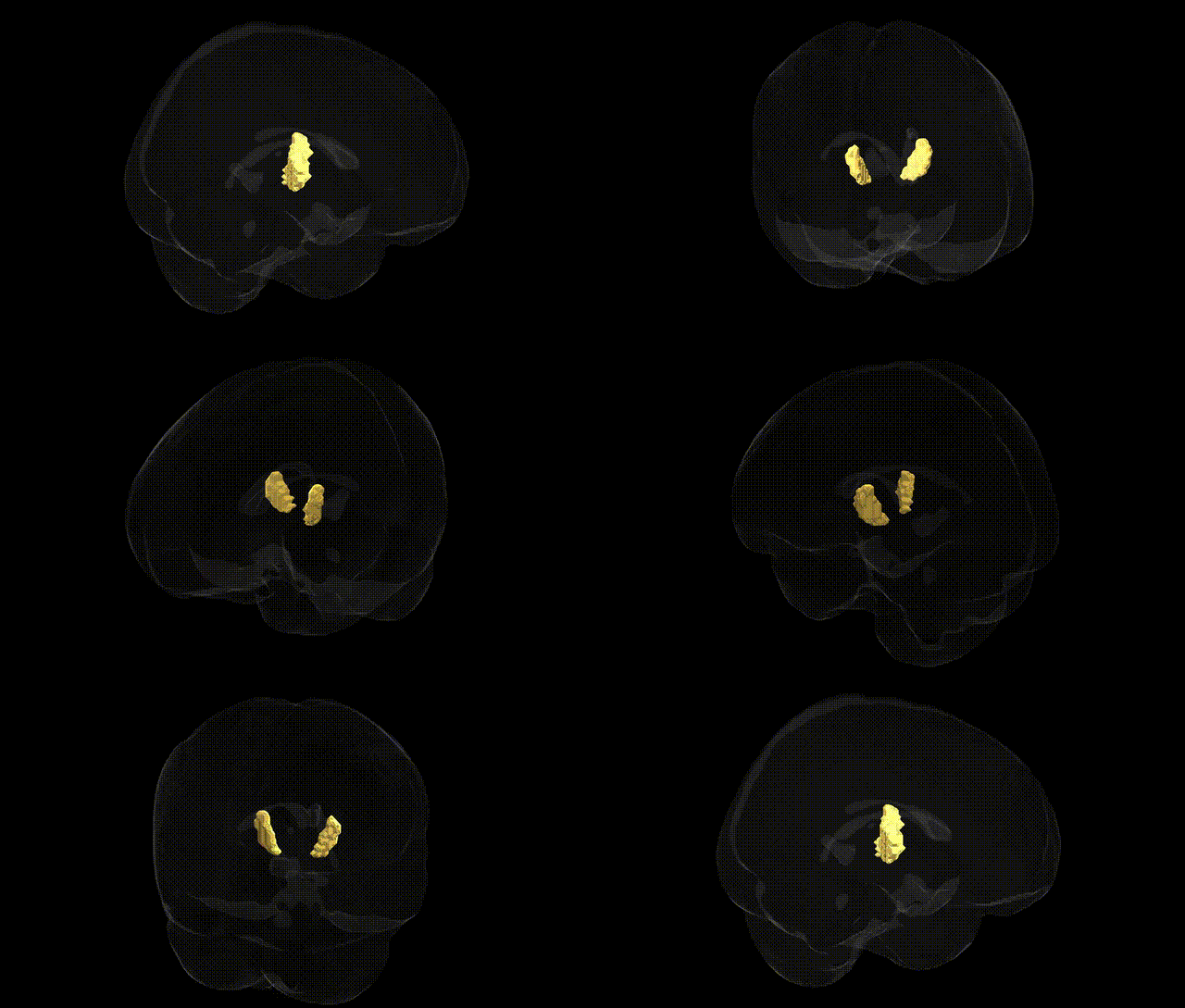
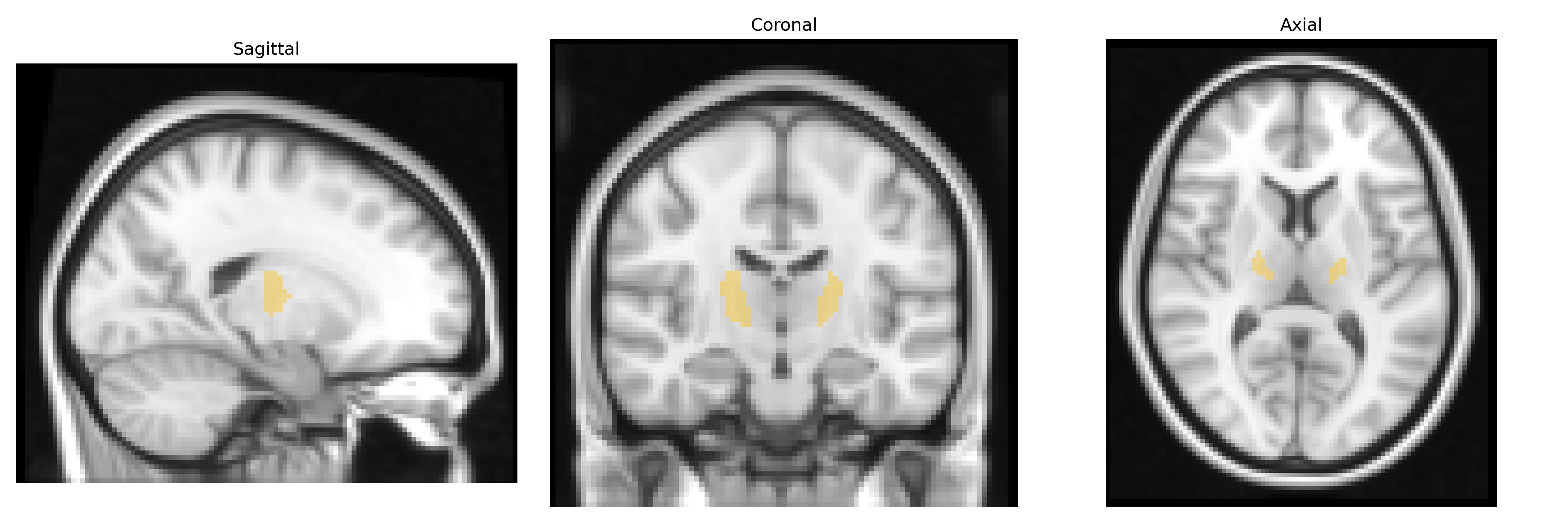
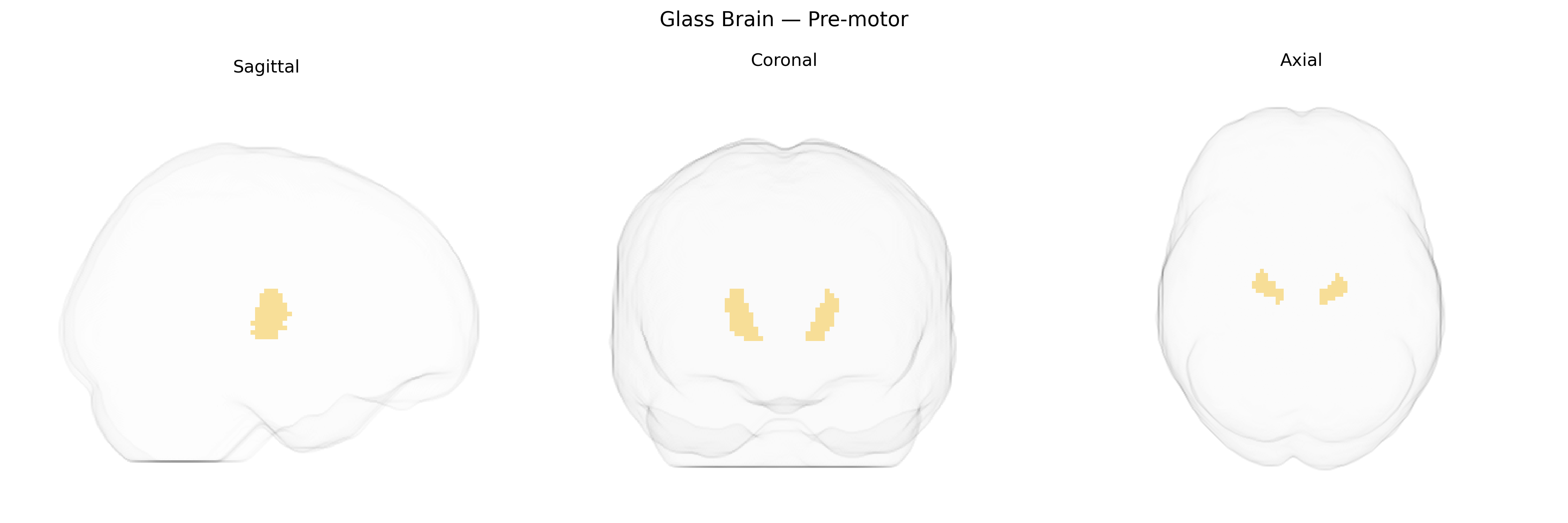
The bilateral pre-motor region in the Thalamus maxprob thr25 2mm atlas corresponds primarily to thalamic nuclei that project to and modulate premotor cortical areas involved in the planning, preparation, and sequencing of voluntary movement. Functionally, this thalamic territory relays processed motor information from basal ganglia and cerebellar circuits to frontal motor-related cortex, integrating signals necessary for selecting appropriate motor programs and adjusting ongoing actions. Neurons in these nuclei contribute to motor set, movement initiation timing, and coordination of complex, multi-joint actions, often in conjunction with sensory and cognitive inputs that influence action selection. Although a direct Wikipedia entry for the “premotor thalamic region” is not available, this field is closely related to the broader Thalamus and its motor relay functions.
The bilateral Pre-motor region as defined in the Thalamus maxprob thr25 2mm atlas corresponds primarily to thalamic nuclei projecting to premotor and supplementary motor cortical areas, and genetic associations involving this circuitry have emerged largely from imaging-genetics and GWAS of brain structure, connectivity, and movement-related traits. Variants in genes affecting thalamocortical development and synaptic function (such as CACNA1C, GRIN2B, and genes within the major histocompatibility complex) have been implicated in altered thalamic volume or functional connectivity with premotor regions in schizophrenia, bipolar disorder, and major depression, while polygenic risk scores for these disorders show associations with structural and functional measures in motor and premotor thalamocortical loops. GWAS of Parkinson’s disease, essential tremor, and other movement disorders identify risk loci in genes involved in dopaminergic signaling (e.g., SNCA, LRRK2, MAPT region) and cerebellothalamic or basal ganglia–thalamic pathways, consistent with premotor thalamic involvement in motor planning and tremor generation, although associations are typically reported at the level of diseases or whole thalamic/motor-network measures rather than this specific atlas-defined region. Large-scale imaging GWAS (such as UK Biobank–based studies) have linked common variants in neurodevelopmental and axon-guidance genes (e.g., ROBO, NRG, and plexin/semaphorin pathways) to inter-individual differences in thalamic subregional volumes and diffusion metrics, including those in motor and premotor thalamic territories, and polygenic scores for cognitive performance and educational attainment have been associated with variation in thalamic connectivity to premotor and frontal cortices. Overall, genetic findings implicate common and rare variants in neurodevelopmental, synaptic, and neurotransmitter-related genes in shaping the structure and function of premotor thalamocortical circuits, with downstream relevance for psychiatric disorders, movement disorders, and individual differences in motor control and higher-order cognition, although highly specific gene–region associations for the “bilateral Pre-motor” parcel of the Thalamus maxprob thr25 2mm atlas remain limited and are typically inferred from broader thalamic or motor-network analyses.
Overview generated by GPT-4o (2026).
Region ID: 5
Hemisphere: bilateral
Atlas: Thalamus maxprob thr25 2mm
Full Quality Version: Download MP4
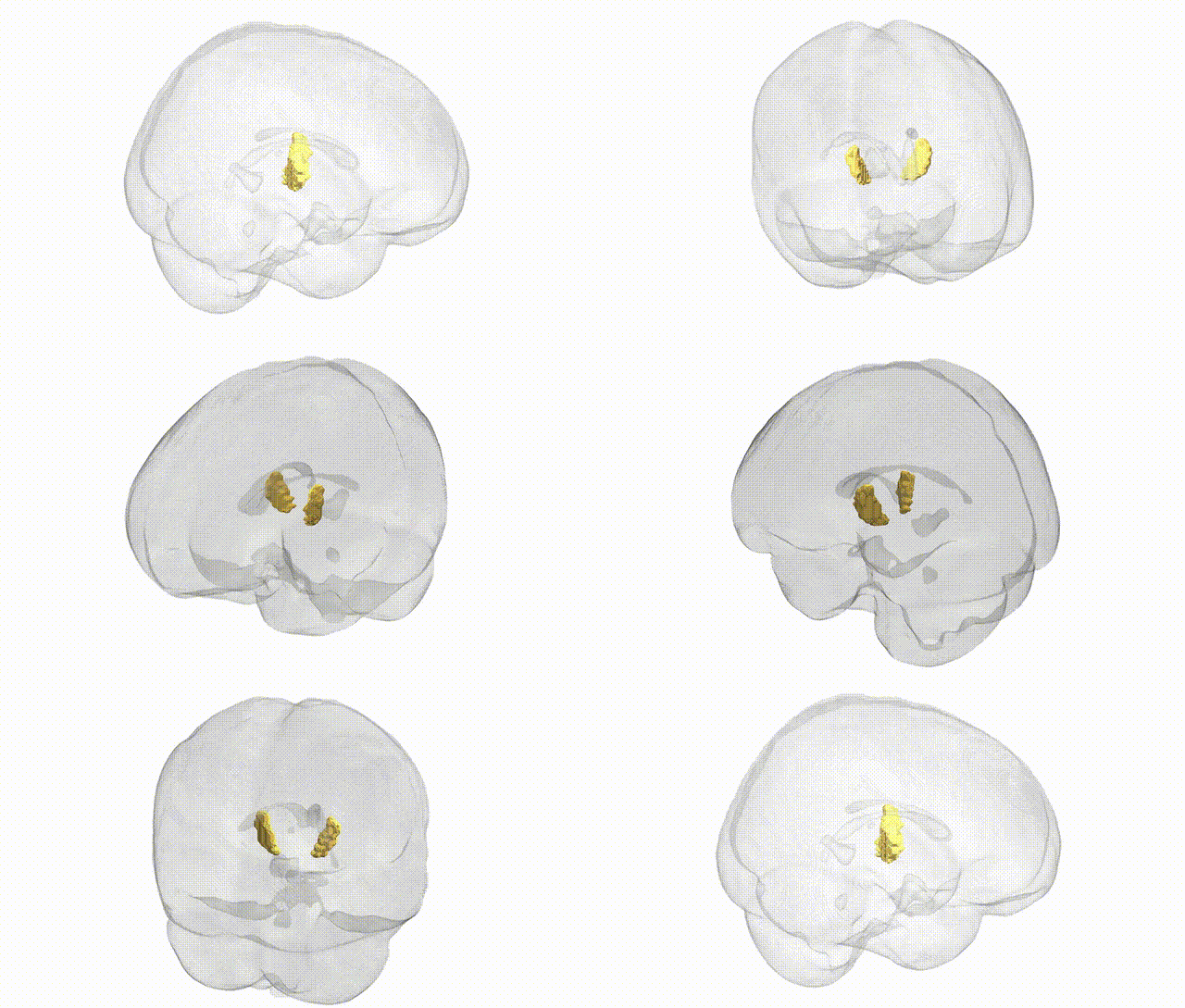
Full Quality Version: Download MP4
Wali Sidiqyar*, Gaurav Rudravaram*, Elyssa M. McMaster, Trent M. Schwartz, Adam M. Saunders, Kurt G. Schilling, Bennett A. Landman "Introducing SPINS: A Shared Public Visualization Library of Neuroanatomical Structures." Medical Imaging with Deep Learning- short paper
This resource is licensed under CC0 1.0 Universal (Public Domain).