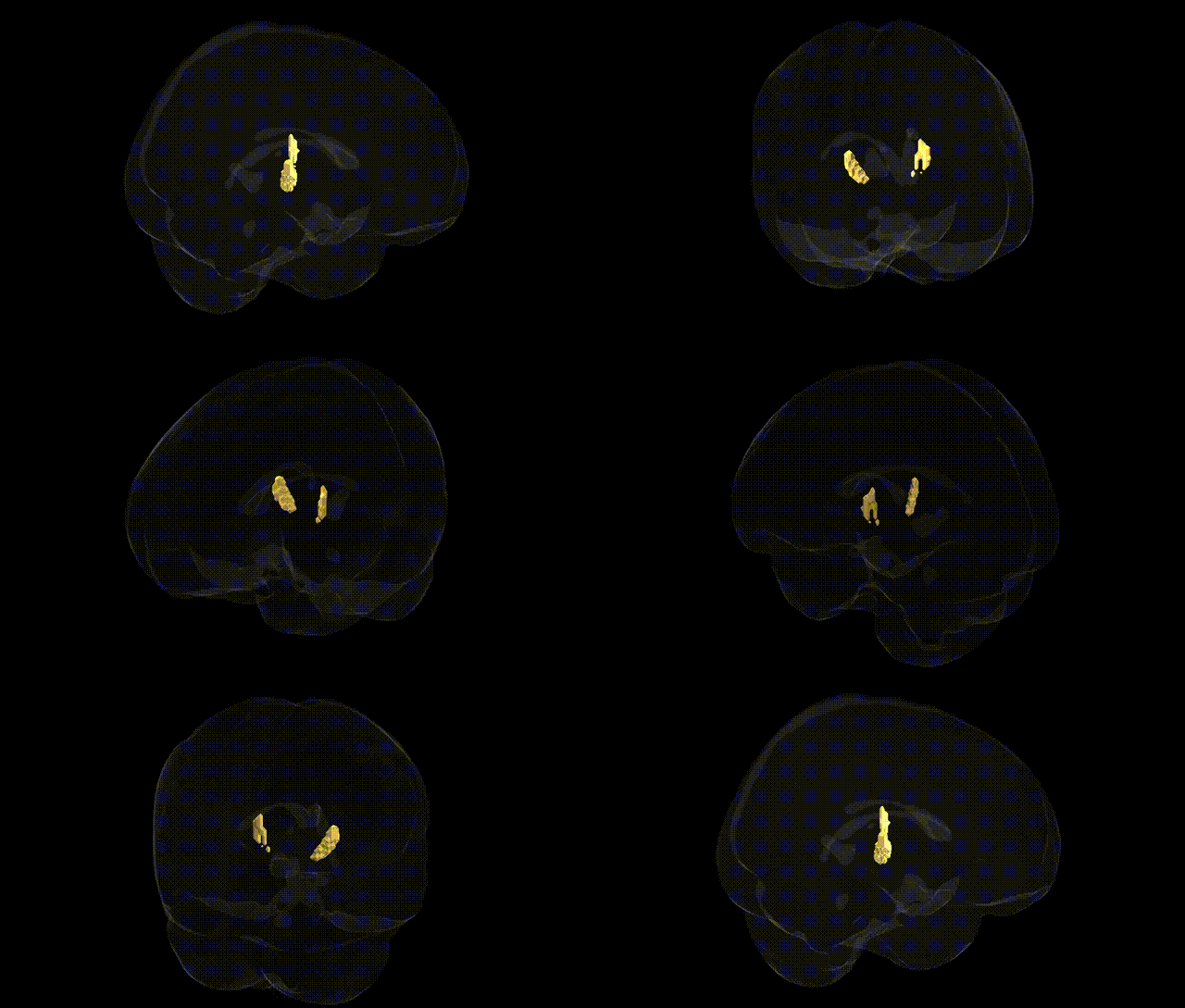
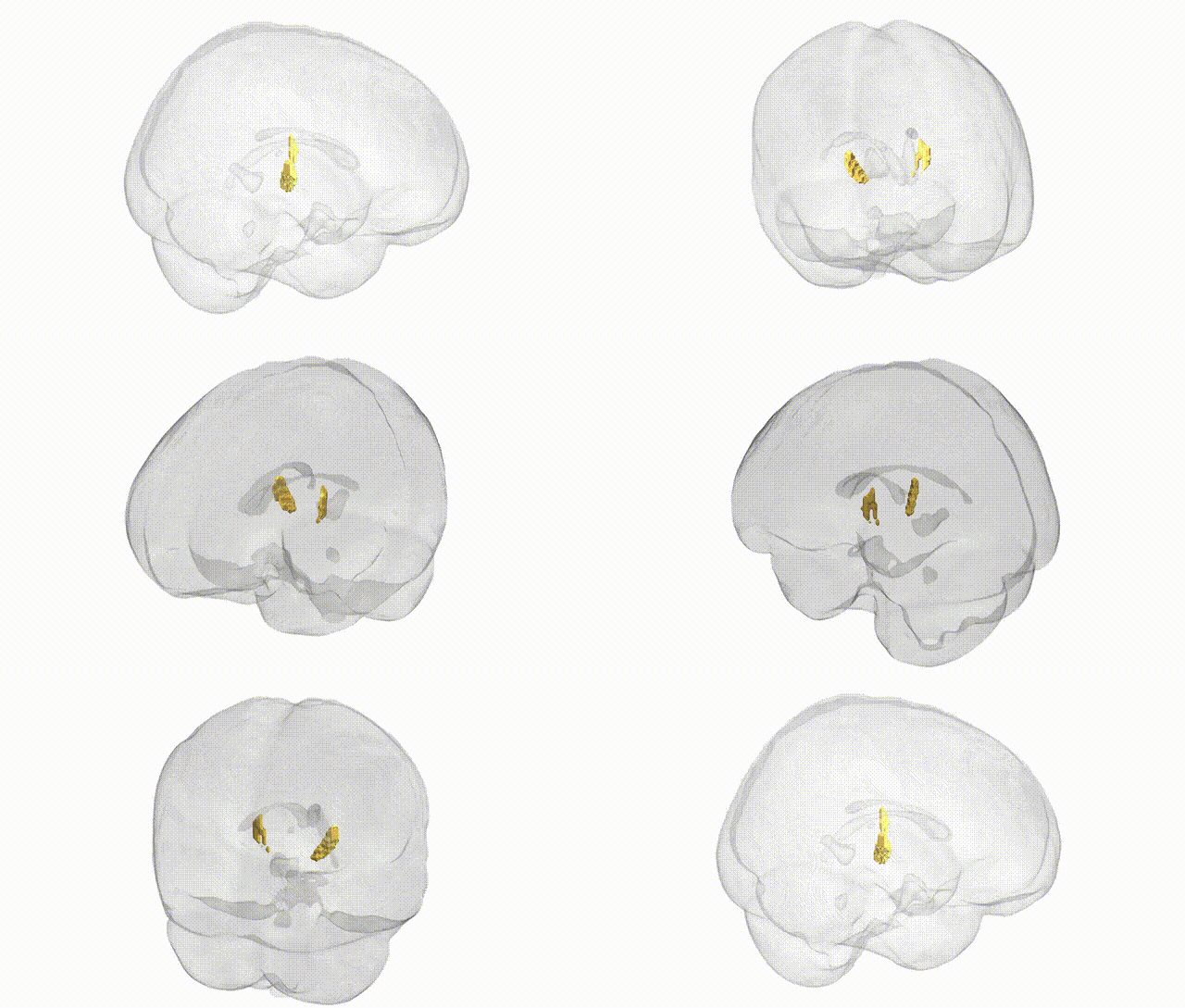
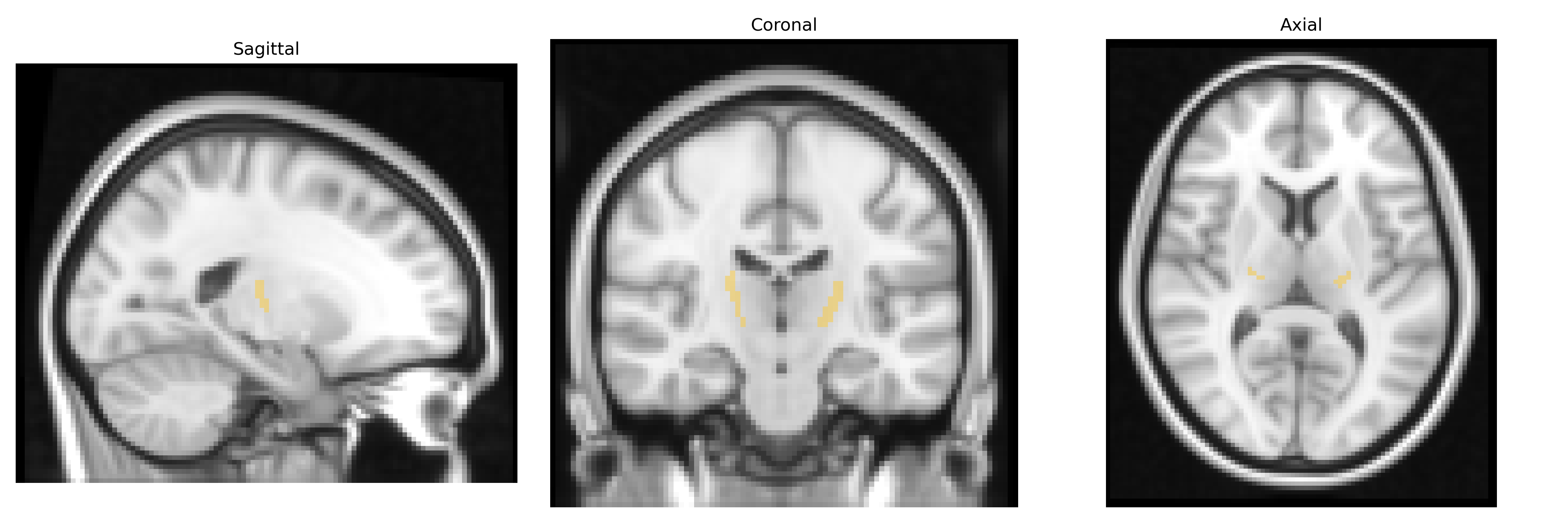
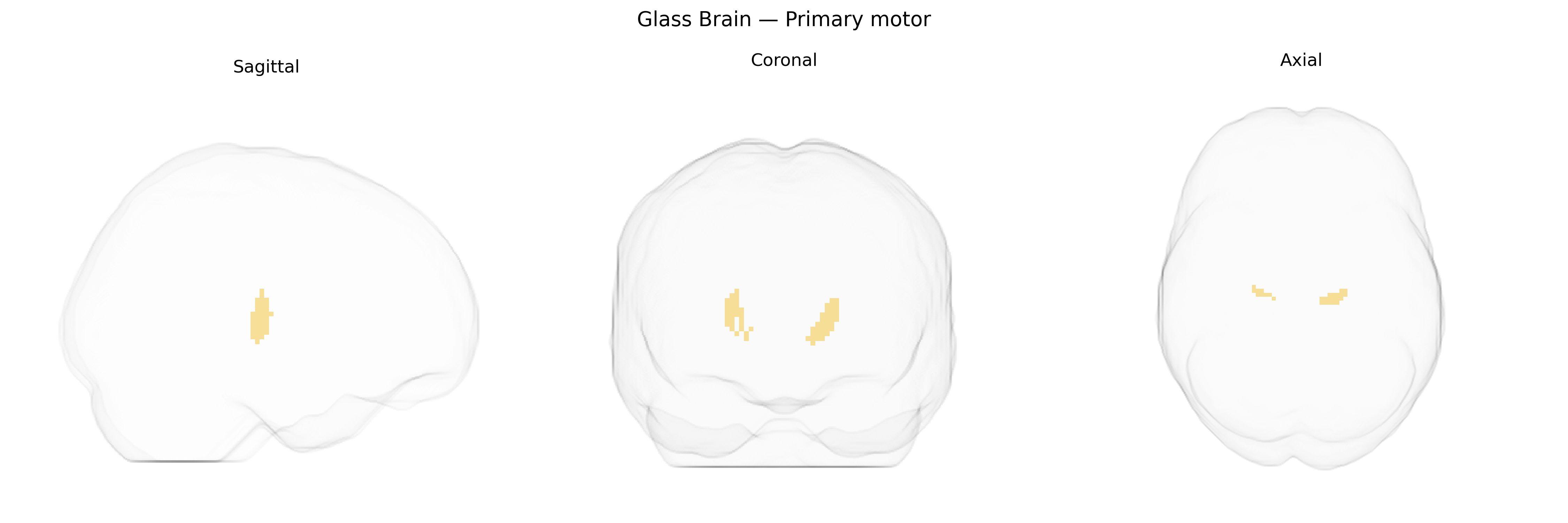
The bilateral Primary motor functional group in the Thalamus maxprob thr25 2 mm Atlas corresponds predominantly to motor relay nuclei, especially the ventral lateral (VL) and ventral anterior (VA) nuclei, which form crucial thalamocortical pathways linking cerebellar and basal ganglia outputs to primary motor cortex. These nuclei participate in the modulation and integration of voluntary motor commands, facilitating the planning, initiation, and execution of movement via excitatory glutamatergic projections to frontal motor areas. Afferent input arises chiefly from the cerebellum (dentate nucleus) and basal ganglia (globus pallidus), while efferent projections target the precentral gyrus and supplementary motor areas, contributing to fine motor control, muscle tone regulation, and coordination of complex motor sequences. There is no direct Wikipedia article for the “Primary motor” thalamic group; a closely related structure is the Ventral lateral nucleus of thalamus.
Genetic associations involving the bilateral primary motor-related thalamic region (as defined in the Thalamus maxprob thr25 2mm atlas) emerge primarily from imaging genetics and GWAS studies linking thalamic structure and motor network function to specific loci and neurodevelopmental or neuropsychiatric traits rather than to this parcel in isolation. Variants near genes such as CACNA1C, GRIN2A, GRIN2B, and CNTNAP2 have been implicated in thalamocortical circuitry integrity and motor system excitability, often via effects on synaptic signaling and calcium channel function, with downstream influence on thalamic volume or connectivity that encompasses motor relay nuclei. Large-scale GWAS of subcortical brain volumes (e.g., ENIGMA and UK Biobank–based analyses) have identified multiple loci affecting overall thalamic size (including regions near DCC, PLEKHM1, and SLC39A8), and these structural differences have been associated with risk for schizophrenia, bipolar disorder, major depressive disorder, and cognitive traits, all of which involve altered thalamocortical and motor network dynamics. Motor-focused traits such as Parkinson’s disease, essential tremor, and dystonia have shown genetic links to pathways (LRRK2, GBA, SNCA, TOR1A, among others) that modulate basal ganglia–thalamocortical loops, with functional and surgical interventions (e.g., thalamic deep brain stimulation) targeting motor thalamus in genetically stratified cohorts. Although few GWAS explicitly isolate the bilateral primary motor thalamic parcel, convergent evidence indicates that genetic variants influencing synaptic transmission, neurodevelopmental patterning, and subcortical morphology contribute to individual differences in structure and function of this motor thalamic region, thereby modulating susceptibility to movement disorders, neurodevelopmental conditions, and broader psychiatric phenotypes.
Overview generated by GPT-4o (2026).
Region ID: 1
Hemisphere: bilateral
Atlas: Thalamus maxprob thr25 2mm
Full Quality Version: Download MP4
Full Quality Version: Download MP4
Wali Sidiqyar*, Gaurav Rudravaram*, Elyssa M. McMaster, Trent M. Schwartz, Adam M. Saunders, Kurt G. Schilling, Bennett A. Landman "Introducing SPINS: A Shared Public Visualization Library of Neuroanatomical Structures." Medical Imaging with Deep Learning- short paper
This resource is licensed under CC0 1.0 Universal (Public Domain).