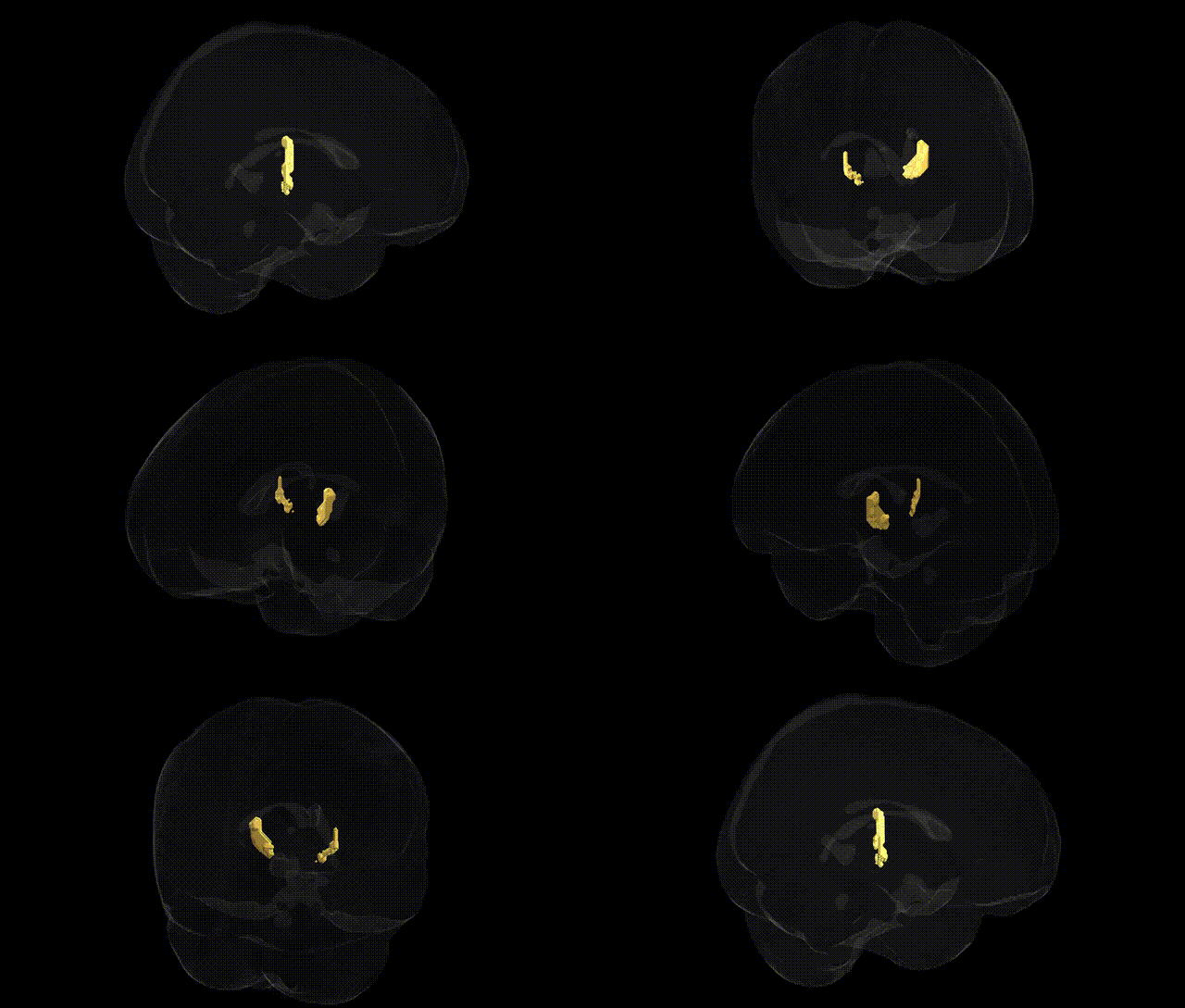
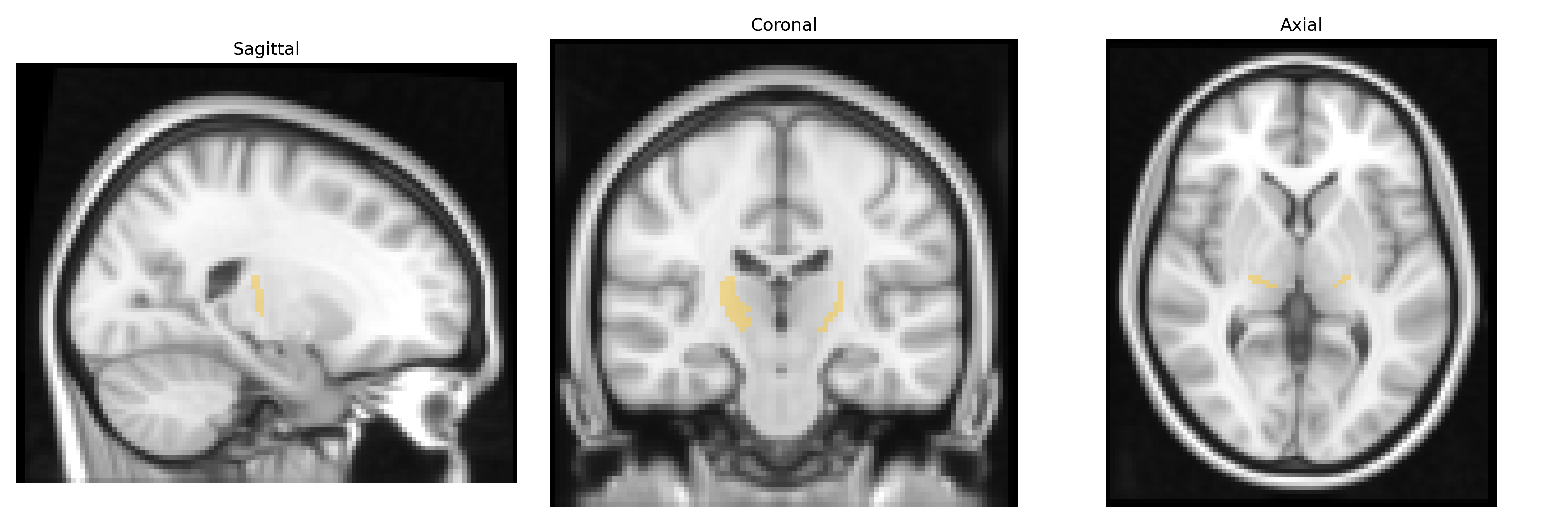
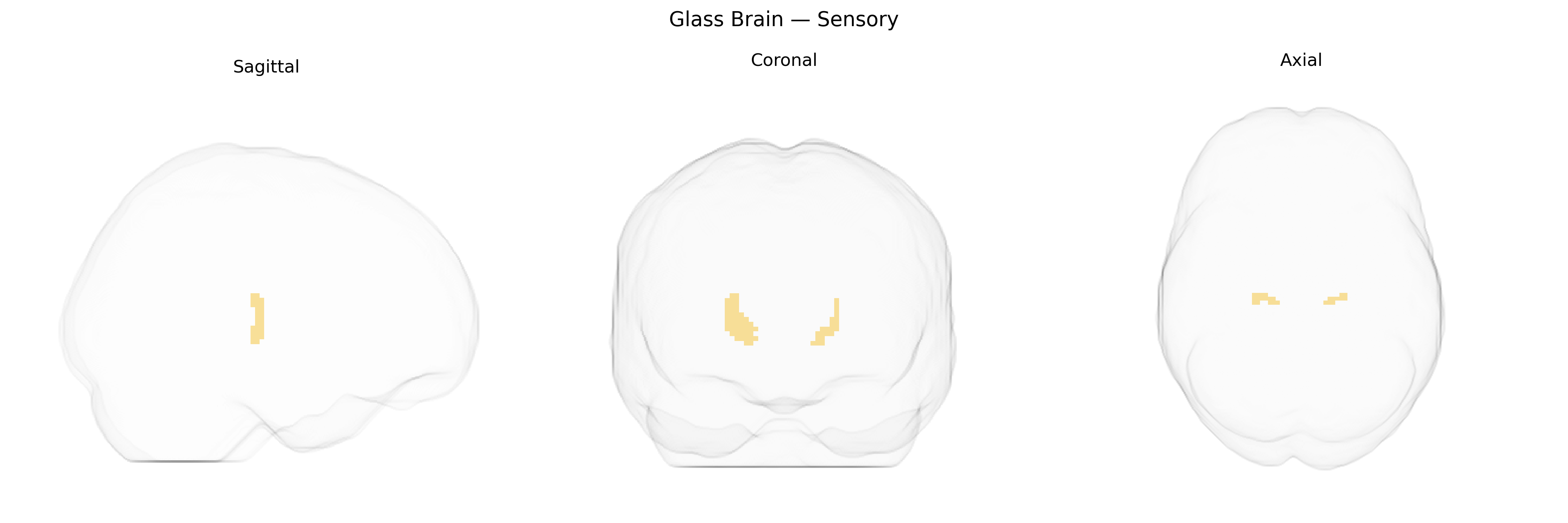
The bilateral Sensory thalamic region in the Thalamus maxprob thr25 2 mm atlas corresponds primarily to nuclei involved in relaying and modulating somatosensory information to the cerebral cortex, most notably the ventral posterior nucleus (including its ventral posterolateral and ventral posteromedial subdivisions). These nuclei receive highly organized afferent input from the medial lemniscus, spinothalamic tract, and trigeminothalamic pathways, conveying signals related to tactile discrimination, proprioception, pain, and temperature from the body and face. Through topographically arranged thalamocortical projections, this sensory complex transmits processed information mainly to the primary somatosensory cortex (postcentral gyrus), playing a critical role in conscious perception of bodily sensations and in maintaining somatotopic maps used for fine sensory discrimination and sensorimotor integration. There is no direct Wikipedia article for the bilateral Sensory region as labeled in this atlas; a closely related and encompassing structure is the thalamus: Thalamus.
The bilateral sensory thalamic nuclei—encompassing ventral posterior and related relay regions in the “Thalamus maxprob thr25 2mm” atlas—are genetically implicated mainly through large-scale neuroimaging GWAS that link common variants to thalamic volume and microstructure, with downstream associations to somatosensory processing and pain perception. Variants in genes involved in axon guidance (e.g., ROBO1/2, SLIT2), synaptic signaling (e.g., GRM3, CACNA1C), and neurodevelopmental patterning (e.g., PAX6, TBR1-related pathways) have been associated with thalamic morphology and connectivity, some of which overlap with loci for schizophrenia, bipolar disorder, ADHD, and autism, suggesting shared genetic influences on thalamocortical circuits. Thalamic sensory nuclei show enrichment for genes and regulatory elements identified in GWAS of chronic pain, migraine, and somatosensory traits (e.g., pain thresholds), as well as insomnia and sleep-related traits that rely on thalamocortical gating of sensory input. Multi-trait and transcriptomic studies also highlight immune and neuroinflammatory genes (e.g., MHC region, complement components) whose variants have been linked to altered thalamic structure and risk for psychiatric and neurodevelopmental disorders, consistent with the thalamus’s role as a sensory hub sensitive to broader genetic influences on cortical–subcortical integration.
Overview generated by GPT-4o (2026).
Region ID: 2
Hemisphere: bilateral
Atlas: Thalamus maxprob thr25 2mm
Full Quality Version: Download MP4
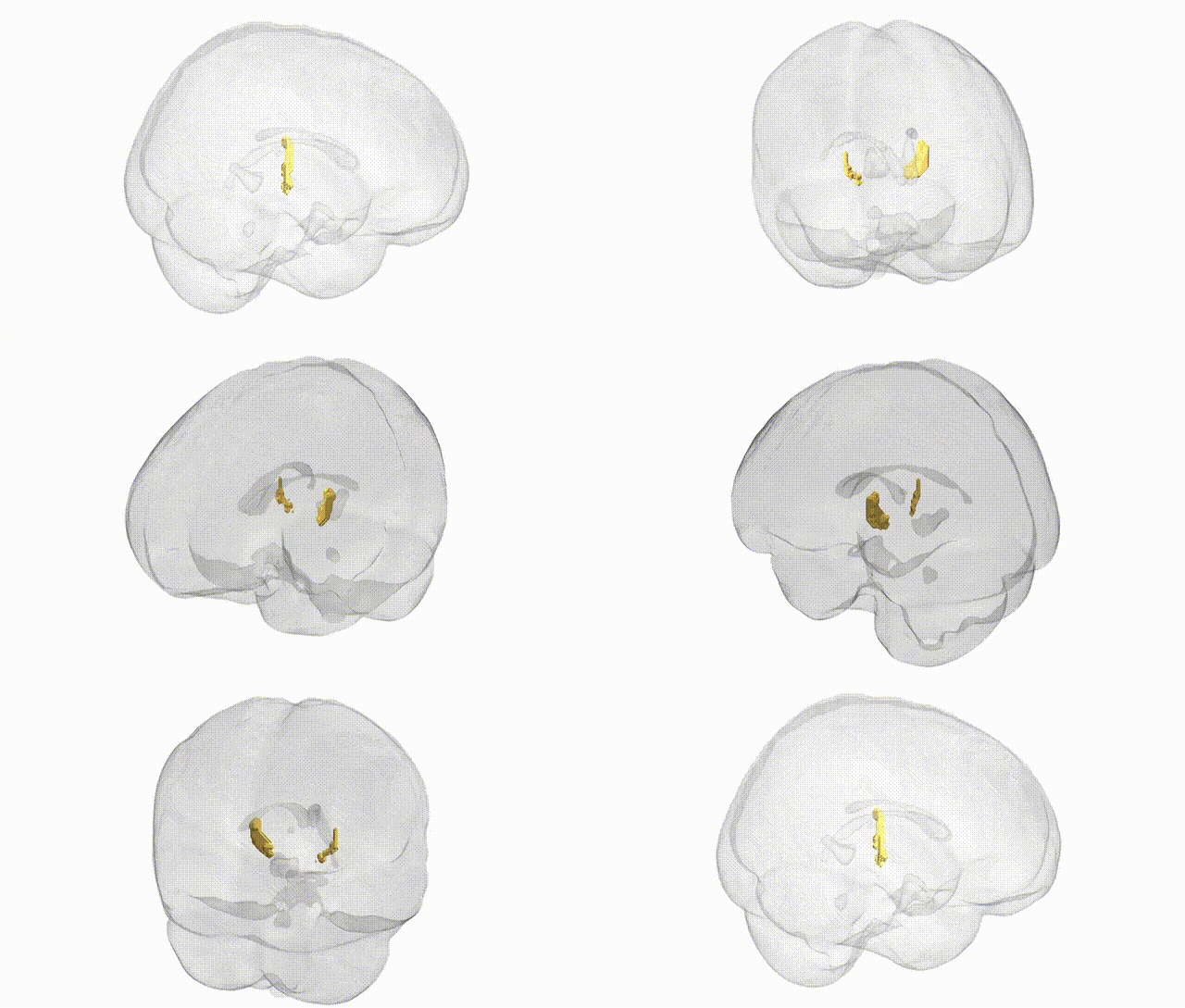
Full Quality Version: Download MP4
Wali Sidiqyar*, Gaurav Rudravaram*, Elyssa M. McMaster, Trent M. Schwartz, Adam M. Saunders, Kurt G. Schilling, Bennett A. Landman "Introducing SPINS: A Shared Public Visualization Library of Neuroanatomical Structures." Medical Imaging with Deep Learning- short paper
This resource is licensed under CC0 1.0 Universal (Public Domain).