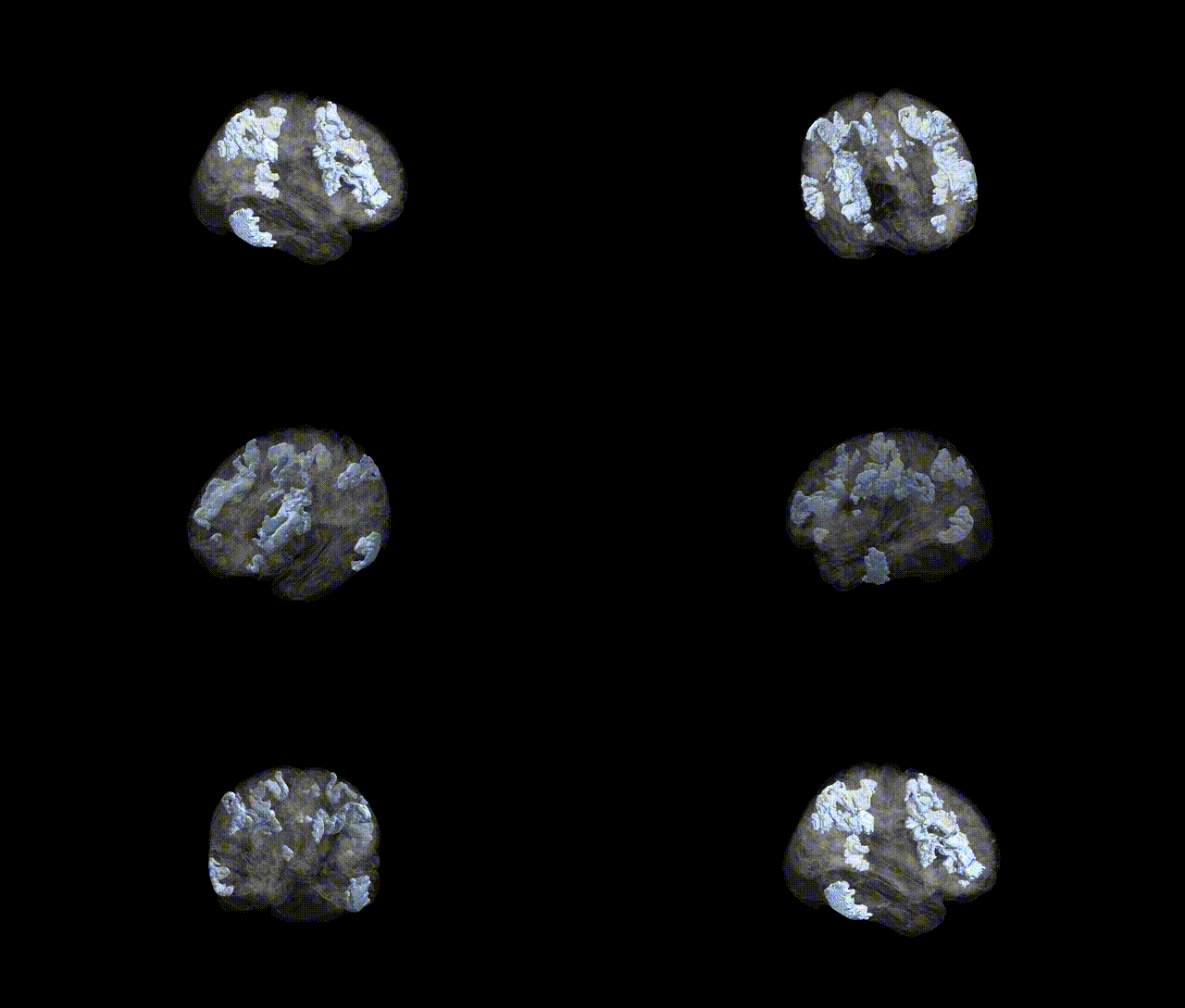
The Bilateral Control_C region in the Yeo-17 atlas is a higher-order association network component implicated in executive control, integrating information across frontal and parietal areas to support goal-directed behavior, cognitive flexibility, and attentional regulation. It is typically localized to bilateral dorsal and lateral prefrontal and parietal cortices, often overlapping with regions such as the intraparietal sulcus and dorsolateral prefrontal cortex, and shows strong functional connectivity with other control and attentional networks. Neural activity in this region is associated with task-set maintenance, working memory manipulation, conflict monitoring, and the adaptive allocation of cognitive resources during demanding tasks. In the broader organization of large-scale brain networks, it forms part of the frontoparietal control system that flexibly couples with sensory, motor, and default-mode networks to coordinate behavior in a context-dependent manner. There is no direct Wikipedia article for this Yeo-defined subdivision; a closely related structure is the Frontoparietal Network.
Published genetic-association data rarely target the Yeo-17 “Control_C” network label explicitly, so inferences come mainly from broader studies of frontoparietal or cognitive control networks that likely overlap this region. Large imaging–genetics and GWAS analyses (e.g., UK Biobank) have linked frontoparietal control network volume, connectivity, and functional activation to common variants in genes involved in synaptic function and neurodevelopment (such as CNTNAP2, CACNA1C, ZNF804A, and DRD2), many of which are also risk loci for schizophrenia, bipolar disorder, major depressive disorder, and ADHD. Polygenic risk scores for these psychiatric conditions, as well as for educational attainment, general cognitive ability, and risk-taking behavior, show significant associations with functional connectivity and morphology in control-network territories overlapping Control_C, suggesting that genetic architectures underlying higher-order cognition and psychopathology partially converge on this network. Additionally, GWAS of functional connectivity and network organization have identified loci near genes involved in axon guidance and myelination (e.g., genes in the NTRK and ROBO/SLIT pathways), which influence global and frontoparietal network topology and may extend to Control_C. However, specific SNP-level or gene-level associations uniquely and reproducibly mapped to the bilateral Yeo-17 Control_C subdivision remain limited, and most current evidence is extrapolated from studies of the broader frontoparietal control system.
Overview generated by GPT-4o (2026).
Region ID: 12
Hemisphere: Bilateral
Atlas: Yeo-17
Full Quality Version: Download MP4
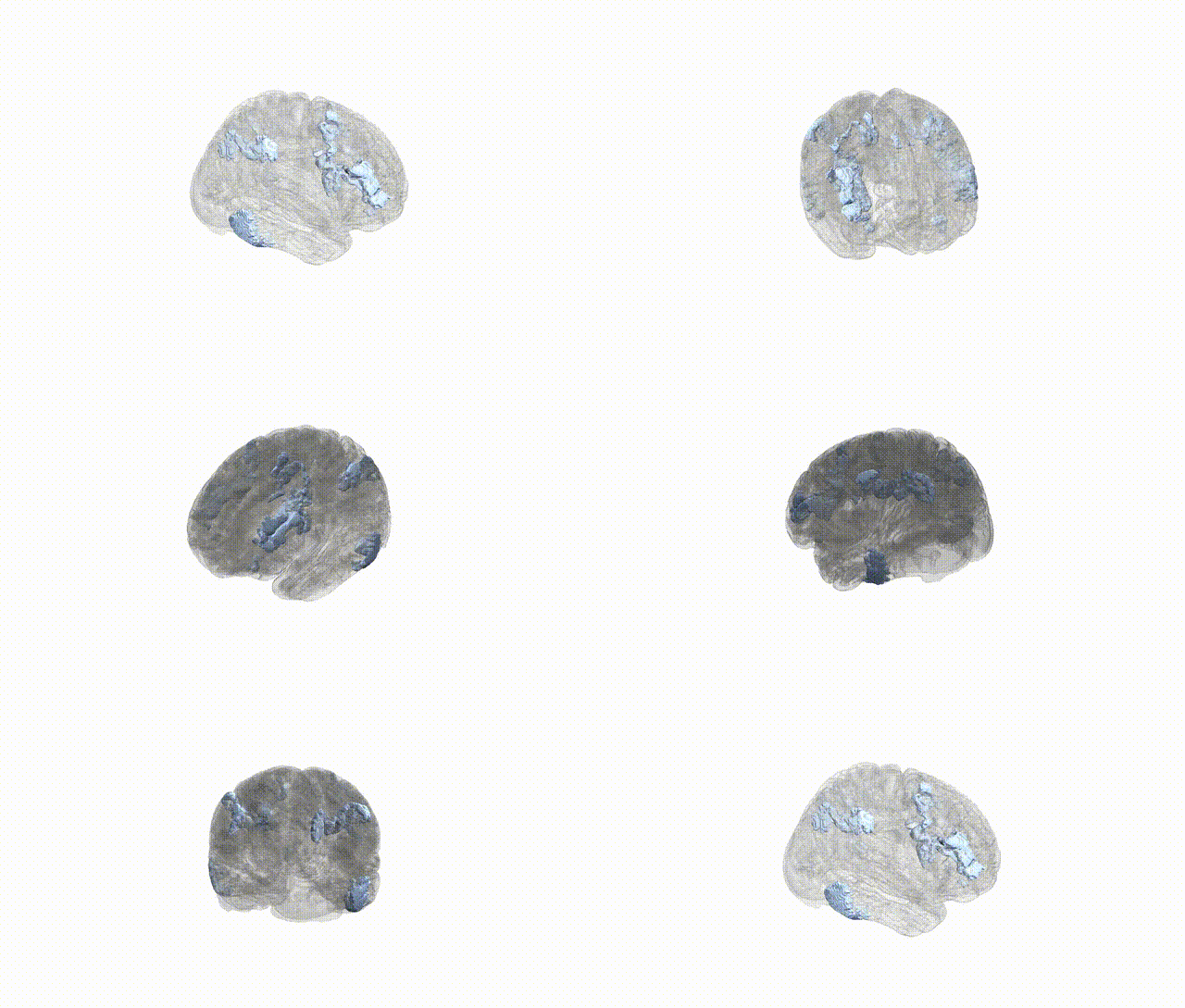
Full Quality Version: Download MP4
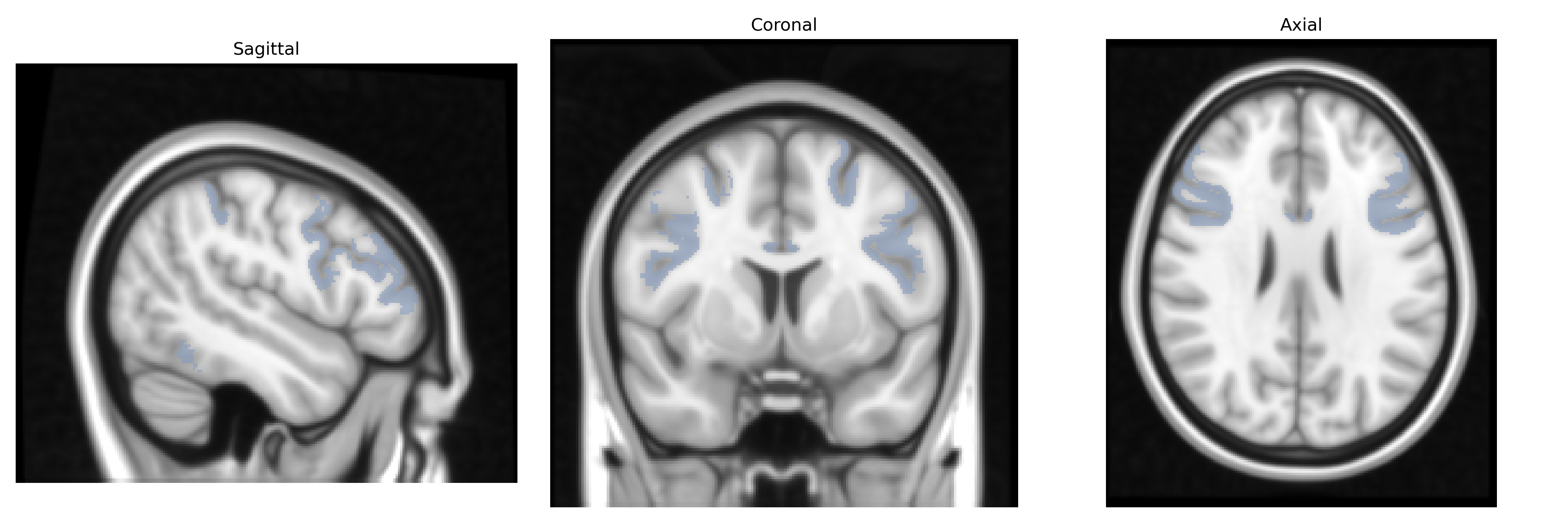
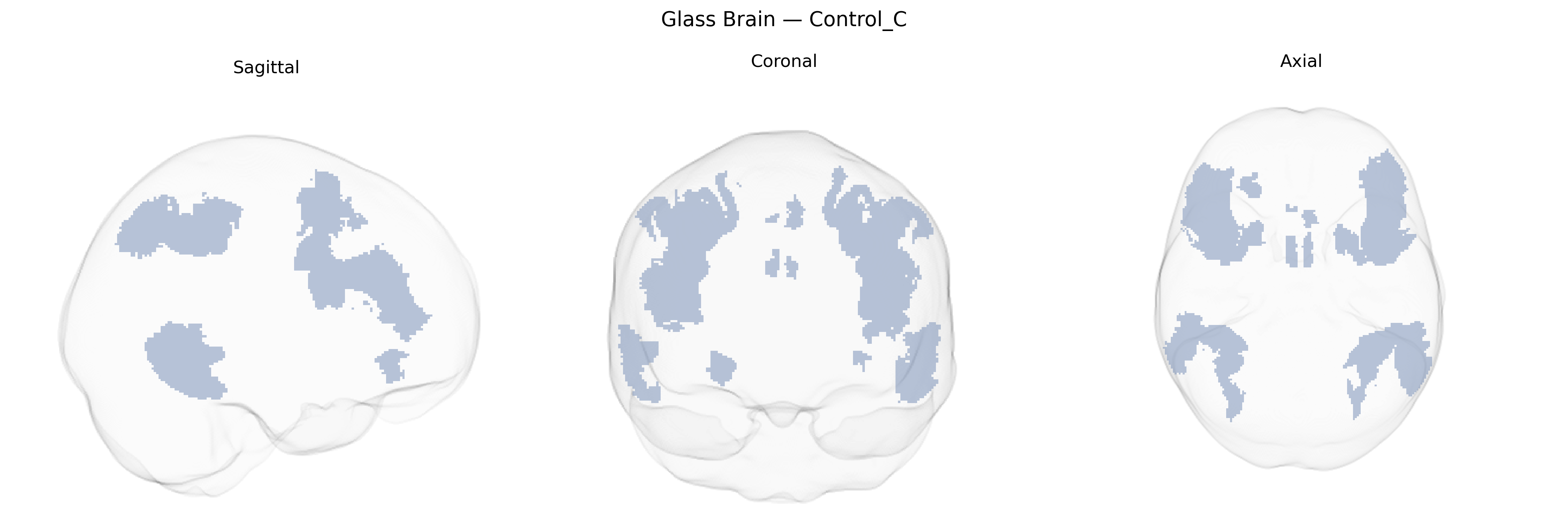
Wali Sidiqyar*, Gaurav Rudravaram*, Elyssa M. McMaster, Trent M. Schwartz, Adam M. Saunders, Kurt G. Schilling, Bennett A. Landman "Introducing SPINS: A Shared Public Visualization Library of Neuroanatomical Structures." Medical Imaging with Deep Learning- short paper
This resource is licensed under CC0 1.0 Universal (Public Domain).