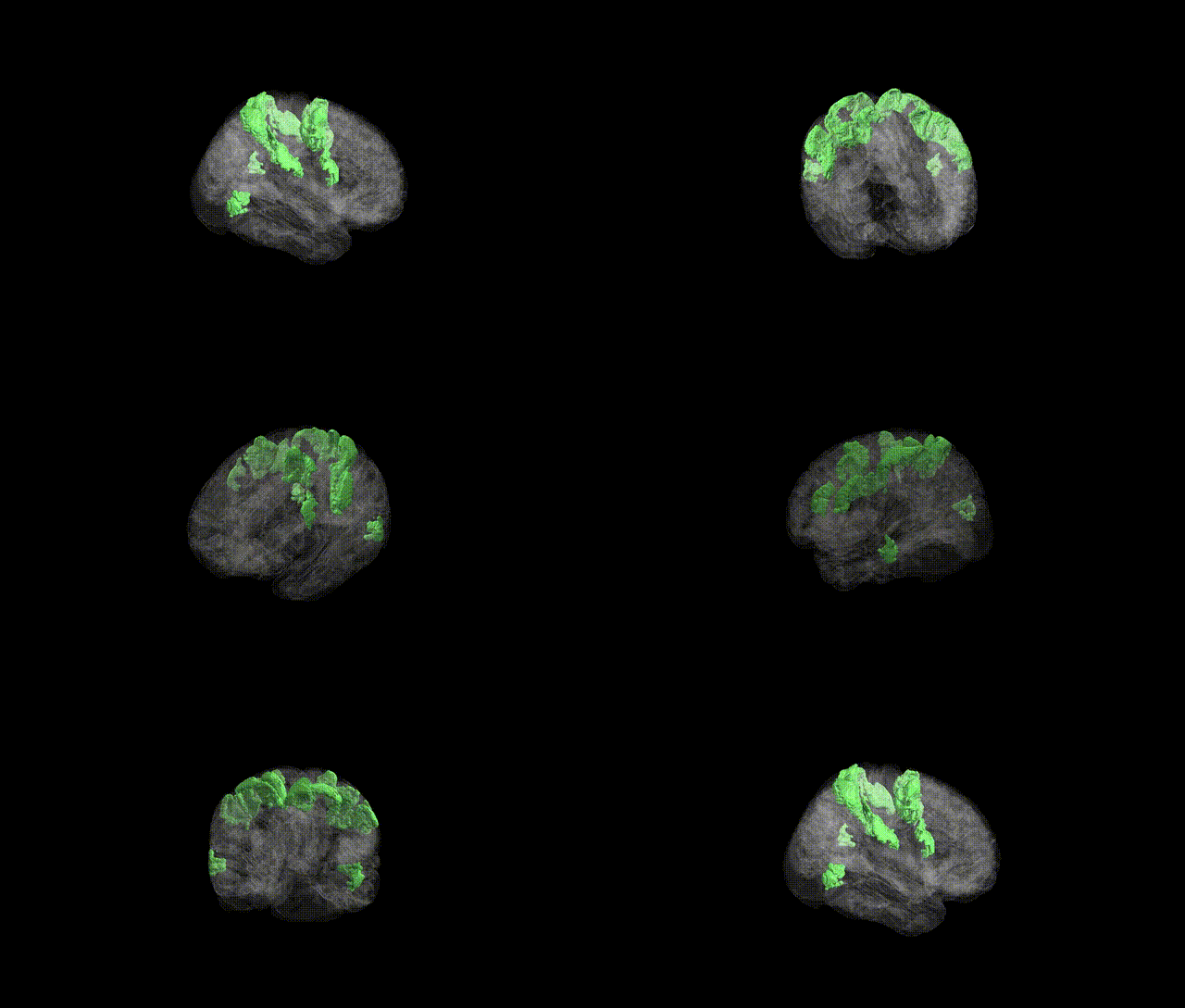
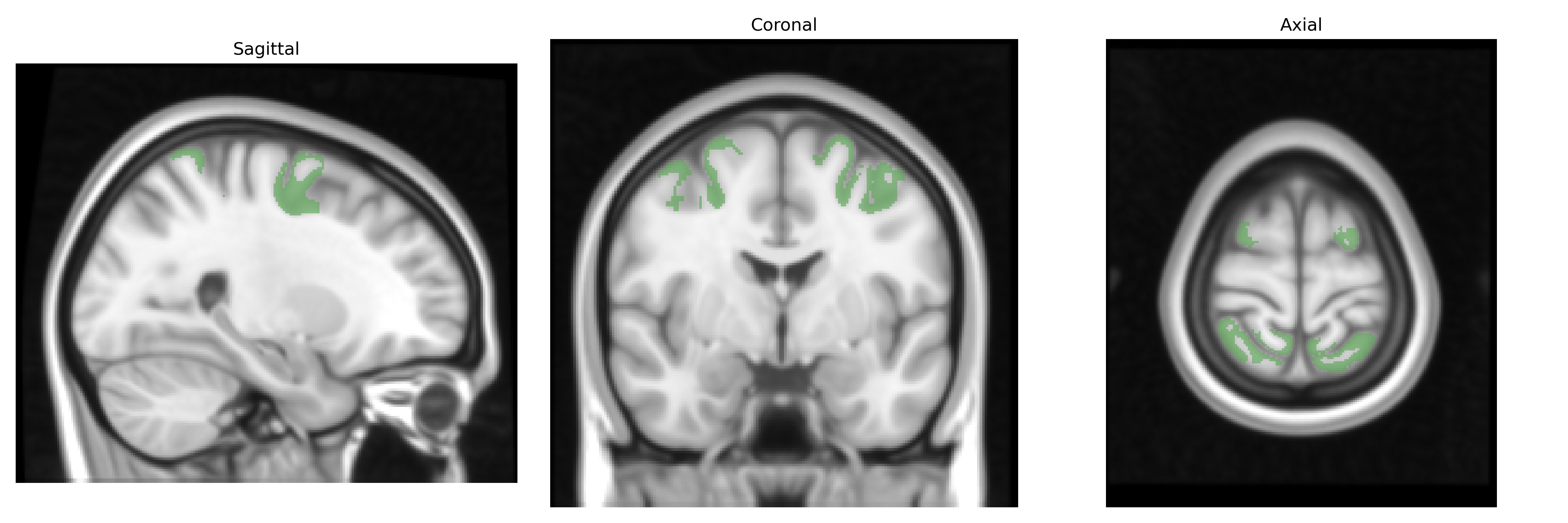
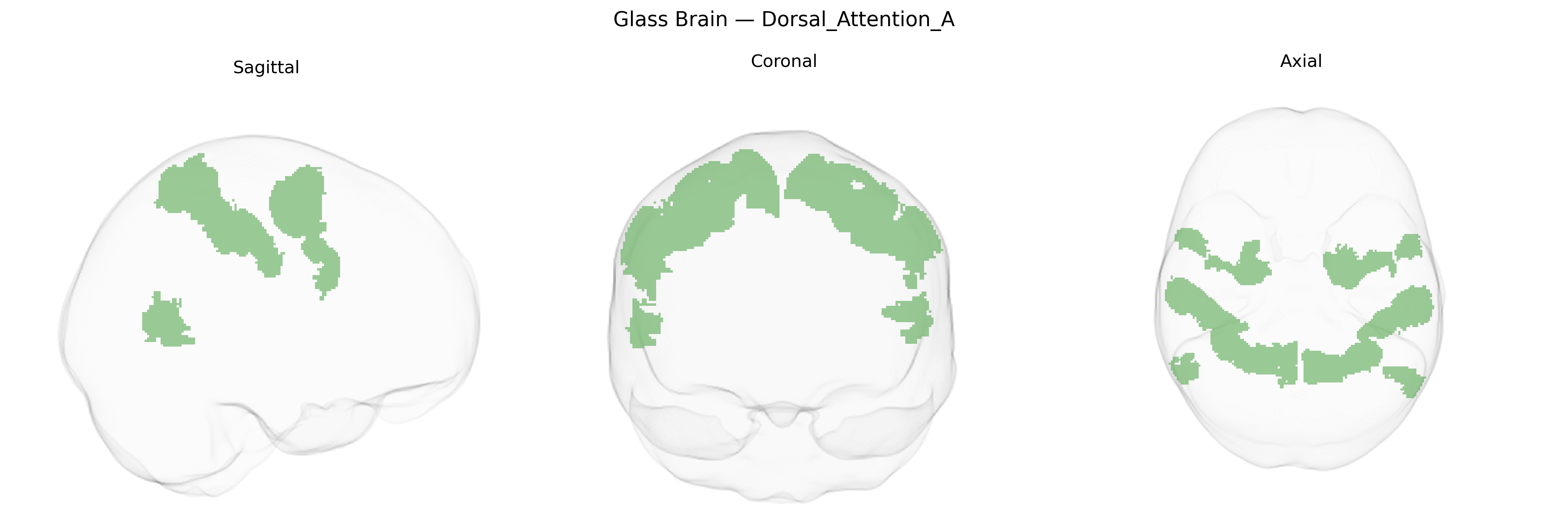
The Bilateral Dorsal_Attention_A region from the Yeo-17 atlas corresponds to a core subsystem of the dorsal attention network, a large-scale frontoparietal network implicated in top-down, goal-directed allocation of visuospatial attention and the control of eye and hand movements. This network typically encompasses portions of the intraparietal sulcus and superior parietal lobule together with frontal eye fields and adjacent premotor cortex, and shows increased activity during tasks requiring voluntary orienting, visual search, and sustained attention. Bilateral Dorsal_Attention_A is characterized by strong interhemispheric symmetry and robust functional connectivity with visual and oculomotor regions, supporting the selection and prioritization of sensory information according to behavioral goals. There is no direct link for this specific Yeo-17 parcel; a closely related structure is the Dorsal attention network.
Genetic associations for the bilateral Dorsal_Attention_A network in the Yeo-17 atlas are largely inferred from studies of the broader dorsal attention and frontoparietal systems, as most GWAS do not target this subnetwork specifically. Variants in synaptic, neurodevelopmental, and neurotransmission-related genes (such as CACNA1C, GRM3, and DRD2) have been linked to structural and functional differences in dorsal attention and frontoparietal regions, often via imaging-genetics approaches that relate SNPs to cortical thickness, surface area, or task-based/ resting-state connectivity. Polygenic risk for schizophrenia, ADHD, and autism spectrum disorder has been associated with altered connectivity and activation within dorsal attention circuits, including intraparietal sulcus and frontal eye fields that map onto Yeo dorsal attention components. Large-scale brain morphology GWAS (e.g., ENIGMA, UK Biobank) have identified multiple loci influencing parietal and frontal cortical measures that overlap the Dorsal_Attention_A territory, and these loci often implicate genes involved in neuronal migration, synapse formation, and axon guidance. Moreover, genetic correlations between attention-related traits (such as inattention and cognitive performance), psychiatric risk (schizophrenia, ADHD, major depression), and intrinsic connectivity of dorsal attention/frontoparietal networks suggest that common variants shaping this network contribute to vulnerability for neuropsychiatric conditions and individual variation in attentional control, even though direct locus-by-locus mapping specifically to “Bilateral Dorsal_Attention_A” remains limited and indirect.
Overview generated by GPT-4o (2026).
Region ID: 6
Hemisphere: Bilateral
Atlas: Yeo-17
Full Quality Version: Download MP4
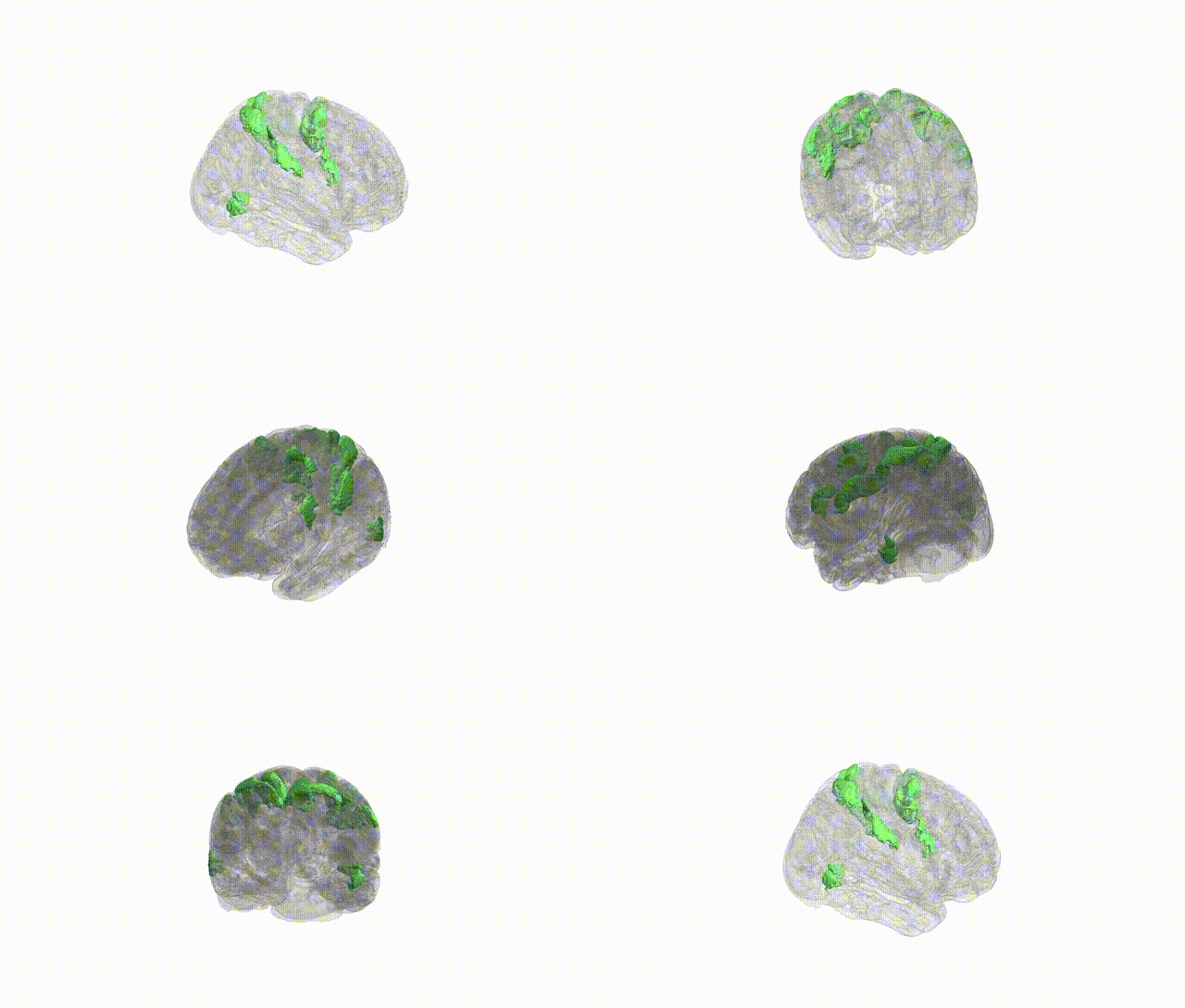
Full Quality Version: Download MP4
Wali Sidiqyar*, Gaurav Rudravaram*, Elyssa M. McMaster, Trent M. Schwartz, Adam M. Saunders, Kurt G. Schilling, Bennett A. Landman "Introducing SPINS: A Shared Public Visualization Library of Neuroanatomical Structures." Medical Imaging with Deep Learning- short paper
This resource is licensed under CC0 1.0 Universal (Public Domain).