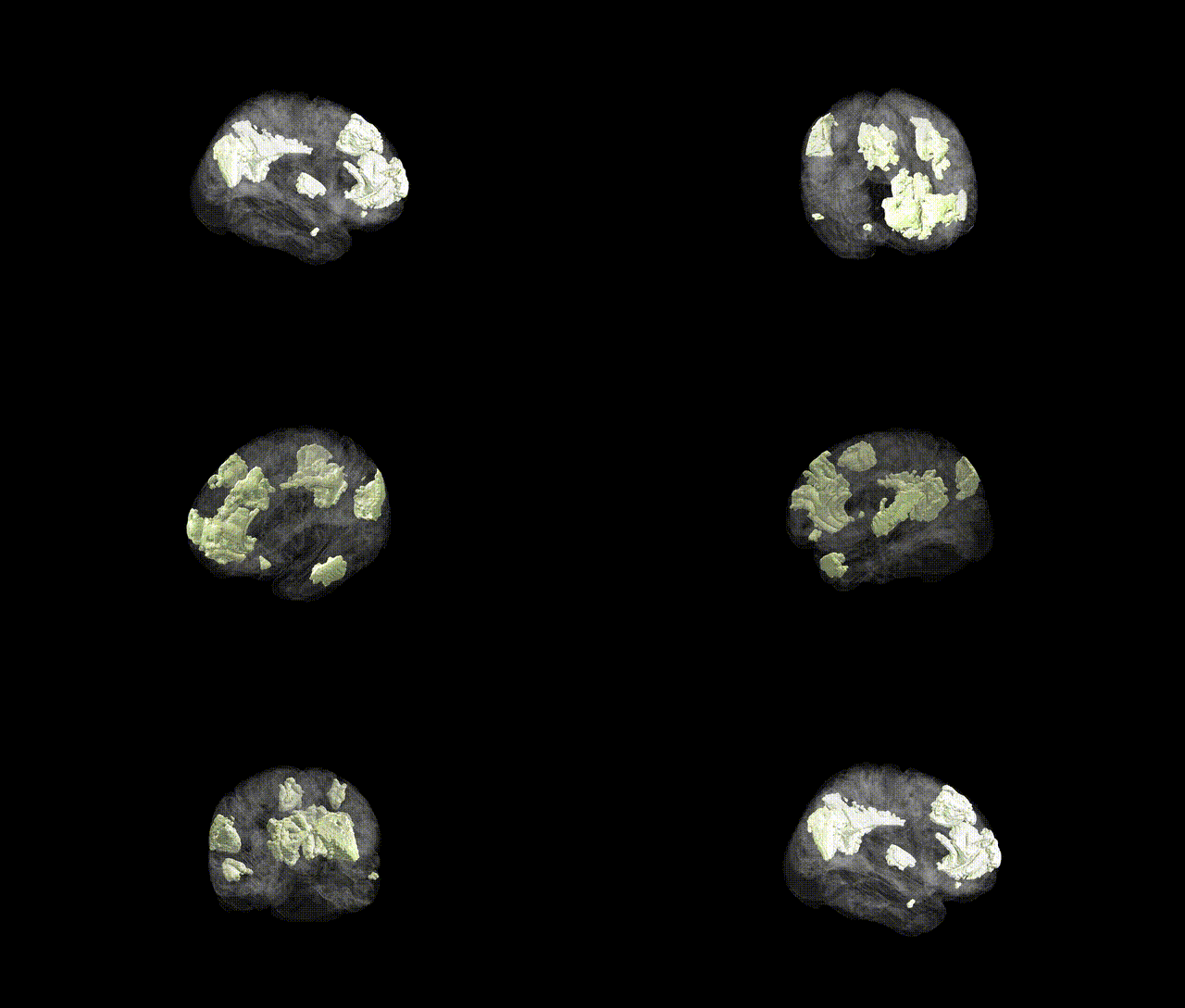
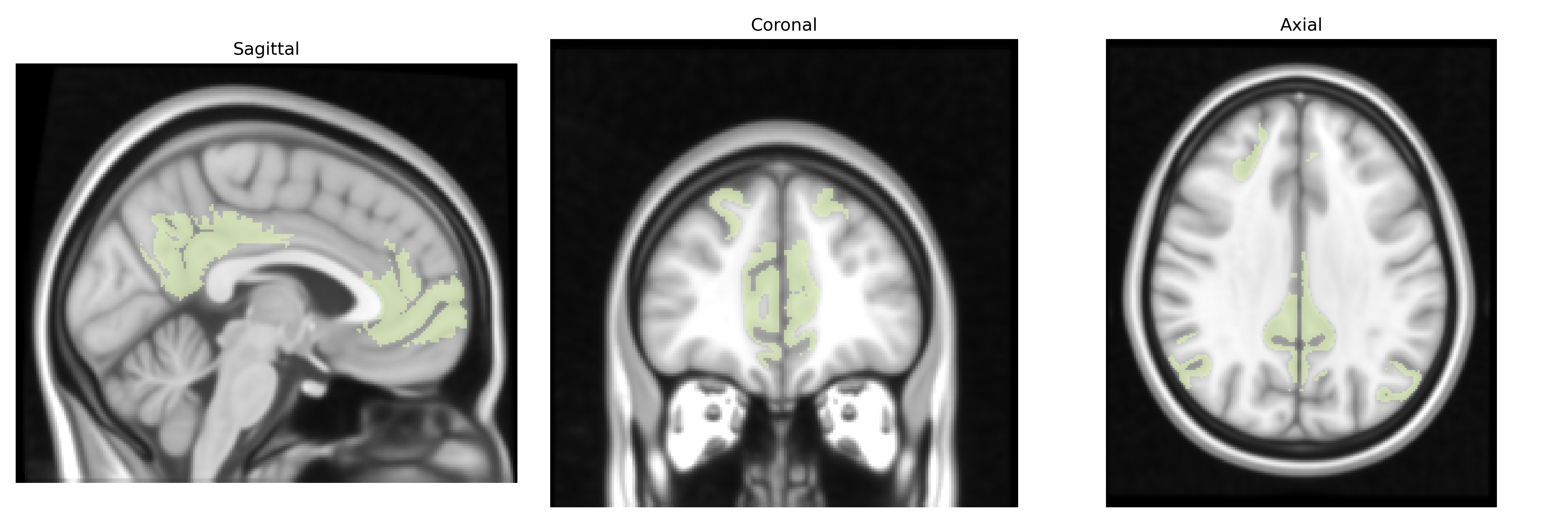
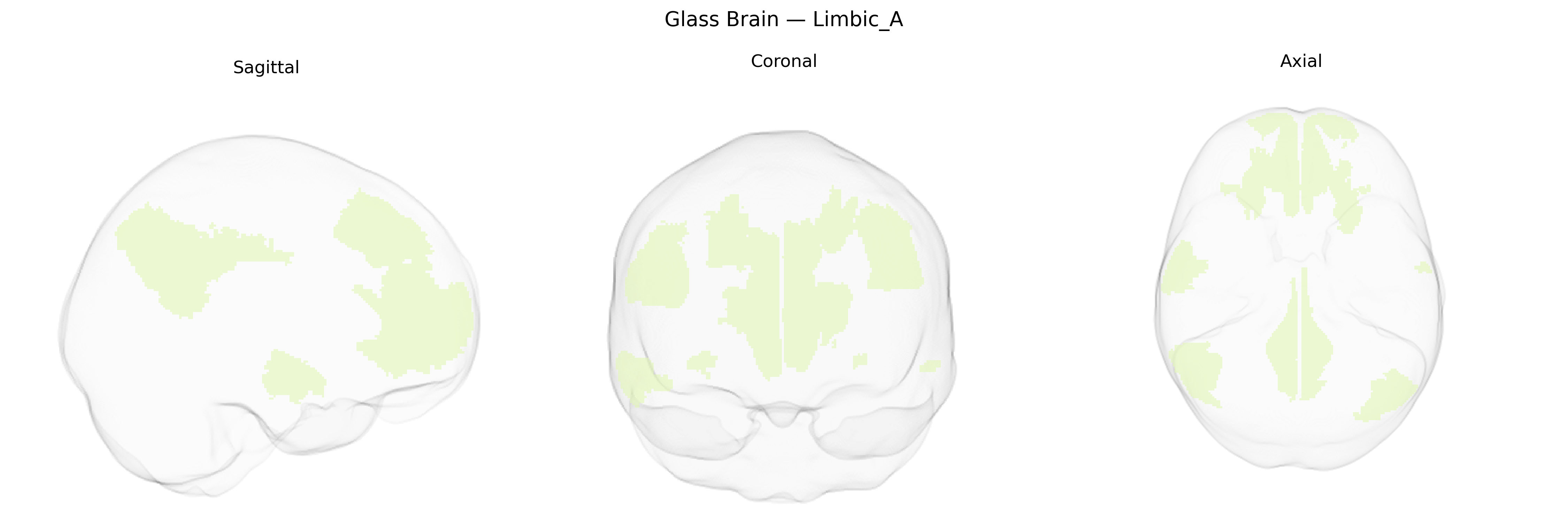
The Bilateral Limbic_A region in the Yeo-17 atlas refers to a large-scale functional network encompassing limbic structures in both hemispheres that are primarily involved in emotion, motivation, affective salience, and aspects of memory processing. This network typically includes portions of medial temporal and ventromedial cortical areas that interact closely with subcortical nuclei to regulate autonomic and visceral responses associated with emotional states, as well as to support associative learning and contextual memory. Activity within Limbic_A is linked to valuation of internal and external stimuli, regulation of mood, and integration of interoceptive signals with higher-order cognitive processing, and it often shows strong functional connectivity with orbitofrontal and medial prefrontal cortices. There is no direct Wikipedia article for “Bilateral Limbic_A”; a related structure is the Limbic system.
The bilateral Limbic_A network in the Yeo-17 atlas, encompassing ventromedial prefrontal and medial temporal limbic structures, has been implicated in multiple genetic and GWAS findings that link its structure and functional connectivity to psychiatric and behavioral traits. Large-scale imaging-genetics consortia (e.g., ENIGMA and UK Biobank–based studies) report that cortical thickness and surface area in medial prefrontal and limbic regions are heritable and influenced by common variants in genes involved in synaptic signaling and neurodevelopment (such as CACNA1C, GRM3, and genes within the major histocompatibility complex), which have also been associated with schizophrenia, bipolar disorder, and major depressive disorder. Polygenic risk scores for depression, anxiety, and schizophrenia correlate with altered connectivity and morphology in medial prefrontal and anterior cingulate components of the Limbic_A network, while GWAS of neuroticism, negative affect, and related personality traits show enrichment of associated variants in genes expressed in these limbic areas. Additionally, genetic variants linked to stress reactivity (for example, in FKBP5 and CRHR1) and emotion regulation have been associated with functional changes in medial limbic circuitry overlapping Limbic_A, and GWAS of cognitive and emotional traits frequently identify loci with regulatory effects in this network, underscoring its role as a genetically modulated hub for affective and self-referential processing.
Overview generated by GPT-4o (2026).
Region ID: 16
Hemisphere: Bilateral
Atlas: Yeo-17
Full Quality Version: Download MP4
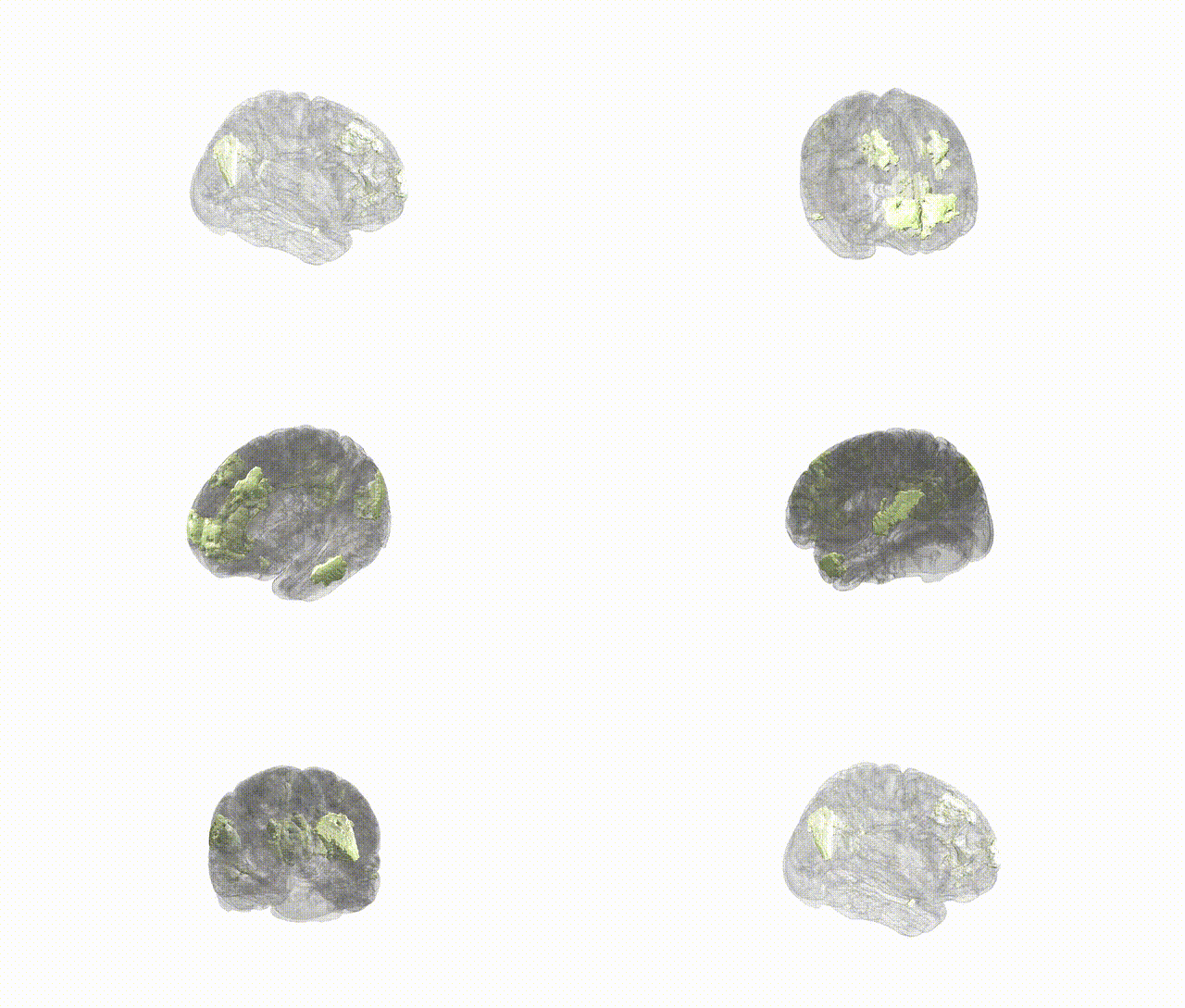
Full Quality Version: Download MP4
Wali Sidiqyar*, Gaurav Rudravaram*, Elyssa M. McMaster, Trent M. Schwartz, Adam M. Saunders, Kurt G. Schilling, Bennett A. Landman "Introducing SPINS: A Shared Public Visualization Library of Neuroanatomical Structures." Medical Imaging with Deep Learning- short paper
This resource is licensed under CC0 1.0 Universal (Public Domain).