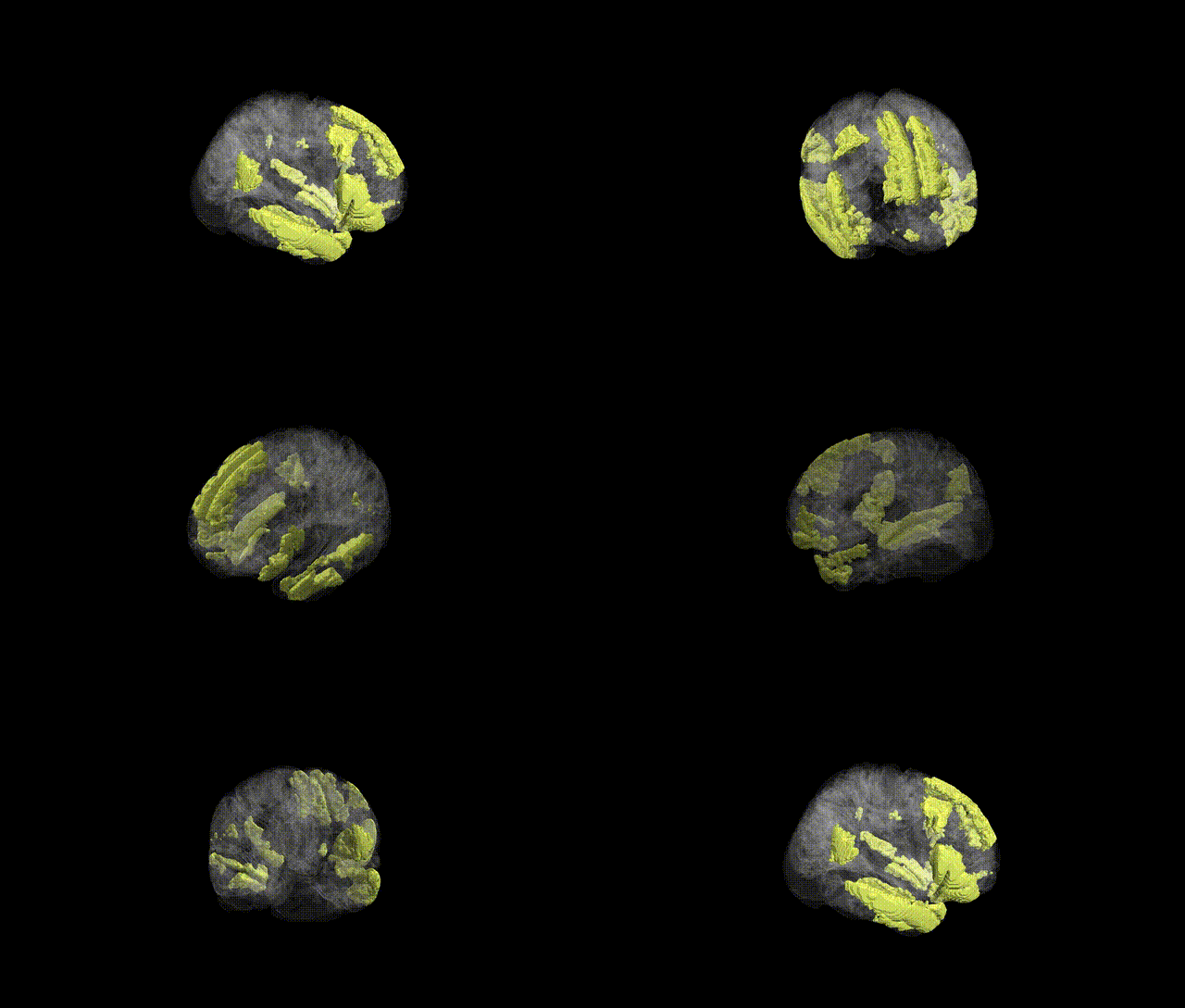
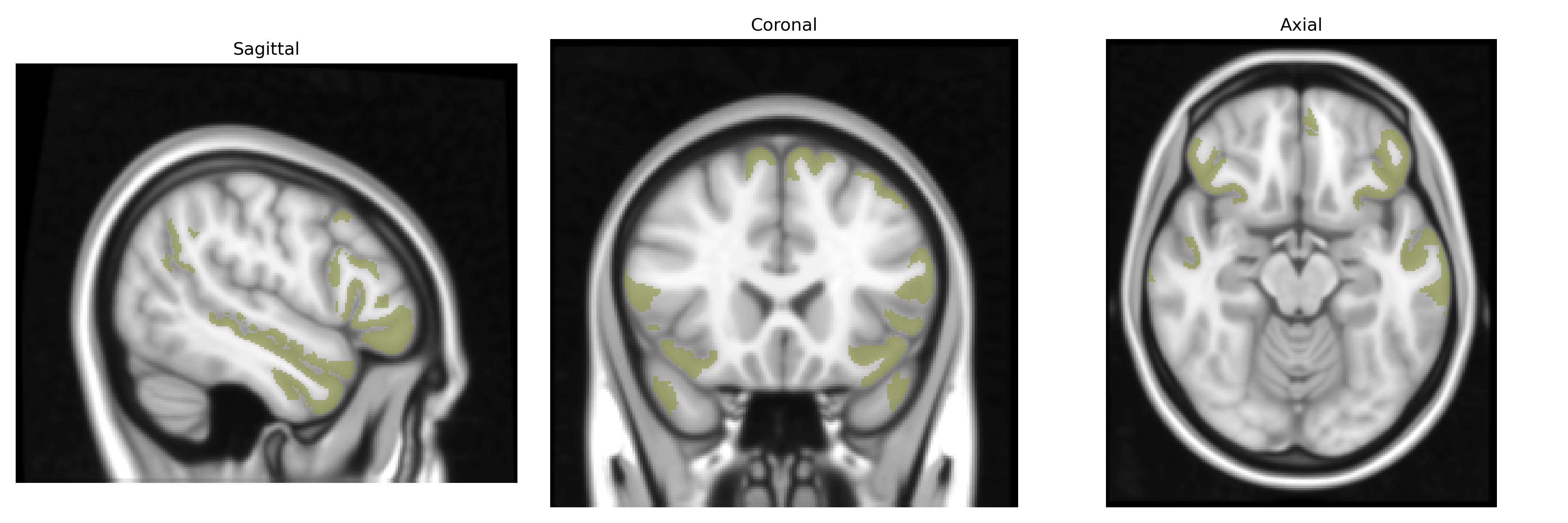
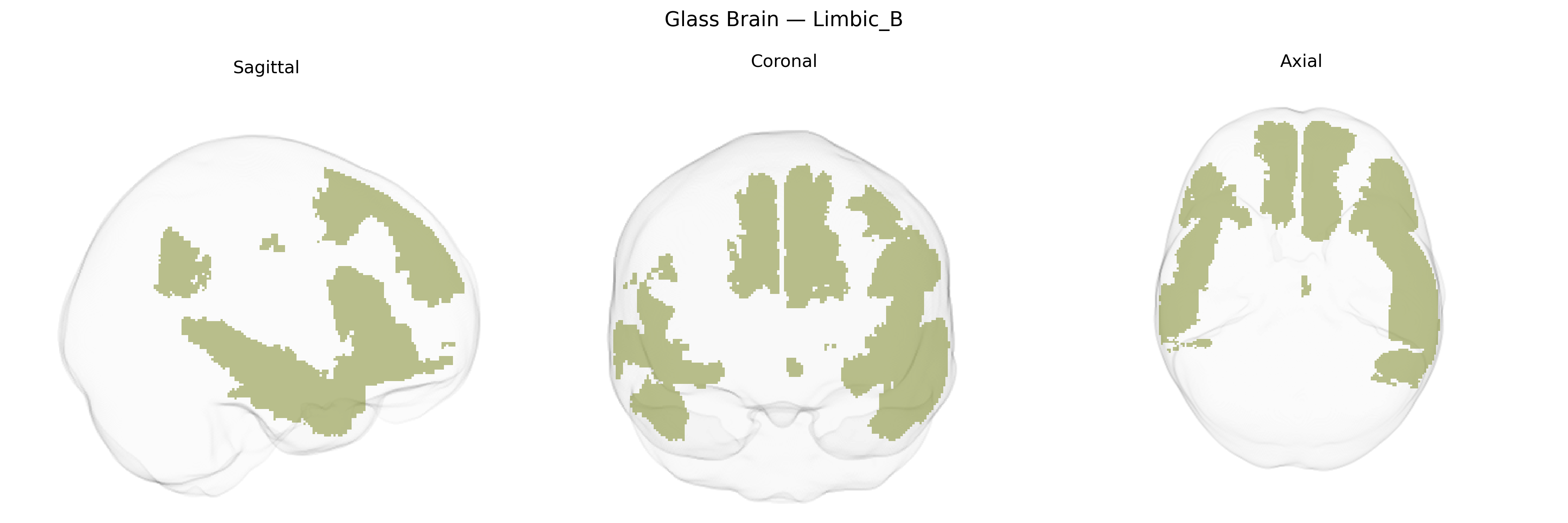
The Bilateral Limbic_B network in the Yeo-17 Atlas refers to a set of limbic and paralimbic regions in both hemispheres that are strongly involved in emotion, affective salience, interoception, and aspects of autonomic regulation. Functionally, this network is associated with processing subjective feeling states, integrating visceral and sensory information with emotional valence, and contributing to memory processes that have strong affective or motivational significance. Anatomically, the Limbic_B network overlaps with or lies adjacent to structures such as the anterior cingulate cortex, medial prefrontal cortex, and portions of the insula and medial temporal lobe, and shows strong connectivity with subcortical limbic components (e.g., amygdala and hypothalamus). There is no direct Wikipedia article for “Bilateral Limbic_B”; a related core structure is the Limbic system.
The Bilateral Limbic_B region in the Yeo-17 atlas, encompassing anterior/ventral limbic and paralimbic cortices (including orbitofrontal, anterior cingulate, and adjacent insular/temporal areas), has been implicated in multiple large-scale imaging genetics and GWAS studies linking its structure and function to polygenic architectures for psychiatric and behavioral traits. SNP-based heritability analyses show moderate heritability for cortical thickness and surface area in this network, with significant associations to common variants near genes involved in synaptic signaling and neurodevelopment (for example, GRIN2A, BDNF, CACNA1C, and other glutamatergic and calcium-channel genes reported in ENIGMA and UK Biobank–based cortical GWAS). Polygenic risk scores for major depressive disorder, bipolar disorder, and schizophrenia have been associated with altered thickness, surface area, or functional connectivity within limbic networks overlapping Limbic_B, and GWAS of neuroticism, anxiety, risk-taking, and alcohol and nicotine use have highlighted variants whose imaging correlates include this region’s activation and connectivity. Additionally, depression- and anxiety-related symptom dimensions, as well as reward-related traits, show genetic correlations with the structure and intrinsic connectivity of limbic Yeo networks, indicating that Bilateral Limbic_B serves as a convergent neuroanatomical target of distributed polygenic influences rather than being driven by a small number of locus-specific effects.
Overview generated by GPT-4o (2026).
Region ID: 17
Hemisphere: Bilateral
Atlas: Yeo-17
Full Quality Version: Download MP4
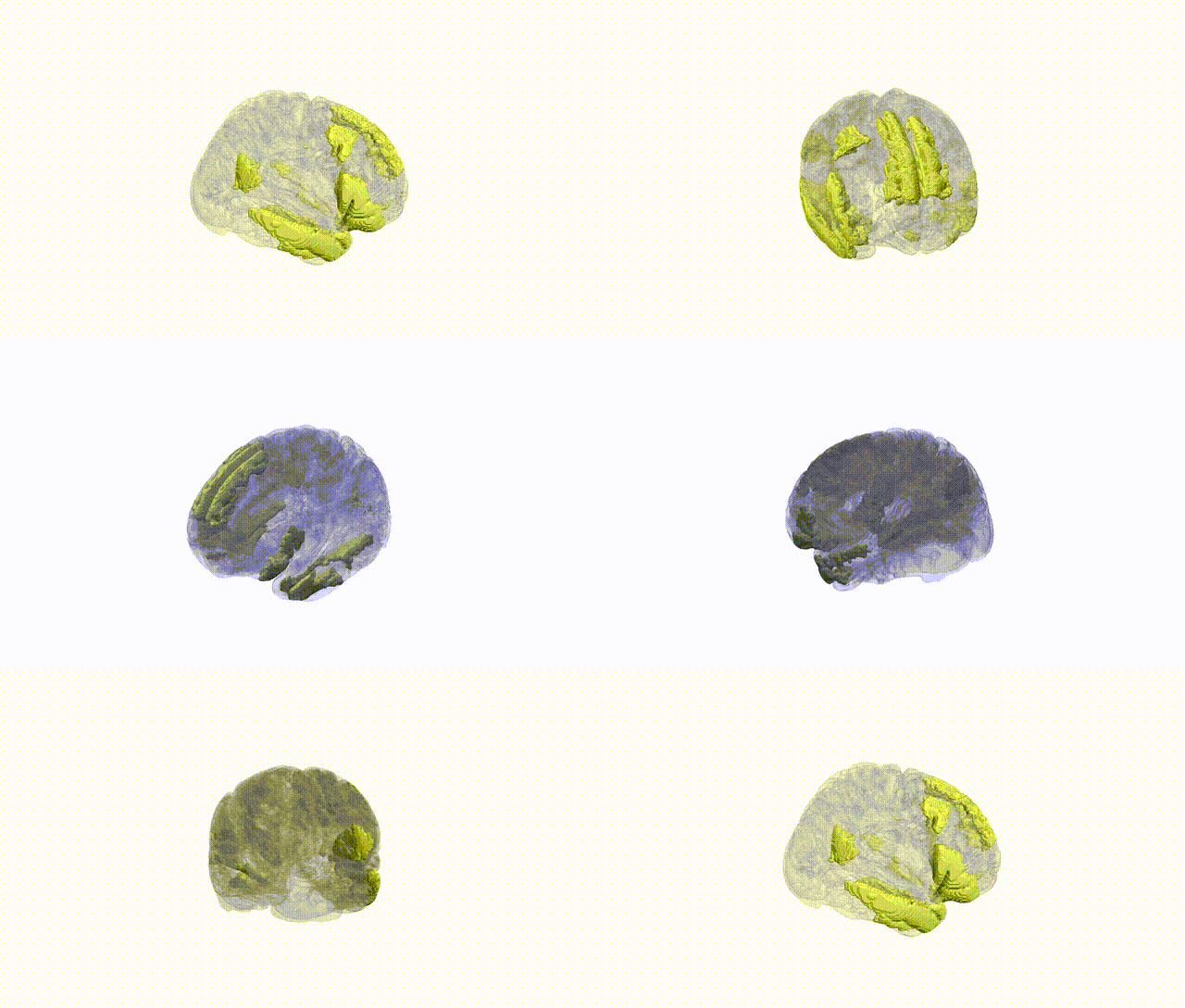
Full Quality Version: Download MP4
Wali Sidiqyar*, Gaurav Rudravaram*, Elyssa M. McMaster, Trent M. Schwartz, Adam M. Saunders, Kurt G. Schilling, Bennett A. Landman "Introducing SPINS: A Shared Public Visualization Library of Neuroanatomical Structures." Medical Imaging with Deep Learning- short paper
This resource is licensed under CC0 1.0 Universal (Public Domain).