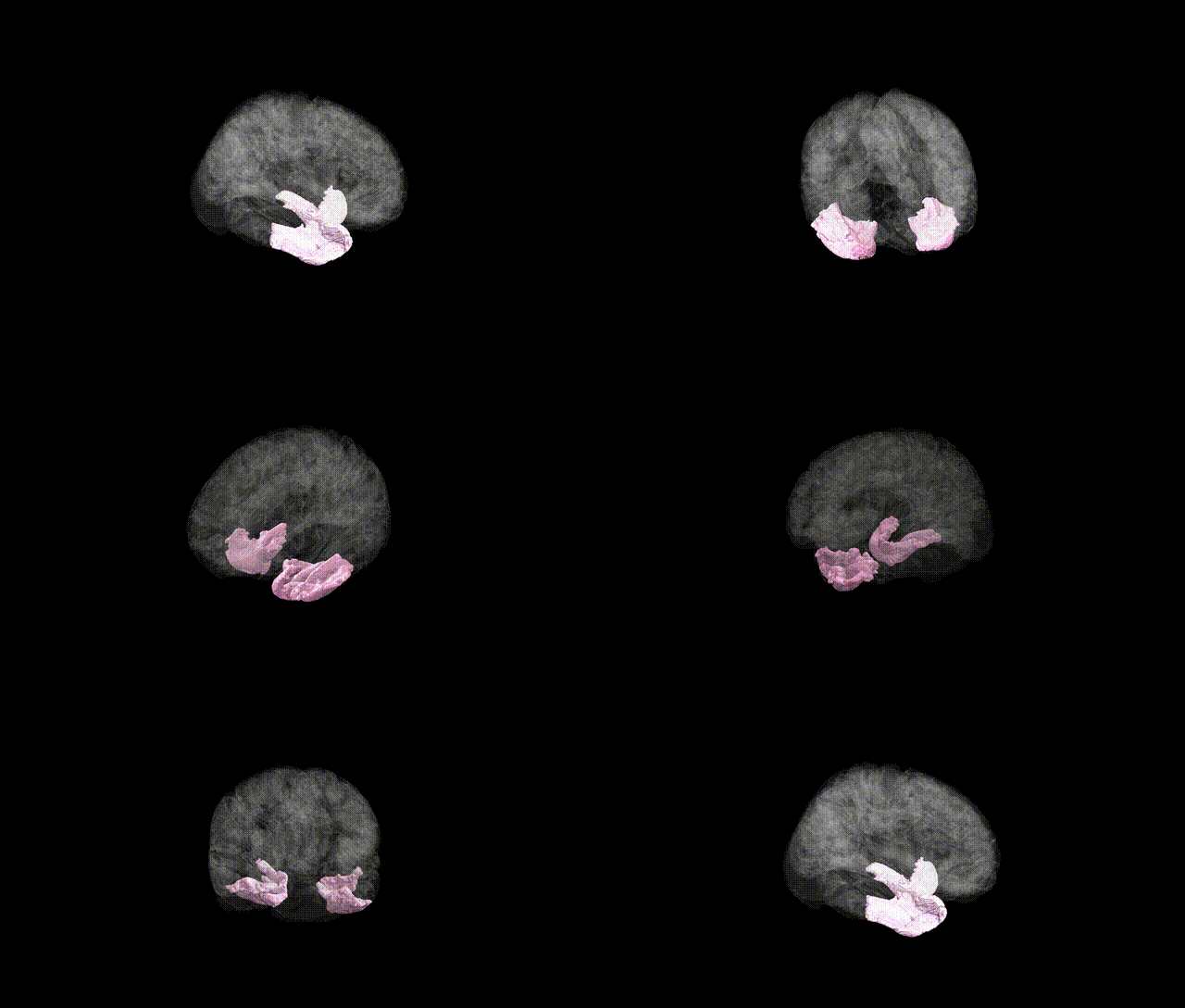
The Bilateral Salience_VenAttn_B region in the Yeo-17 atlas is part of a distributed network encompassing both the salience network and ventral attention network, implicated in detecting behaviorally relevant internal and external stimuli and rapidly reallocating processing resources. Anatomically, this functional group typically involves portions of the anterior insula, dorsal anterior cingulate cortex, frontal operculum, and adjacent fronto-parietal regions, bilaterally. Functionally, it contributes to switching between the default mode and central executive networks, integrating interoceptive, emotional, and sensory information to guide adaptive responses and attention shifts. This network is crucial for goal-directed behavior, autonomic regulation, and the prioritization of salient events, and its disruption has been linked to neuropsychiatric conditions such as anxiety disorders, major depression, and schizophrenia. There is no direct link for this composite region; a related structure with a dedicated article is the Salience network.
Research directly targeting the “Bilateral Salience_VenAttn_B” parcel from the Yeo-17 atlas is sparse, but genetic findings for salience and ventral attention networks more broadly implicate multiple polygenic influences rather than single loci. Large imaging‑genetics consortia (e.g., ENIGMA, UK Biobank) have shown that cortical thickness, surface area, and functional connectivity within salience/ventral attention regions (notably anterior insula, dorsal anterior cingulate/midcingulate, inferior frontal and parietal cortex) are highly heritable and associated with common variants near genes involved in synaptic signaling and neurodevelopment, such as DCC, BDNF, HMGA2, and variants in glutamatergic and GABAergic pathways. GWAS of intrinsic functional connectivity and network topology report that salience and ventral attention connectivity patterns share polygenic architecture with psychiatric and cognitive traits, including major depressive disorder, schizophrenia, ADHD, autism spectrum disorder, and general cognitive ability, as well as with neuroticism and risk‑taking behavior, although individual effect sizes are small. Several studies link altered salience/ventral attention connectivity to disorder‑related polygenic risk scores—for example, higher polygenic risk for schizophrenia, depression, or ADHD correlating with disrupted connectivity or morphology in these regions—supporting the idea that genetic risk for these conditions partially manifests via differences in salience/ventral attention network structure and function, even if parcel‑specific associations for the “Salience_VenAttn_B” region have not yet been reported.
Overview generated by GPT-4o (2026).
Region ID: 9
Hemisphere: Bilateral
Atlas: Yeo-17
Full Quality Version: Download MP4
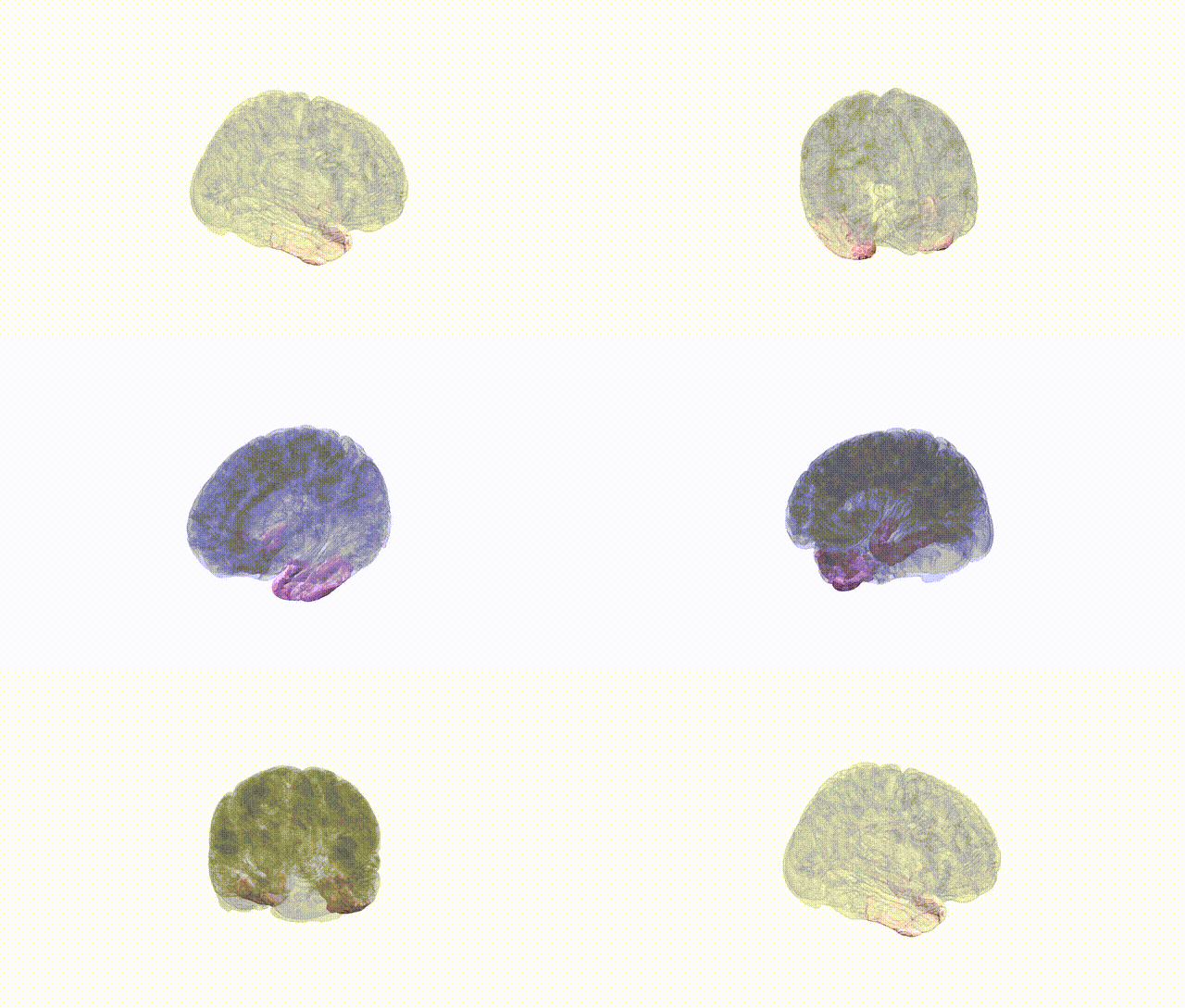
Full Quality Version: Download MP4
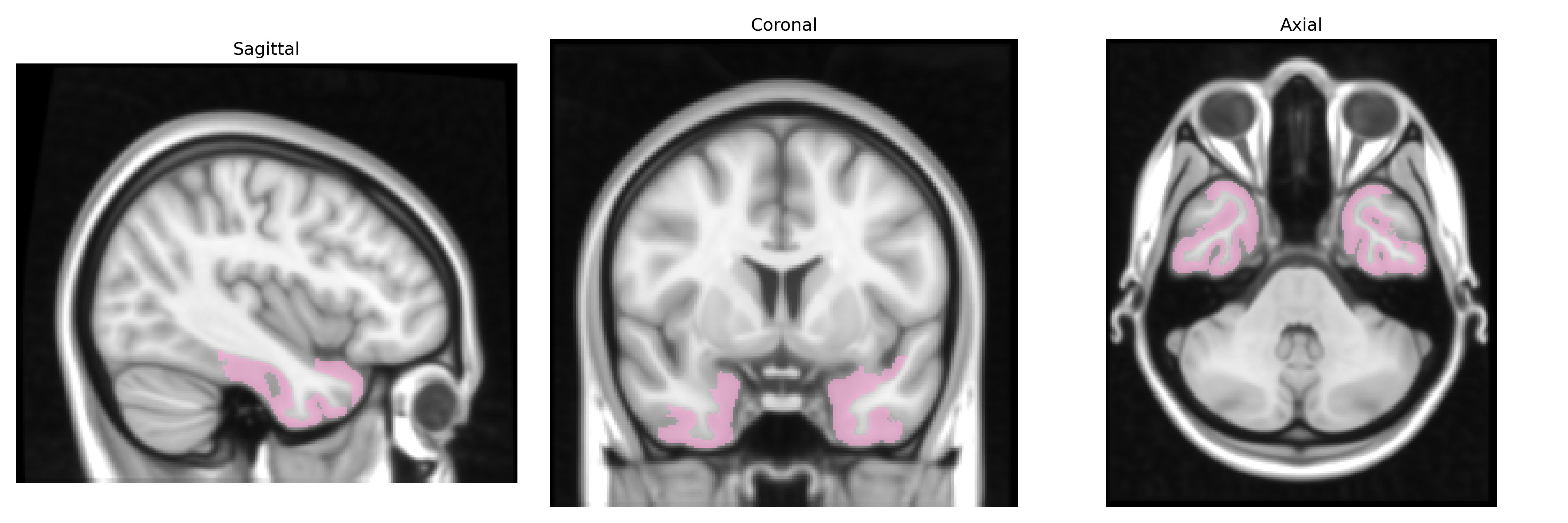
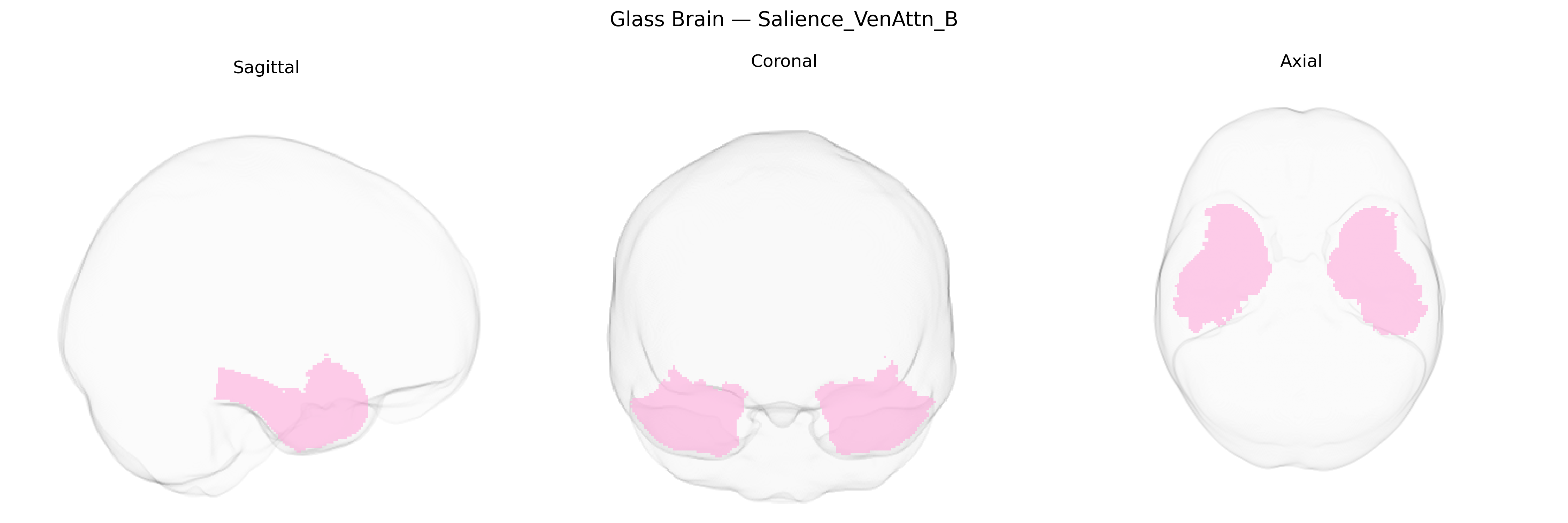
Wali Sidiqyar*, Gaurav Rudravaram*, Elyssa M. McMaster, Trent M. Schwartz, Adam M. Saunders, Kurt G. Schilling, Bennett A. Landman "Introducing SPINS: A Shared Public Visualization Library of Neuroanatomical Structures." Medical Imaging with Deep Learning- short paper
This resource is licensed under CC0 1.0 Universal (Public Domain).