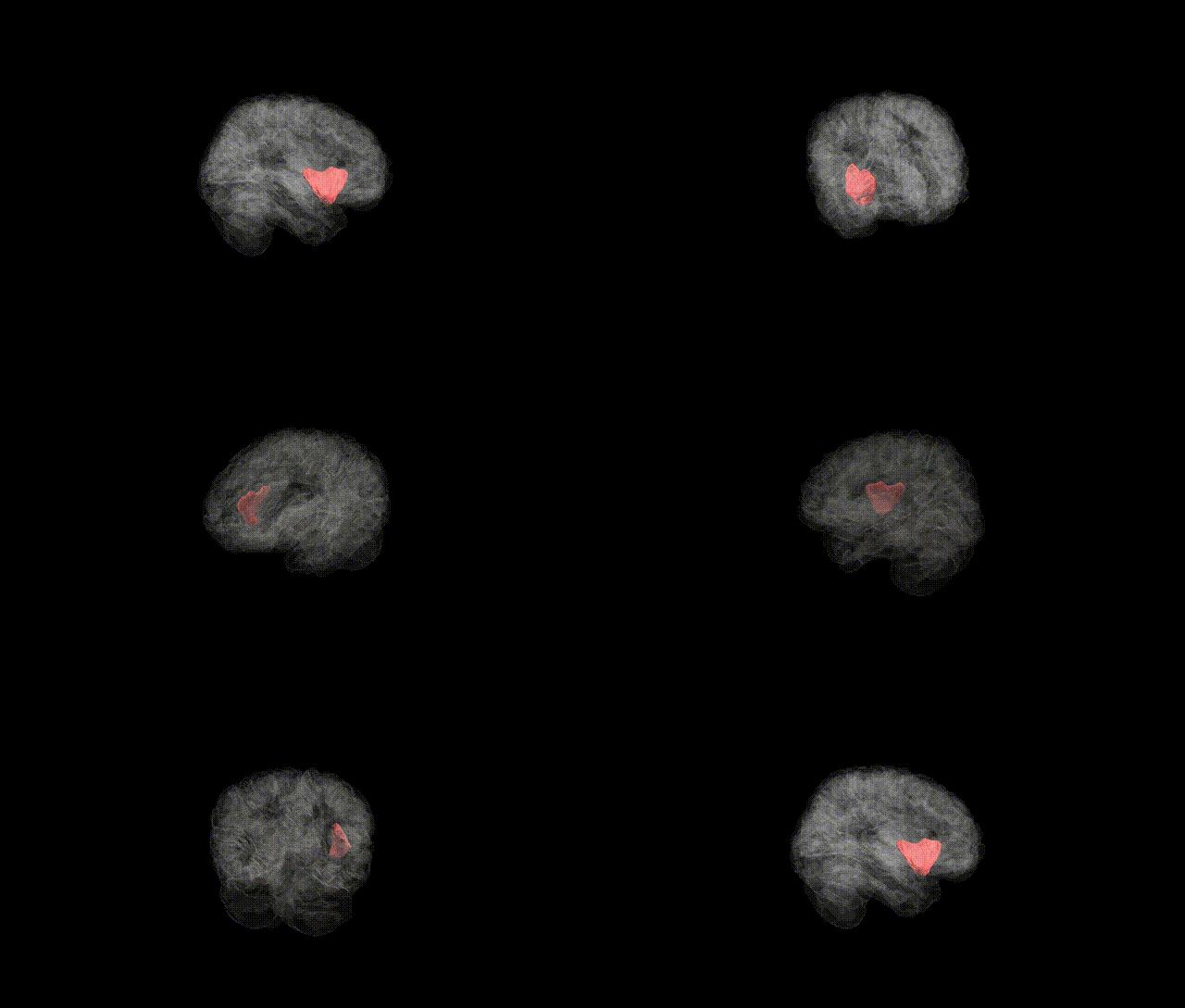
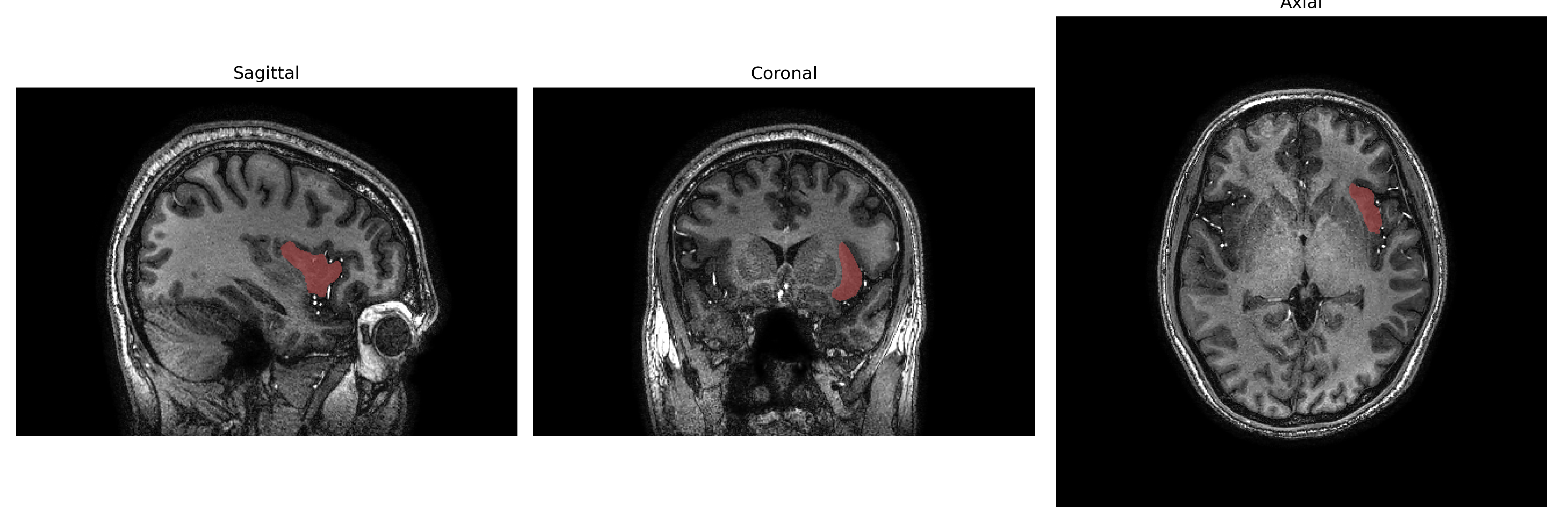
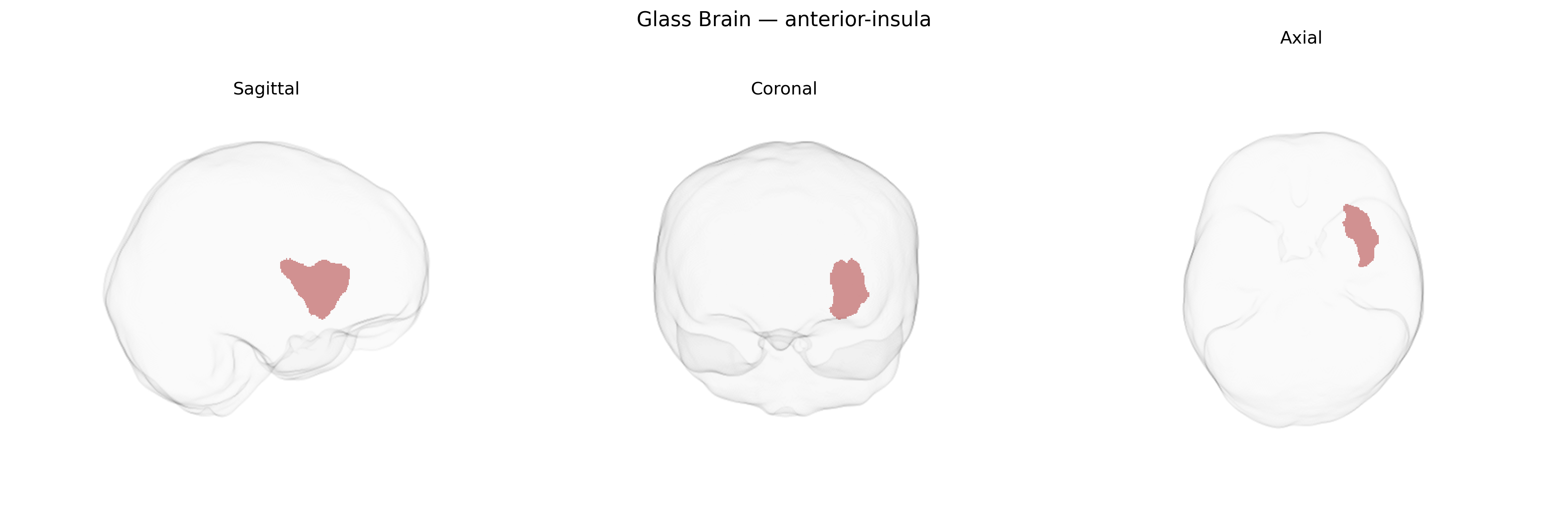
The left anterior insula is the rostral portion of the insular cortex located deep within the lateral sulcus of the left hemisphere, anterior to the central insular sulcus and adjacent to the frontal operculum. Cytoarchitectonically, it is generally agranular to dysgranular cortex and is heavily interconnected with limbic, prefrontal, and cingulate regions. Functionally, the left anterior insula is implicated in interoceptive awareness, integration of visceral and emotional states, and higher-order cognitive control, including aspects of language, empathic processing, and decision-making under uncertainty. It forms a core hub of the salience network, coordinating the dynamic switching between default mode and executive-control networks and contributing to the subjective experience of feelings by binding bodily states with cognitive appraisals. Insular cortex
The left anterior insula, as defined in the brainCOLOR Atlas, has been implicated in multiple genetic and psychiatric GWAS findings, particularly those related to mood, psychosis, and substance use. Large-scale imaging-genetics studies (e.g., UK Biobank–based GWAS of cortical thickness and surface area) have identified common variants near genes involved in synaptic function, neurodevelopment, and glutamatergic signaling that influence insular morphology and connectivity, though associations are typically polygenic and distributed rather than region-specific. Polygenic risk scores for major depressive disorder, bipolar disorder, and schizophrenia show correlations with altered structure or function in the anterior insula, consistent with its role in salience processing and emotional awareness. GWAS of substance use (including alcohol and nicotine dependence) and anxiety-related traits have also linked risk variants and polygenic liability to altered insular activation during interoceptive, craving, and decision-making tasks. Additionally, insula-related genetic effects have been reported in neurodegenerative and pain conditions (e.g., Alzheimer’s disease risk alleles and chronic pain GWAS loci), often through their impact on network-level connectivity rather than a single gene–region linkage. Overall, current evidence suggests that genetic influences on the left anterior insula are highly polygenic, shared across multiple psychiatric and behavioral traits, and mediated via broader salience and interoceptive networks rather than unique to this specific brainCOLOR parcel.
Overview generated by GPT-4o (2026).
Region ID: 27
Hemisphere: Left
Atlas: brainCOLOR
Full Quality Version: Download MP4
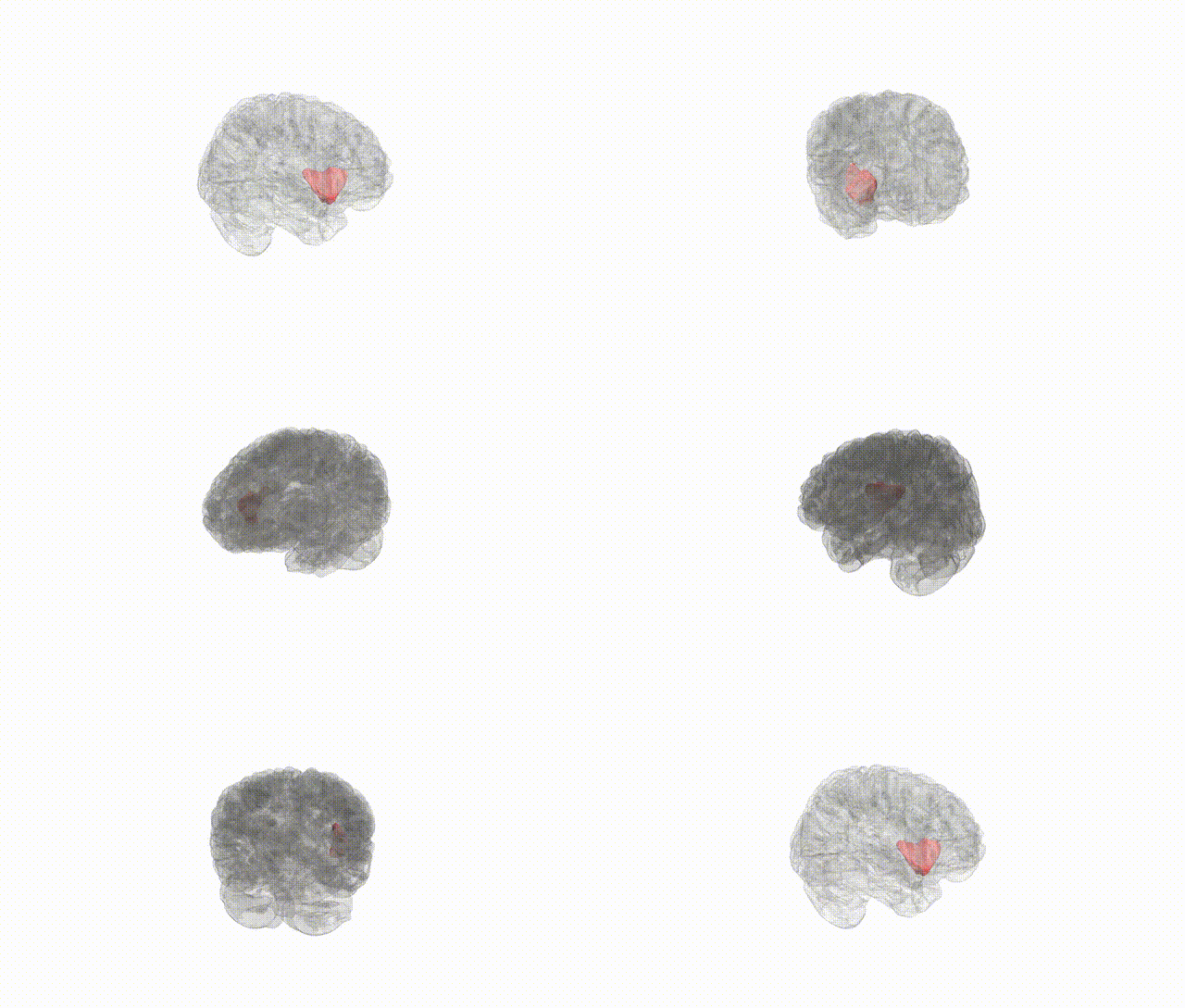
Full Quality Version: Download MP4
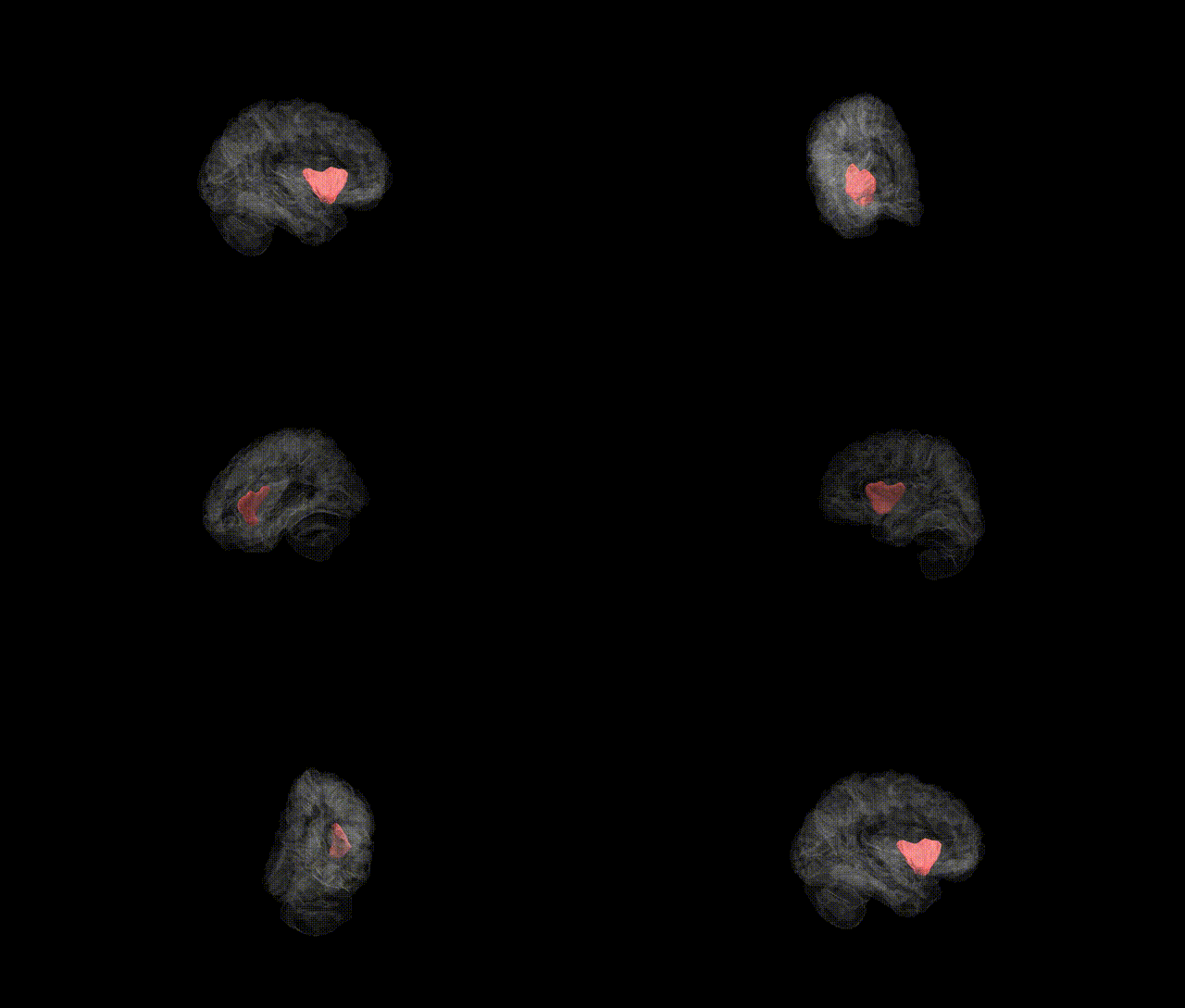
Full Quality Version: Download MP4
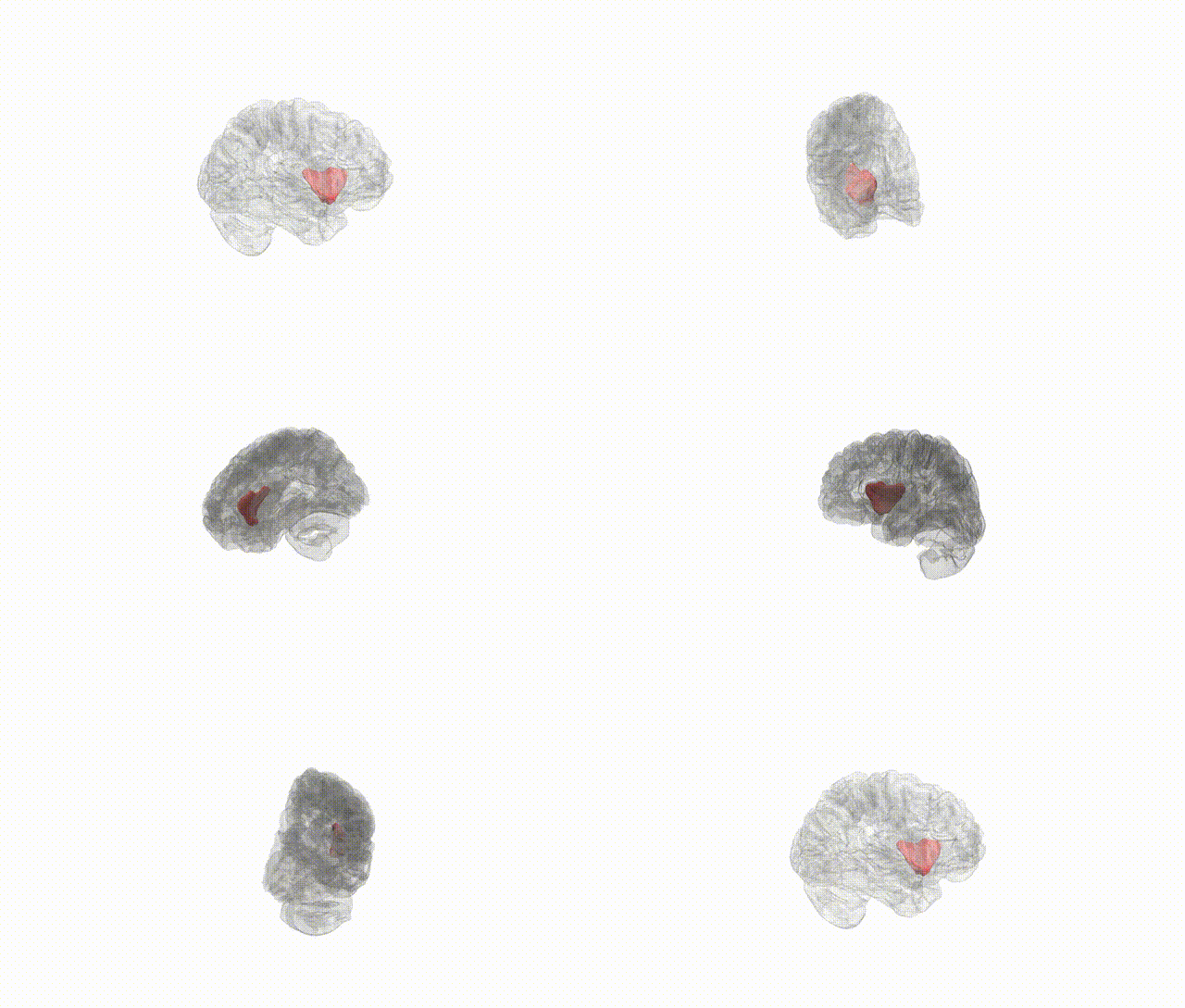
Full Quality Version: Download MP4
Wali Sidiqyar*, Gaurav Rudravaram*, Elyssa M. McMaster, Trent M. Schwartz, Adam M. Saunders, Kurt G. Schilling, Bennett A. Landman "Introducing SPINS: A Shared Public Visualization Library of Neuroanatomical Structures." Medical Imaging with Deep Learning- short paper
This resource is licensed under CC0 1.0 Universal (Public Domain).