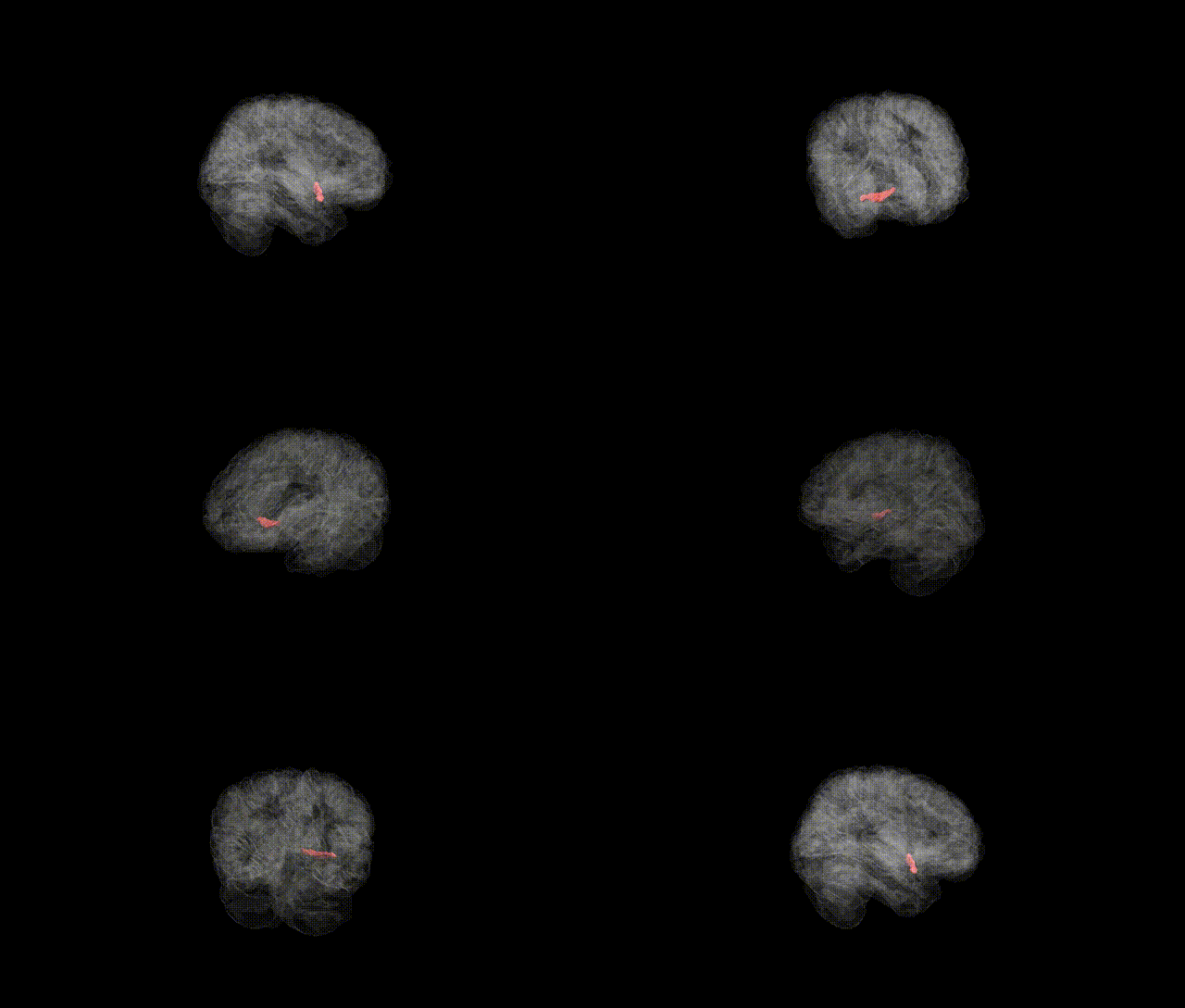
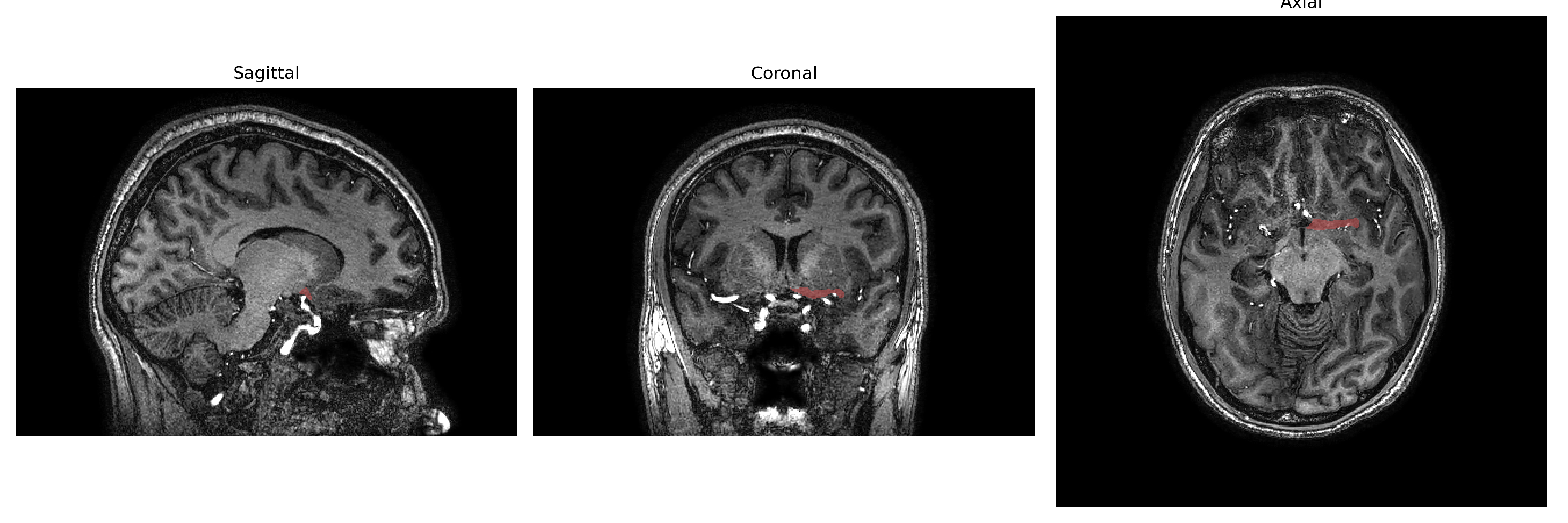
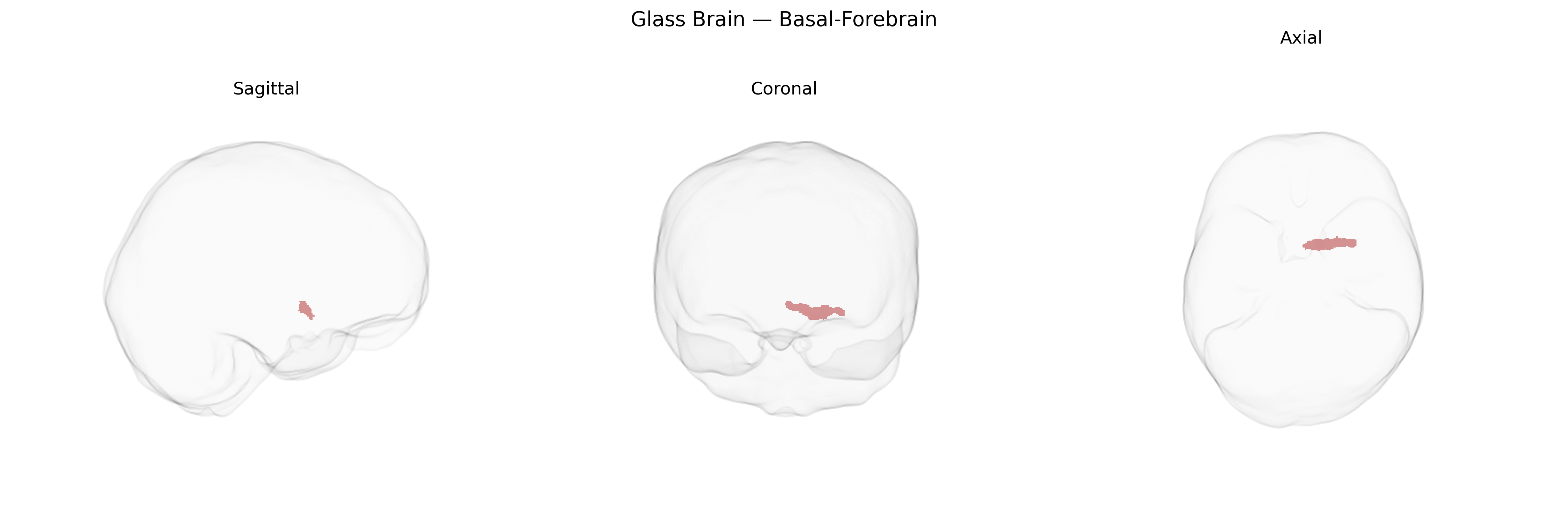
The Left Basal Forebrain is a ventral region of the cerebral hemispheres comprising clusters of cholinergic, GABAergic, and glutamatergic neurons situated near the medial and lateral aspects of the anterior commissure, nucleus accumbens, and ventral pallidum. It includes key structures such as the nucleus basalis of Meynert, medial septal nucleus, and diagonal band nuclei, which project widely to the cerebral cortex, hippocampus, and amygdala. Functionally, this region plays a central role in modulating cortical activation, attention, arousal, learning, and memory through its dense cholinergic innervation; degeneration of its neurons is prominently associated with cognitive decline in neurodegenerative disorders such as Alzheimer’s disease and Parkinson’s disease dementia. There is no single dedicated Wikipedia entry for “Left Basal Forebrain”; a closely related structure is the Basal forebrain.
The Left Basal-Forebrain region, as defined in the brainCOLOR Atlas, encompasses cholinergic nuclei such as the nucleus basalis of Meynert and neighboring structures involved in arousal, attention, and memory, and genetic studies of basal forebrain volume and function point to polygenic influences overlapping with neurodegenerative, psychiatric, and cognitive traits. GWAS and imaging-genetics analyses have implicated common variants in genes related to synaptic function, neurodevelopment, and cholinergic signaling—most prominently APOE (particularly the ε4 allele) in relation to basal forebrain atrophy and vulnerability in Alzheimer’s disease, as well as broader Alzheimer’s risk loci (e.g., CLU, PICALM, BIN1) that track with reduced basal forebrain volume or cholinergic degeneration. Additional associations have been reported between basal forebrain structure or connectivity and schizophrenia- and depression-related polygenic risk scores, suggesting shared genetic architecture with major psychiatric disorders, while cognitive GWAS (e.g., general intelligence, memory performance) show partial overlap in implicated loci and basal forebrain–hippocampal circuitry measures. Although many studies treat basal forebrain measures bilaterally rather than isolating the left side, available data indicate that genetic effects on this region’s morphology and integrity are substantially heritable and converge on pathways involved in neurotrophic signaling, amyloid processing, and synaptic plasticity, consistent with its established role in dementia, cognitive decline, and attentional control.
Overview generated by GPT-4o (2026).
Region ID: 22
Hemisphere: Left
Atlas: brainCOLOR
Full Quality Version: Download MP4
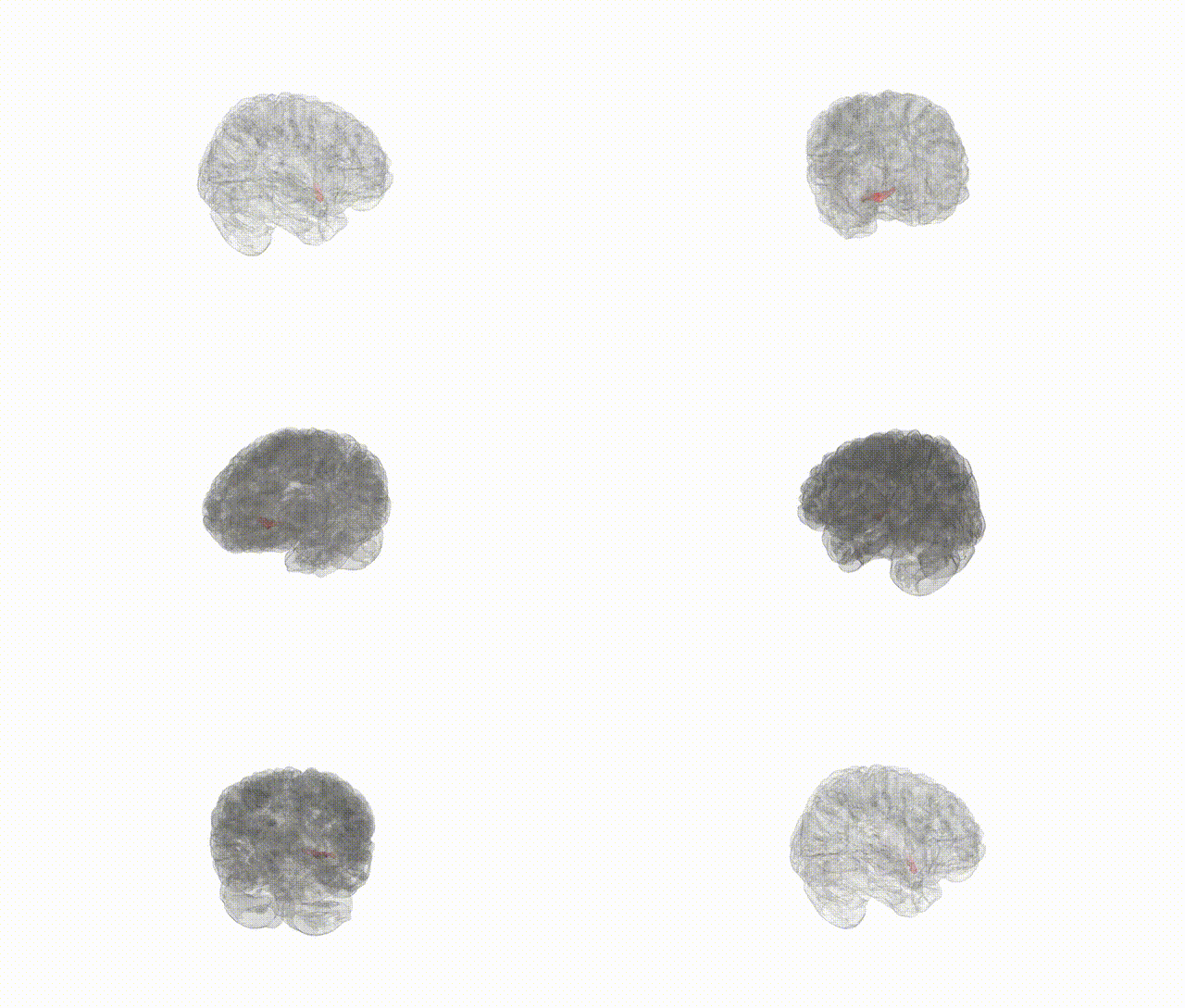
Full Quality Version: Download MP4
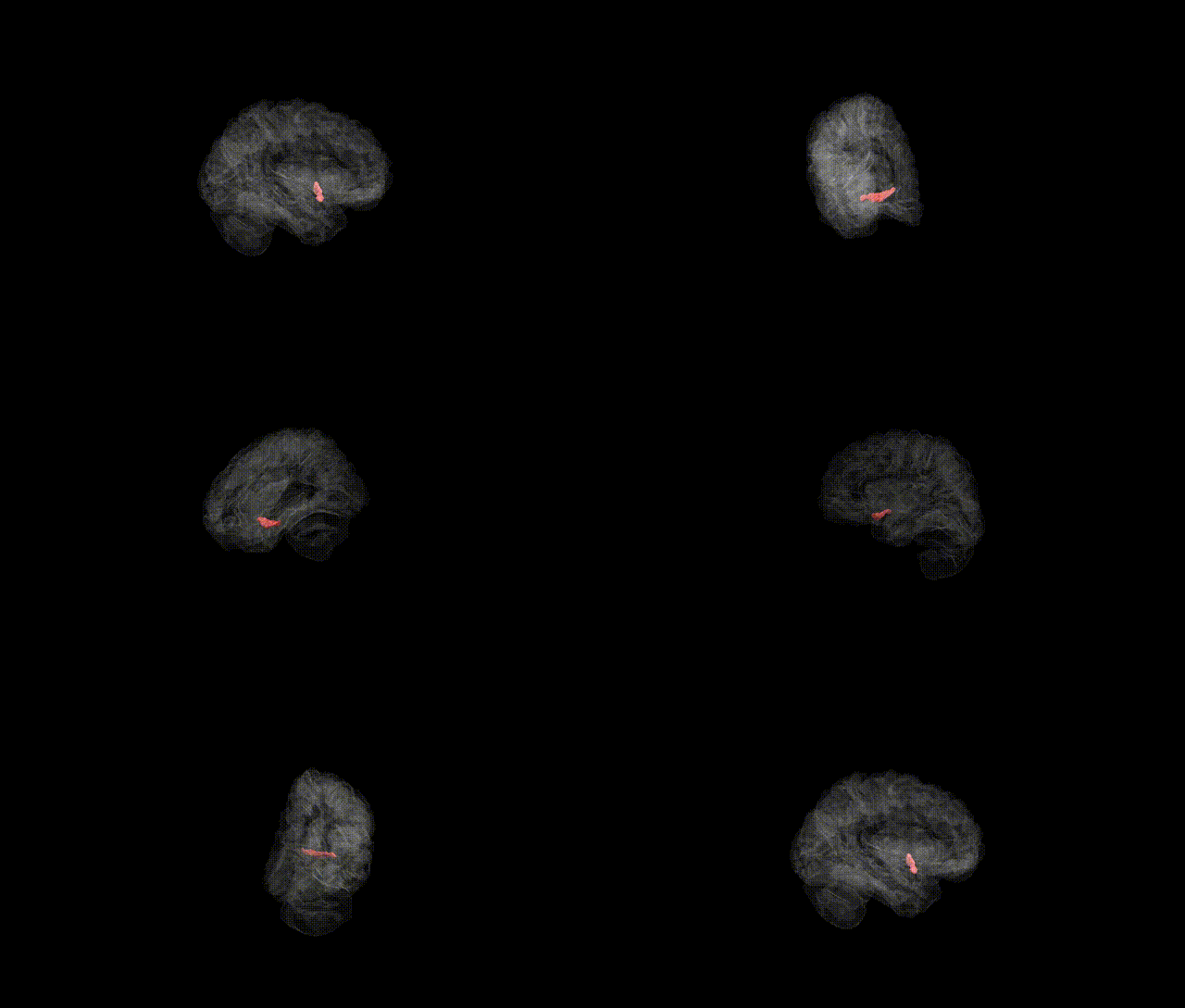
Full Quality Version: Download MP4
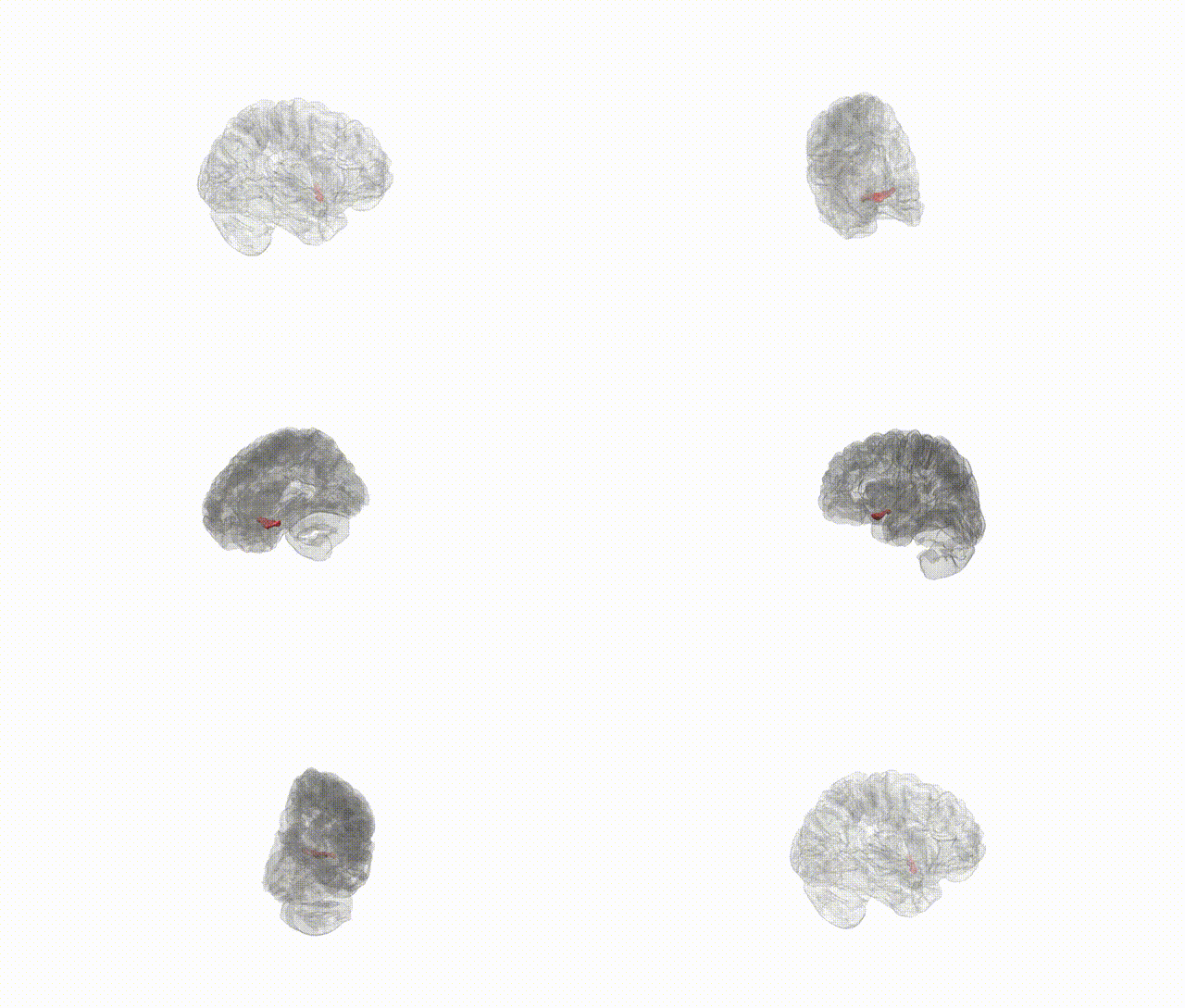
Full Quality Version: Download MP4
Wali Sidiqyar*, Gaurav Rudravaram*, Elyssa M. McMaster, Trent M. Schwartz, Adam M. Saunders, Kurt G. Schilling, Bennett A. Landman "Introducing SPINS: A Shared Public Visualization Library of Neuroanatomical Structures." Medical Imaging with Deep Learning- short paper
This resource is licensed under CC0 1.0 Universal (Public Domain).