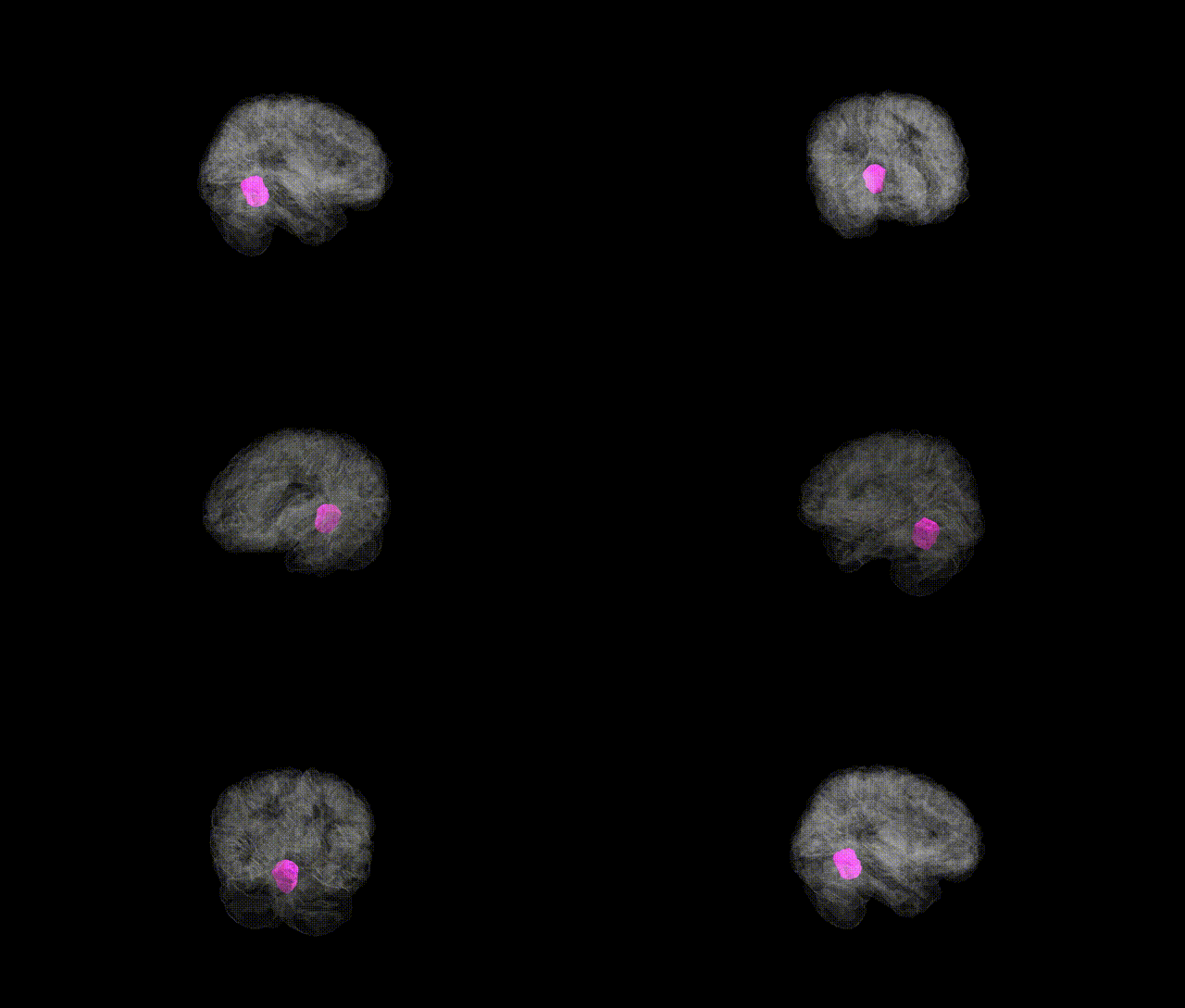
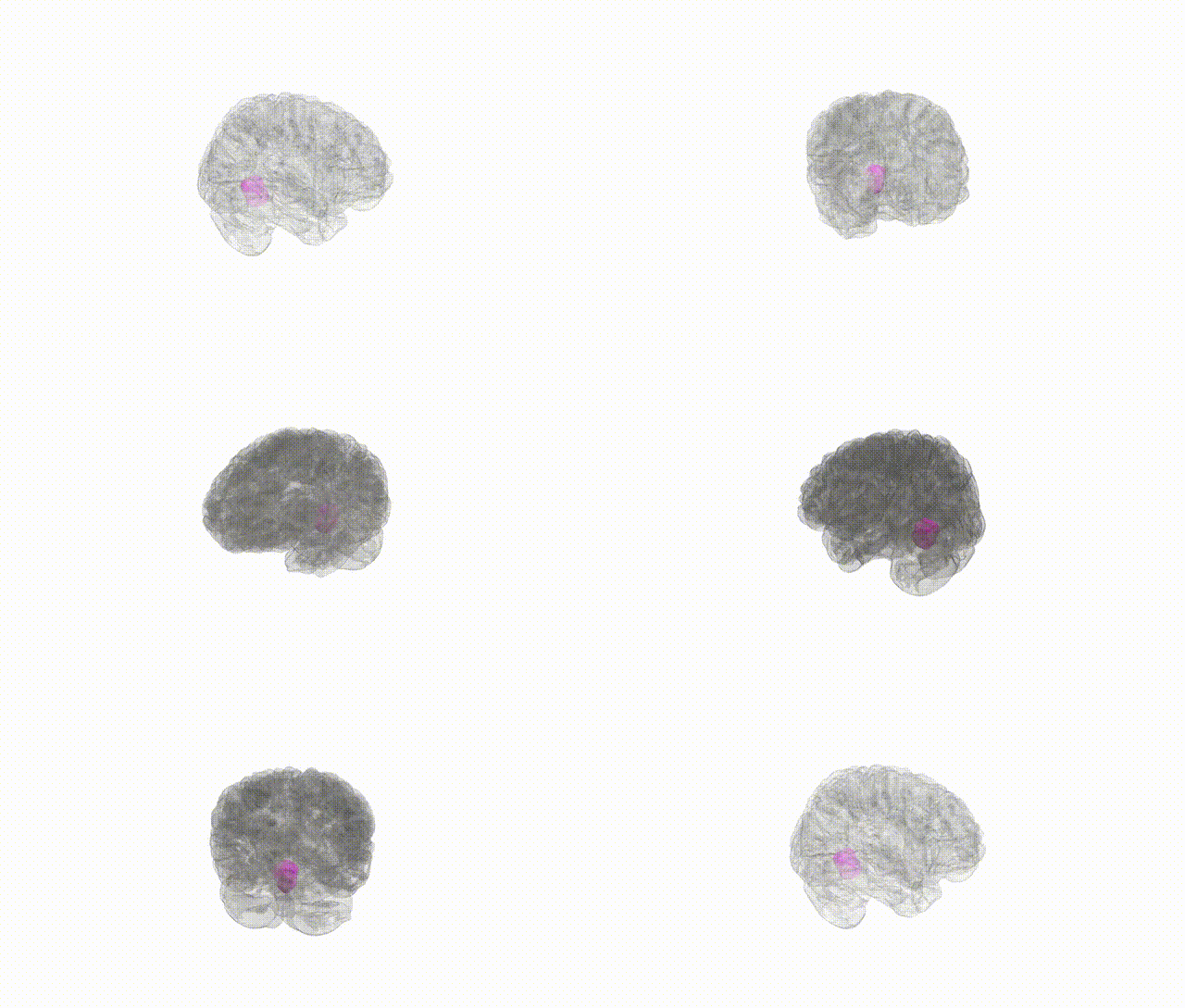
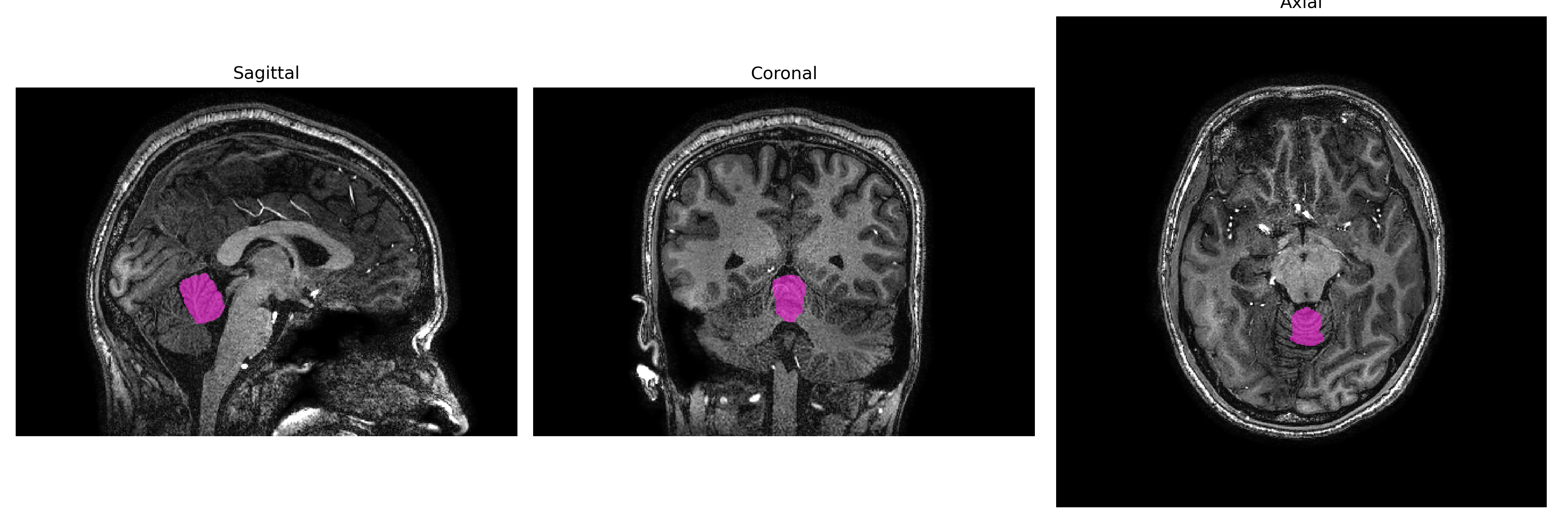
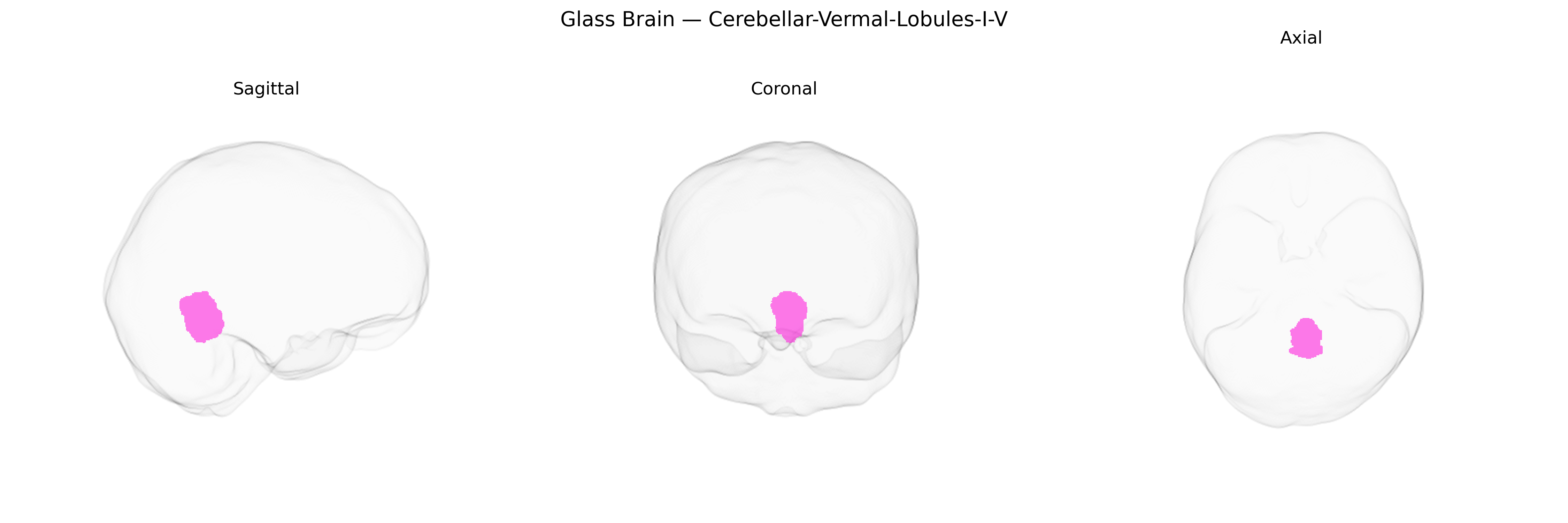
The Midline Cerebellar-Vermal-Lobules-I–V region corresponds to the anterior vermis of the cerebellum, comprising the midline segments of lobules I–V that lie within the anterior lobe. This area is primarily involved in the regulation of posture, axial muscle tone, and coordination of trunk and proximal limb movements, integrating somatosensory input (especially from the spinal cord) with motor control circuits. Neurons within these vermal lobules project predominantly to the fastigial nucleus, influencing vestibulospinal and reticulospinal pathways that mediate balance and gait. Functionally, this region contributes to the execution and timing of simple, stereotyped motor patterns and is implicated in truncal ataxia and gait disturbances when damaged. There is no direct link; see the related structure Cerebellar vermis.
The Midline Cerebellar-Vermal-Lobules-I–V region, as defined in the brainCOLOR atlas, has not been the direct focus of many region-specific GWAS, but genetic studies of cerebellar volume and morphology implicate it through broader vermis and anterior cerebellar measures. Large-scale imaging genetics consortia (e.g., ENIGMA, UK Biobank–based studies) have identified multiple loci influencing global and regional cerebellar volumes, including variants near genes involved in neurodevelopment, axon guidance, and synaptic function (such as KIAA0586, PAX3, and variants in chromosomal regions 1q, 3p, and 9p), though these are typically reported for total cerebellar or lobular (I–IV, V–VI) volumes rather than the specific midline vermal label. Vermal lobules I–V are structurally and functionally linked to motor control and, via cerebello-thalamo-cortical circuits, to cognitive and affective processes, and genetic risk factors for neurodevelopmental and psychiatric disorders—such as autism spectrum disorder, schizophrenia, bipolar disorder, and attention-deficit/hyperactivity disorder—have been associated with altered cerebellar vermis size or microstructure in imaging-genetics and case–control studies, even when the implicated loci are not tied uniquely to this subregion. Monogenic and copy-number–variation conditions that affect cerebellar midline development, including some forms of Joubert syndrome, Dandy–Walker malformation, and 22q11.2 deletion syndrome, frequently involve genes critical for hindbrain patterning and ciliogenesis (e.g., AHI1, CEP290, ZIC1/4, and others), producing hypoplasia or dysplasia of the vermis encompassing lobules I–V. Overall, available genetic evidence links the Midline Cerebellar-Vermal-Lobules-I–V region to polygenic influences on cerebellar structure and to developmental and psychiatric disorders with cerebellar involvement, but there are few findings that isolate this exact brainCOLOR-defined region as a unique target of specific variants in GWAS.
Overview generated by GPT-4o (2026).
Region ID: 19
Hemisphere: Midline
Atlas: brainCOLOR
Full Quality Version: Download MP4
Full Quality Version: Download MP4
Wali Sidiqyar*, Gaurav Rudravaram*, Elyssa M. McMaster, Trent M. Schwartz, Adam M. Saunders, Kurt G. Schilling, Bennett A. Landman "Introducing SPINS: A Shared Public Visualization Library of Neuroanatomical Structures." Medical Imaging with Deep Learning- short paper
This resource is licensed under CC0 1.0 Universal (Public Domain).