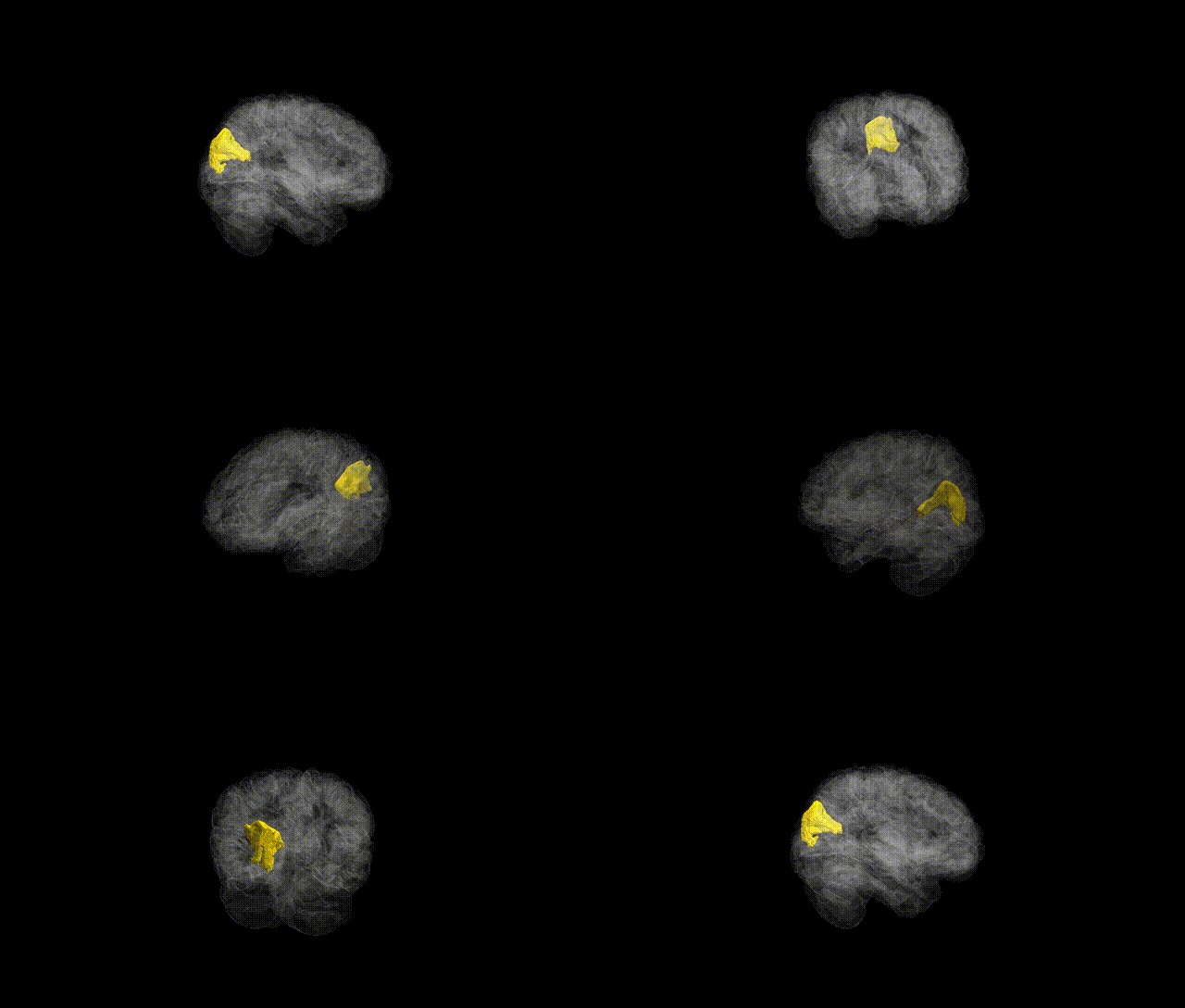
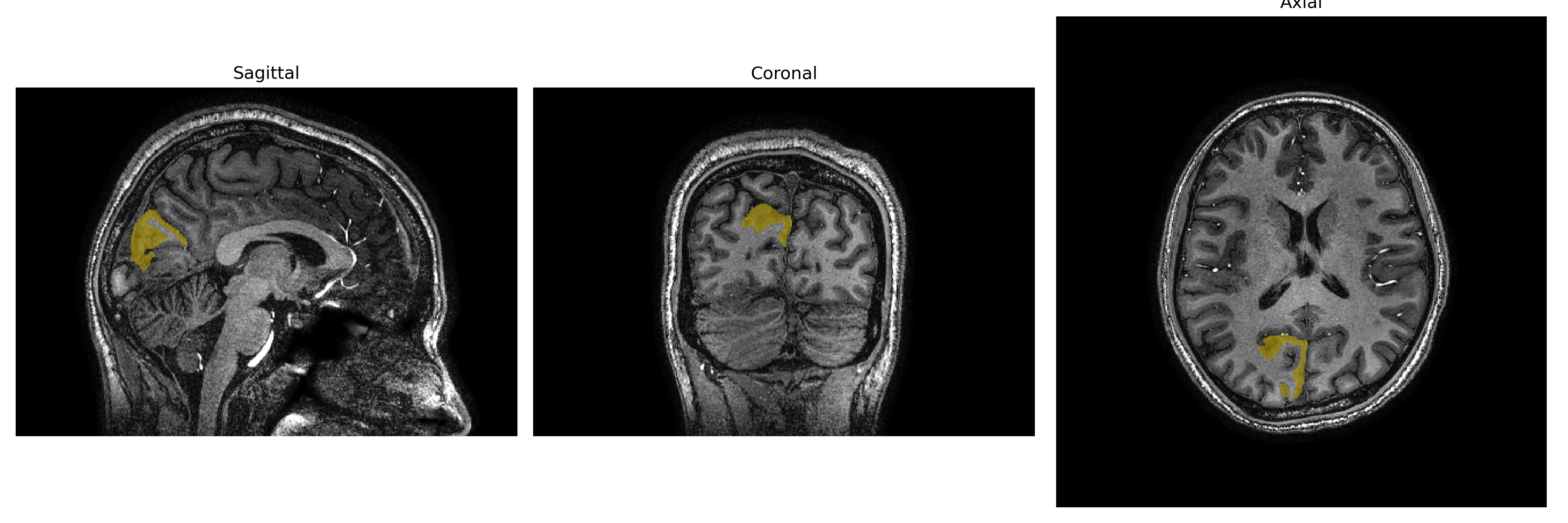
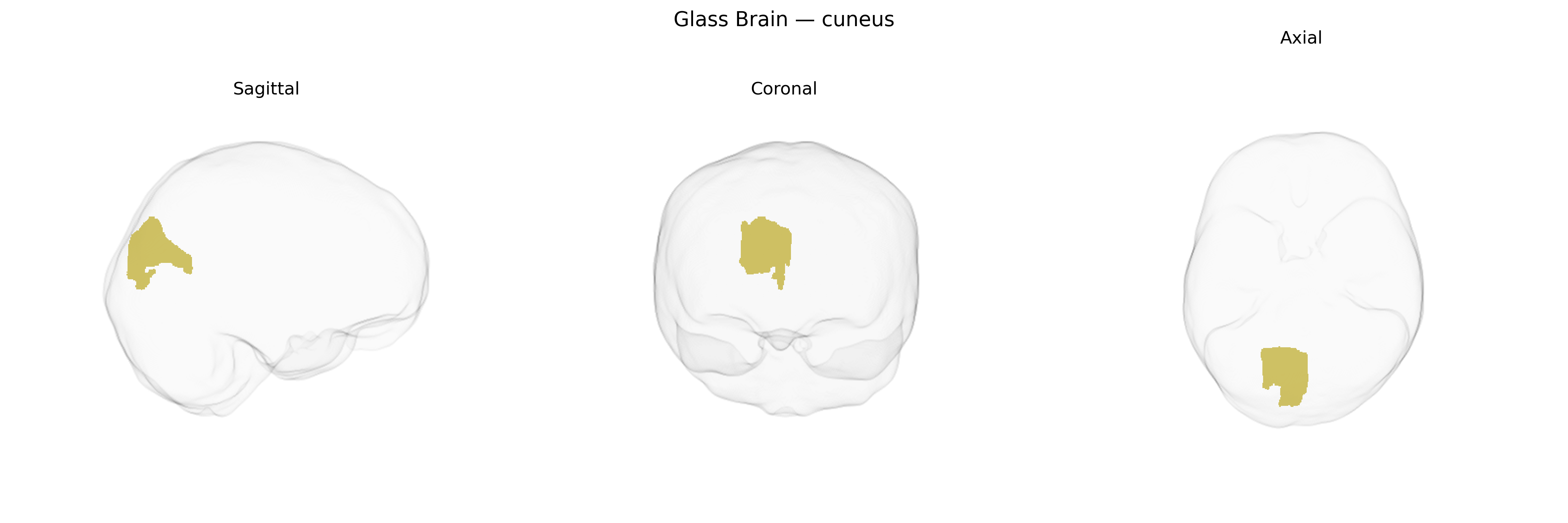
The Right cuneus is a medial occipital lobe structure forming part of the primary and associative visual cortex, situated between the parieto-occipital sulcus and the calcarine fissure in the right hemisphere. It is predominantly involved in basic visual processing, including interpretation of visual stimuli from the contralateral (left) visual field, and contributes to higher-order functions such as visual attention, spatial processing, and aspects of visual imagery. The cuneus participates in early stages of the dorsal visual stream and connects with other occipital, parietal, and temporal regions to integrate visual information with eye movements and visuospatial cognition. There is no dedicated Wikipedia entry specifically for the “Right cuneus,” but it is encompassed within the general description of the Cuneus.
The right cuneus, a primary and associative visual cortex region defined in the brainCOLOR atlas, has been implicated in several genetic and GWAS findings, largely through imaging‑genetics studies linking common variants to regional cortical thickness, surface area, and functional activation. Large-scale consortia such as ENIGMA and UK Biobank have identified polygenic influences on cuneus structure, with variants in genes involved in neurodevelopment, synaptic function, and myelination (for example, pathways involving glutamatergic signaling, axon guidance, and neuronal differentiation) contributing to interindividual differences, though single-locus effects are generally small and often fall below genome-wide significance when examined at fine-grained parcellations like brainCOLOR. The right cuneus has been reported in GWAS-based endophenotype studies of psychiatric and neurological traits, including major depressive disorder, schizophrenia, autism spectrum disorder, and Alzheimer’s disease, where polygenic risk scores for these disorders show modest associations with altered cuneus volume or thickness, as well as in migraine and visual processing traits. In addition, genetic correlations have been observed between right occipital/cuneus structure and cognitive and perceptual traits (such as processing speed, general intelligence, and visual attention), reflecting the broader heritability of visual cortex morphology. Overall, current evidence supports a highly polygenic architecture for right cuneus measures, with disorder- and cognition-related genetic influences acting through diffuse, small-effect variants rather than through a few region-specific genes, and no single variant or gene set uniquely and robustly assigned to the right cuneus in the brainCOLOR atlas.
Overview generated by GPT-4o (2026).
Region ID: 36
Hemisphere: Right
Atlas: brainCOLOR
Full Quality Version: Download MP4
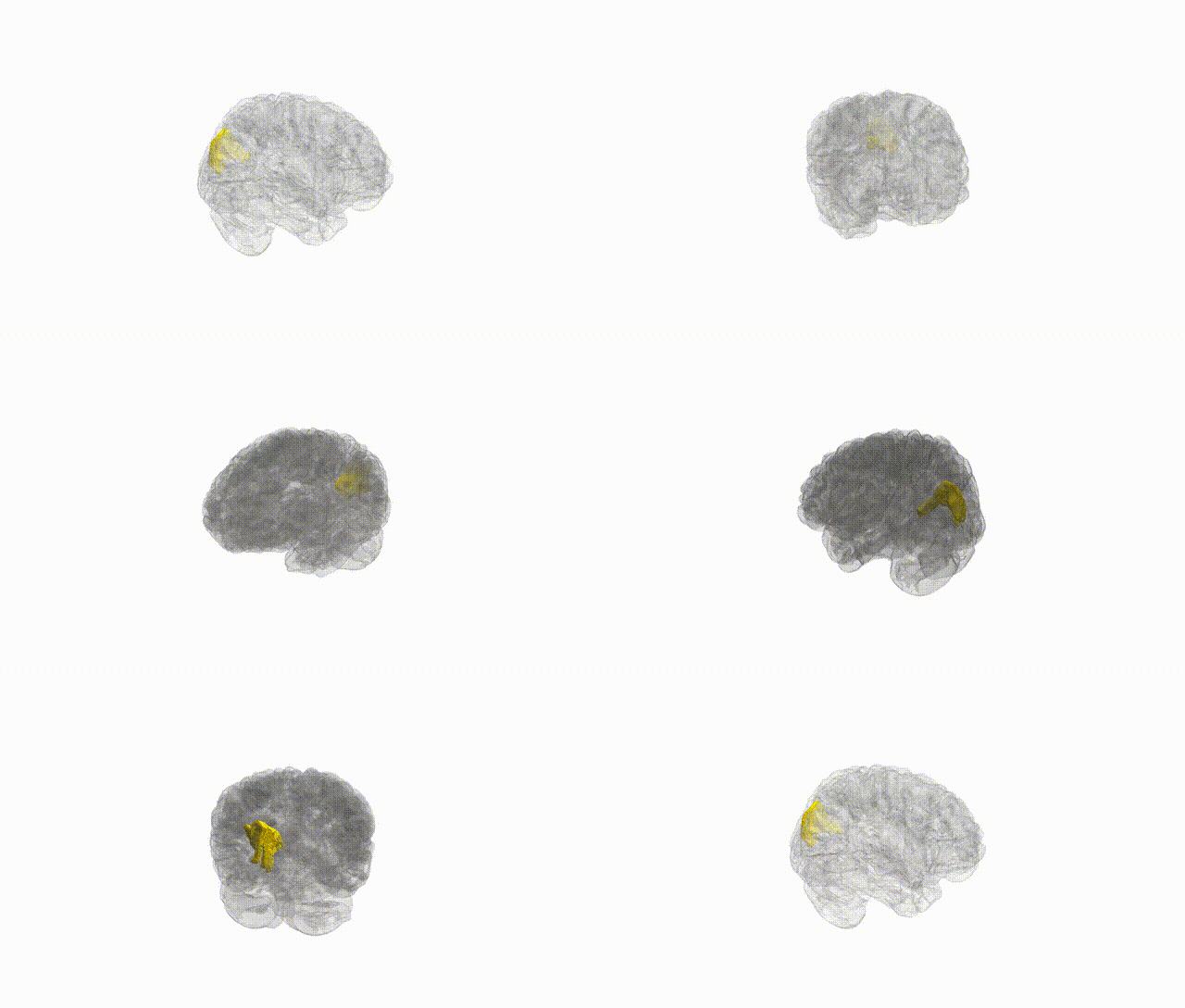
Full Quality Version: Download MP4
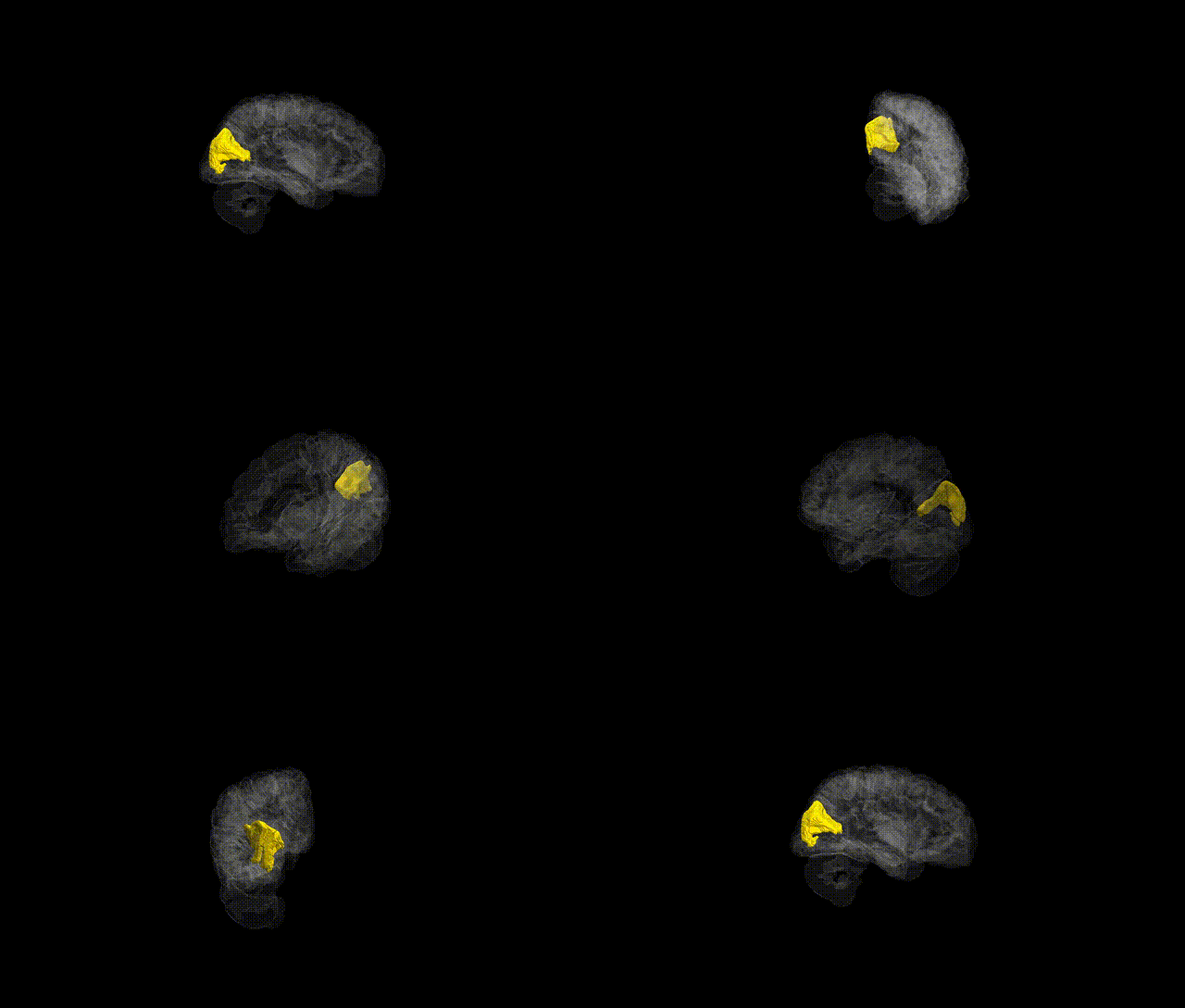
Full Quality Version: Download MP4
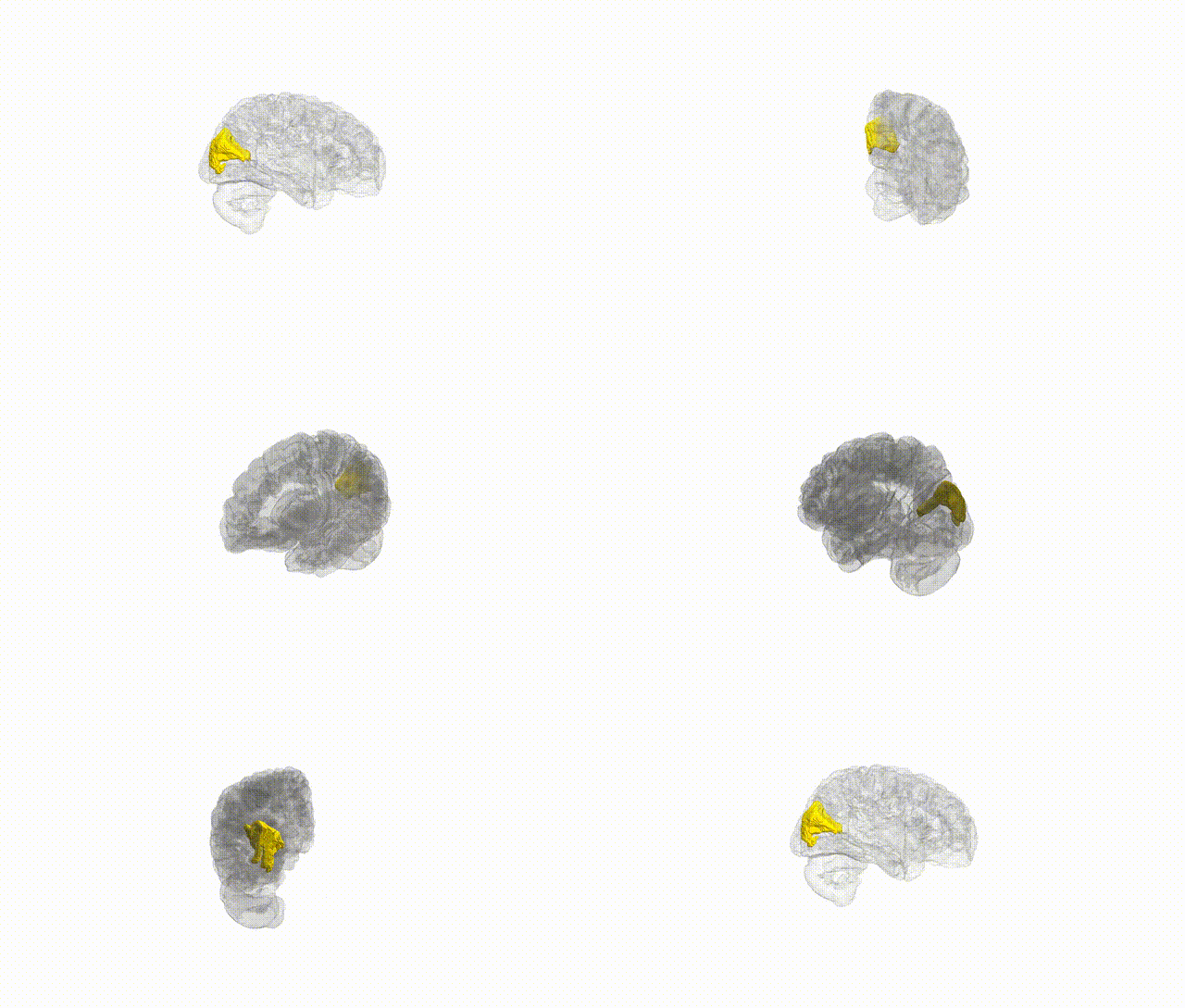
Full Quality Version: Download MP4
Wali Sidiqyar*, Gaurav Rudravaram*, Elyssa M. McMaster, Trent M. Schwartz, Adam M. Saunders, Kurt G. Schilling, Bennett A. Landman "Introducing SPINS: A Shared Public Visualization Library of Neuroanatomical Structures." Medical Imaging with Deep Learning- short paper
This resource is licensed under CC0 1.0 Universal (Public Domain).