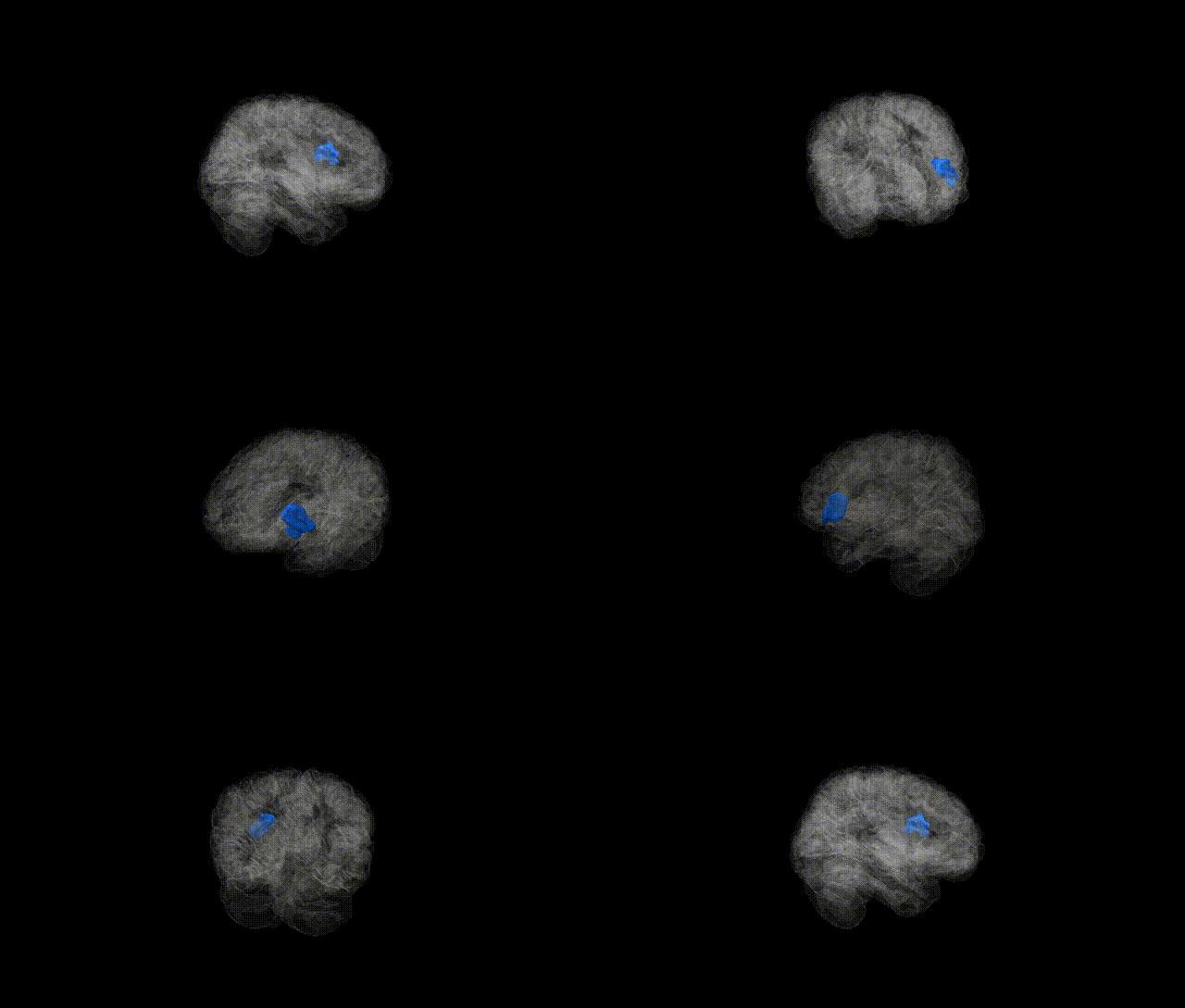
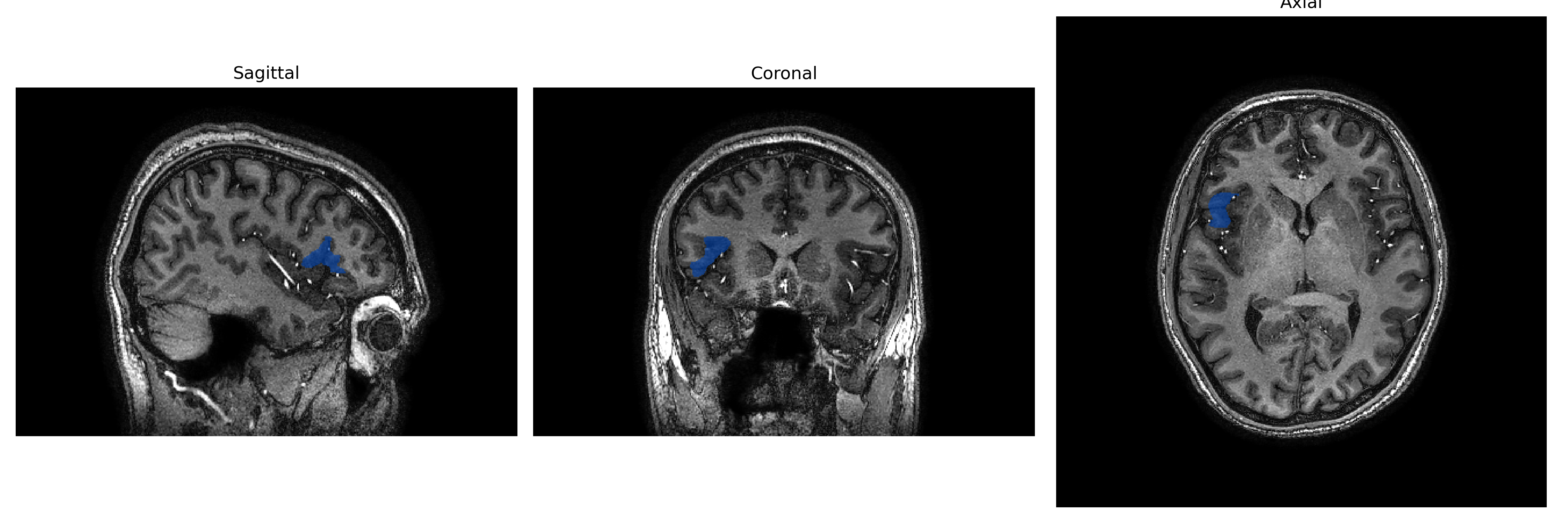
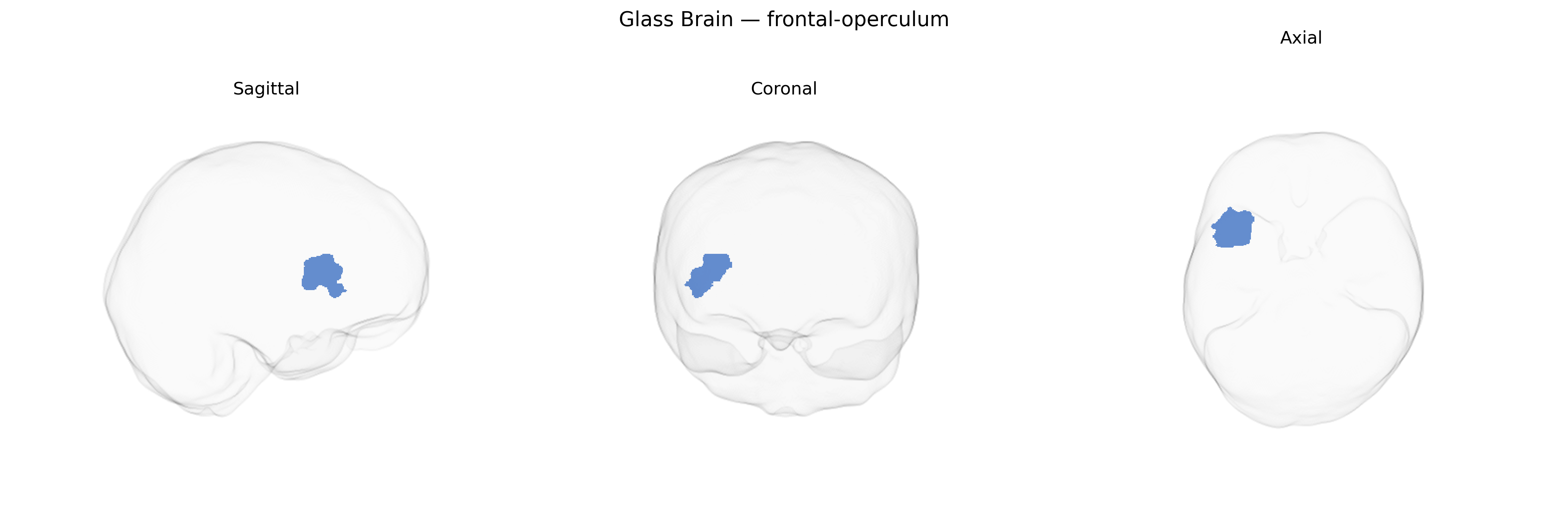
The right frontal operculum is a cortical region overlying the insula in the inferior frontal lobe, forming part of the lateral sulcal (Sylvian fissure) margin and corresponding largely to the pars opercularis of the inferior frontal gyrus. It participates in networks subserving motor speech planning, response inhibition, and cognitive control, and is frequently implicated in tasks requiring rapid selection and suppression of competing motor or verbal responses. Cytoarchitectonically, it overlaps with portions of Brodmann area 44 and is structurally and functionally connected with premotor cortex, pre-supplementary motor area, anterior insula, and parietal control regions. In the right hemisphere, the frontal operculum has been associated with modulation of prosody, articulation timing, and broader executive functions rather than core language production per se. There is no direct link for “Right frontal operculum”; see the related region Inferior frontal gyrus.
The right frontal operculum, corresponding largely to the right pars opercularis/inferior frontal gyrus and frontal opercular cortex in the brainCOLOR atlas, has been implicated in several genetic and GWAS-based findings, although associations are typically reported at the level of broader inferior frontal or frontal opercular regions rather than this subregion alone. Large neuroimaging GWAS consortia such as ENIGMA and UK Biobank–based studies have identified common variants in genes involved in neuronal development and synaptic function (e.g., gene sets including FOXP2-related pathways, glutamatergic signaling, and axon guidance) associated with cortical thickness or surface area in inferior frontal and opercular territories, with some evidence that right-hemispheric measures show partially distinct genetic architectures from left. Polygenic risk scores for schizophrenia, major depressive disorder, and autism spectrum disorder have been linked to structural and functional alterations in right inferior frontal and opercular regions, consistent with broader genetic overlap between psychiatric risk loci (e.g., CACNA1C, GRIN2A, DRD2, and complement pathway genes) and fronto-insular–opercular networks. GWAS of language-related traits (such as verbal fluency and phonological processing), cognitive control, and risk-taking or impulsivity have also reported associations between trait-linked variants and morphometry or activation in inferior frontal and opercular cortex, implicating dopaminergic, GABAergic, and synaptic plasticity genes in this circuitry. Additionally, variants associated with substance use phenotypes (e.g., alcohol and nicotine dependence) show enriched effects in fronto-opercular networks, including right frontal operculum, paralleling functional imaging evidence that this region contributes to inhibitory control, cue reactivity, and craving, although precise SNP- or gene-level mappings specifically restricted to the right frontal operculum remain relatively coarse and are generally inferred from parcel-based imaging-genetics analyses rather than region-exclusive GWAS.
Overview generated by GPT-4o (2026).
Region ID: 40
Hemisphere: Right
Atlas: brainCOLOR
Full Quality Version: Download MP4
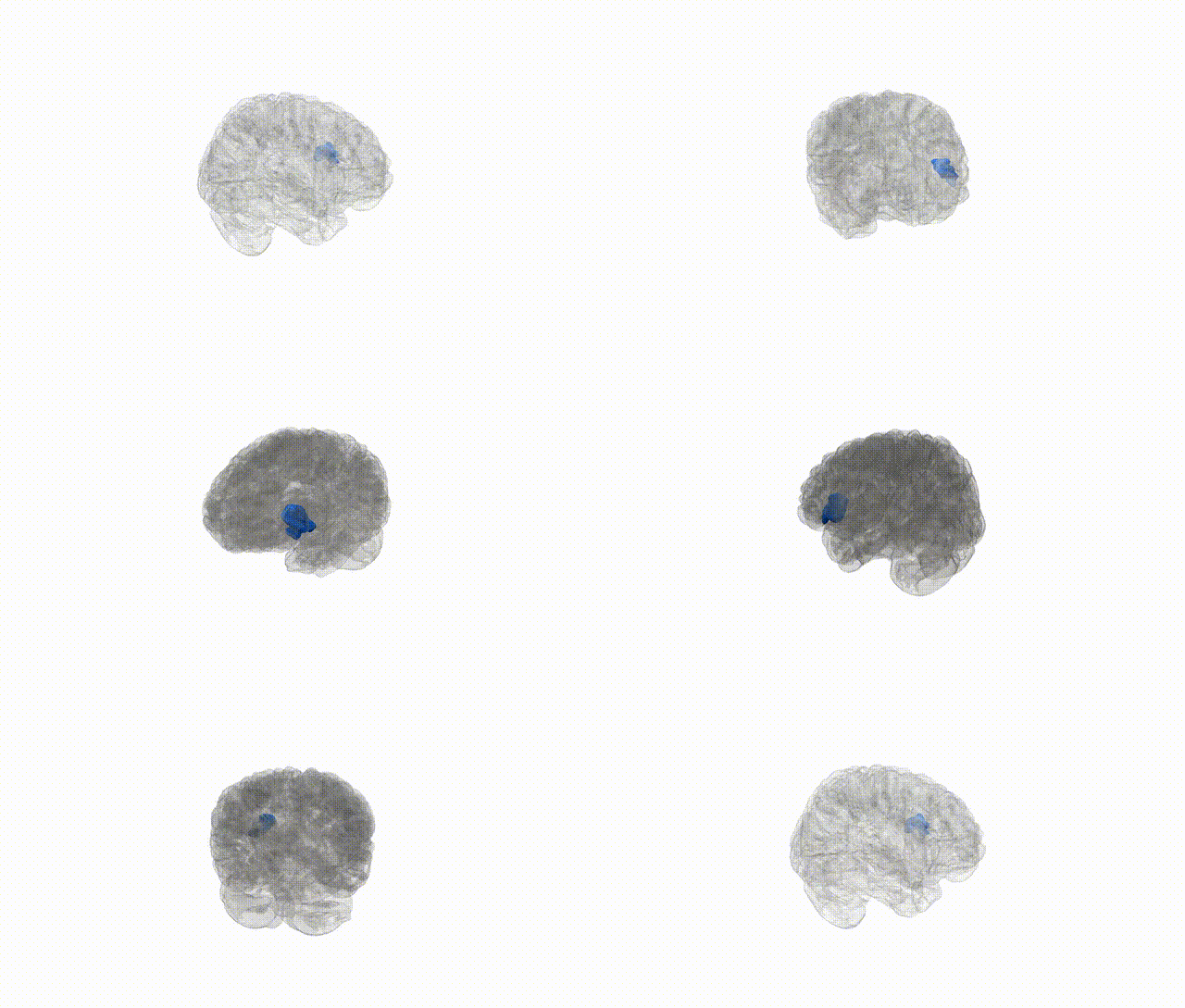
Full Quality Version: Download MP4
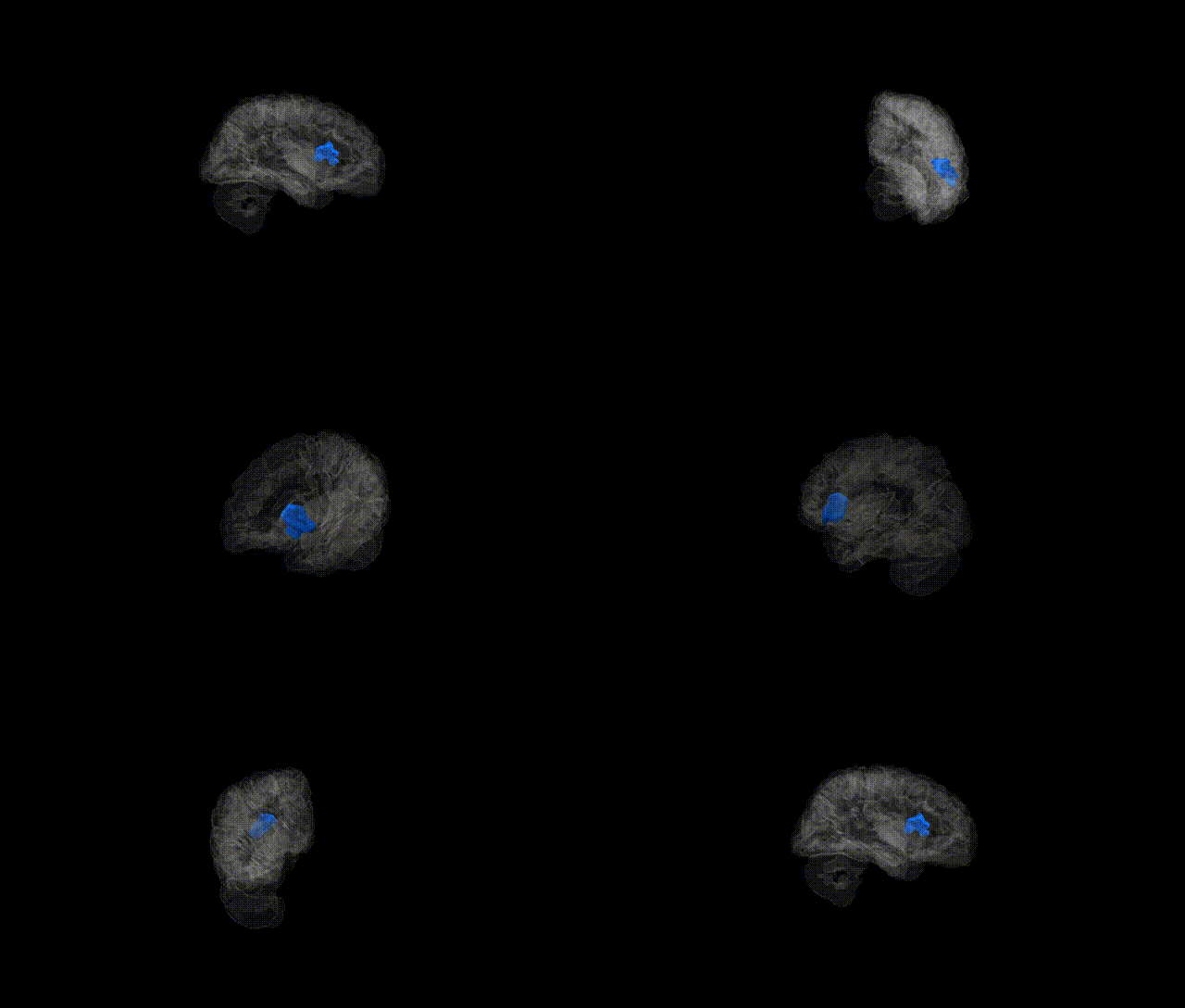
Full Quality Version: Download MP4
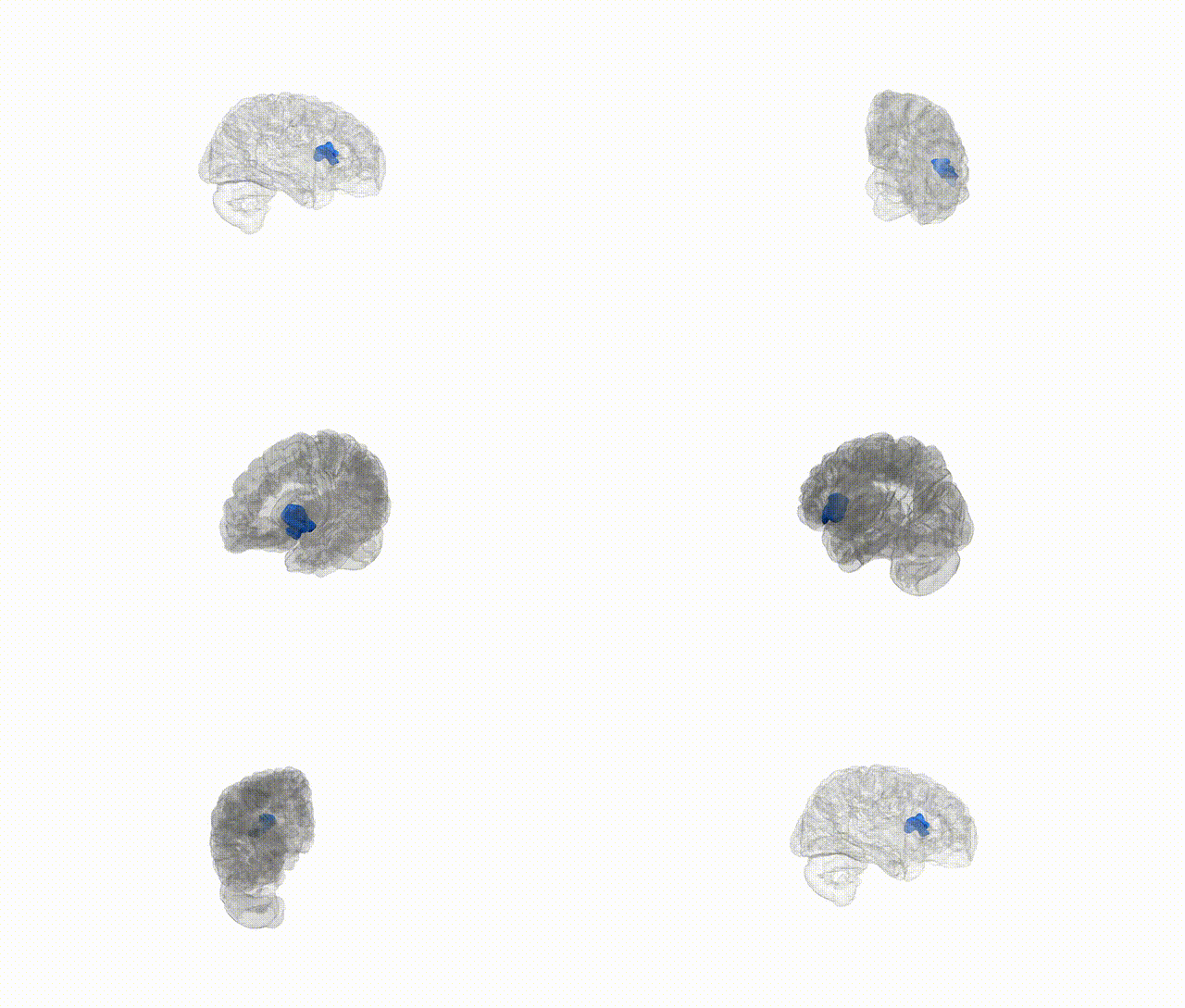
Full Quality Version: Download MP4
Wali Sidiqyar*, Gaurav Rudravaram*, Elyssa M. McMaster, Trent M. Schwartz, Adam M. Saunders, Kurt G. Schilling, Bennett A. Landman "Introducing SPINS: A Shared Public Visualization Library of Neuroanatomical Structures." Medical Imaging with Deep Learning- short paper
This resource is licensed under CC0 1.0 Universal (Public Domain).