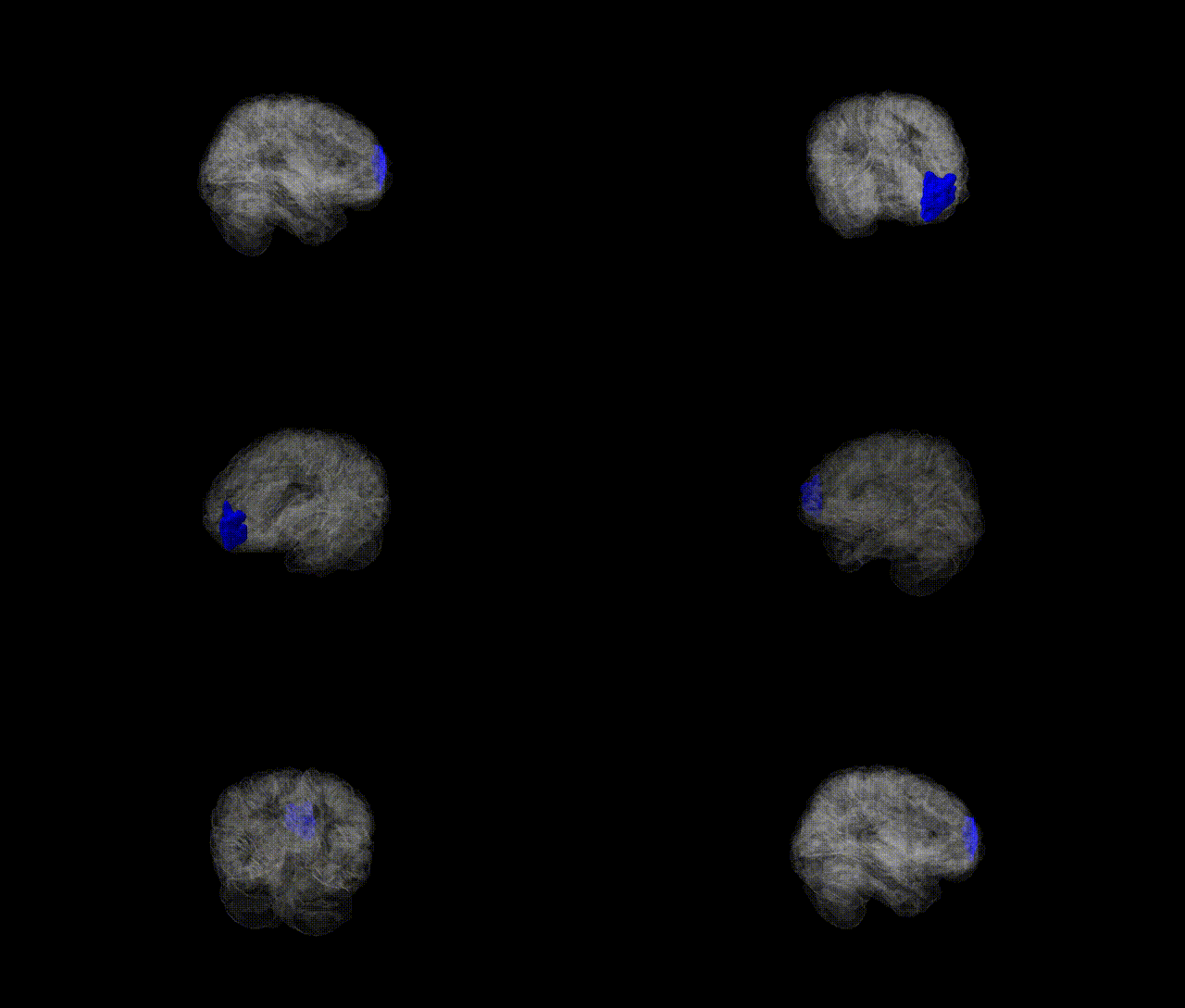
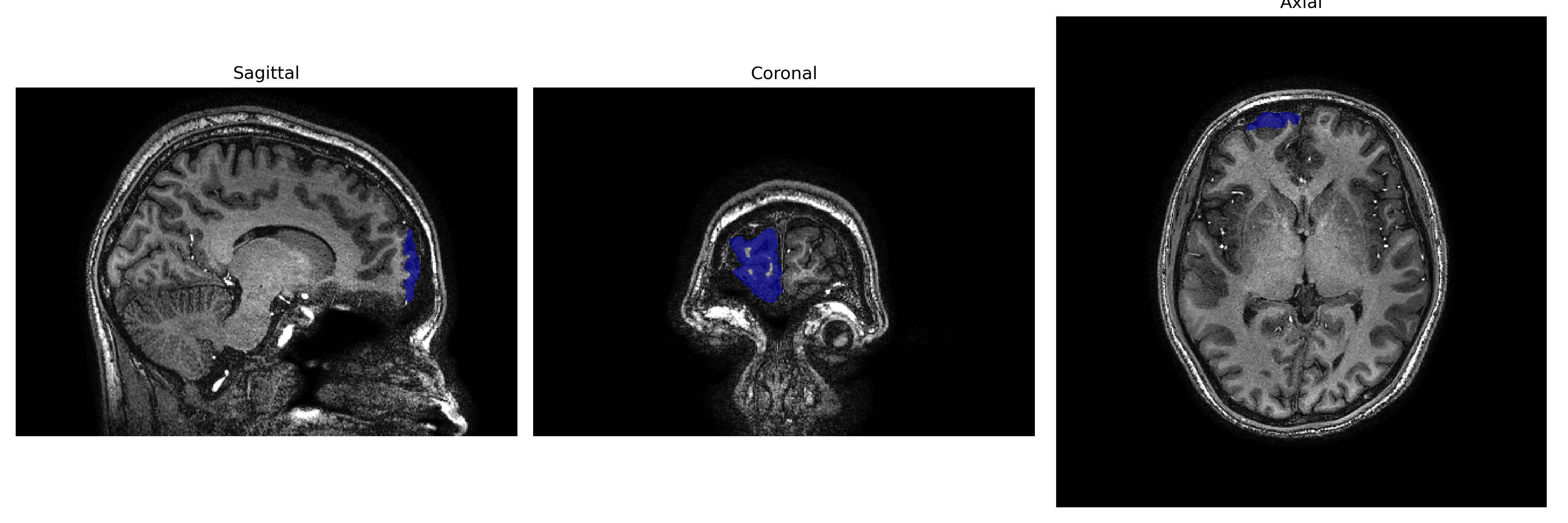
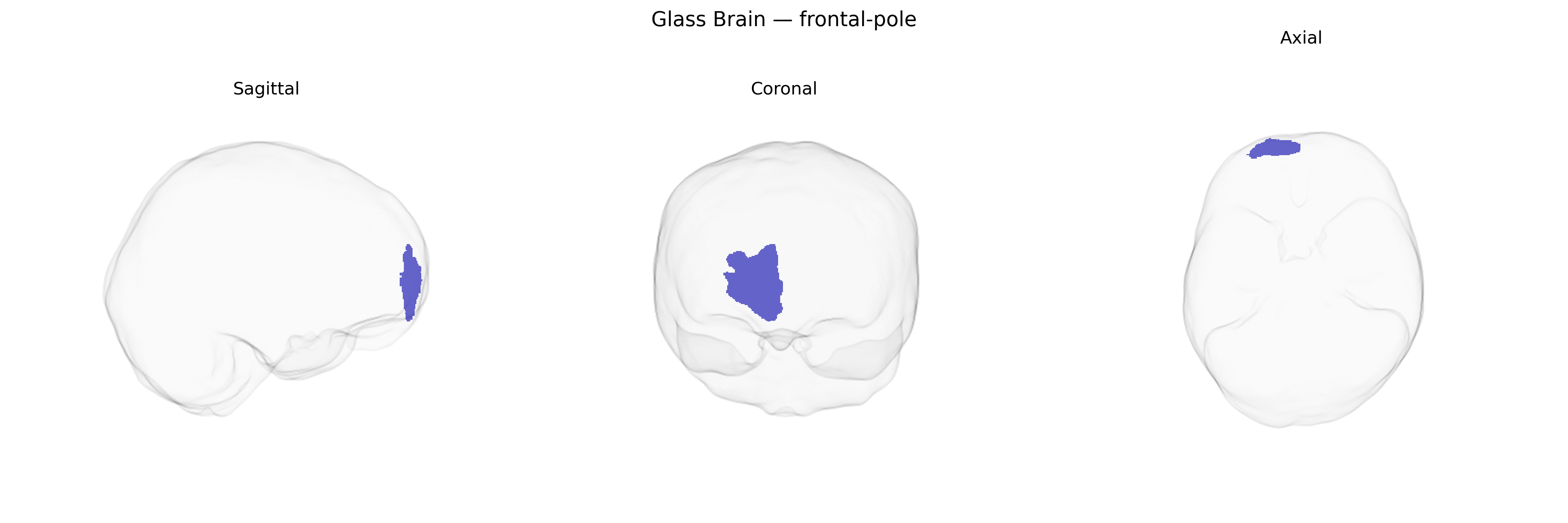
The right frontal pole, corresponding approximately to the most anterior portion of the right frontal lobe (Brodmann area 10), is a heteromodal association cortex implicated in high-level executive and socio-cognitive functions. It contributes to prospective memory, complex decision-making, multitasking, and the integration of internal goals with external contextual information, and is often engaged during tasks requiring evaluation of alternative strategies over extended time scales. Structurally, the frontal pole exhibits extensive reciprocal connectivity with dorsolateral and orbitofrontal prefrontal cortices, anterior cingulate cortex, temporal association regions, and limbic structures, supporting its role in metacognition and the regulation of goal-directed behavior. There is no direct link for the “right frontal pole,” but it is part of the Frontal lobe.
The right frontal pole, a prefrontal region implicated in high-level cognitive control, decision-making, and social-emotional processing, has been linked through imaging-genetics and GWAS work (often using parcellations that map reasonably onto the brainCOLOR atlas) to polygenic influences shared with psychiatric and cognitive traits rather than to single, large-effect variants. SNP-based heritability analyses show that frontal pole volume and cortical thickness are moderately heritable, with genome-wide significant associations reported near genes involved in neurodevelopment and synaptic function (for example, loci reported in ENIGMA and UK Biobank cortical morphology GWAS, including variants near HMGA2 and IGF1 for global and frontal cortical measures, and genes related to neuronal differentiation and myelination). Polygenic risk scores for schizophrenia, bipolar disorder, major depressive disorder, and autism spectrum disorder have been associated with structural or functional alterations in right frontal pole or adjacent frontopolar territories, aligning with findings that this region shows case–control differences in these conditions. Additional associations link right frontal pole morphology or connectivity to traits such as intelligence, educational attainment, risk-taking, and substance use, consistent with the region’s role in prospective evaluation and behavioral regulation. Overall, genetic findings suggest that variation in right frontal pole structure and function reflects many small-effect common variants that also contribute to psychiatric risk and higher-order cognitive traits, rather than region-specific “frontal-pole genes.”
Overview generated by GPT-4o (2026).
Region ID: 42
Hemisphere: Right
Atlas: brainCOLOR
Full Quality Version: Download MP4
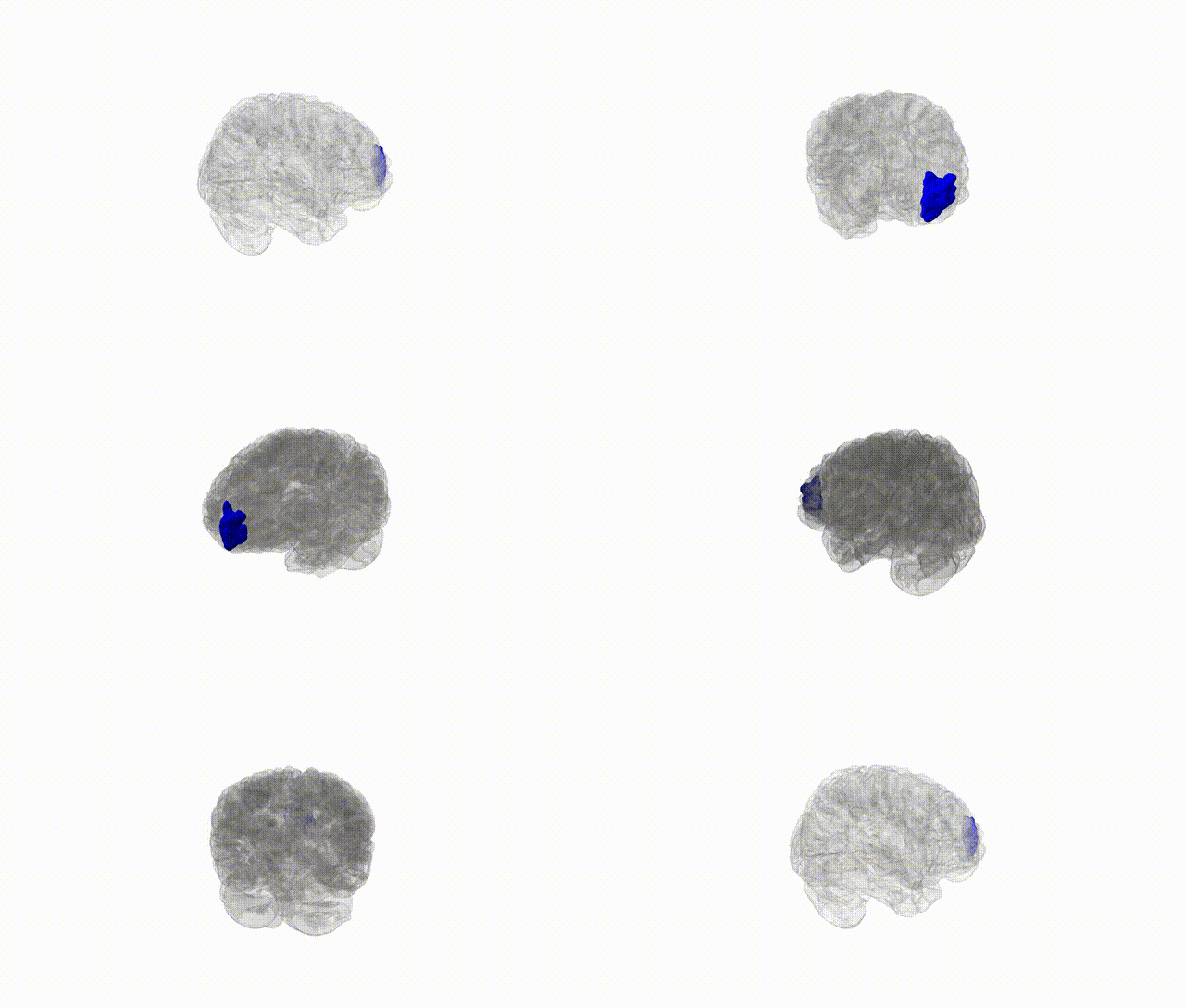
Full Quality Version: Download MP4
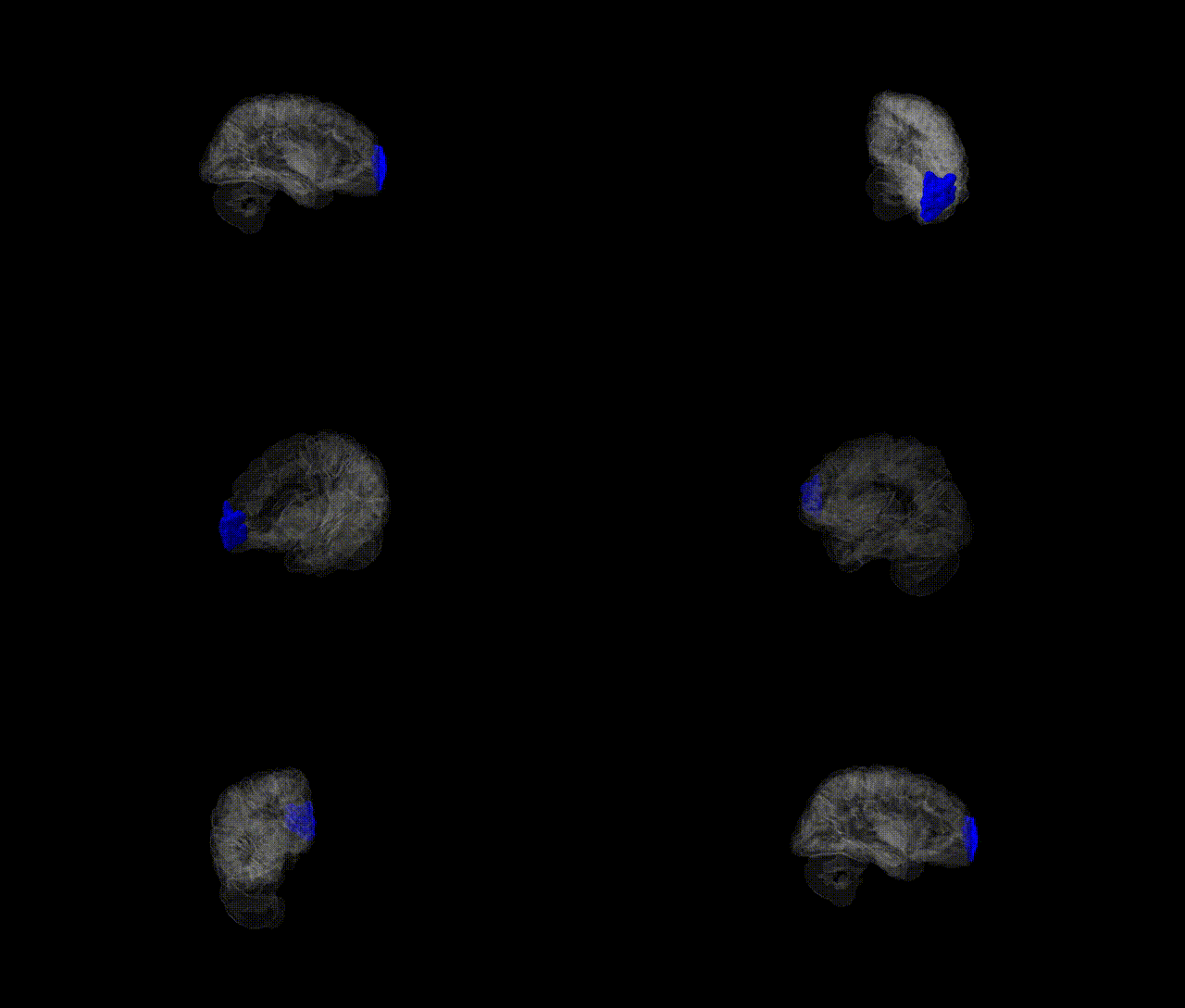
Full Quality Version: Download MP4
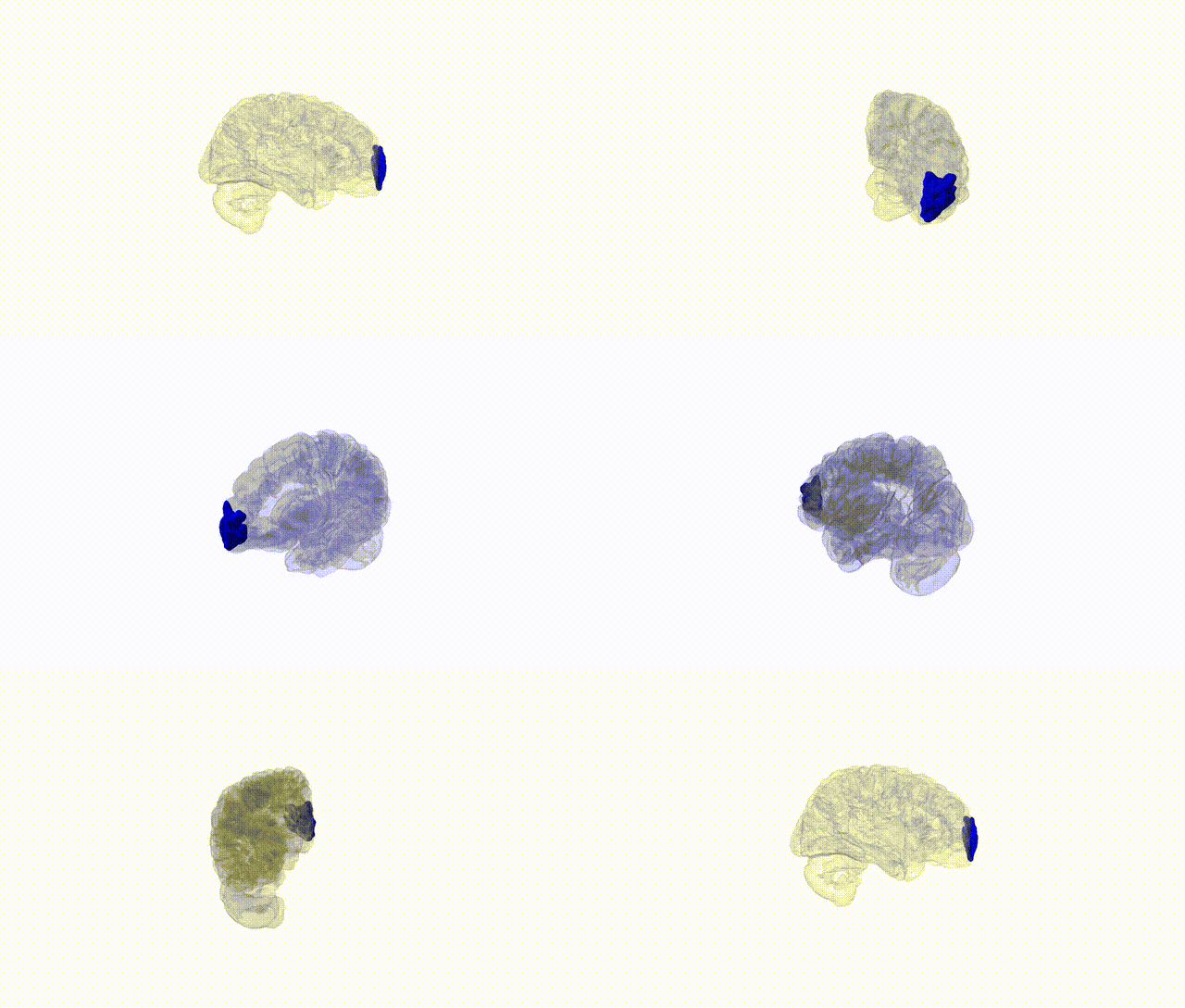
Full Quality Version: Download MP4
Wali Sidiqyar*, Gaurav Rudravaram*, Elyssa M. McMaster, Trent M. Schwartz, Adam M. Saunders, Kurt G. Schilling, Bennett A. Landman "Introducing SPINS: A Shared Public Visualization Library of Neuroanatomical Structures." Medical Imaging with Deep Learning- short paper
This resource is licensed under CC0 1.0 Universal (Public Domain).