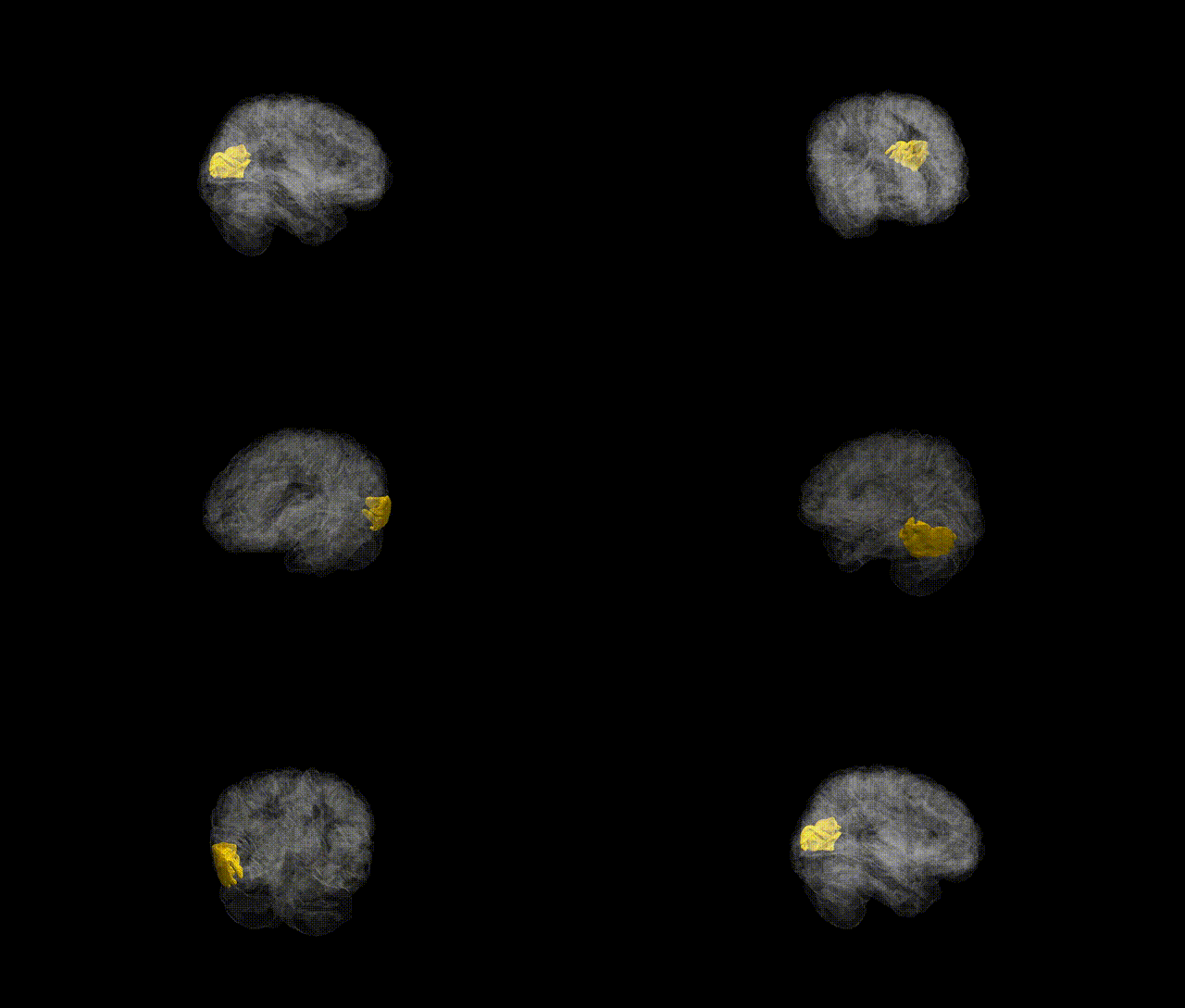
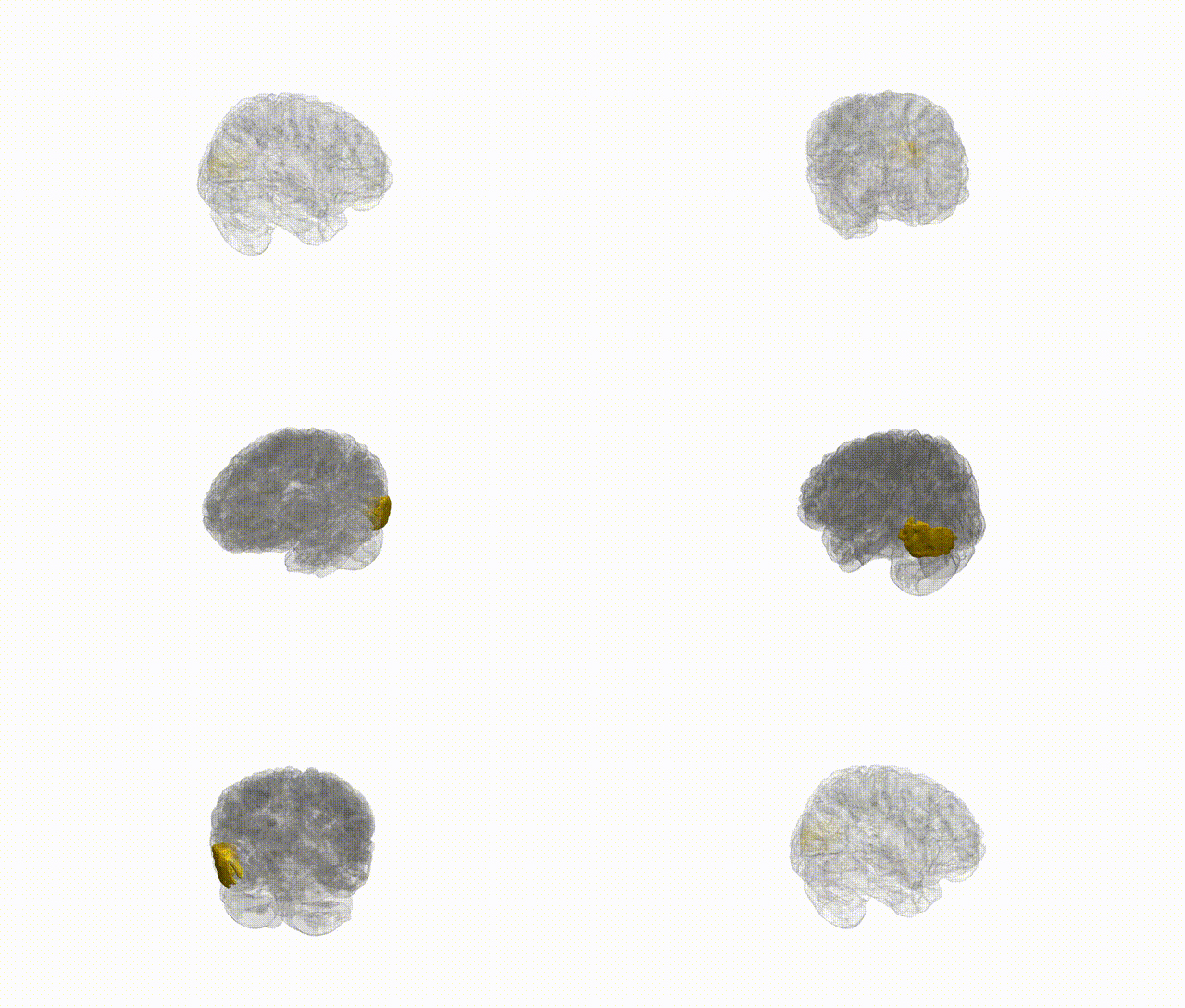
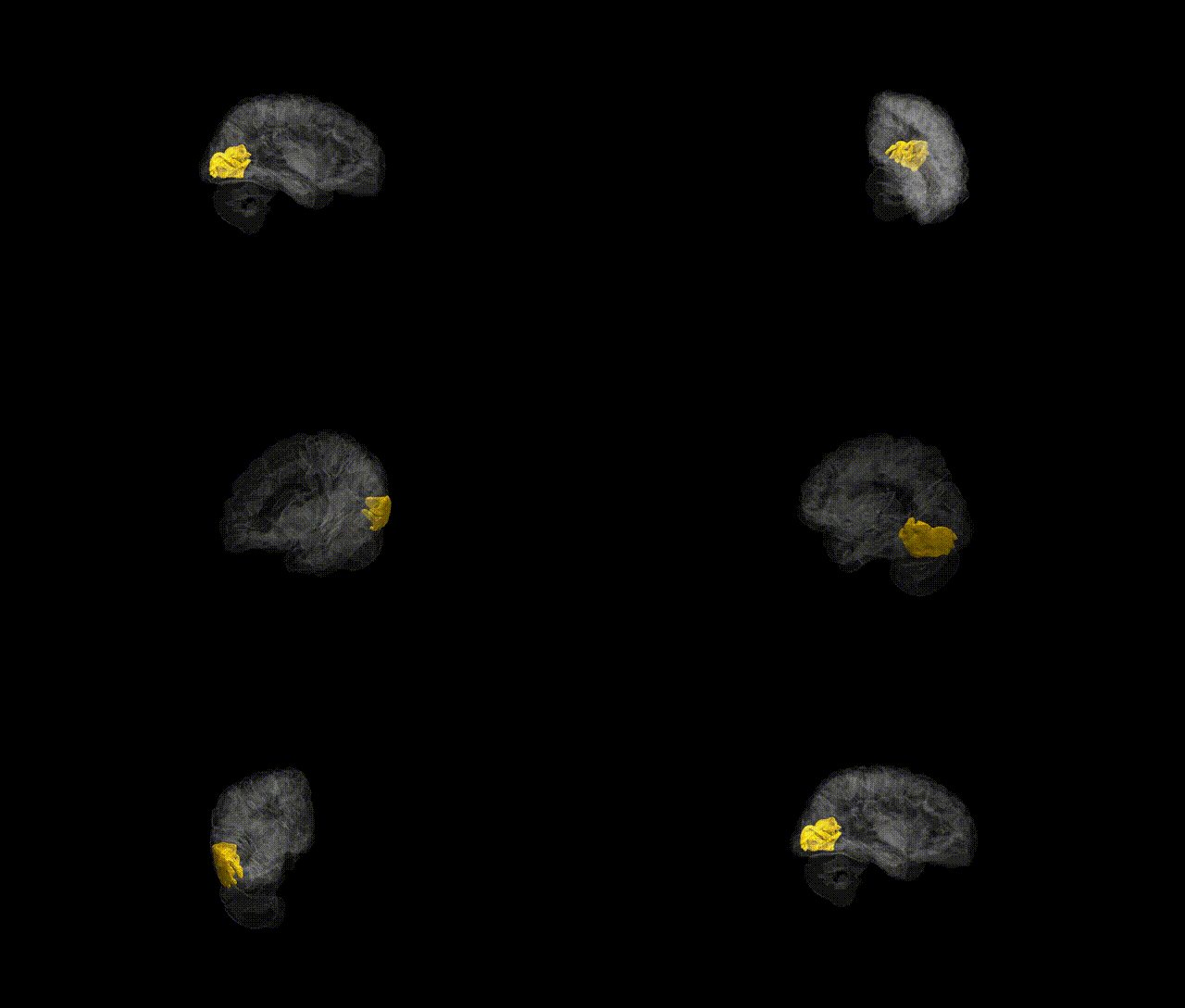
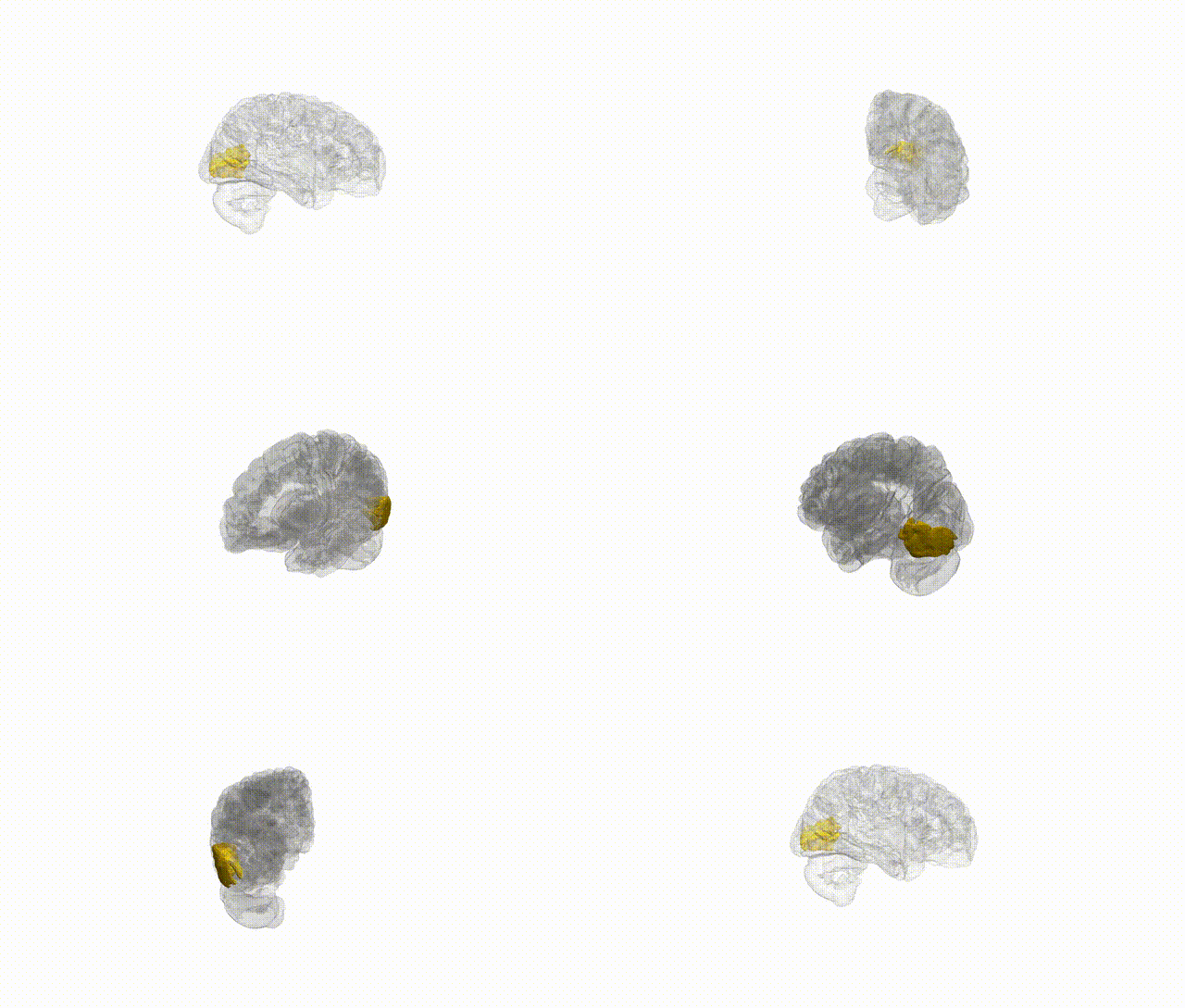
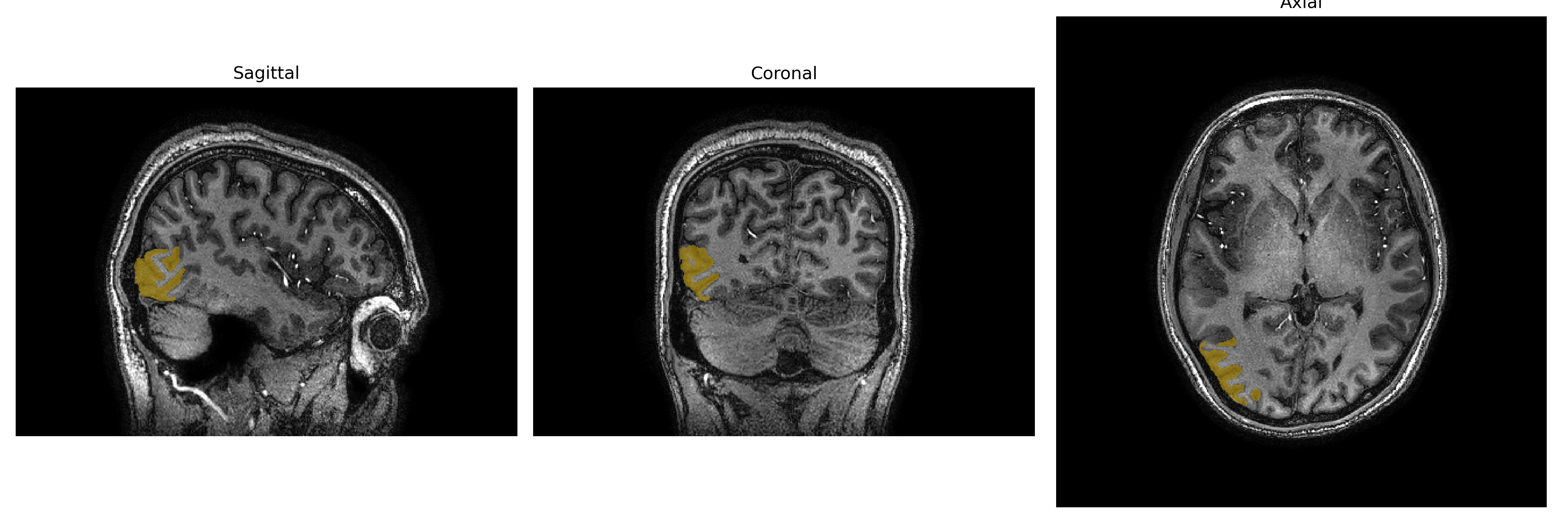
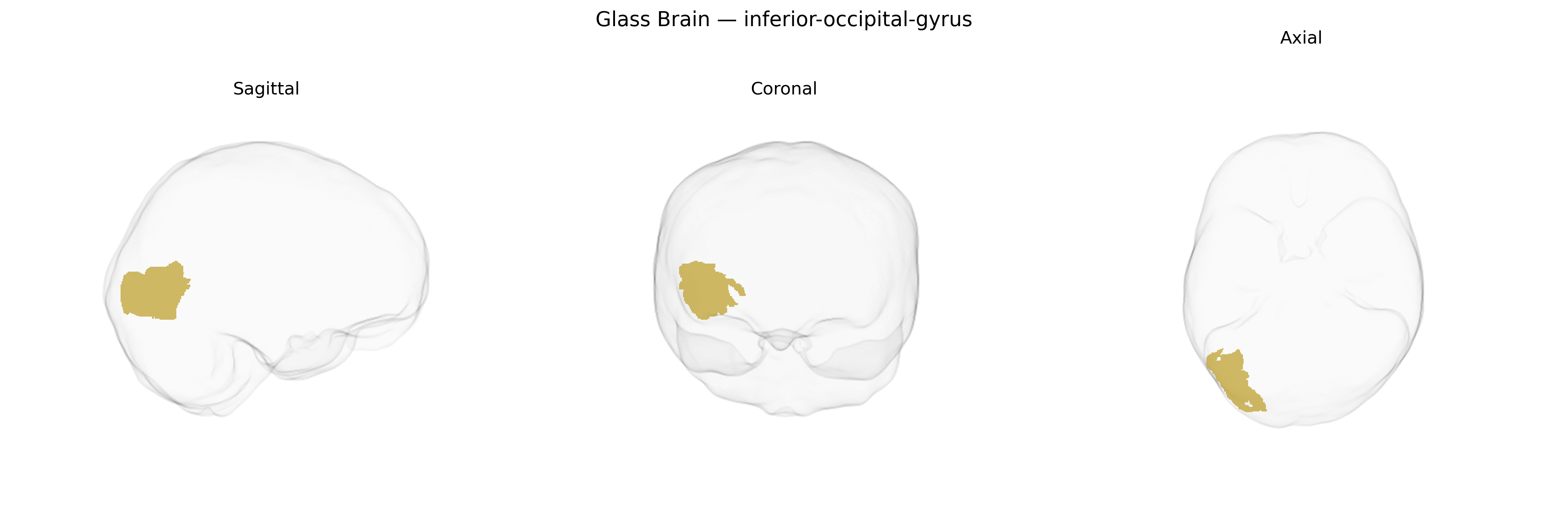
The Right Inferior Occipital Gyrus is a cortical region located on the ventral aspect of the occipital lobe, forming part of the visual association cortex involved in early-stage processing of complex visual features such as shape, edges, and motion that contribute to object and face perception. It lies inferior to the middle occipital gyrus and anterior to the occipital pole, bordering portions of the lateral occipital and ventral temporal cortices, and receives substantial input from primary visual areas (V1) and other extrastriate regions. Functionally, it participates in hierarchical visual processing streams, especially the ventral “what” pathway, supporting the transformation of low-level visual information into representations useful for recognition and categorization. There is no direct Wikipedia article for the Right Inferior Occipital Gyrus; a closely related and encompassing structure is the Occipital lobe.
The right inferior occipital gyrus (IOG) in the brainCOLOR atlas corresponds broadly to occipital and ventral visual areas implicated in object and face perception, and genetic associations are typically captured in GWAS of cortical thickness, surface area, and functional activation. Large-scale imaging-genetics consortia such as ENIGMA and UK Biobank–based studies have reported heritable variation in occipital cortical measures, with common variants near genes involved in neurodevelopment and synaptic signaling (for example, in pathways related to axon guidance, neuronal differentiation, and visual system development), though locus-level findings are generally reported at the level of “occipital cortex” or “visual cortex” rather than specifically the right IOG. Polygenic architectures for educational attainment, intelligence, and general cognitive function show enrichment in visual and occipital regions, including inferior occipital areas, consistent with their role in high-level visual processing that supports reading and object recognition. Genetic influences on face-selective responses in occipito-temporal cortex, including regions adjacent to or overlapping the inferior occipital gyrus (such as the occipital face area), have been inferred from twin and family studies, and rare or common variants affecting genes implicated in neurodevelopmental and psychiatric conditions (e.g., autism spectrum disorder and schizophrenia) have been associated with atypical structure or activation in occipito-temporal regions that include the right IOG, but specific, robust, and repeatedly replicated SNP-level associations uniquely tied to the right inferior occipital gyrus in the brainCOLOR atlas remain limited in current published GWAS.
Overview generated by GPT-4o (2026).
Region ID: 48
Hemisphere: Right
Atlas: brainCOLOR
Full Quality Version: Download MP4
Full Quality Version: Download MP4
Full Quality Version: Download MP4
Full Quality Version: Download MP4
Wali Sidiqyar*, Gaurav Rudravaram*, Elyssa M. McMaster, Trent M. Schwartz, Adam M. Saunders, Kurt G. Schilling, Bennett A. Landman "Introducing SPINS: A Shared Public Visualization Library of Neuroanatomical Structures." Medical Imaging with Deep Learning- short paper
This resource is licensed under CC0 1.0 Universal (Public Domain).