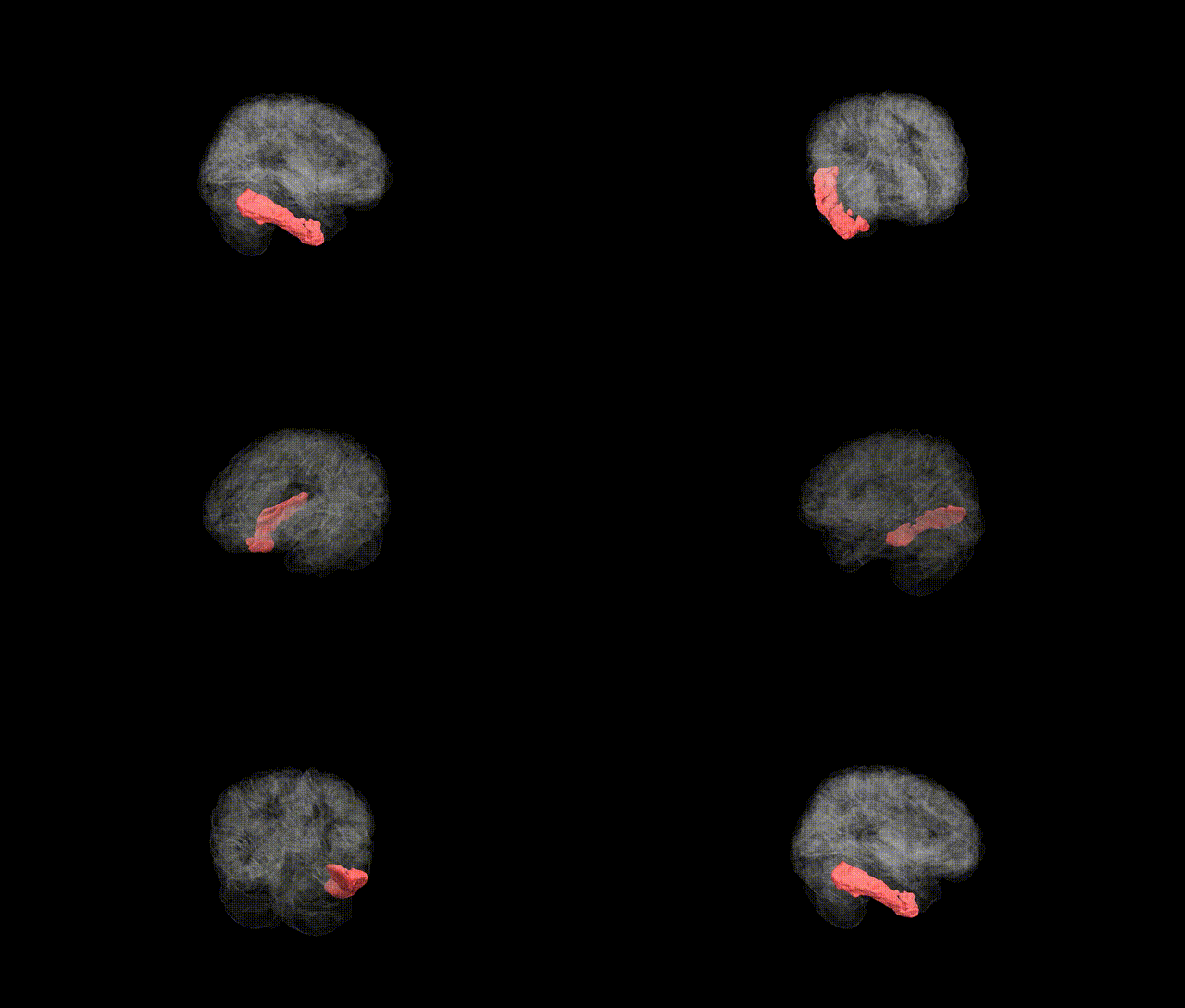
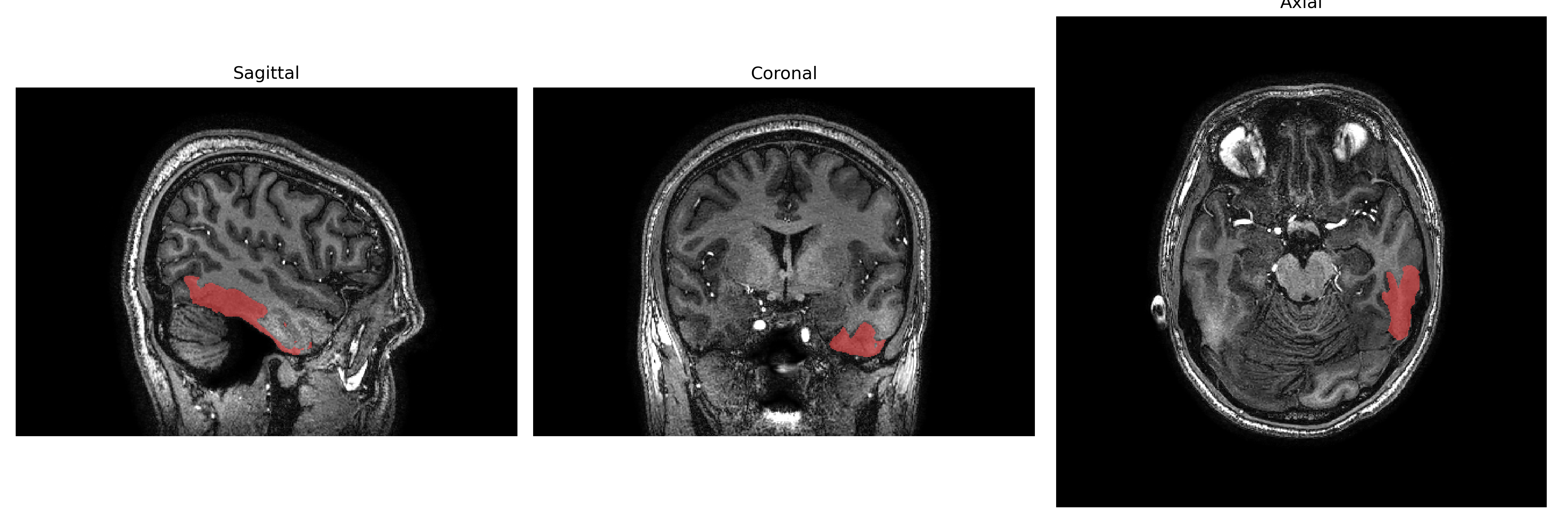
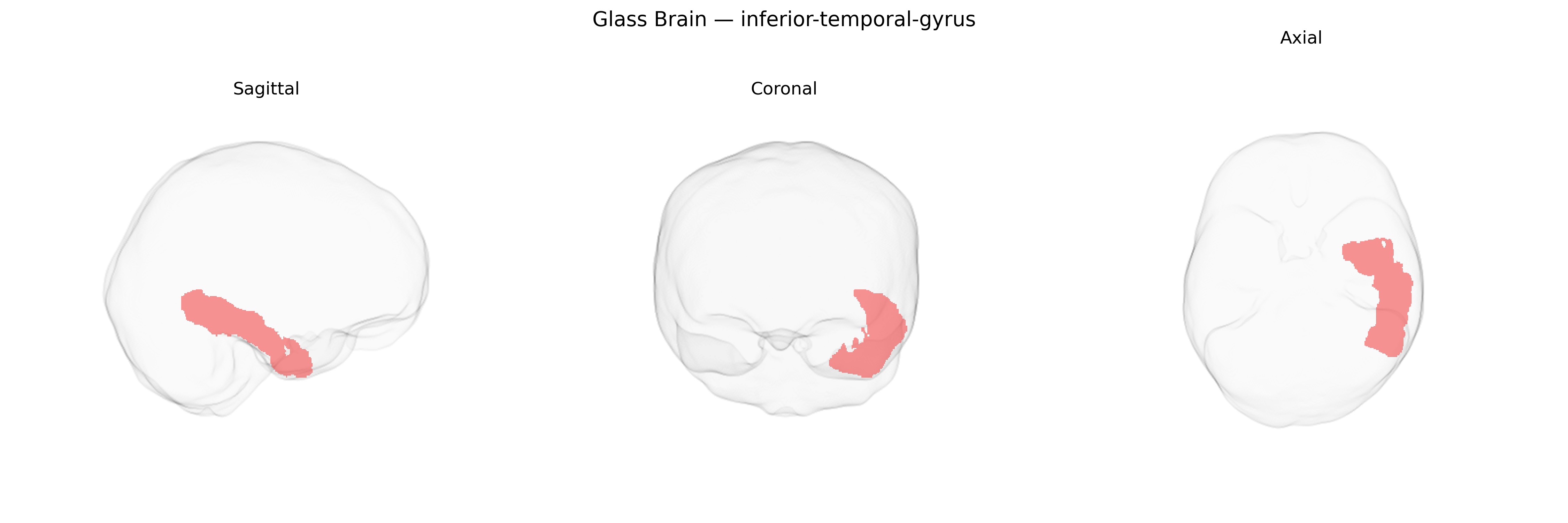
The left inferior temporal gyrus is a ventral temporal lobe structure located on the lateral surface of the cerebral hemisphere, bordered superiorly by the middle temporal gyrus and inferiorly by the occipitotemporal (fusiform) region. Cytoarchitectonically, it is part of the neocortex and participates in high-level visual processing, particularly in object recognition, shape and form analysis, and aspects of visual-semantic integration. Functional imaging studies implicate this gyrus in the processing of complex visual stimuli such as faces, tools, and written words, with lateralization in the left hemisphere often associated with language- and reading-related functions, including mapping visual word forms onto phonological and semantic representations. Through dense reciprocal connections with occipital, parietal, and frontal association areas, as well as medial temporal memory structures, the left inferior temporal gyrus contributes to linking visual input with stored knowledge and goal-directed behavior. There is no direct Wikipedia article for this specific gyrus; a closely related and encompassing structure is the Temporal lobe.
The left inferior temporal gyrus, as defined in the brainCOLOR Atlas, has been implicated in several genetic and GWAS-based associations largely through its roles in language, visual object recognition, and higher-order cognition. Imaging genetics and large-scale GWAS of cortical morphology (e.g., ENIGMA and UK Biobank cohorts) report heritable variation in cortical thickness and surface area in this region, with common variants in genes involved in neurodevelopment and synaptic function (such as MAPT, CNTNAP2, and DCDC2-related loci) contributing to its structural variability. The left inferior temporal gyrus frequently appears in studies of reading and language, where risk variants for dyslexia and specific language impairment show associations with altered activation and/or morphology in inferior temporal regions involved in orthographic and semantic processing. GWAS of schizophrenia, bipolar disorder, and major depressive disorder have linked polygenic risk scores to reduced cortical thickness or volume in left inferior temporal regions, suggesting that shared common-variant liability for severe psychiatric disorders partly manifests through structural differences there. In neurodegenerative disease, variants in APOE and other Alzheimer’s disease risk loci have been associated with atrophy patterns and tau/amyloid burden that prominently involve temporal neocortex, including the inferior temporal gyrus, in line with its known vulnerability to early Alzheimer’s pathology. Traits such as general cognitive ability, educational attainment, and face- or object-recognition performance have also been associated with structural or functional variation in this region in polygenic and imaging-genetic studies, indicating that common genetic variation influencing cognition and visual-linguistic processing is partly expressed through the left inferior temporal gyrus.
Overview generated by GPT-4o (2026).
Region ID: 51
Hemisphere: Left
Atlas: brainCOLOR
Full Quality Version: Download MP4
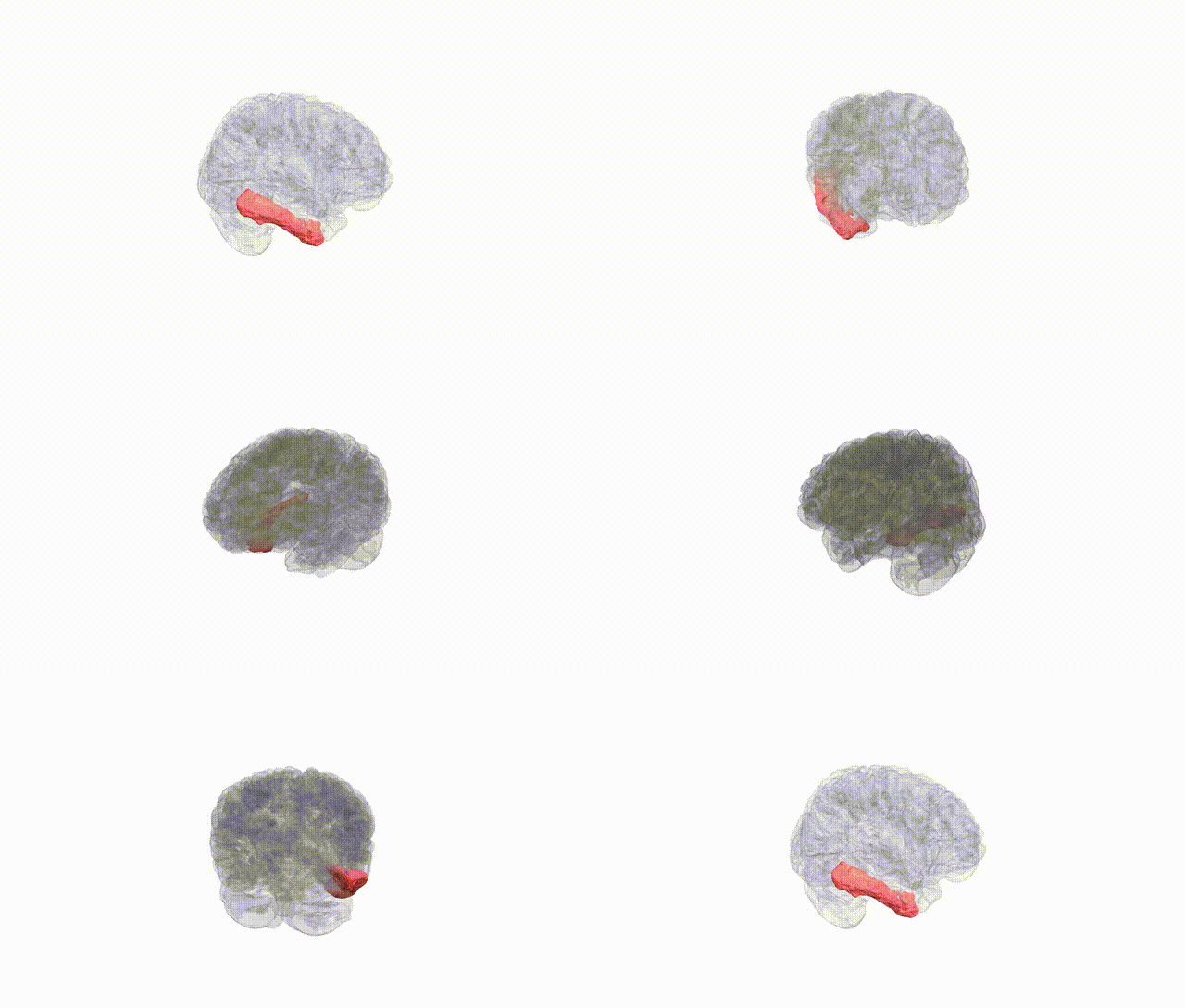
Full Quality Version: Download MP4
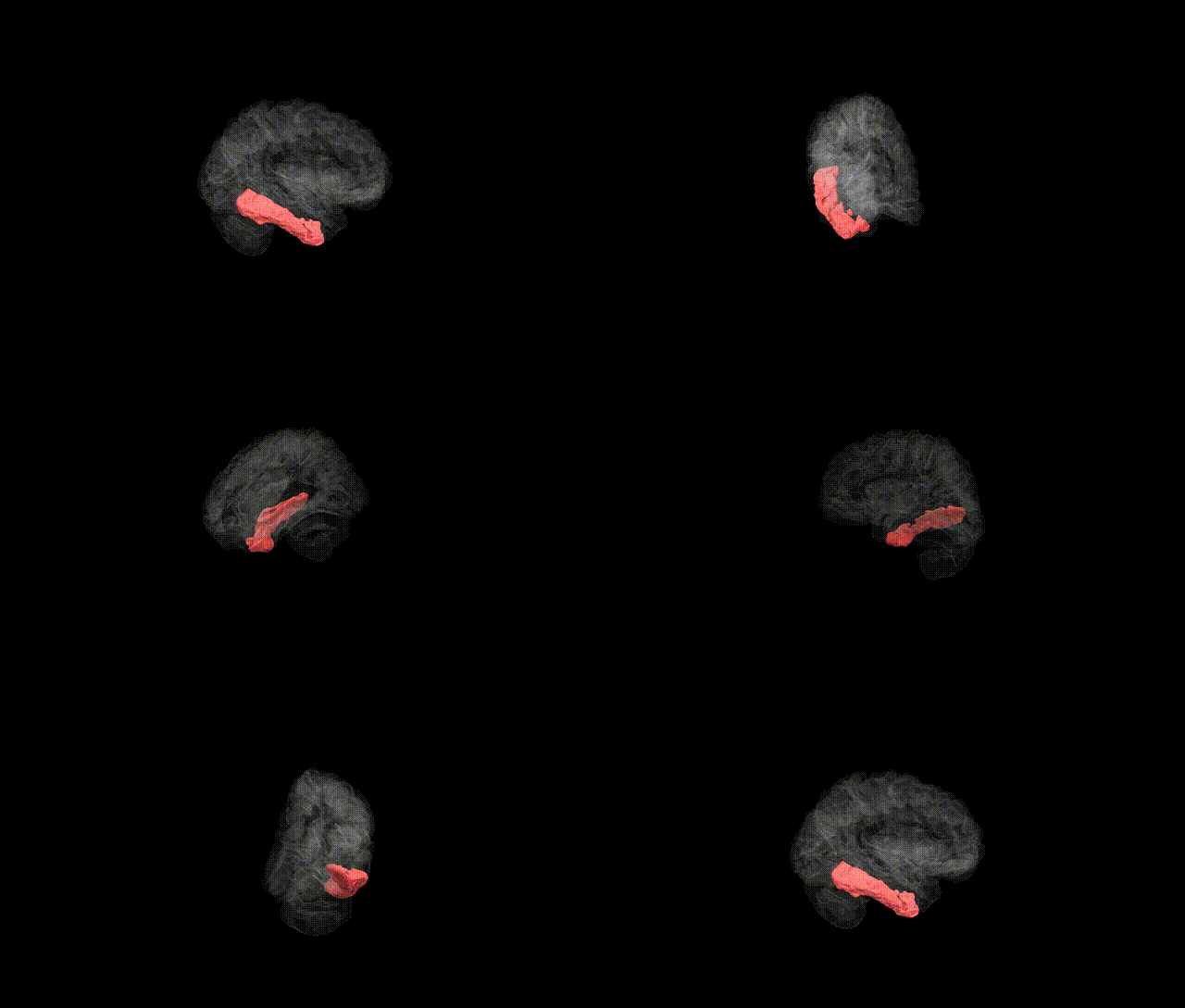
Full Quality Version: Download MP4
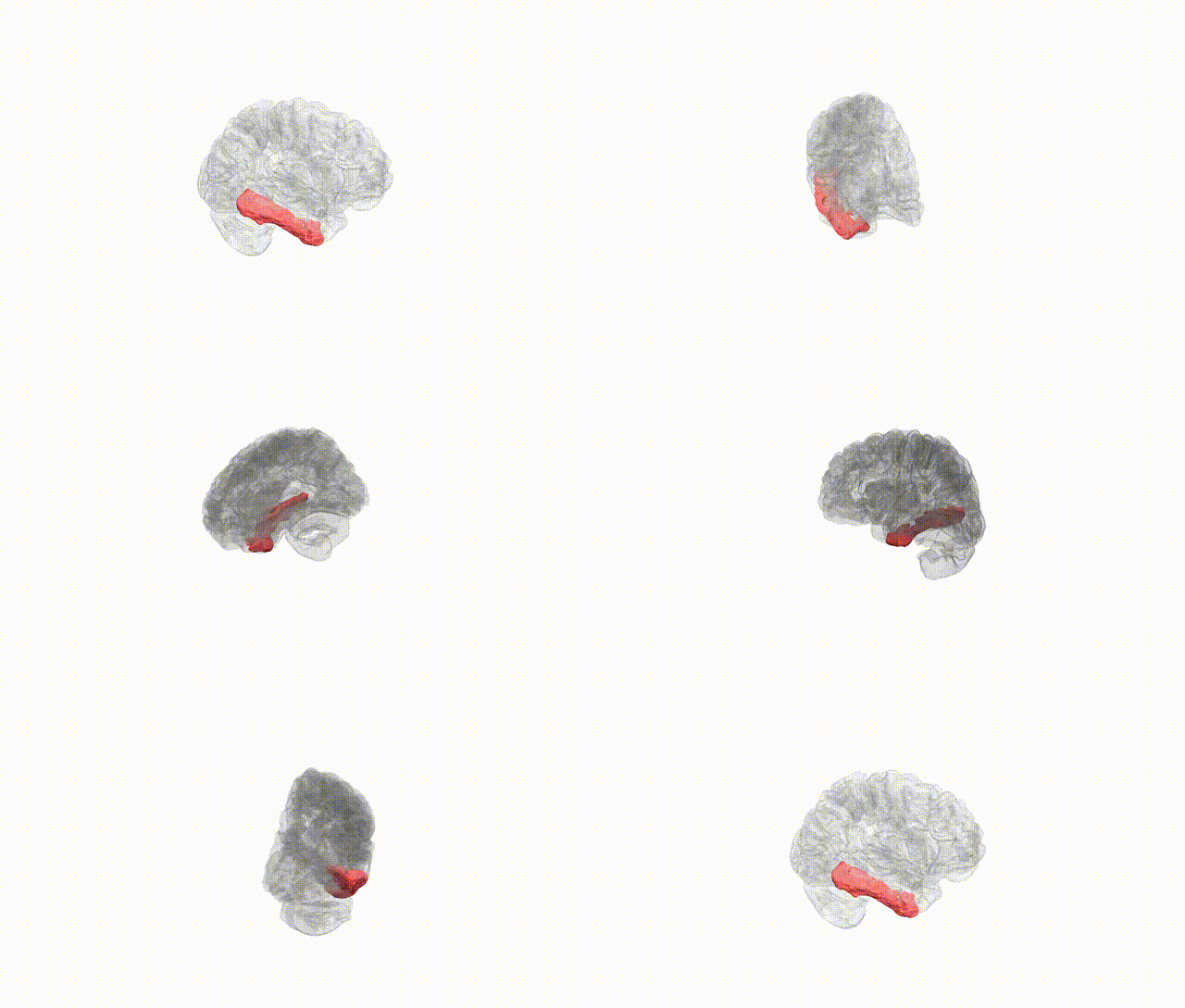
Full Quality Version: Download MP4
Wali Sidiqyar*, Gaurav Rudravaram*, Elyssa M. McMaster, Trent M. Schwartz, Adam M. Saunders, Kurt G. Schilling, Bennett A. Landman "Introducing SPINS: A Shared Public Visualization Library of Neuroanatomical Structures." Medical Imaging with Deep Learning- short paper
This resource is licensed under CC0 1.0 Universal (Public Domain).