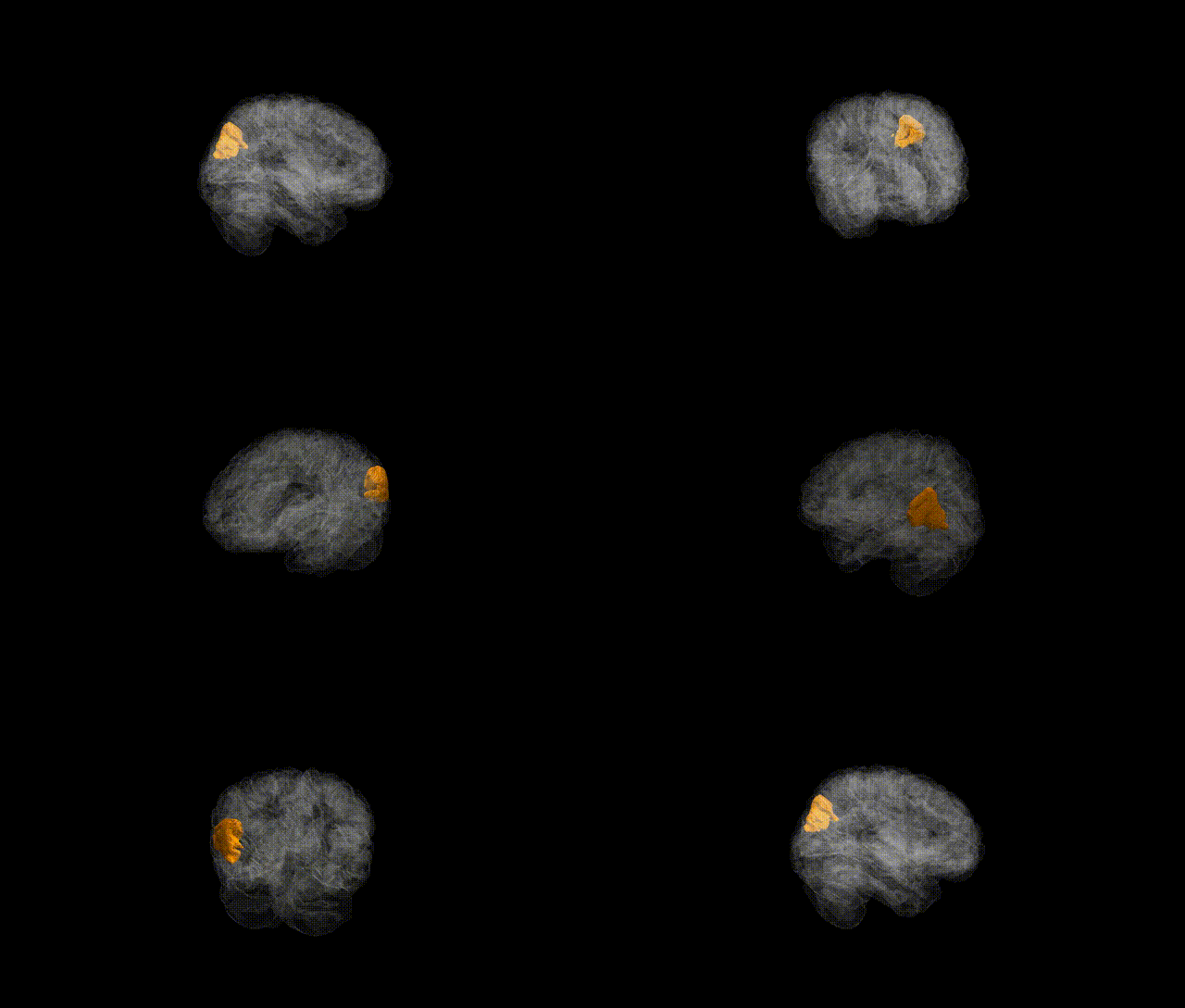
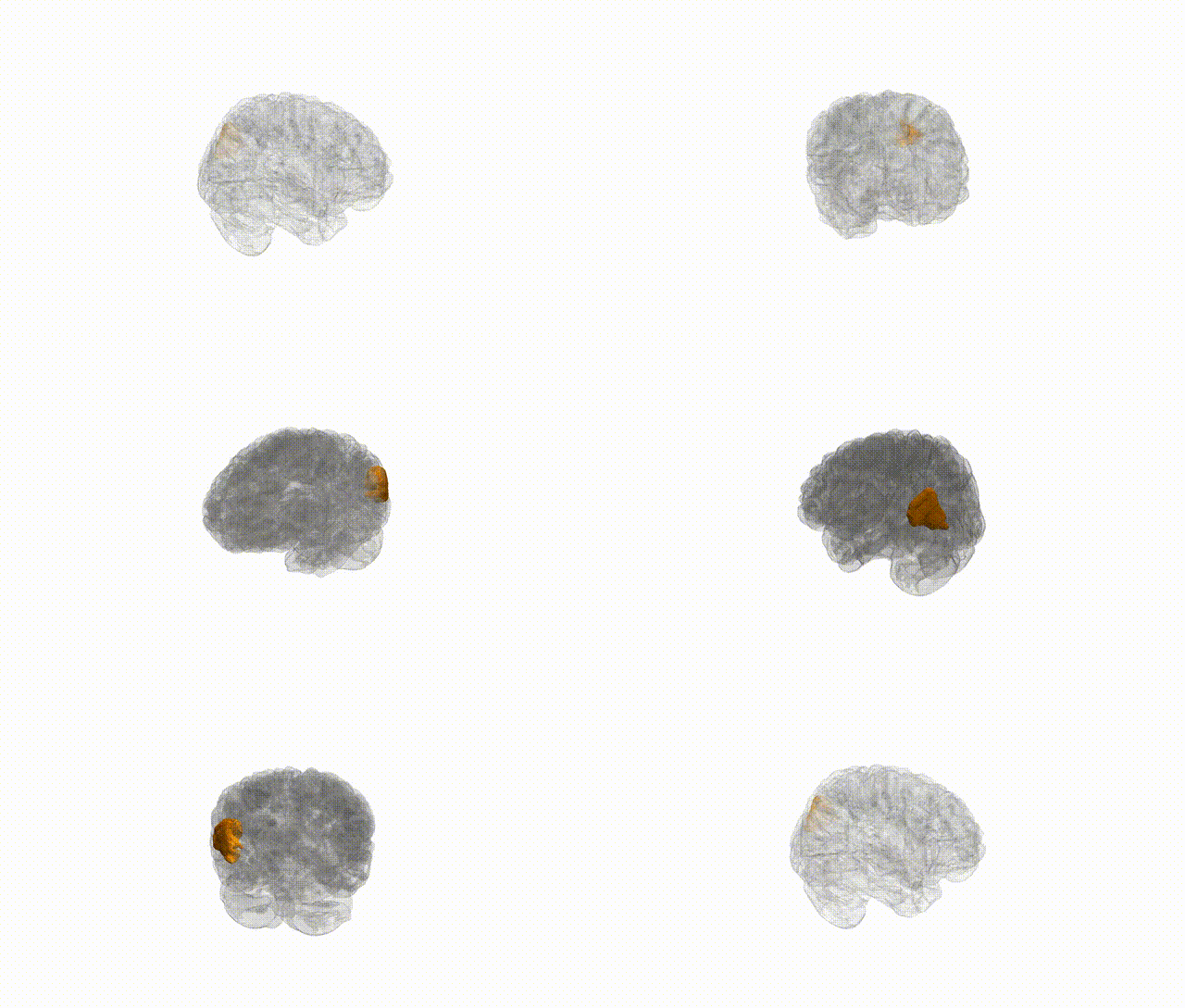
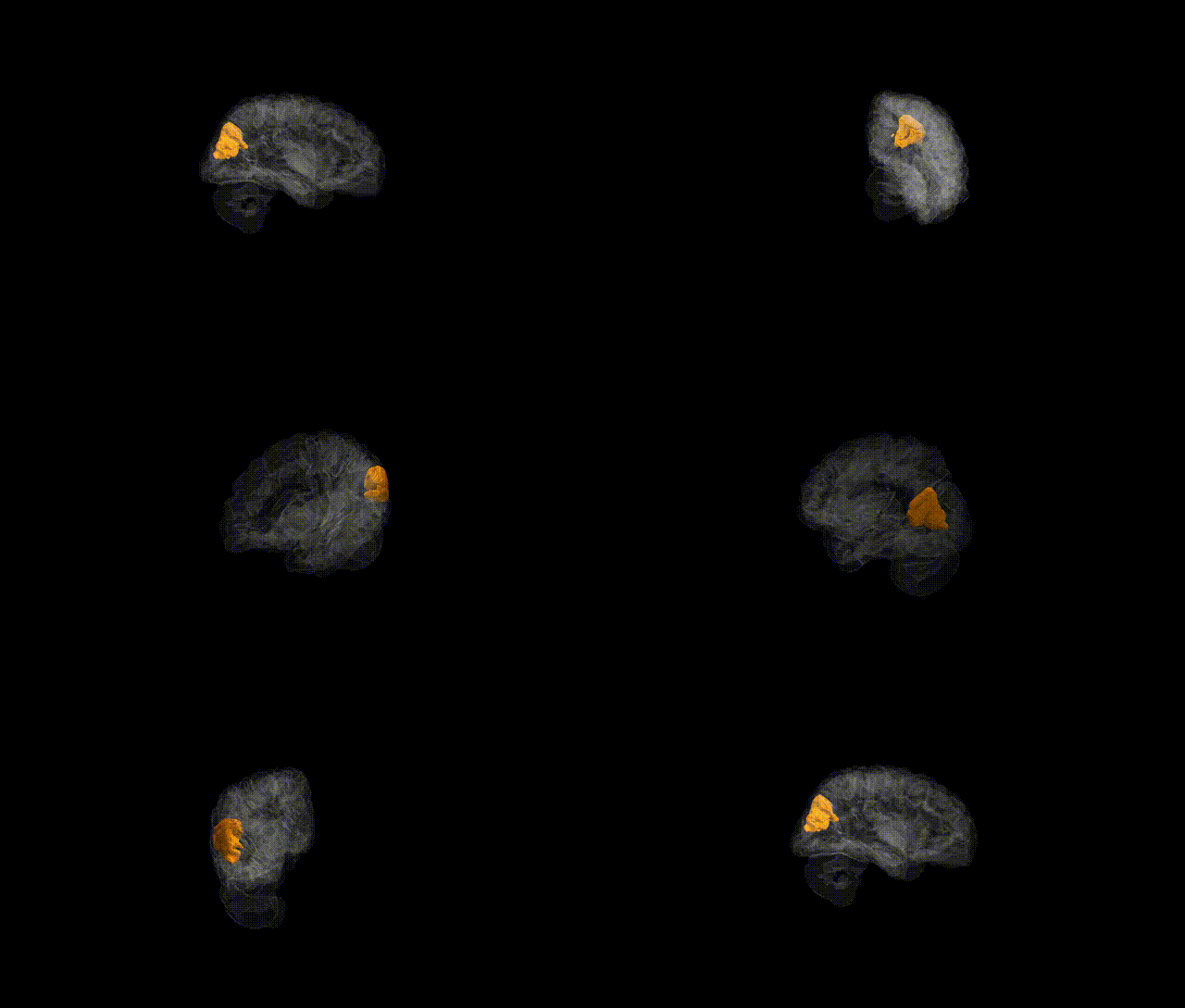
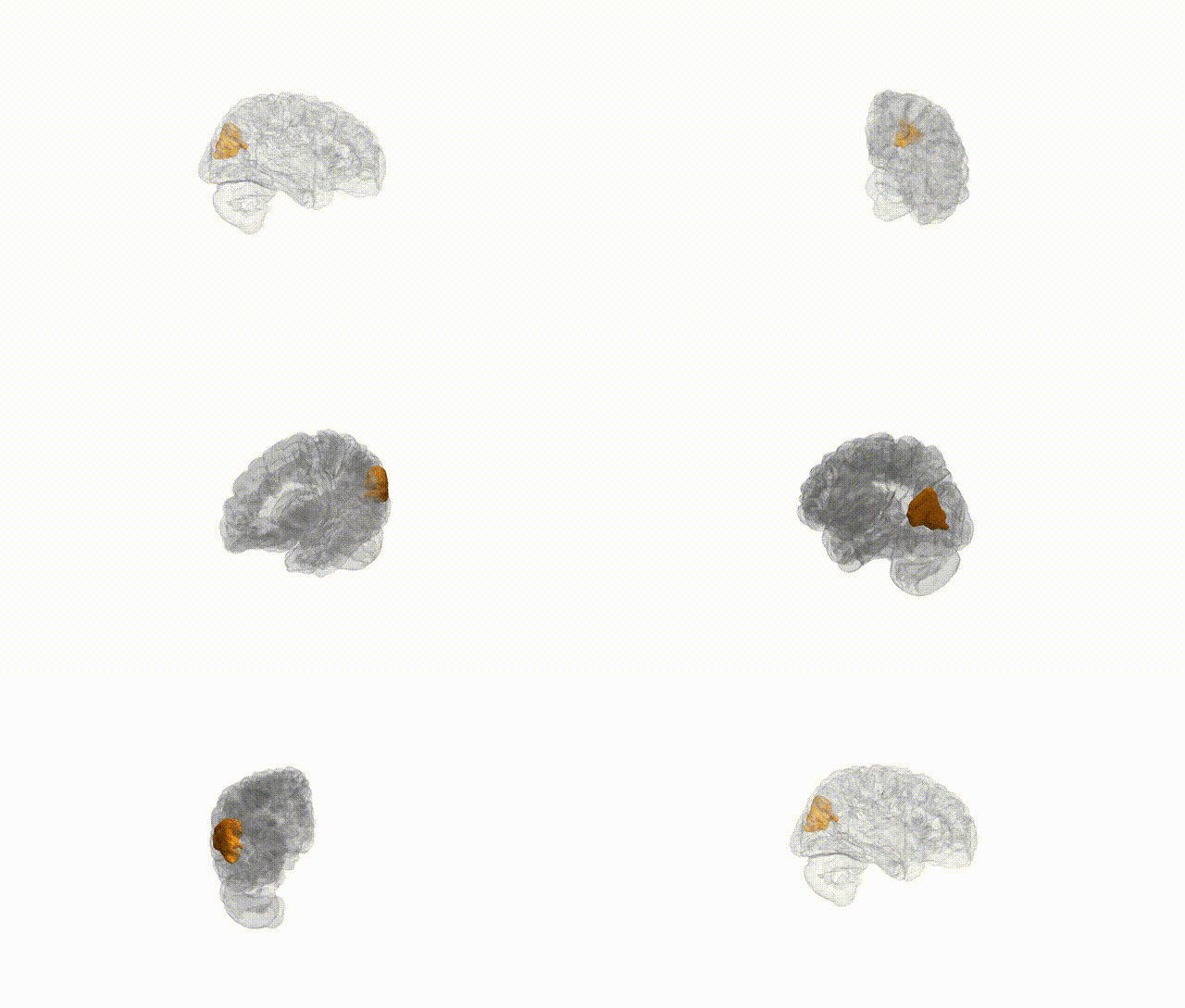
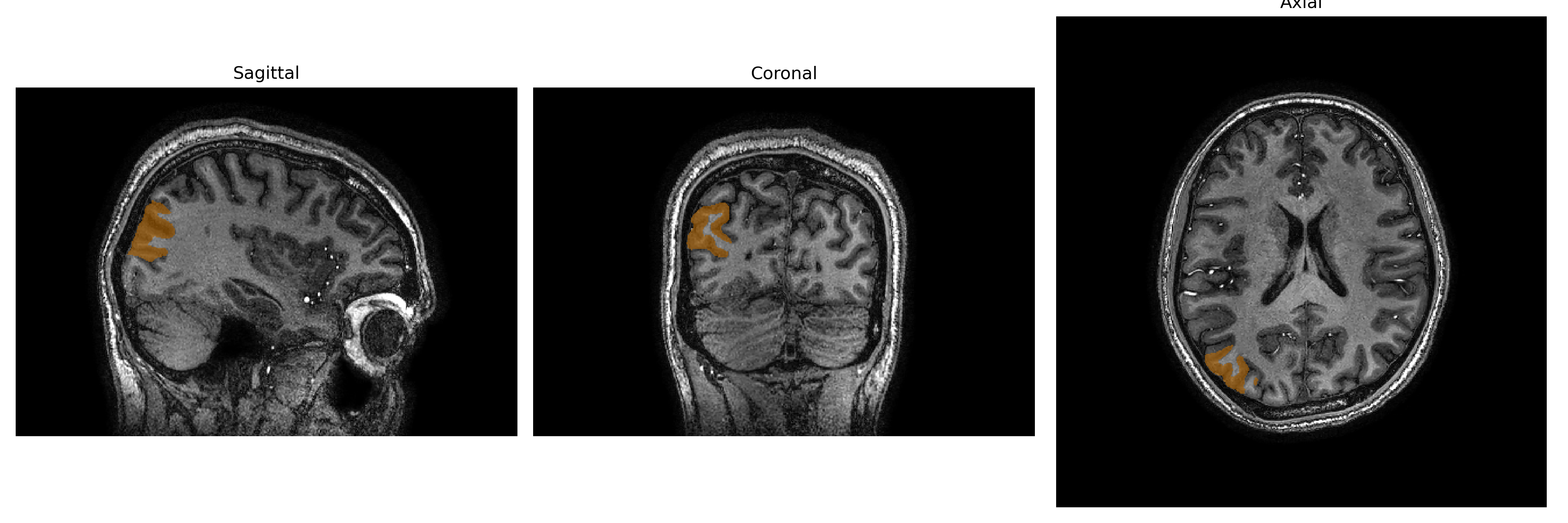
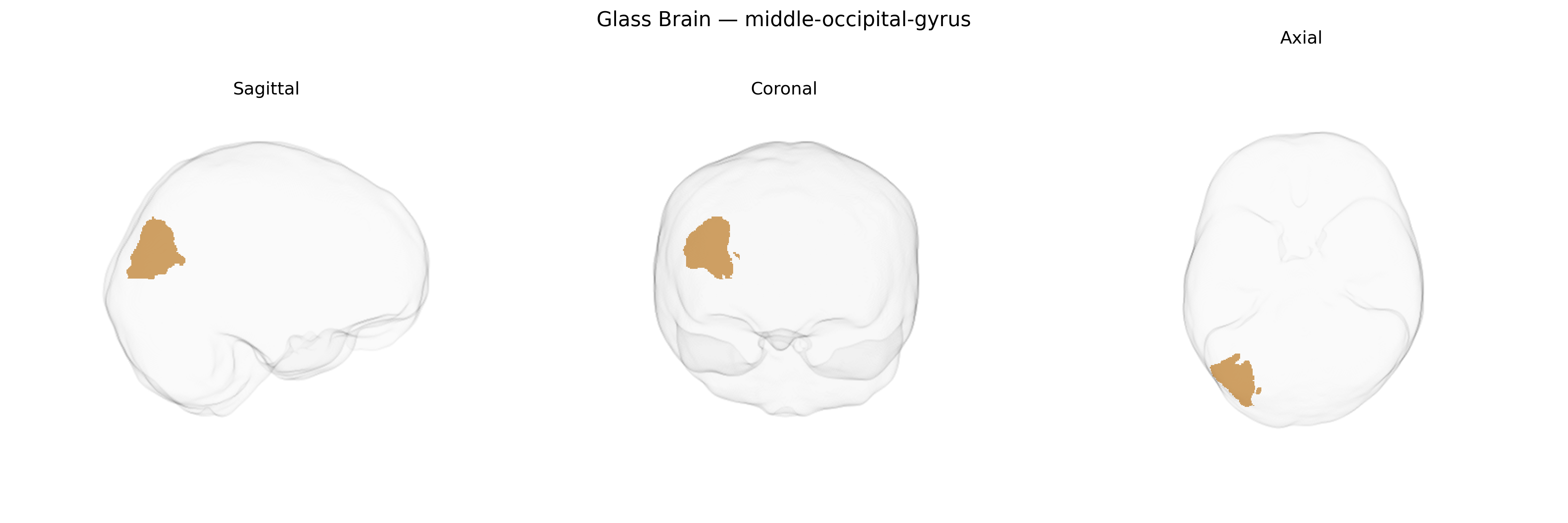
The Right middle-occipital gyrus is a lateral subdivision of the occipital lobe, situated between the superior and inferior occipital gyri and extending along the middle portion of the occipital convexity. Cytoarchitectonically, it incorporates parts of higher-order visual association cortex beyond primary visual area V1, contributing to the processing of complex visual attributes such as form, motion, and spatial relationships, and participating in dorsal and ventral visual streams through its connectivity with parietal and temporal regions. It receives afferent input from early visual cortices and projects to multimodal association areas, supporting visuospatial integration, object recognition, and visually guided behavior. There is no direct link; see the related structure Occipital lobe.
The right middle occipital gyrus, a visual-association region captured in parcellations such as the brainCOLOR atlas, has emerged in imaging genetics and GWAS work as part of networks implicated in visual processing, reading, and higher-order cognition rather than as a locus with a single dominant gene association. Large-scale brain MRI GWAS (e.g., ENIGMA, UK Biobank) have identified common variants influencing occipital cortical thickness, surface area, and volume, with signals often mapping to genes involved in neurodevelopment and synaptic function (such as variants near KIAA0586, PAX6, or other regulators of cortical patterning), though findings are typically reported at lobar or broader occipital-ROI levels rather than specifically the right middle occipital gyrus. Polygenic risk for neuropsychiatric disorders—including schizophrenia, autism spectrum disorder, and major depression—has been associated with structural and functional alterations in occipital regions, including middle occipital cortex, particularly in case–control MRI studies and polygenic score–brain association analyses, but these effects are small and distributed. Occipital cortex activation and structure, including middle occipital regions, have also been linked genetically and phenotypically to reading ability and dyslexia, visual hallucinations in Parkinson’s disease and Lewy body dementia, migraine susceptibility, and visual attention traits, usually as part of larger occipito-parietal networks. Overall, genetic associations involving the right middle occipital gyrus are currently characterized by polygenic, network-level effects detected in broad cortical GWAS and multimodal imaging-genetics studies, rather than well-replicated, region-specific single-gene effects.
Overview generated by GPT-4o (2026).
Region ID: 62
Hemisphere: Right
Atlas: brainCOLOR
Full Quality Version: Download MP4
Full Quality Version: Download MP4
Full Quality Version: Download MP4
Full Quality Version: Download MP4
Wali Sidiqyar*, Gaurav Rudravaram*, Elyssa M. McMaster, Trent M. Schwartz, Adam M. Saunders, Kurt G. Schilling, Bennett A. Landman "Introducing SPINS: A Shared Public Visualization Library of Neuroanatomical Structures." Medical Imaging with Deep Learning- short paper
This resource is licensed under CC0 1.0 Universal (Public Domain).